Parts of western and northern central New York could see reduced visibility during Wednesday’s partial solar eclipse due to expected scattered rain showers and thunderstorms throughout the afternoon, according to the National Weather Service in Buffalo.
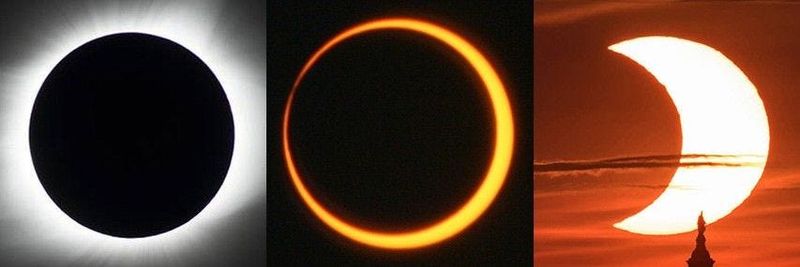
The eclipse on Wednesday, Aug. 12, will be visible across parts of the country, including 26 states and Washington, D.C, but New York will not experience totality, according to NASA. New York’s visibility of the partial eclipse is expected to be throughout the afternoon, around the same time as forecasters predict the thunderstorms and showers to hit.

Here is what to know about western and central New York’s forecast during today’s partial solar eclipse.
When is the solar eclipse in New York?
The eclipse will begin in New York at approximately 12:51 p.m. Wednesday and end around 2:45 p.m., according to Timeanddate.com.
The timing and amount of the sun covered will vary depending on where you are in the state. Parts of western and central New York can expect to see scattered showers and thunderstorms towards the end of the eclipse’s visibility period in the state.
Marginal risk of severe thunderstorms across upstate NY
Forecasters said that an area of low pressure is expected to move across western and central New York today, bringing scattered showers and thunderstorms throughout the afternoon and into the evening.
Areas south of Lake Ontario have a level 1 of 5 Marginal Risk of severe thunderstorms, with the primary risk being isolated strong to damaging winds. There is also a lesser threat of large hail that could hit, and the potential of localized heavy rainfall that could lead to minor ponding in poor drainage areas, according to the National Weather Service in Buffalo.
The main window for severe storms will be from 2 p.m. to 10 p.m., starting around the end of New York’s visibility window for the partial eclipse.
Where severe weather is possible
The severe weather and thunderstorm risk applies to parts of western and northern New York, including:
Eclipse times by city in New York
If you’re wondering what time the eclipse will happen where you are, here’s a breakdown for several major New York cities:
Albany will see the greatest amount of the sun covered among these locations, at about 13%, while Buffalo will see the least, at about 7.5%.
Rochester is expected to have the lowest average cloud cover at 50%, while New York City has the highest at 62%.
Will the thunderstorms hit during the partial eclipse?
The main window for severe storms in western and northern central New York will be from 2 p.m. to 10 p.m., according to the National Weather Service in Buffalo.
The partial eclipse in major cities across western and northern central New York is expected to start anytime between 12:50 p.m. and 1:02 p.m. and end anytime between 2:24 p.m. and 2:40 p.m., with the peaks ranging between 1:40 p.m. and 1:50 p.m.
This means the expected thunderstorms will likely hit those areas closer to the end of the eclipse.
How to safely watch the eclipse
The safest and simplest way to view the eclipse is with certified solar eclipse glasses or a handheld solar viewer.
Solar viewers should comply with the ISO 12312-2 international safety standard, according to NASA. NASA does not certify or approve specific brands of eclipse glasses.
The American Astronomical Society maintains a list of manufacturers and suppliers of safe solar viewing products.
Never look directly at the sun through regular sunglasses, a camera lens, binoculars or a telescope without an appropriate solar filter. Doing so can cause serious and permanent eye damage.
If you don’t have eclipse glasses, NASA also provides instructions for making a simple pinhole projector that allows you to view the eclipse indirectly.
—Madison Scott is a New York Connect reporter, covering entertainment, breaking and consumer news, and trending topics with a focus on stories that matter to readers across New York State. She also has an interest in how the system helps or doesn’t help families with missing loved ones. She can be reached at MDScott@USATodayco.com.
This article originally appeared on Rochester Democrat and Chronicle: Will New York see the solar eclipse? Here’s where storms could get in the way
Reporting by Madison Scott and Alexandra Rivera, New York Connect Team / Rochester Democrat and Chronicle
USA TODAY Network via Reuters Connect
By Madison Scott and Alexandra Rivera, New York Connect Team | USA TODAY Network