The big wooden bass plug hit the water with a loud “ker-plop.”
Even though I could not see the lure — after all, it was somewhere past midnight on the lee side of a little Canadian island — I knew it was a good cast by the sound. That is, the lure landed close to shore, not hitting any weeds, shore grasses, or overhanging limbs. The cast sounded just right.

After the obligatory pause for a few seconds … to let the ripples dissipate and to hopefully entice any nearby predatory finny critters, the reel handle made a slight quarter turn, just enough to engage the gears, taking the reel off free-spool in case of an instant strike requiring an immediate hook set with a quick, hard lift of the stout bass rod’s tip.
Then … after about 10 seconds, the retrieve began.
“Ker-plop, ker-plop, ker-plop …” the sound of the jitterbug dancing, more like chugging across the lake’s deeper water, back to the boat, over the heads of the imagined night-feeder bass. Midway through the retrieve, I muttered an inaudible sound of disgust and began reeling in the jitterbug as fast as the reel crank would turn. A sliver of grass or aquatic weed, maybe part of a muskrat’s dinner, had fouled the jitterbug’s big sharp treble hooks that hang beneath the ‘bug on the water.
With a bit of exasperation, I horsed in the lure, swung it up in the dark against the starry sky and felt the big No. 2 hooks to free them from the telltale strand of weed. It may be incredulous to some that a few shards of lake weed or grass can change the tune and therefore the effectiveness of a big wooden fishing lure. But experienced fishers who are in tune with their lures are wired, not only into the plug’s sound, but in daylight, the appearance of the lure, too. The way it runs.
Many of our lures appear fine when we buy them right out of the box, or so we think. Expert fishermen, no matter what species they are after, bass or trout, fresh or saltwater, have learned how to tune their baits and make them more effective. Most lures fresh out of the box need tweaks and adjustments, realignments, sharpenings and tunings that are secret. New lures can be looked at as raw materials for catching fish. They often need to be modified to really work well. If manufacturers tuned every one, the costs would be much more.
If a fisher can tell by the slight difference in sound of a jitterbug that is running right or not, imagine how a fish can discern the slightest variation with their super-tuned senses far beyond ours.
Top tournament fishers in many cases tell when asked, the brand and model of the lure they are using for their wins without hesitation. But … they rarely tell the secrets though, the way they modified or tuned it. How they fished it.
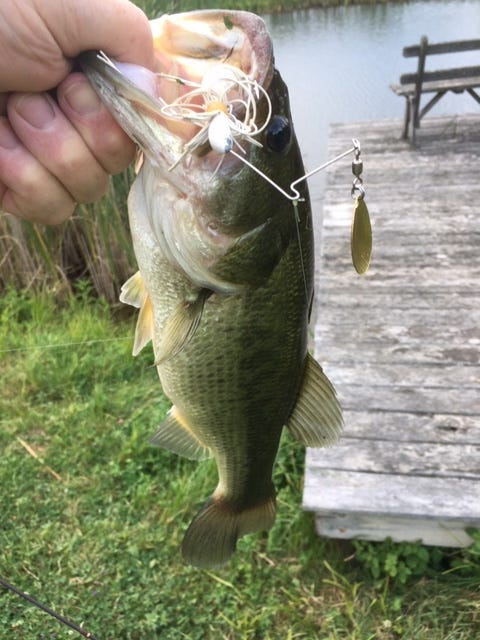
Yep, now with bass season here in New York state, it’s time to check out the tackle boxes and bass gear. If a bait, whether a jig, spinnerbait, crankbait, or topwater plug is not tuned to run right, its effectiveness to entice fish to strike diminishes in direct proportion to its being out of tune.
On one opening day of bass season my success came in the form of one small broken-back brown Rapala-type minnow cast parallel to the shore. The bass were eager to strike … just one of those phenomenal days that occur only once in a while and especially on opening day! But after the lure had been hammered over and over, the eye-screw … where the line attached, became bent.
I began to notice the lure was not running right, for one thing because it began to lose its effectiveness. Of course, I straightened the eye and immediately tied into another bass. But I had to switch baits because the lure was too far gone to run right. It didn’t look, or appear bad, but had lost its punch. I had other baits in the tackle box that were close, but none that were as effective. I tried to buy another from the company … same color, but they had been discontinued as so often happens.
When fishing for trout I have had wet flies that were all the same to my eye, yet one consistently out-produced all the rest, tied the same, on same vise with the same materials. And why? One would think that a miniscule No. 14, 16, or even 18 hook, the size of your little fingernail and tied with a tiny bit hair and a few wisps of feather would not make much difference to a fish. But experience has taught us the opposite. I think they see better than we do.
In fact, the smallest amounts of fly tying material, or angle of a bass lure’s spinnerbait … these precise details often make the difference between a hot or “go to” lure or the so-so, run-of-the-mill apparent carbon copies stuffed in the compartments of the tackle box.
— Oak Duke writes a biweekly Outdoors column.
This article originally appeared on The Evening Tribune: Tuning fishing lures can be the key to success on the water: Outdoors column
Reporting by Oak Duke / The Evening Tribune
USA TODAY Network via Reuters Connect