Locally developed technology and the help of the public may result in ways to better manage a federally protected water bird and in the process, help solve issues some Wayne County residents are having with bird poop and their impact on the Lake Ontario fish stock.
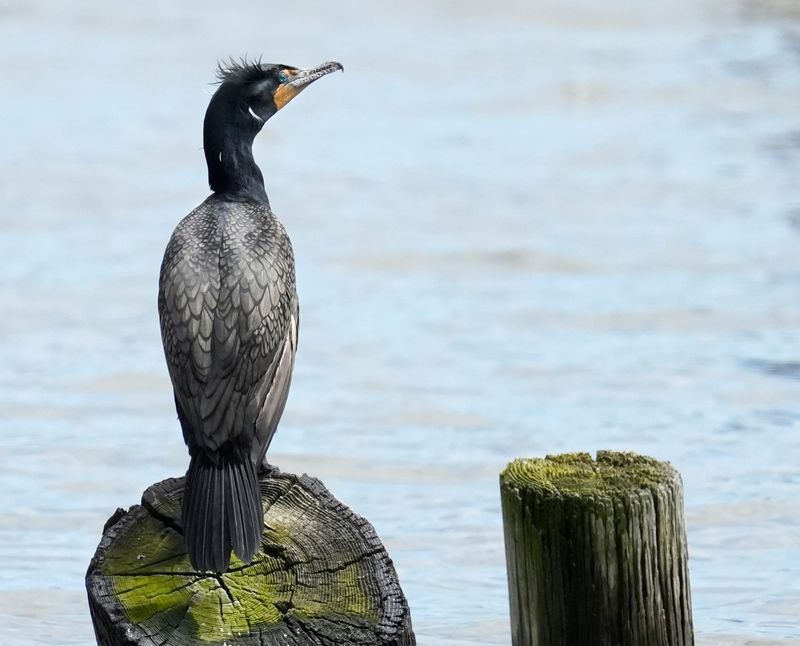
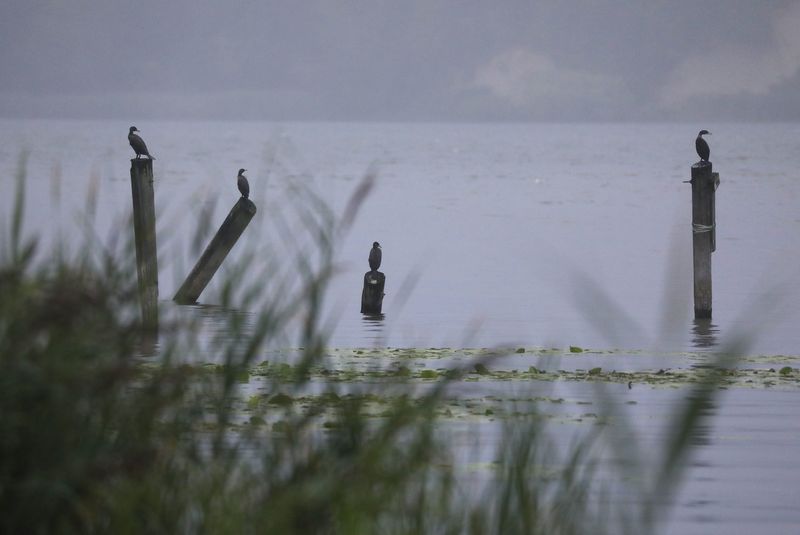
Researchers are calling on the public to use their eyes and their camera lenses to help document the activities of the federally protected double-crested cormorant throughout the Great Lakes region and the rest of New York.

The New York Sea Grant, a collaborative program of Cornell University and the State University of New York, is seeking photographic evidence of the large, fish-eating bird’s presence, activities and their impacts.
How can Wayne County people and other New Yorkers help?
New York Sea Grant partnered with Wayne County GIS to develop a new online reporting tool at https://nyseagrant.org/cormorant for the public to upload photos and report observations of double-crested cormorant numbers, nesting and feeding activities.
The survey includes options for logging the birds’ impact on natural habitat, water quality, infrastructure, and recreation. The survey developers strongly encourage users to submit photos to show the birds’ activity and impact. The survey is designed for use by the public across New York’s Great Lakes region and statewide. The site includes a link to an observation viewer to see updates in real time and can be used as a resource for New York state, American, Canadian, and other environmental, wildlife and fisheries resource managers.
“This new reporting tool responds to local leaders’ interests in having a way for community members to report, track and share with resource managers information about double-crested cormorant activity statewide,” stated Katherine Bunting-Howarth, associate director of the New York Sea Grant.
More about the double-crested cormorants
Double-crested cormorants, their nests, and eggs are all federally protected under the Migratory Bird Treaty Act updated by the U.S. Congress in 1972.
Cormorant populations were once adversely affected by the insecticide DDT, but in the words of the New York Sea Grant, thier numbers have exploded over the past four decades.
New York is one of several states and the Canadian provinces of Ontario and Quebec that manage the bird populations through hazing, oiling of eggs, and killing birds, although the population appears to be leveling off because of control measures. Cormorants have occupied most of the available breeding sites, which also limits their expansion, according to researchers.
But as happens when bird, animal and human populations collide, problems can arise.
What will information on Great Lakes cormorants be used for?
Town of Huron residents have been reporting issues with cormorants, according to David Fantuzzo, supervisor of the Wayne County town near Lake Ontario.
“New York Sea Grant has developed a way for people who live, work, and enjoy recreation along Wayne County’s shoreline to report their individual observations while at the same time getting a broader picture of the problem here,” Fantuzzo said in a statement. Double-crested cormorants use the Great Lakes region for breeding, with nesting colonies of a few dozen birds to more than a thousand pairs.
Their droppings, however, can destroy the trees and vegetation below their nests. The birds’ wide-ranging diet of fish is also a cause of concern for the recreational fishing industry. Double-crested cormorants were identified as a serious issue by New York’s charter fishing industry during meetings held by New York Sea Grant along New York’s Great Lakes-St. Lawrence River shoreline. “In meetings in Oak Orchard, Irondequoit, Oswego, Henderson, and Alexandria Bay, charter captains expressed concerns about increasing populations of double-crested cormorants and interest in seeing more research on the birds and their predation of fish, particular after stocking,” stated New York Sea Grant Great Lakes Fisheries and Ecosystem Health Specialist Stacy Furgal.
More about New York Sea Grant
New York Sea Grant is one of 34 university-based programs under the National Sea Grant College Program of the National Oceanic and Atmospheric Administration. New York Sea Grant’s statewide network integrates research, education, and extension services focused on coastal community economic vitality, environmental sustainability, and citizen awareness and understanding about New York’s Great Lakes and marine resources.
New York Sea Grant has offices at the University at Buffalo, Rochester Institute of Technology, Cornell Cooperative Extension of Wayne County in Newark, the State University of Oswego, and Watertown.
For more details, visit www.nyseagrant.org.
Mike Murphy covers Canandaigua and other communities in Ontario County and writes the Eat, Drink and Be Murphy food and drink column. He can be reached at mmurphy@messengerpostmedia.com. Follow him on X at @MPN_MikeMurphy.
This article originally appeared on Rochester Democrat and Chronicle: Track cormorant activity in New York with new tool
Reporting by Mike Murphy, Rochester Democrat and Chronicle / Rochester Democrat and Chronicle
USA TODAY Network via Reuters Connect
By Mike Murphy, Rochester Democrat and Chronicle | USA TODAY Network