Hy-Vee is partnering with a data company to help customers find healthy foods.
Hy-Vee and Kroger are among grocers using the FoodHealth Score system to help customers eat healthier. Hy-Vee customers will be able to use the app while in stores or when shopping online to see a food’s score.

What is the FoodHealth Score?
The idea is that nutrition labels are confusing, or in some cases, simply lacking, according to a Tufts University study. FoodHealth Co. uses AI to simplify choices by scoring foods from 1 to 100, giving the highest scores to those that reduce risks of chronic diseases, according to its website. The scores are based on ingredient quality and nutrient density, according to Hy-Vee’s website.
Sugary foods get the lowest scores, from 1-19. Foods like grains are rated 20-49, with the recommendation to “eat occasionally.” Proteins are rated 50-79, with an “eat often” recommendation, and fruits and vegetables get the highest scores, from 80-100, and are rated as “staple foods.”
FoodHealth said on its website that the score’s methodology is based on the science-endorsed Mediterranean diet, which emphasizes plant-based foods and healthy fats and limited intake of dairy, eggs and red meats.
While there are other food scores based on other diets, “The best evidence around the prevention of chronic disease is to follow the Mediterranean diet,” said Lyndi Buckingham-Schutt, an assistant professor of community health and nutrition at Iowa State University. “That is across the literature very well established.”
She said one drawback is that Hy-Vee’s score does not appear to be customizable to the needs of each individual user, nor does it appear to be equipped to make what she called “culturally relevant” swaps of one food for another.
“This tool, from what I understand, could be great,” Buckingham-Schutt said. “This is just a problem with any type of generalized score.”
On Hy-Vee’s website canned pear halves score 88, while boneless, skinless chicken tenders score 65. Shredded wheat cereal scores just 9, and plain Greek-style yogurt scores 77.
“Everything that they’re saying shaped the score looks, on paper, good,” Buckingham-Schutt said.
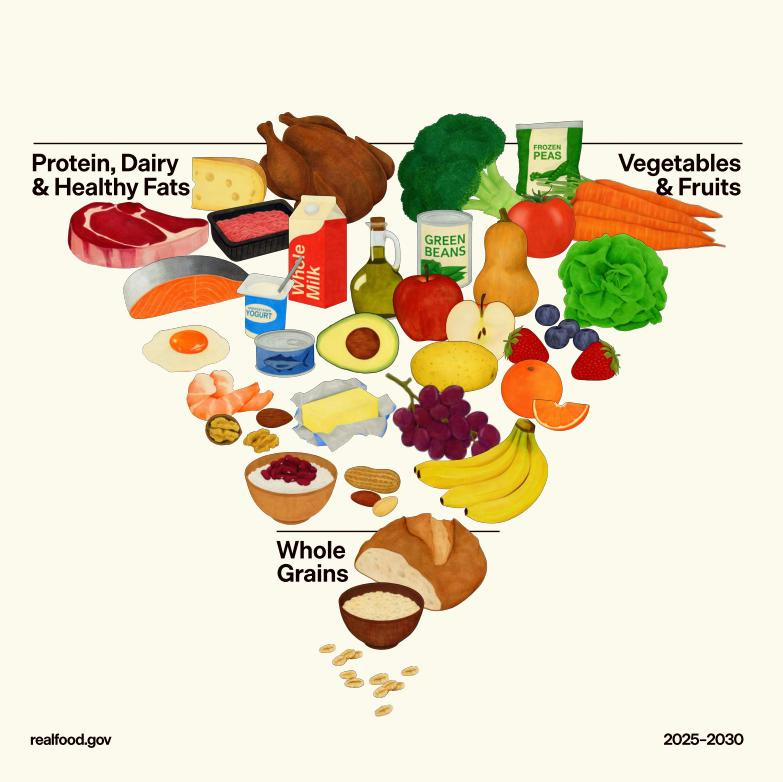
New tool comes as US Department of Agriculture introduces revised food pyramid
Hy-Vee announced its partnership with the FoodHealth Co. two days before U.S. Health and Human Services Secretary Robert F. Kennedy Jr. released new dietary guidelines that emphasize meats, fruits, and vegetables.
“With the implementation of the FoodHealth Score in our app, we want to make healthy food options more accessible and transparent,” Hy-Vee President Aaron Wiese said in a news release. “This tool builds upon the dietitian and pharmacy services we already offer and adds to our holistic ‘food is medicine’ approach that we provide to our customers. Now more than ever before, we have the resources available to best serve individuals in their health journey.”
Buckingham-Schutt said eating more nutrient-dense foods often helps people lose weight, but that this may not be a weight-loss tool because some healthy foods like avocados have healthy fats and sugars.
“I don’t know if it’s a weight-loss tool,” she said. “It could be. But it truly to me is a tool to improve your diet quality. And those aren’t one in the same. “
(This story has been edited to correct the description of FoodHealth Co. and to
Philip Joens covers retail and real estate for the Des Moines Register. He can be reached at 515-284-8184 or pjoens@registermedia.com.
This article originally appeared on Des Moines Register: New online tool aims to help Hy-Vee customers make better food choices
Reporting by Philip Joens, Des Moines Register / Des Moines Register
USA TODAY Network via Reuters Connect