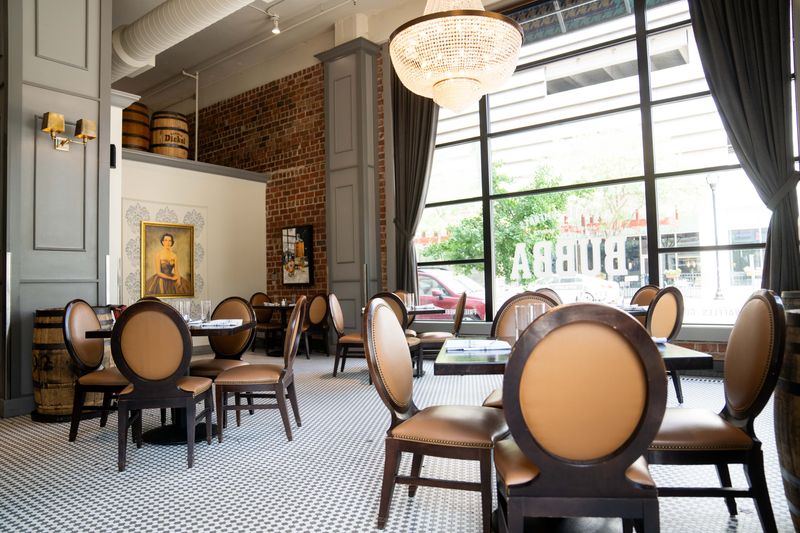
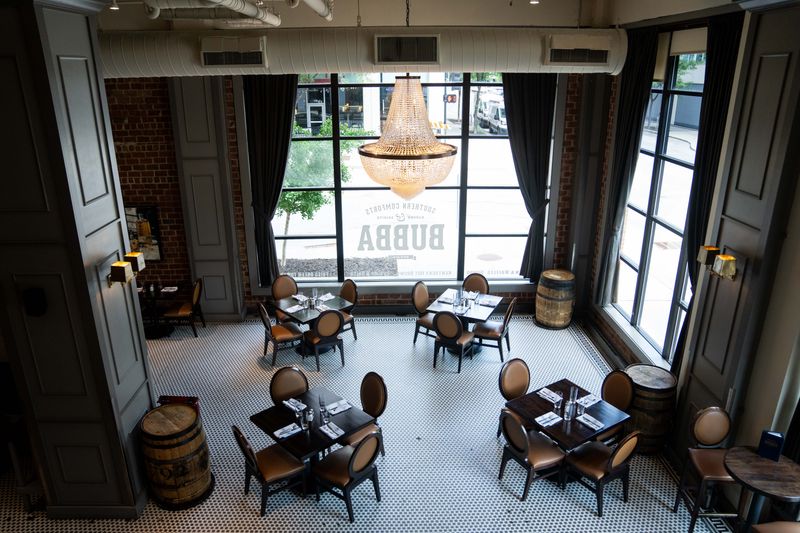
On a summer night in downtown Des Moines, the chandeliers in Bubba Southern Comforts glow like theater lights, throwing a warm, amber shimmer across the sidewalk. They’re impossible to miss — oversized, perfectly symmetrical in the front windows, bead‑strung by hand and hung so they read as luminous billboards for the restaurant inside. That was the point.
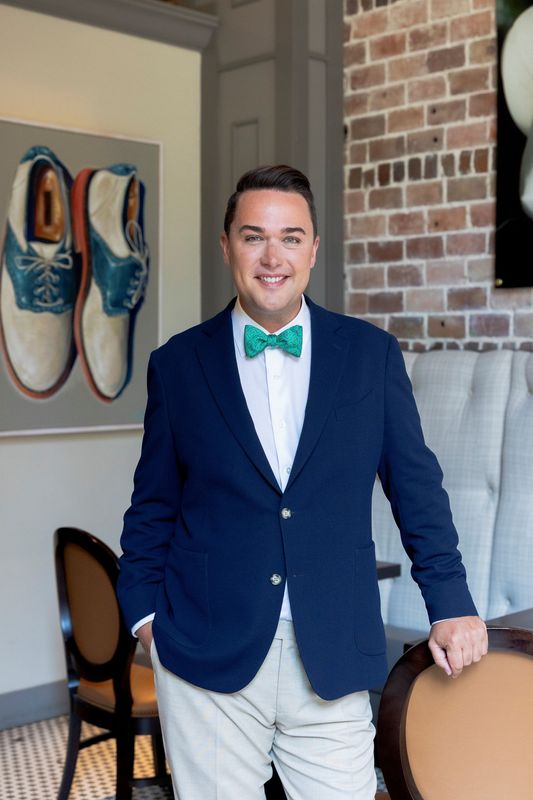
“You eat with your eyes first, and that starts the second you walk in the door,” Bubba founding partner Chris Diebel said.

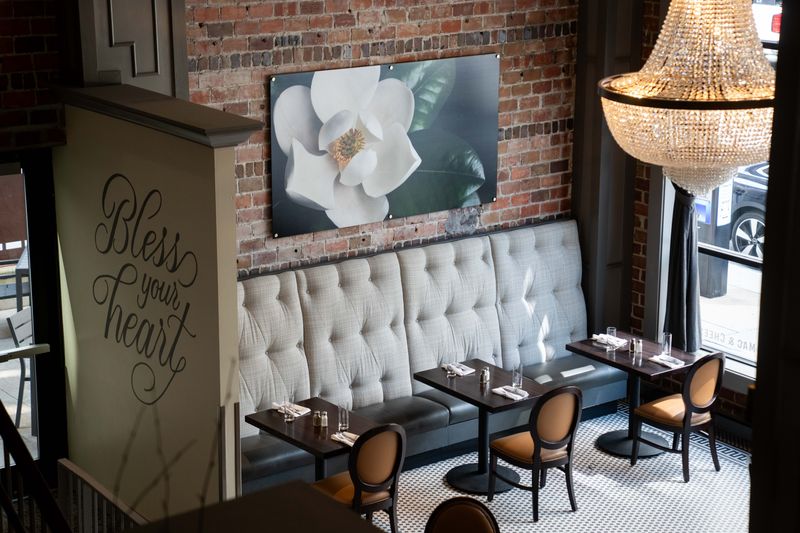
Ten years after Bubba opened its brick-and-mortar doors, the restaurant has become something like a Southern-inflected living room for downtown Des Moines — a place where a family in their Sunday best can tuck into fried chicken while kids in sneakers stare up at those chandeliers and wave down at strangers from the mezzanine railing. The details are intentional, right down to the portraits on the wall and the bow ties that keep mysteriously disappearing from an upstairs display.
Bubba is, in many ways, a portrait of Diebel himself: his Texas roots, his grandparents’ dinner rituals, his fascination with hospitality as theater. It is also a case study in what it takes to get a restaurant not just open, but to stay open — and relevant — for a decade in a downtown that no longer behaves the way it used to.
“We wanted to celebrate that ‘Bubba’ is a phrase that really does cross all socio‑economic boundaries. We’ve got really big, shiny chandeliers, and we serve really accessible comfort food — and all of that can coexist,” Diebel said of the idea of the Southern restaurant that is now part of the Des Moines Register’s Essential Restaurants when he decided to take it from a pop-up to a full-fledged ode to Southern cooking.
A pop-up, a burner phone and a room that couldn’t look like the last one
Bubba’s origin story starts more modestly, long before the chandeliers went in.
In 2013, while working in marketing for Orchestrate Hospitality, Diebel heard his bosses talking about pop-ups. He asked if he could try one himself. Orchestrate said yes — and loaned him a seasoned team, turning what could have been a scrappy side project into a fully realized preview of a restaurant that didn’t yet exist.
They called it Bubba and staged it at Hoyt Sherman Place, taking reservations on a burner phone. That first event in 2013 sold out, 450 seats over three nights and four courses. Scott Stroud, the executive chef with Orchestrate Hospitality, offered three options for each course, including shrimp and grits and chicken and waffles. Diebel’s father, Tim Diebel, helped tie the bow ties servers wore.
“That’s when we knew we were onto something,” Diebel said.
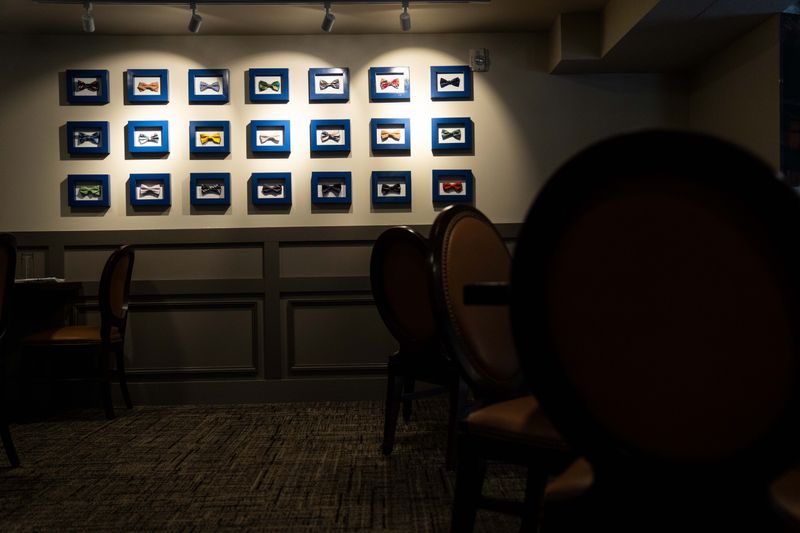
That small, almost ceremonial gesture by his father eventually reappeared in a wall of individually framed bow ties at the permanent restaurant.
It would be three more years before Bubba found a home, and it arrived wrapped in history. The former Raccoon River Brewing Co. space on the corner of 10th and Mulberry streets was cavernous and beloved, with 100‑year‑old brick walls and a soaring ceiling. That history, Diebel decided, could not be the new restaurant’s story.
“I felt very strongly that it could not feel like a retread of a former restaurant,” he said. “Everything had to change. The bar physically moved, the stairs physically moved. I didn’t want anyone walking in here and going, ‘Oh yeah, I remember Raccoon.’”
The build‑out turned a gigantic brewery into a 7,000‑square‑foot Southern parlor and mezzanine. Carpeting went onto the upstairs floor. Velvet drapes and upholstered chairs tamed the noise instead of the usual acoustic tiles. Light poured in through the tall windows — and, eventually, back out through those chandeliers, which were custom‑made in Las Vegas after Diebel couldn’t find matching vintage fixtures.
The gamble worked. On a campaign stop years later, former Raccoon River co‑owner and then-Colorado governor, now Sen. John Hickenlooper walked in, looked around and asked Diebel if it was his place. “‘You did one hell of a job in here,’” Diebel recalled him saying.
A room built of ancestors and accidents
Bubba’s décor looks seamless now — bow ties, portraits, whiskey barrels and still life paintings layered into a visual story of the modern South. Behind that finish is a lot of improvisation and, in one case, a near disaster.
Midway through construction, a two-story sheetrock shaft appeared beside the staircase. It was a functional necessity, hiding plumbing, but it obliterated the exposed brick wall Diebel had imagined as his rustic showpiece.
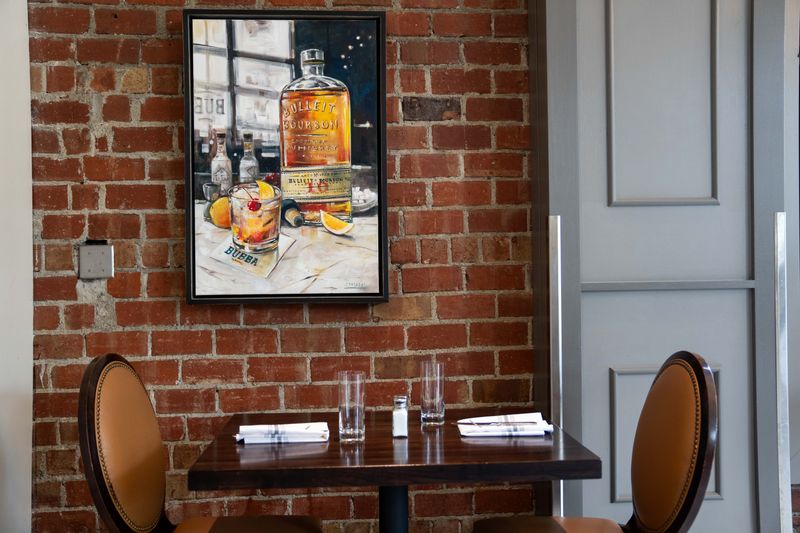
He panicked. Then a liquor rep from Bulleit asked if there was anything they could do together. Yes, Diebel told him: help pay for art.
The solution became one of Bubba’s most distinctive visual moments. Local artist Jimmy Navarro painted a still life of old‑fashion ingredients — sugar cubes, orange peels, a bottle of Bulleit — set on what looks like Bubba’s own bar top, with the restaurant’s front window in the background. Navarro shot reference photos in the unfinished space, then painted in details that effectively anchored the room in its own self‑image. Bulleit paid for the piece. The money Diebel saved went toward wallpapering the new shaft in a tight photograph of stacked whiskey barrels in a rickhouse, turning an eyesore into a glowing, floor‑to‑ceiling barrel wall.
Around it, he scattered actual bourbon barrels picked out on trips to Kentucky. Barrel tops ended up in the restrooms. A series of Warhol‑style whiskey‑bottle prints from Louisville fill dead wall space. Silver trays and sconces catch the light.
Navarro, known for his Converse shoes works of art, also contributed to the dining room with a homage to bucks, the saddle shoes.
Then there are the more personal artifacts. A definition‑of‑“Bubba” sign hangs over the host stand — “a form of affection… usually reserved for the oldest brother” — and parents routinely stop to pose their own Bubbas under it for photos.
Upstairs, an entire wall is lined with bow ties, a visual echo of his father’s nightly ritual back at the pop‑up. The display needs regular replenishing. “Most of the ones that go missing are probably kids,” Diebel said; you can tell by the height.
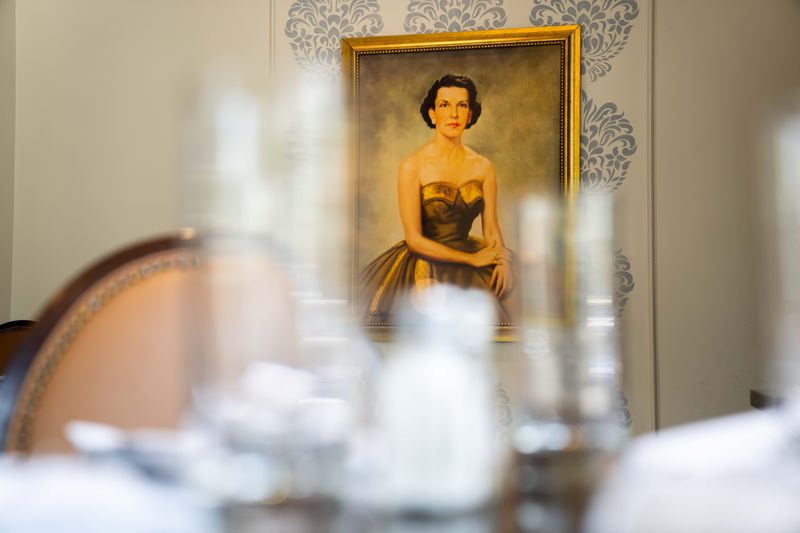
One of the most quietly loaded pieces is a portrait of his great-grandmother. The original hangs in Texas, so Diebel hired a photographer to capture it in his grandmother’s home. A reproduction watches over Bubba, tiara perched just so — a reminder of Sunday dinners where she’d sit in her wingback chair, declare, “I think I’ll have some ice cream now,” and the evening would shift into dessert.
“This space is special to me because there are little pieces around the room that remind me of family and remind me of my home state of Texas. People that have spent time in the South come in here and they feel a familiarity that I think is really special, and we tried really hard with that when we designed it a decade ago,” Diebel said.
He’s lost three grandparents since Bubba opened. The room, he said, is one of the places they still feel most present.
Fried chicken, succotash and the dotted line between Iowa and the South
For all the theatrics of the room, Bubba doesn’t work if the food doesn’t land. From the beginning, Diebel wanted a menu that traced the “dotted lines” between Midwestern comfort food and Southern classics — a spread that would feel familiar to Des Moines diners but carry more heat, more seasoning, more risk on the plate.
“There are a lot of dotted lines between Midwest comfort food and Southern comfort food, and I think that’s part of the secret to Bubba’s success,” he said. “A lot of this food is very accessible to Midwestern palates — it’s just got a little bit more kick, a little bit more seasoning. It’s not too scary for people to try.”
He originally imagined something more formal, inspired by prix fixe Southern restaurants in Washington, D.C., and Dallas. Des Moines nudged him in a different direction. “I thought it would be even more upscale, but I’m a firm believer you have to listen to what the customer wants, and the customer clearly wanted this place to be a little more casual, and that’s OK.”
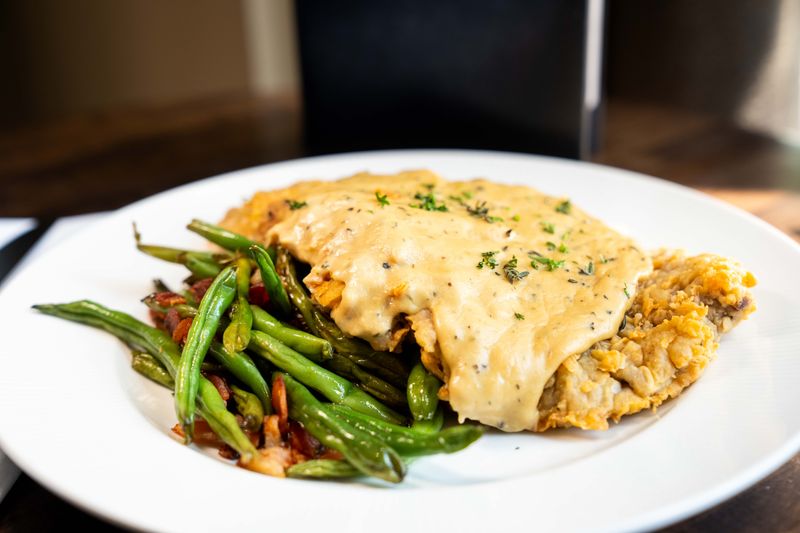
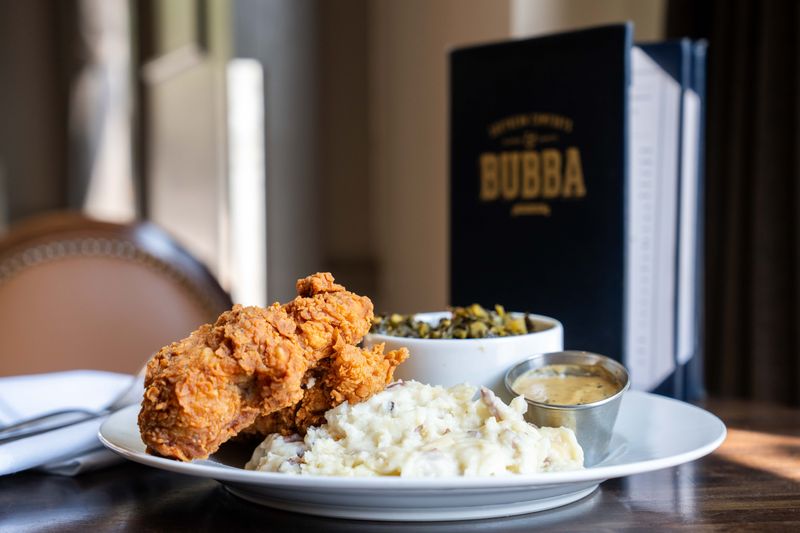
Today, the core hits are non-negotiable: fried chicken, meatloaf, shrimp and grits, chicken fried steak, Kentucky hot brown, a Southwest Cobb salad that outsells its competitors.
The surprise has been just how much Iowans love that chicken fried steak.
“I knew that fried chicken would be a No. 1 seller. I am so pleasantly surprised as a Texas boy who loves chicken fried steak. It has consistently been a top seller, and this market has just really resonated with it,” Diebel said.
Even the fried chicken is obsessively tuned: a thyme‑heavy brine to season the meat, a buttermilk dip laced with a little hot sauce, a dredge cut with cornstarch and rice flour for extra texture. “What’s holding it all together and probably contributing to the cragginess of it is the buttermilk dip,” he said.
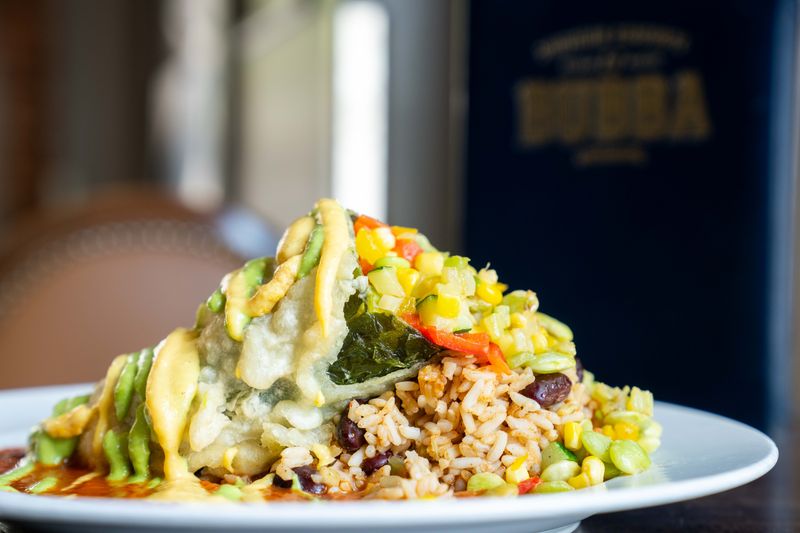
Crab cakes have endured despite a freak freeze in Texas that sent Gulf crab prices spiking. A vegan succotash‑stuffed poblano pepper, laid over a sweet corn purée that “you would swear has cream in it,” has become the dish he recommends to proud carnivores.
Some menu darlings didn’t make it through the pandemic streamlining: black‑eyed peas (a favorite of Tyra Banks, he noted) and fried okra, which he refuses to serve from frozen. Both fell victim to too many sides and not enough labor. “We already have too many sides on our menu. That’s kind of a Southern thing — and it’s also inefficient.”
The decade no one planned for
If the restaurant’s first act was about building an identity, its second was about not losing it. When the pandemic arrived, Diebel watched his carefully hoarded reserves vanish in less than two weeks.
“When the revenue absolutely stops, but the bills keep coming from the last 30 days, it goes fast,” he said of those opening days of the pandemic in March 2020 when restaurants were shut down to prevent the spread of COVID-19.
He slept on Bubba’s banquettes some nights during downtown protests, worried the floor‑to‑ceiling glass would shatter. The windows held. So, somehow, did the business.
Survival looked like chaos: takeout dinners, hand‑canned cocktails, early‑morning doughnut pop‑ups. He describes that time as throwing spaghetti at the wall just to see what stuck. The federal PPPloans, $284,642.60 to save 47 jobs, helped, but only because he insists they were used “by the book” — paying staff and bills, not cushioning personal risk.
What he remembers most now is the tipping. “We were just shocked at the generosity of the community. We were doing this takeout, and people were very often tipping double what their bill was. People were tipping 50% to 100% on their bills, and it just restores your faith in humanity,” Diebel said.
A different downtown, and a restaurant that keeps reinventing itself
Coming out of the worst years, Diebel now runs Bubba in a downtown that no longer behaves like the one he opened in. The reliable office worker lunch crowd is gone. “You used to be able to pretty solidly track your lunch traffic. Those days are gone. It’s all over the map,” he said.
The old one-hour business lunch has migrated to counter service and grab-and-go, dining style he plans to address with Mezze Mediterranean Kitchen, opening inside the historic Temple for Performing Arts this fall. Pamela Bass Bookey and Harry Bookey developed the restaurant with Diebel acting as the senior project manager and owner’s representative, overseeing execution.
If he were opening Bubba today, it wouldn’t be 7,000 square feet.
Downtown Des Moines, once the uncontested epicenter of Iowa’s restaurant scene, now shares that spotlight with neighborhoods and suburbs ringed with new concepts. “That is not necessarily the case anymore. There’s great food all around this place,” he said.
So he leans into what Bubba can do that a smaller, newer restaurant can’t: big, theatrical moments and a sense of continuity.
In June, the restaurant hosted a barbecue pop‑up with USA TODAY Restaurant of the Year Whatcha Smokin? BBQ + Brew that drew more than 400 people in a single day. A Veuve Clicquot fried‑chicken collaboration sent social media into a minor frenzy, selling hundreds of Champagne‑battered birds in July. Magnolias & Mistletoe brings escalating décor and 10 holiday cocktails in November and December, adding more sparkle, more wreaths, more reason to book a December table. Even the Nola-tini, a Southern take on an espresso martini, and Monday night steak deals give customers an excuse to return.
“You’ve got to constantly do things to remind people that you are there and you are worth their time and money,” he said.
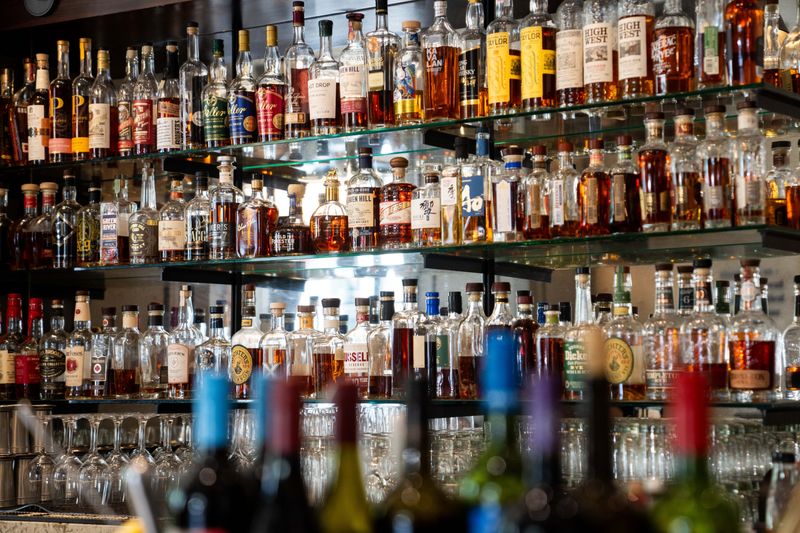
Bubba features an extensive bourbon collection, including a new wine-finished whiskey. A wall of 100 bourbons and ryes greets diners as they walk through the front doors. Exclusive single-barrel whiskey picks and specials such as Houndstooth four-grain bourbon finished in Cabernet Franc wine casks and signature drinks like the Old Forester Mint Julep keep aficionados returning. Diebel also travels to Kentucky to find limited-edition whiskeys, such as a 10th anniversary single barrel of Eagle Rare Bourbon, hand-selected to commemorate the restaurant’s first decade. The bottles nod to Bubba’s long-standing reputation as one of downtown’s go-to spots for whiskey lovers.
He credits Bubba’s survival to a mix of fiscal discipline, relentless adaptation and an unusually stable staff.
“I think I would be really proud to hear how many people have stayed in a fairly transient staffing environment. It’s really gratifying to think through all the people who stayed for many years at a time and have remained friends and remain customers.”
Ten years in, part of the furniture
Asked what would surprise his younger self most, standing in the dust of the Raccoon River build‑out, Diebel doesn’t hesitate. It’s not just that Bubba is still here; it’s that the restaurant is starting to feel like part of the furniture of downtown Des Moines. “I remember constant pressure in trying to deliver something that didn’t feel like a flash in the pan. It’s special to think that, man, we’ve made it 10 years, and we are becoming one of those brands that people just find synonymous with downtown Des Moines,” he said.
Bubba has always been more than a restaurant — it’s a very personal expression of Diebel’s Texas roots, family history and hospitality philosophy. The fried chicken, shrimp and grits, bourbon collection and the personal artifacts throughout the restaurant only add to that story.
The chandeliers still sparkle. Kids still tug at bow ties. Someone, every week, walks in, looks around and tells him with a mix of sheepishness and fondness: “I love this place. I haven’t been here in ages. I need to get back down here.”
At 10 years on July 28, Bubba is exactly what its owner hoped a “bubba” could be — a term of endearment made physical, a place where the line between special occasion and everyday supper blurs, where family stories hang on the walls and the fried chicken comes out crackled and hot, just as promised.
Where to find Bubba Southern Comforts
Sign up for our dining newsletter, Table Talk DSM, which comes out on Wednesday mornings with all the latest news on restaurants and bars in the metro. You can sign up for free at DesMoinesRegister.com/tabletalk.
Susan Stapleton is the entertainment editor and dining reporter at The Des Moines Register. You can reach out to her on Facebook, Twitter, or Instagram, or drop her a line at sstapleton@gannett.com.
This article originally appeared on Des Moines Register: Inside Bubba’s 10-year journey from pop-up to Des Moines staple
Reporting by Susan Stapleton, Des Moines Register / Des Moines Register
USA TODAY Network via Reuters Connect
By Susan Stapleton, Des Moines Register | USA TODAY Network