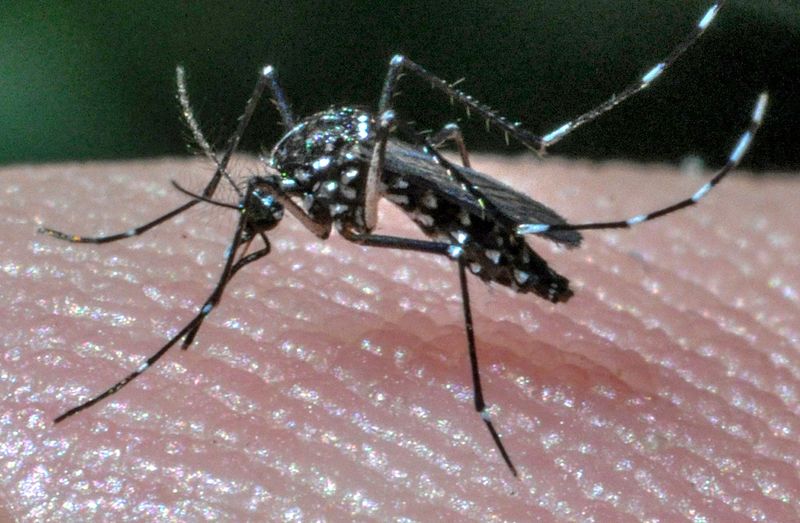
RICHMOND, IN — The West Nile Virus has been found in mosquitoes around Wayne County during routine annual surveillance, the Indiana Department of Health confirmed Monday.
No human infections have been reported to date to the Wayne County Health Department. But health officials urge everyone to take precautions to avoid getting sick from West Nile and other mosquito-borne diseases.

“Protecting Wayne County from mosquito-borne illnesses largely depends on individual citizens,” WCHD said in a press release. “Eliminate or report breeding grounds and protect yourself from bites.”
On July 22, IDOH confirmed the state’s first case of the season in Vanderburgh County. The state reported a total of 11 human cases in 2024.
The virus has been found in testing in nearly 30 counties as of Friday.
According to the IDOH’s Mosquito-Borne Illness Dashboard, five pools in Wayne County totaling 341 mosquitoes have been tested for West Nile Virus, with three testing positive for the disease.
In comparison, Hamilton County leads the state with 47 out of 323 mosquito pools testing positive.
Neighboring Randolph County (three pools out of three tested positive) and Henry County (four pools out of 10 tested positive) have also reported the presence of West Nile.
The last confirmed human case in Wayne County was in 2017, when there were four positive pools. The county already has more than last year’s two positive pools.
Wayne County Health Department Director Dan Burk said the increase is typically because of weather conditions, moreso in a rainy season.
“A lot of rural residents have the issue, because they typically have a lot of items in their yards, whether it’s tractor tires, equipment, swimming pools, cattle and animal feeders and things like that,” he said. “Anywhere stagnant water is they will breed and produce mosquitoes. This is a wet weather pattern that’s typically going to have a larger season.”
Tips to minimize risk of West Nile Virus
The IDOH and WCHD provided the following tips to minimalize the risk of contracting the virus:
Burk said he couldn’t stress enough for people to drain vacated swimming pools, clean gutters, dump tires after heavy rains and dump empty flower pots outside.
“Anything that’s stagnant, please, please, please dump it,” he said. “If not, it breeds the mosquitoes pretty quickly.”
What is West Nile, and what are its risk factors?
West Nile Virus is transmitted to humans by mosquitoes that have first bitten an infected bird.
Mosquitoes lay eggs in still water, which hatch in seven to 10 days. The WCHD said a crucial step often overlooked is draining and eliminating standing water weekly.
What are the symptoms of West Nile Virus?
The Wayne County department said a person bitten by an infected mosquito may show symptoms three to 15 days later, though the Indiana Department of Health said most infected people have no symptoms or only mild, flulike symptoms that include fever, headache, body aches, joint pains, vomiting, diarrhea, swollen lymph glands or a rash.
More severe symptoms can include encephalitis or meningitis and other neurological syndromes, including flaccid muscle paralysis, with serious cases sometimes leading to death.
The Indiana Department of Health said although people older than 50 are at the greatest risk of serious illness and death from the disease, all ages have been affected and have had severe disease.
Anybody with more questions is asked to call the Wayne County Health Department at (765) 973-9245 or visit waynecountyhealth.in.gov.
Evan Weaver is a news and sports reporter at The Palladium-Item. Contact him on X (@evan_weaver7) or email at eweaver@gannett.com.
This article originally appeared on Richmond Palladium-Item: West Nile Virus has been confirmed in Wayne County mosquitoes. Here are tips to avoid the disease
Reporting by Evan Weaver, Richmond Palladium-Item / Richmond Palladium-Item
USA TODAY Network via Reuters Connect