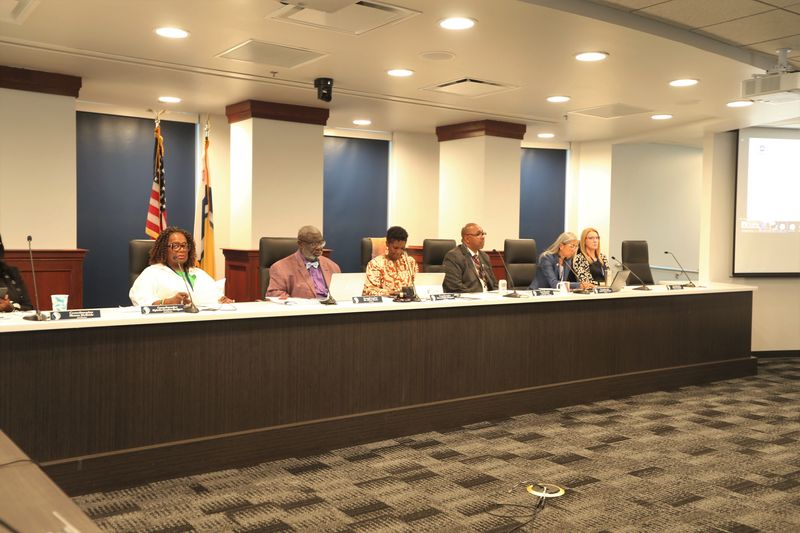
SOUTH BEND — South Bend Common Council members and local residents criticized the council’s Utilities Committee for providing what they called only the anti-data center side at its Aug. 20 meeting.
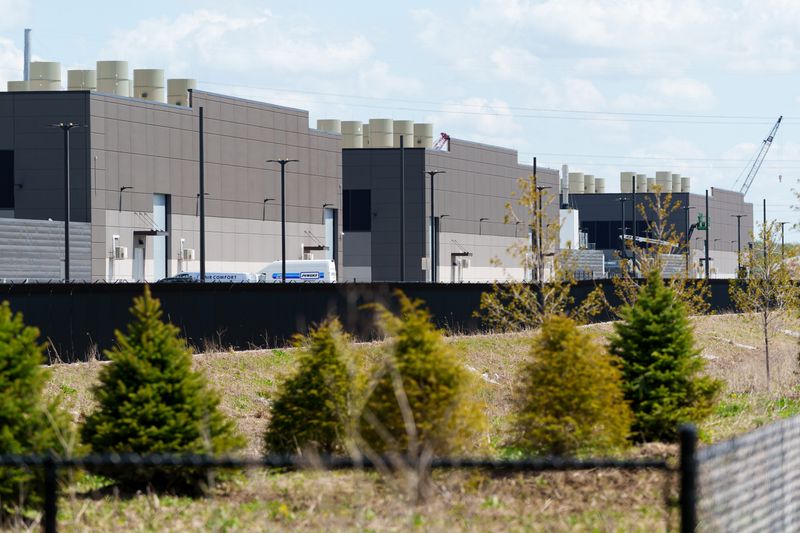
In a time when data centers are popping all over the state and country while also drawing opposition, including in St. Joseph County, the Utilities Committee put the hot-button issue on its agenda in the form of two presentations.

Ironworkers and environmentalists joined in the conversation to provide two separate perspectives — one where a data center promises the ability to provide for their family and another where concerns loom about how natural resources will become scarce.
But council members Canneth Lee, Sharon McBride, Sheila Niezgodski and Rachel Tomas Morgan felt dissatisfied with the lack of an expert opinion on the pro-side of data centers.
“It would have been nice to hear both sides and not just the cons,” McBride said in response to the data center presentations. “I think it would’ve been more prudent for me to have [a] presentation that would’ve talked to the benefits, if you will, or some of the opportunities.”
Open loop versus closed loop
To give residents an in-depth understanding of how data centers work, particularly when it comes to water usage, Karl Perusich, professor at the Purdue University College of Electrical Engineering, gave a presentation on the difference between closed- and open-system data centers.
The main difference between a data center that uses an open-loop system versus a closed-loop system is water usage, Perusich said.
“In a closed-loop system, you’re going to reuse one of your resources. More often than not, it’s water,” Perusich said. “Typically, in an industrial process, or any kind of process, you use the water to dissipate the heat. That’s what it’s there for.”
Open-loop data center systems mean input resources are used only once and become a part of the product or scrap, Perusich said. Closed-loop systems run more like swimming pools or a car’s oil system.
“You fill the pool up once … you don’t have to keep constantly refilling it with water,” Perusich said. “You’ll get some evaporation. The kids will splash around and you’ll lose some water. So periodically you have to fill it back up, but for the most part, the water you put in once is all the water you’ll use.”
One side of the coin
Ben Inskeep, program director of Citizens Action Coalition, provided the meeting’s second presentation about data centers.
Citizens Action Coalition opposes large, hyper-scale data centers, Inskeep said, based on analysis of the negative impacts data centers have had and could have on the state, including excessive water consumption, noise pollution and loss of wetlands.
“We do have a lot of unknowns when it comes to data centers because they’ve not been very transparent about how much water they’re using on a day-to-day basis. We hear a lot of generalities, and a lot of promises, but not a lot of actual data on what has been their historic use,” Inskeep said. “We don’t often have any information about what is in that waste stream of the data centers.”
Because of the lack of policies and regulations regarding data centers, Inskeep brought up the idea of a moratorium. Passing a moratorium that temporarily pauses the ability to approve or construct a data center isn’t inherently anti-data centers, he said.
“It would give South Bend time to review their existing policies on data centers and establish a collaborative process for updating it with resident input before any addition data center proposals are filed and then potentially approved,” Inskeep said. “There’s a way to do economic development in a way that’s thoughtful.”
Trade workers in support
Utilities Committee Chair Sherry Bolden-Simpson said she wished she could’ve gotten an expert to present in support of data centers, but the committee was pressed for time.
During public comment, South Bend Regional Chamber of Commerce President and CEO Jeff Rea, who writes a monthly column for The Tribune that he has used to promote the benefits of data centers, offered his services to educate the council members on some of the pros.
“We work with the county as they put protections in place related to water usage, to zoning [and] noise control,” Rea said. “We have some great examples here in our own community of things that we’ve done to be proactive.”
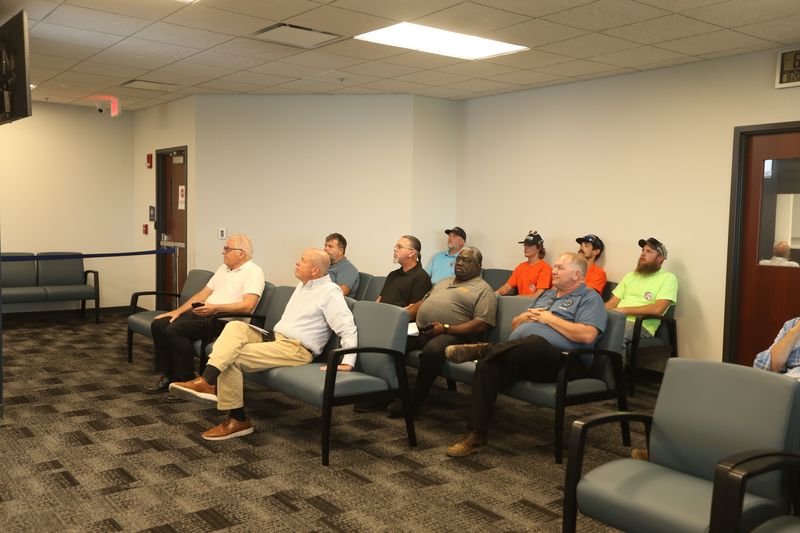
Beyond Rea’s offer, residents, specifically trade and ironworkers, had no problem stepping in and showing the council members exactly how data centers could benefit the community with jobs.
And on the chance that South Bend establishes a moratorium on data centers, as Indianapolis did Aug. 19, they emphasized that the same opportunities may not still be on the table when it’s over.
The trade unions promise their students and employees the opportunity to work on big projects that are necessary to maintain their careers and livelihoods, International Union of Operating Engineers, Local 150, Representative James Gardner said. Letting a data center slip through the community’s hands, he added, would be a travesty.
“A moratorium, it sends a signal out that we are not open for business,” Gardner said. “The more that happens and the more the thresholds are put into place that deter economic development, this city will become just like it was 10 [to] 15 years ago, listed as a dying city.”
Email South Bend Tribune business reporter Jessica Velez at jvelez@usatodayco.com.
This article originally appeared on South Bend Tribune: Utilities Committee criticized for one-sided data center presentation
Reporting by Jessica Velez, South Bend Tribune / South Bend Tribune
USA TODAY Network via Reuters Connect
By Jessica Velez, South Bend Tribune | USA TODAY Network