You think you’ve spotted U.S. Immigration and Customs Enforcement in Indianapolis. Should you post about it online?
Social media posts about ICE’s whereabouts have been going viral. While well-intentioned, it’s essential that online posts about ICE sightings are verified. When communities are scared and stressed, fearmongering only causes additional damage.

Navigating this landscape takes some guidance. I attended local trainings and spoke with community organizers and legal experts. Here’s what I found.
Verify before you post
In Indianapolis, the Indiana Undocumented Youth Alliance, or IUYA, has a Rapid Response hotline you can call if you think you see ICE. The hotline, 855-589-4639, uses volunteers who are vetted and trained to confirm or debunk alleged ICE sightings.
I talked with Wendy Catalan, a volunteer organizer with IUYA, who said first-hand reporting matters. Rapid Response also differs from usual social media posts about ICE activity because the volunteers provide follow-up information.
The answer to the question at the top of this column: Don’t post first. Call the hotline, let trained volunteers verify what you saw and let confirmed information — not fear — drive what gets shared.
“It’s important to report back saying, ‘yes, ICE was there,’ ‘yes, ICE conducted an arrest or an operation, but they are not there anymore,’” Catalan said. “We’re just keeping eyes out.”
Once a sighting is confirmed, sharing that verified information — along with the follow-up update that ICE has left — is exactly the kind of online posting that helps rather than harms.
Some will argue that any sharing of ICE locations — verified or not — amounts to interference with federal law enforcement. But knowing that officers are in your neighborhood is not the same as obstructing them. Communities have always had the right to know what is happening on their streets, and that right doesn’t disappear because the activity is federal rather than local.
Verified, timely information allows people to make informed decisions about their own safety and the safety of their neighbors. That is not fearmongering. It is exactly what community looks like.
For Rapid Response, the goal is not to be the first to report an ICE sighting. It’s not a race, Catalan said, and each situation is a learning experience. The goal is to create transparency about what’s happening in our communities.
When it comes to recording immigration or law enforcement activity, Indiana ACLU legal director Ken Falk said that people are generally allowed to observe and document. Indiana law does allow officers to establish a 25-foot buffer zone if they believe someone is interfering, but short of that, recording is protected.
“You have a perfect right to stay on the sidewalk and observe and record,” Falk said. “You do not have the right to obstruct, but to the extent that you are observing, we all have the right to do that. And it’s extremely important that we do, given what current events demonstrate.”
Mark Hodges, a Brown County resident, is suing top Trump officials over exactly that right — his ICE monitoring app was removed from the Apple App Store after federal pressure.
Being aware of what’s going on in your community is essential when immigrant and First Amendment rights are being threatened. If you’re posting about immigration enforcement activity online, having verified information is key, and that’s where Rapid Response can help.
Hit the streets
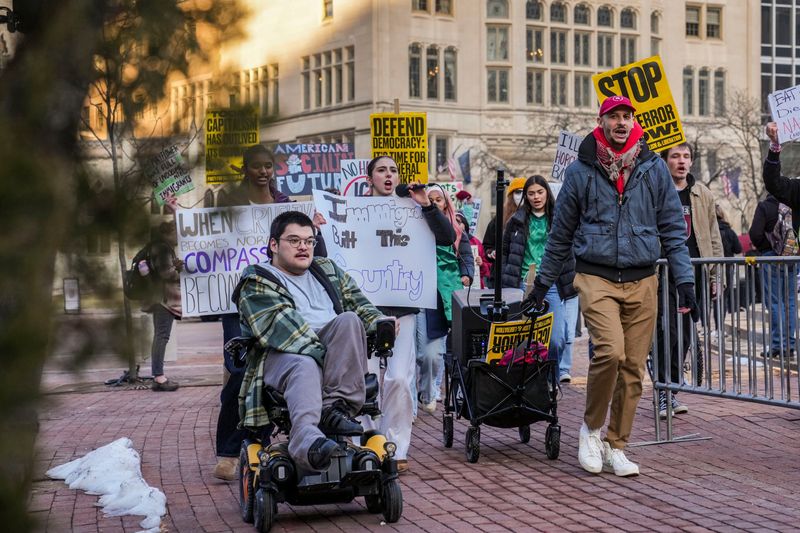
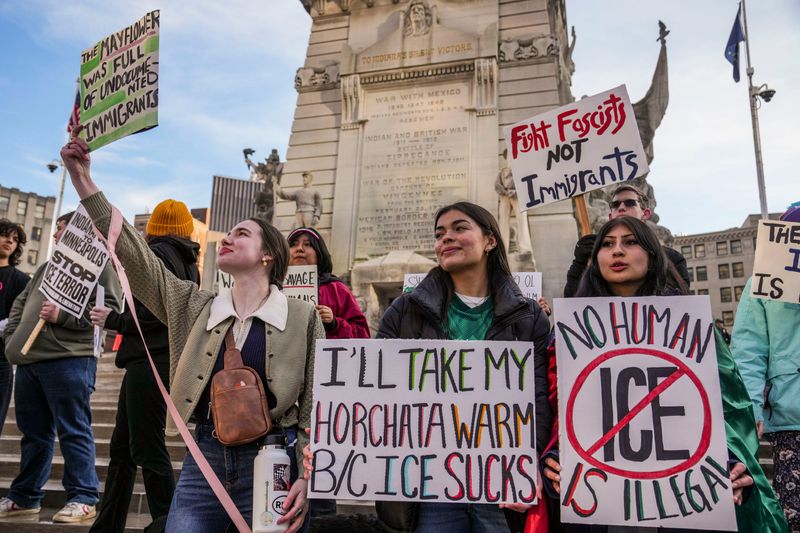
Beyond spreading awareness online, protesting was the organizing method people mentioned most — and for good reason.
Showing up publicly and visibly does matter.
Protests, especially when they’re large enough, can correlate with shifts in election results and can further foster civic and political engagement. The 2017 Women’s March correlated with an increase in the number of women who ran for office, which almost doubled from 2016. There were also some positive shifts in votes for Democratic candidates in parts of the country that had high protest turnout.
Protesting can get you connected with other supportive resources as well. At anti-Trump protests across the country, organizations have been tabling to get protesters registered to vote and inform them of other actions they can take.
Attending a protest can be a stepping stone for more civic engagement and activism throughout your life. People who participated in the 1964 Freedom Summer during the civil rights movement were more likely to engage in additional advocacy work over the course of their lives than those who hoped to participate but ultimately did not.
In Indiana, Hoosiers Rise is an online resource that compiles information about upcoming events and protests.
Find your role
Not everyone takes that approach — and organizers here are counting on it.
When I attended Standing in Solidarity with our Immigrant Neighbors at Northview Church of the Brethren, I learned about accessible organizing. The event was co-hosted by Indivisible Central Indiana, the Peace Church Coalition and the Indianapolis Peace and Justice Center.
The event’s goal was to create a supportive and collaborative space where people could learn more about how to get involved. I met community organizer Stuart Mora, who explained that organizations that support immigrants in Indiana already exist; people just need to get connected with them.
You don’t have to reinvent the wheel to be there for your neighbors. Organizations like Coalition for our Immigrant Neighbors and Indivisible Central Indiana are here to support immigrants across Indiana, making them good starting places for getting involved.
“Some people say they’re not very comfortable with public action,” Mora said. “And we understand that. You gotta meet people where they are. And sometimes that means, you know, ‘I speak a second language, and I could go with somebody to their ICE check-in or to their court hearing’ … If people are too scared to leave their house, like, ‘I’ll go and do their grocery shopping or take, you know, their clothes to the laundromat.’ It can be that simple.”
At the event, organizers passed out a sheet of paper with the words “my gifts” written across the top in capital letters. Each “gift” was a different way a person could support their immigrant neighbors.
The list was all-encompassing. Some tasks related to hosting and planning events, protests and fundraisers. Other tasks focused on assisting individuals who have upcoming immigration hearings or other meetings through preparing or delivering food for them, translating for them or driving them to their hearings.
There were even tasks that could be completed in a person’s home, like donating funds, writing poetry, creating visual art and praying.
The ways to get involved are endless, with some tasks being more time-intensive than others. And as broad as this list of gifts is, it’s still not exclusive. If you have a talent, skill or interest, there’s a good chance you can use it to support the people near you.
The news cycle is overwhelming and stressful. Brutal detention center conditions and people dying at the hands of ICE are appalling realities. And while individual actions and organizing can’t immediately fix these major systemic issues, they can make local impacts and provide immediate assistance to the people near you.
From individual tasks to organized projects, there are ways to step up for everyone.
Contact IndyStar opinion fellow Sadia Khatri at sadia.khatri@indystar.com.
This article originally appeared on Indianapolis Star: Spotted ICE in Indianapolis? Confirm before you post online. | Opinion
Reporting by Sadia Khatri, Indianapolis Star / Indianapolis Star
USA TODAY Network via Reuters Connect