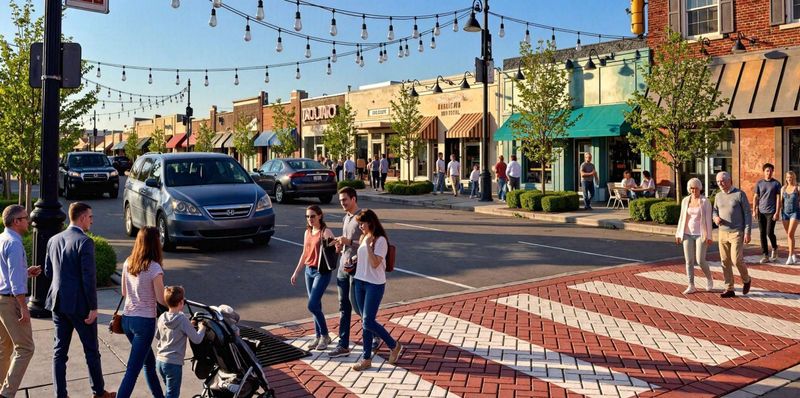
Momentum is building in Broad Ripple to find ways to move the village forward and adjust to the changing demographics and demand in the neighborhood over the next 15 years.
After months of public meetings, surveys and feedback, a Broad Ripple nonprofit created to find solutions on how to improve the village’s reputation and physical landscape unveiled its recommendations to a receptive audience earlier this week.

Friends of Broad Ripple Village, a nonprofit launched last year by longtime resident Bo Boroski to serve as a conduit between the village and the city’s economic development arm, on April 21 presented residents with a two-phased plan for improving neighborhood quality of life and attracting private investment.
Boroski’s plan addresses vast storefront vacancies, the perception of safety and security and the process of placing art in the village, among other improvements. Though the plan is wide-ranging, it still leaves some items on residents’ wish lists unanswered. For instance, the plan does not address Broad Ripple Park, attempt to shut down businesses or assign blame to any parties, Boroski said.
Broad Ripple renderings show ‘beautified’ village, new developments
The highlight of the April 21 meeting at the Indianapolis Arts Center was unveiling renderings that revealed an upgraded Broad Ripple. Half of the renderings focused on infrastructure upgrades that could be budget-friendly and achievable in the short term, while others leaned on grandiose aspirations to upgrade the village that was once the undisputed cultural hot spot in the city.
Consultants and architects focused on the main commercial strip of Broad Ripple Avenue and surrounding blocks. The renderings, which are not final, offer a glimpse into a new vision for Broad Ripple that builds on previous plans for growth and redevelopment.
The recommendations fall into two phases:
The nearly 100 people in attendance responded positively to the recommendations by CSO, an Indianapolis studio that designed landmarks such as the Indianapolis International Airport terminal and the Palladium in Carmel. When one rendering for phase two showed the main strip of Broad Ripple reimagined with festival lights and improved landscaping, an audible “wow” floated across the room.
“Phase one is the low-hanging fruit, things we think can be done in one to three years, important, high-impact stuff to make a big change quickly,” CSO principal Randy Schumacher said. “Then phase two is for the longer-term, the bigger projects that will help revitalize Broad Ripple, bring vibrancy to the streets, more businesses, more people living here, the density.”
With the recommendations public, the pressure now turns to the city, where Indianapolis Economic Development Inc. will work with the Department of Metropolitan Development to ensure economic development in the village, said IEDI chief of staff Mike Lofton.
“Our next steps are to continue to be a good partner in this public-private partnership,” Lofton said in a statement. “We look forward to helping navigate the economic development process with multiple Broad Ripple stakeholders.”
How will improvements be paid for?
How the improvements can be paid for remains a key question.
Jim Brainard, the former Carmel mayor heralded for creating the suburb’s current identity, gave several examples of how Broad Ripple could become a self-sustaining civic district, where economic activity within the neighborhood boundaries pays for improvements that residents and visitors can enjoy. The methods could help Broad Ripple move forward without relying on city coffers that have to pay for services for the city’s nearly 900,000 residents and multiple developments that span every nook and cranny of the city’s 360 square miles.
Many of the proposals he discussed would require residents to pay fees, but some tactics would rely on incentives or taxing mechanisms for new businesses entering the village. There’s also an opportunity for Broad Ripple to sponsor events, he said. He pointed to the Carmel Christkindlmarkt as an example of a revenue-generator for the north suburb.
Ultimately, it would be up to Broad Ripple leaders and residents to decide which ideas work the best, Brainard said.
In the meantime, Boroski encouraged residents to report dilapidated properties and violations around the neighborhood, doing what they can to improve the area’s image as IEDI works on the feasibility of certain development and funding mechanisms.
“I will feel good tonight when I lay my head down, I know that all of you have access to that,” Boroski said.
Alysa Guffey writes business and development stories for IndyStar. Have a story tip? Contact her at alysa.guffey@indystar.com.
This article originally appeared on Indianapolis Star: See what Broad Ripple could look like with new master plan
Reporting by Alysa Guffey, Indianapolis Star / Indianapolis Star
USA TODAY Network via Reuters Connect