SOUTH BEND — The Midwest Continental Divide Trail has officially been tabled as of earlier this month, according to county officials, but that’s not stopping residents from making sure it doesn’t come back. At least not in its current form.
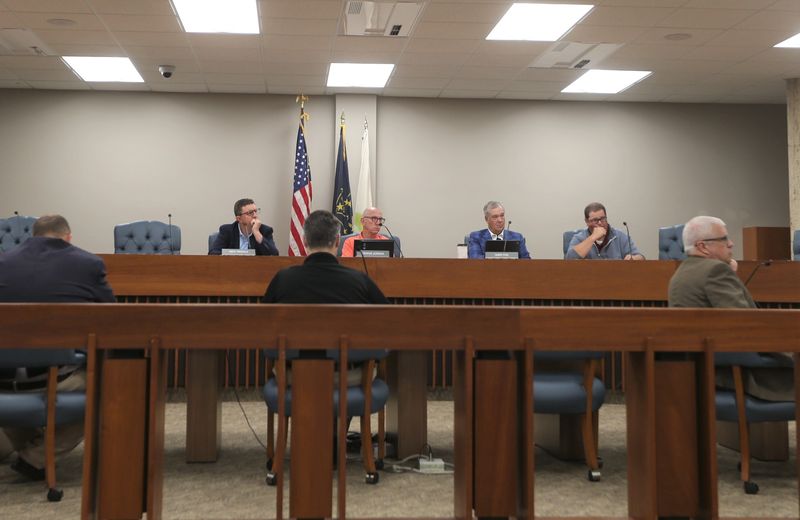
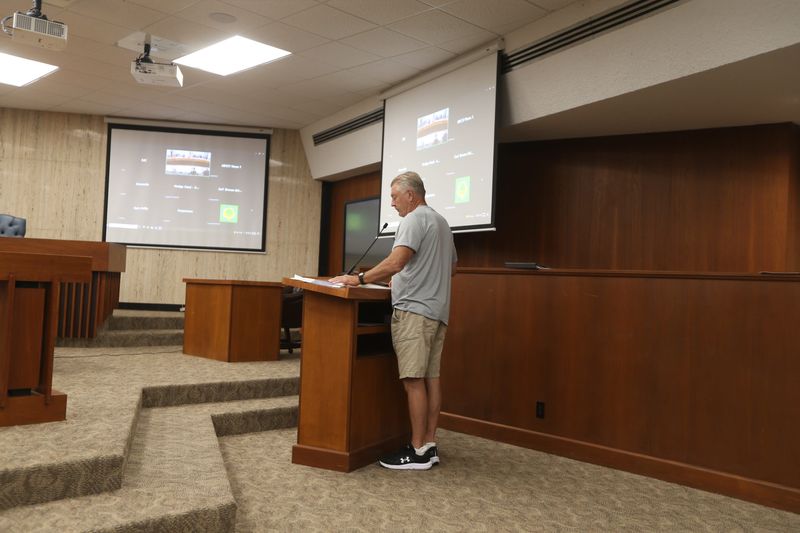
At the St. Joseph County Redevelopment Commission meeting on July 14, local farmers and County Surveyor Derek Dieter used their three minutes to speak during public comment to ask the county to care about its residents not “a group of people who want to become public sector millionaires,” as Martin Blad Farms owner Brent Burkus said.

The Midwest Continental Divide Trail was planned to be multi-use trail, defined by the watersheds of the Kankakee River and the St. Joseph River. The project was intended to connect county attractions, such as the Indiana Dinosaur Museum and Potato Creek State Park, to foster a “vibrant, united community,” according to the project’s website.
But, for many local farmers, that trail system meant possibly giving up their land without their approval.
Pulled from county council agenda
In May of 2025, Senate Bill 486 was passed to create a Midwest Continental Divide Commission. The St. Joseph County Council was prepared to approve moving forward with the formation of the commission on July 14.
That was until North Liberty residents packed the town’s council meeting on July 6 to share their concerns regarding the divide trail. Residents did not shy away from hard truths of what they said the trail could do to their livelihoods.
After the meeting in North Liberty, Board of Commissioners President Carl Baxmeyer said the county’s Infrastructure, Planning & Growth department requested that the resolution to move forward with the Midwest Continental Divide Commission be pulled off the agenda.
“Because there were so many questions raised, we felt it was prudent to delay,” Baxmeyer said.
Commissioner Rafael Morton told The Tribune he felt it was important to point out that the original idea for the Midwest Continental Divide did not come from the county but rather from the state.
In fact, Indiana House Representative Jake Teshka sponsored Senate Bill 468 and publicly supported the bill until July 5, when he shared a press release with local media revoking his advocation for the trail.
“I supported the enabling legislation on the big idea that it would be nice to have a trail similar to those in nearby regions,” Teshka said in the press release. “The devil though, as they say, is in the details. And residents have raised very legitimate concerns about the ideas that are out there.”
The press release also included quotes from County Councilman Joseph Thomas, Commissioner Tony Hazen, Commissioner Baxmeyer and Councilman Randall Figg, who all shared their thoughts on delaying the trail due to residential pushback.
Without the support of a state representative, Morton said, the project had to pause.
“I don’t see how we would have any other choice,” Morton said. “If the directive from the state level [Teshka] is saying himself maybe we need to take a pause and look at different things that are being talked about and concerns, what else would we do?”
Push against eminent domain
Local farmer Chantelle Snyder was one of a handful of residents who spoke at the July 14 redevelopment meeting against the Midwest Continental Divide, regardless of it being paused currently.
“I have read through the legislation,” Snyder said. “The eminent domain language is very disturbing to me. … I understand what’s going to happen. It’s tabled until after the election and then it’s going to pick back up again.”
Eminent domain refers to the power of the government to take private property and convert it into public use, according to Cornell Law School. On page twelve of Senate Bill 468, it’s written in the final bill that the Midwest Continental Divide Trail Commission “may exercise the power of eminent domain as provided in section 22 of this chapter and subsection (c).”
According to the Cornell Law School, the Fifth Amendment provides that the government may only exercise this power if it provides just compensation to the property owners.
Snyder became especially concerned after seeing that part of her farm fell into a “destination district,” she said. No one has approached her asking to buy the land for the project, but she worried that with eminent domain written into the legislation, the commission could just take it despite her being disinclined to sell, she said.
“This master plan talks about protecting agricultural land from development. I don’t need this to do that,” Snyder said. “I’ve been a widow managing this farm almost 10 years. I have lost track of how many people have come to my door, have called me, have sent me things in the mail asking for a data center, solar panels, battery storage, carbon sequestration. I have said no to every single one.”
But without the formation of the commission to decide where the trail would go, Baxmeyer said, no one was truly ever aware of whether the trail would end up on their property.
“There is no defined trail cutting through specific properties,” Baxmeyer said. “What the initial study did was define an area through which the trail system would be developed. Specific residents say, ‘they’re going to put a trail through my property.’ That may be what comes out of this once the commission is formed.”
South Bend’s financial role
Farm owners Burkus and Snyder, and Surveyor Dieter also all attended the South Bend Common Council meeting on July 13 and spoke during public comment about the invasiveness of the Midwest Continental Divide Trail to city officials.
When Burkus was done relaying his concerns about the project to the council, Common Council President Canneth Lee told the attendees, “this is not a city of South Bend project.”
But South Bend has contributed thousands of dollars to the design of The Midwest Continental Divide Trail, seemingly without the some members of the council’s knowledge, although at-large common council member Oliver Davis spoke out against the trail with the farmers and sixth district councilwoman Sheila Niezgodski’s husband state Sen. David Niezgodski helped write Senate Bill 468.
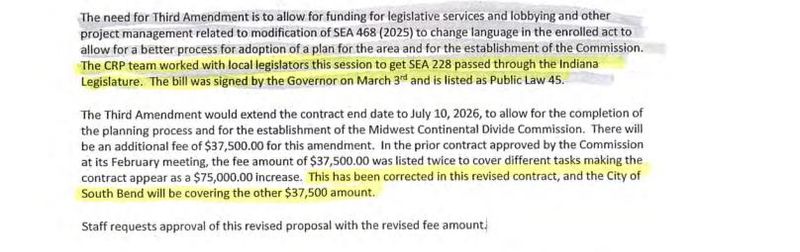
In March 2026, an amendment was passed by the county’s redevelopment commission to allow more time for the “modification of SEA 468 (2025) to change language in the enrolled act.”
Written at the bottom of the memorandum, the contract appeared to have a $75,000 increase — where the county would provide $37,500 and “the City of South Bend will be covering the other $37,500 amount,” according to the document.
The city also paid for the creation of the “Conceptual Design for the Indiana Continental Trail” document in 2021, Burkus said.
“Let me read you your own mission statement, sir,” Burkus said to President Lee, “‘to create a new identity for the area of St. Joe County and the city of South Bend around the concept of an economically viable eco-district. This new place could become a regional destination and national model for development.”
When Snyder spoke after Burkus she also brought up that the Midwest Continental Divide Commission was supposed to include a member appointed by the city of South Bend, she said. The commission would also include a St. Joseph County member, a member from the Pokagon Band of Potawatomi and one member from both the Indiana House and Senate.
Where was the money coming from?
Though South Bend did provide some funding for the trails design, a majority of the funding given to the commission was going to come in from the state. The Tribune’s reporting partner WNDU reported in 2025 that the state budget included an appropriation to the Continental Divide Commission of $2 million per year for the next 20 years.
The money would come from the compact between the Pokagon Band and the state, WNDU reported.
Once the agenda item to approve the commission was pulled from the county council agenda, Figg said he wanted to assure residents that none of the money spent on the trail so far was taxpayer money.
“There are some people saying, ‘they should fix our road.’ Well, there’s no taxpayer dollars coming out of this unless you gamble,” Figg said. “It was from the Four Winds Casino, Pokagon Band.”
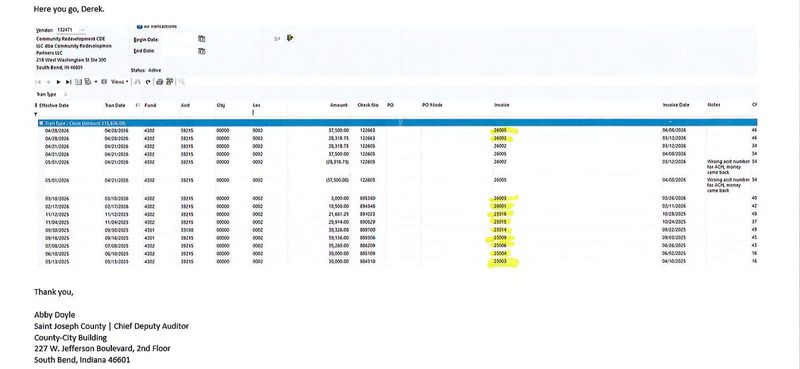
But when Dieter asked the county Chief Deputy Auditor Abby Doyle if any more transactions had been to fund the design of the trail, Doyle told Dieter via email that nothing additional had been paid since April 28, 2026, except that funding was pulled from a TIF district.
“No additional back up has been added to the claim. These claims were paid out of 4302 New Carlisle Dev Area #1,” Doyle said in the email.
New Carlisle Economic Development Area 1 is a tax-increment financing district, otherwise known as a TIF, and TIFs use taxes on future gains in real estate values to pay for public infrastructure improvements, according to a “Tax Increment Financing Toolkit” created by the state of Indiana.
There are currently 15 transactions spanning from May 13, 2025, to April 28, 2026, that pulled from the 4302 New Carlisle Economic Development Area fund, according to a document proved by Doyle to Dieter. The total shows over $400,000 taken from the TIF district.
While the future of the Midwest Continental Divide Trail is currently unknown, Figg said Teshka will likely take the bill back to the state and rework it, or as Teshka said in his press release, “adjust or repeal the enabling legislation.”
“They’re going to rework this bill, take out imminent domain [and] take out a lot of this stuff,” Figg said. “Can it come back? Maybe someday, [but] it’ll be different.”
Email South Bend Tribune business reporter Jessica Velez at jvelez@usatodayco.com.
This article originally appeared on South Bend Tribune: Leaders say Continental Divide trail is tabled, residents unconvinced
Reporting by Jessica Velez, South Bend Tribune / South Bend Tribune
USA TODAY Network via Reuters Connect


By Jessica Velez, South Bend Tribune | USA TODAY Network