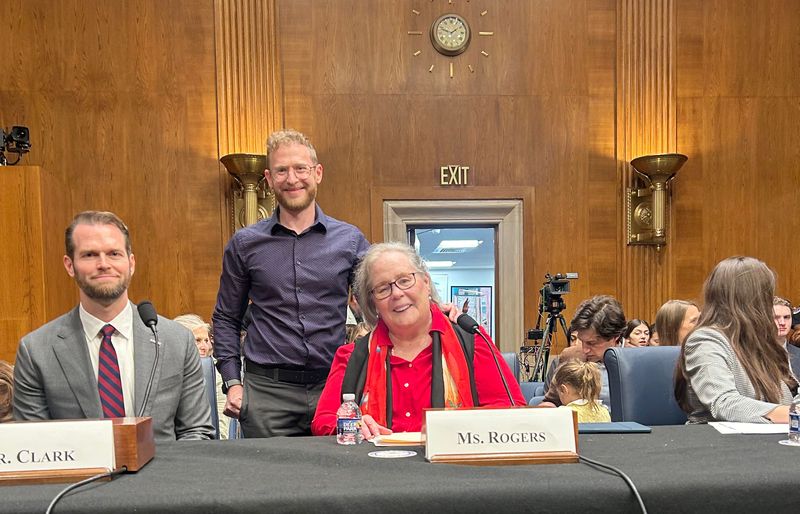
Five experts, including Carol Rogers, director of the Indiana Business Research Center at Indiana University, testified Wednesday, July 29, in front of a U.S. Senate subcommittee headed by Sen. Jim Banks about their vision for how artificial intelligence (AI) will affect workers across the nation.
Banks (R-Ind.) led the session titled “The Impact on AI on the Workforce” for the HELP Employment and Workplace Safety Subcommittee. In his opening statements, Banks told the audience and panelists that he planned to “examine the challenges that American workers face and explore policy solutions to increase opportunity, promote fairness and support families.” The session was conducted as U.S. senators prepare the AI Workforce PREPARE Act, Senate Bill 3339.

Rogers answered senators’ questions alongside fellow Hoosier Ken Clark, president and CEO of EmployIndy, as well as Dr. Liya Palagashviili, director of the Labor Policy Project at Mercatus Center at George Mason University; Johnathan Liebert, CEO of BBB of Southern Colorado; and Justin Heck, senior director of research and data production with Opportunity@Work in Canton, Michigan.
Testimony before Senate committee
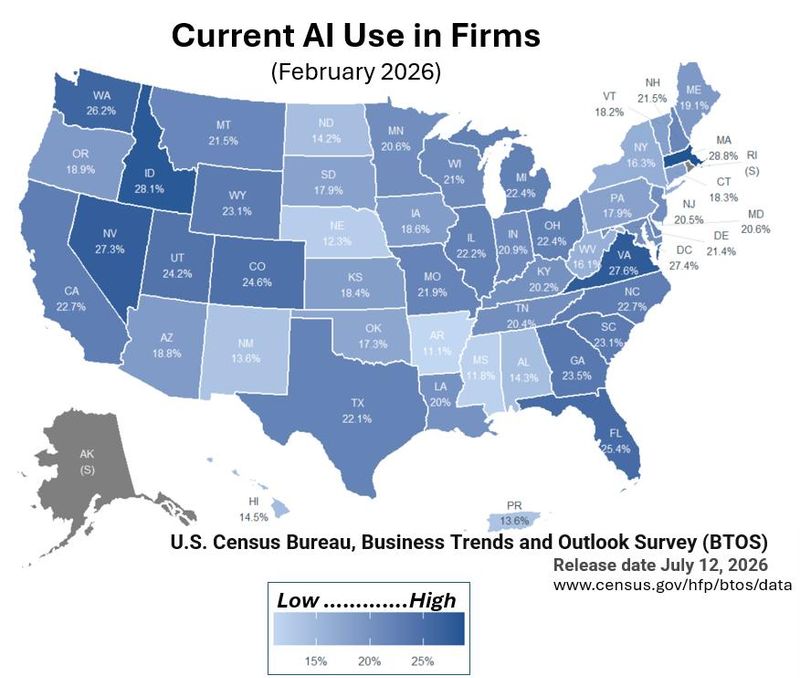
While Rogers is proud to work at Indiana University — and was excited to visit IU’s Washington, D.C., campus building — she stated that her opinions were her own. Her opening statement shared that nearly 20% of U.S. firms report they now use AI in some business function, according to Census data; that 62% of adults ages 18-64 use generative AI; and workers report spending 6.3% of their work hours using AI.
Rogers told the committee that findings of the Indiana Business Research Center show that AI’s effect on workers may not be what was predicted by some, saying the research “looks less like mass job eliminations and more like market-based repricing.” She said “some caution is warranted on AI’s impact on the workforce: “I’ve cautioned against extrapolating too much from big AI-linked layoffs at companies like Amazon and Meta. Those are concentrated in a narrow slice of large, capital-intensive firms making enormous, simultaneous investments in AI infrastructure and is now what we see broadly across the economy.”
Rogers, and others on the panel, said the impact of AI on the nation’s workforce is still emerging, and changing. Rogers said the proposed Senate bill would help by providing better forecasting, standardized reporting and research access to data to help respond to gaps in data about AI. Rogers said the tension with AI is “the acceleration of AI in the workplace puts employers and workers as well as government between a rock and a hard place — we need to modernize these systems quickly, but those systems aren’t yet ready.”
Reflections after the testimony
On Thursday, back at home in Indiana, Rogers said she thought the session went well and the committee was committed to listening and understanding about AI and its effects on the nation’s workforce.
A large part of the challenge facing Congress and the nation is defining what AI is and what it could and should do, Rogers said. Having “regular folks” understand what AI is depends on their perspective — if they ask Google’s Gemini questions, get information from OpenAI ChatGPT or query Microsoft Copilot.
“Most of us know what Copilot is … and yet for many of us, it’s just a name,” Rogers said, adding that people know the AI can help them answer questions.
The problem, she explained, is after AI answers are given, people expect it to be accurate and sometimes it’s not. “Many people may not look at what it says after it gives you an answer,” she said. “AI is not always accurate. Be sure to check,” which can start with the footnote AI provides on where it found its answer.
“In my work as a researcher, of course, I check any results I get from any of these AI tools and I have frequently found mistakes. It’s like anything: trust but verify.”
One of the strengths of AI is its speed, Rogers said. What most people don’t realize it that AI has been amassing a vast databank of knowledge of people for the past 15-20 years. “It knows what people are asking for. It knows where they are located” and will triangulate a person’s location to give it the answer it deems most appropriate. She said in many ways, everyone using AI have been “test subjects.”
Thinking back on her testimony, Rogers said the committee and panelists were talking mostly about workers being displaced. “We also need to talk about the employers,” she said, adding companies should have a plan for governing AI with rules of conduct for employees. “That’s one way a business and the staff are able to work with AI, with company ground rules.
Rogers believes Senate Bill 3339, which has bipartisan support in Congress, is needed and that the nine senators who queried the panel were well-informed, asking relevant questions. She reflected on how the technology advancements of the past replaced some workers in occupations such as making buggy whips, but created new jobs — something she anticipates will happen with AI. The bill will help collect data on how businesses deal with AI, how it’s used as a tool to reduce labor needs and how it increases productivity, or not. That information can help “all of us to understand what it is doing to the workforce.”
“I think most of my colleagues at the table all landed on short-term, there will be displacements,” eliminating some workers in certain companies. But longer-term Rogers believes AI will reallocate jobs for workers, not replace them all.
“We need to create an early warning system, in affect, about the impact on the workforce,” Rogers said.
Reflecting on her time on the panel, Rogers praised Banks for listening to everyone in the room, which she said was overflowing with people.
“He made himself available to the people in the room, not just the panel.” As one of three Indiana residents involved in the session, Rogers said, “It was a wonderful testament to being a Hoosier.”
Contact Carol Kugler at ckugler@heraldt.com.
This article originally appeared on The Herald-Times: IU’s Carol Rogers 1 of 5 panelists at Senate hearing on AI, workforce
Reporting by Carol Kugler, The Herald-Times / The Herald-Times
USA TODAY Network via Reuters Connect
By Carol Kugler, The Herald-Times | USA TODAY Network