I didn’t plan on spending so much of Friday’s class watching the flooding with my middle school science students. But the questions just kept coming.
“Wait, they just build roads on dirt?”

“How does rain kill a tree if plants need water to live?”
It’s too bad I hadn’t gotten to erosion yet because the next question would take a few more classes to answer: “Why doesn’t the water just go into the ground?”
Well, it used to. A quarter of pre-colonial Indiana was covered in bogs, swamps and marshes. These wetlands are often compared to sponges. They store millions of gallons of water per acre, and they can singlehandedly shrink floodplains, slow erosion and lower the crests of rising rivers.
Indiana was once littered with wetlands. The Grand Kankakee Marsh, known as the “Everglades of the North,” snaked across northwestern Indiana. The Great Black Swamp stretched from Fort Wayne to Lake Erie. Thousands of smaller peat bogs, like Bacon’s Swamp in Indianapolis, played critical historic functions, including as part of the Underground Railroad.
All of that changed in the early days of statehood. Like many other states spurred on by federal funding, swamps were drained to make way for agriculture. Creeks like Pogue’s Run were buried under the impermeable surfaces of cities. And rivers were dammed and channeled to suit the whims of roads and railways. Indeed, control of water was often viewed as part of “man’s triumph over nature.”
Our ancestors would argue that these changes helped the growth and development of the state. After all, we wouldn’t be known for corn if we didn’t have solid land to grow it on.
But terraforming has consequences, many of which we are now feeling. Flooding has worsened as spongy land has been swapped for concrete and asphalt. Wetland destruction threatens dozens of native species. Healthy wetlands also naturally control mosquito populations by nurturing their predators. Instead, we are now dealing with rising rates of West Nile virus across the state, mostly driven by mosquitoes breeding in stagnant water in developed areas.
Our forefathers made some shortsighted choices, perhaps with the best of intentions, which have burdened us with new challenges. No surprise there. But when you know better, you do better, right?
Sadly, it seems Indiana prefers to keep riding the waves of ancient failures. In 2021, we rolled back our already meager wetland protections, and then we did it again in 2024. Even as the federal government makes its own cuts and the Clean Water Act lies gutted, our wetlands program was somehow still found out of compliance, collecting money and accomplishing too little with it. Meanwhile, the last of our wetlands stand to be paved over by data centers.
The fact is that Indiana has no plan for its water, and it shows.
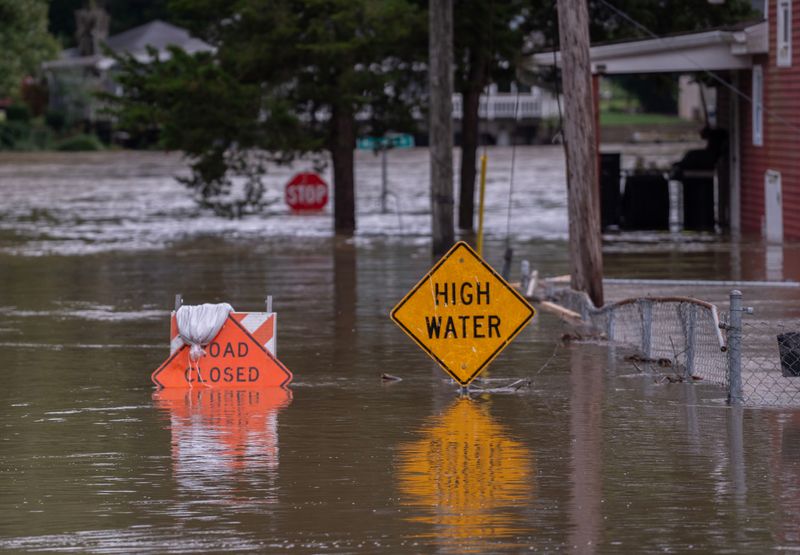
We now wake up in a state with hundreds of Hoosiers displaced, homes and businesses inundated, dozens of roads and bridges washed away and millions of dollars of damage that we can only hope will be covered by insurance or government aid. We can’t change those facts today. But we can do quite a lot to prevent this from happening again, no matter how much rain Mother Nature throws at us.
We can restore and protect the wetlands we already have. We can add mini-wetlands that carry the same benefits in strategic places. We can even get creative and employ constructed wetlands in the place of industrial drainage ditches.
But whatever we do, the fact remains that historic storms like these are getting more likely every year. Doing nothing isn’t an option. We need a water plan, with wetlands at its center.
Ronak Shah is a middle school science teacher in Indianapolis.
This article originally appeared on Indianapolis Star: Indiana keeps draining wetlands. Now we’re drowning in floods. | Opinion
Reporting by Ronak Shah, Opinion Contributor / Indianapolis Star
USA TODAY Network via Reuters Connect

By Ronak Shah, Opinion Contributor | USA TODAY Network