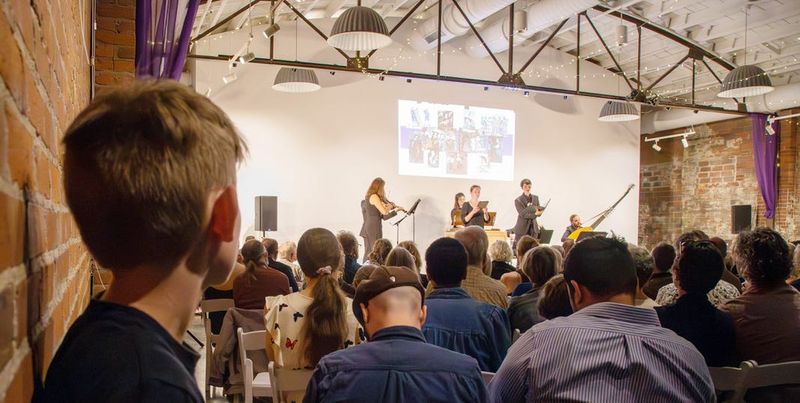
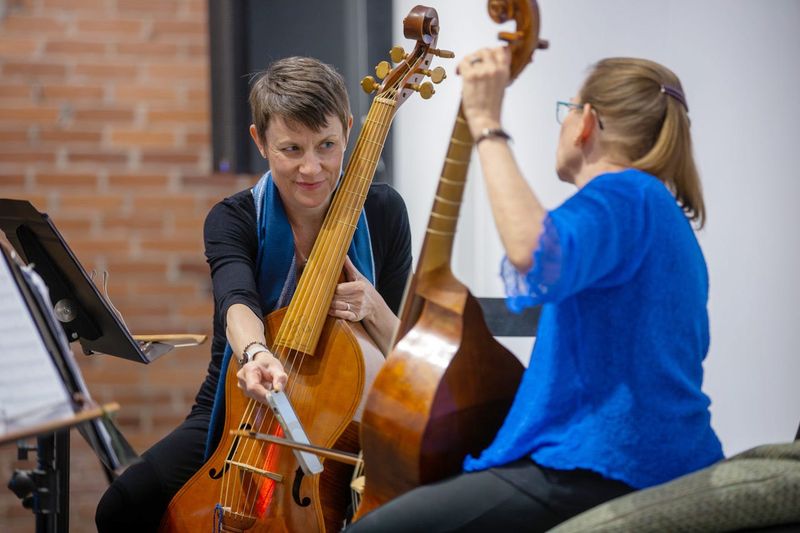
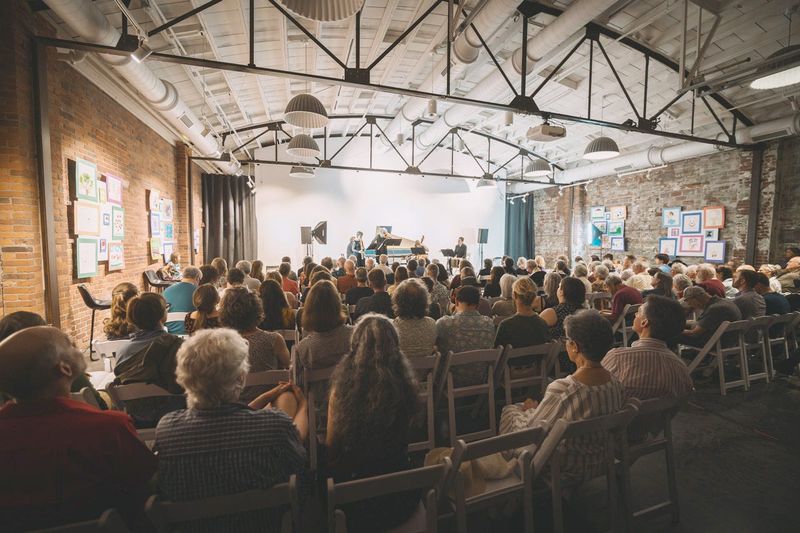
Covering three continents and four centuries, Bloomington Early Music Festival 2025 is devoted to early music of Black Africans and their descendants. Only during the past few decades have many of these musical accomplishments received notice. “Early Music in the African Diaspora” will take attendees on a seven-day tour of African indomitability and talent May 25-31 in a variety of venues.

A happy hour joins the roster of six live and four virtual concerts paired with pre-show discussions, five workshops, a youth performance and a community showcase, where Bloomington musicians get invited to the stage. It’s the first early music festival dedicated to exploring music by and for Black Africans and their descendants, as the Bloomington Early Music Festival (BLEMF) tries something new this year. The public will learn about the many ways Africans’ traveling and relocating have contributed to early music. The entire festival is free of charge.
“Ours is, to our knowledge and everyone we asked in the performance and scholarly fields, the first-ever early music festival focused on music of the African Diaspora — defining early music as music from medieval through mid-19th century,” said Suzanne Ryan-Melamed, BLEMF’s president and CEO and the person who came up with the diaspora idea.
Kicking off the festival are a pre-concert talk and the opening concert, by Indianapolis’ Alchemy Viols May 25 at 6:15 p.m. The week ends on the evening of May 31 at Bloomington’s First Christian Church, with two concerts and a talk. In between, there are activities such as baroque dance, African art and mask making, African drums, tavern hopping and how to make music books. Go online to blemf.org/festival2025 for the festival schedule.
Early 16th century to mid 19th century
The program includes composers and musicians of African descent in Europe and the Americas from the beginning of the 16th century to the mid 19th century. “There’s one dip into the 20th century, to go very much against our usual rules!” Ryan-Melamed said.
Most of these musicians were enslaved or descended from enslaved Africans. But some, particularly in Europe, were not. Ryan-Melamed said those ancestors would have been African aristocrats, traders or missionaries coming to Europe before the rise of the global African slave trade, initiated by the Portuguese in 1501.
“There is some question about certain musicians who appear in the historical record in the Holy Roman, English and Spanish royal courts. Absolutely they faced prejudice, marginalization and racism, but they were not enslaved or brutally treated as those in the colonies were.”
Traditional West African music influenced some of the music BLEMF chose for this festival; however, they are showcasing Western art music performed, composed and affected by Afro-Europeans and African Americans (enslaved and manumitted), in addition to traditional music that developed during slavery in the American colonies.
For those wanting to hear and learn about music on the African continent, there will be an African drumming workshop led by Dan Kusaya, a local Bloomington musician and music educator.
“I recommend this highly,” Ryan-Melamed said. “And the ‘African Art & Mask Making’ workshop is also African-continent focused, not diaspora.
“I would not characterize our concert audiences as any more ‘white’ than any other event around town — our demographic reporting actually shows a slightly higher proportion of people of color in our audiences than the census reports for Bloomington itself. But this music is for everyone.”
What is the African diaspora in general?
Researchers began calling the population movement of African people the “African diaspora” in the 1950s. It includes all global communities descended from the historic migrations of peoples from Africa since the 1400s (National Library of Medicine). This means it differs from pre-historic people leaving Africa, which resulted, many scholars believe, in people living all over Earth.
The trans-Atlantic slave trade caused the biggest immigration of African people to the New World from the Old World. Some use “African diaspora” to mean only the trans-Atlantic slave trade. This definition highlights the impacts of Blackness, slavery, location, colonialism and racism in propping up the trans-Atlantic slave trade and is why some call the “African diaspora” the “Black diaspora.”
As BLEMF organizers pondered doing the “Early Music in the African Diaspora,” they wondered if they could find enough content from the early-music genre to produce a weeklong festival.
“But then one day two summers ago,” Ryan-Melamed said, “I thought, what if I just write down what we know of now?” There was plenty: musicians and historical events BLEMF members had read about, current early music groups and individuals, people who have recovered this early music, plus lullabies, spirituals and work songs.
“It was clear this was more than feasible. And when we discussed it in our board meeting, it was clear it had to happen now.”
Happy Hour: ‘Tavern Hopping Through Time’
This marks the fourth year of “Tavern Hopping Through Time” ‘with BLEMF. Happy Hour will feature a screened performance of a concert theater work, “The Chevalier,” by Bill Barclay, a staged and costumed play with full orchestra and violin soloist, Brendon Elliott, playing Joseph Bologne’s music. Barclay, currently based in New York City, worked for nearly a decade as music director at Shakespeare’s Globe in London. Bologne was a master violinist whose talents survived racism and slavery laws in late 1700s Paris. One of the first known classical music composers of African descent, Bologne’s works include operas, symphonies and sonatas (New York Public Library).
Should attendees (age 21 or older only) prefer not to imbibe — and avoid the $15 charge for alcohol — the (free) show begins at 5 p.m. May 30 at Bloomington’s Waldron Arts Center, at 122 S. Walnut St.
‘Making Music Books’ in Lilly Library: Will we get to touch stuff?
“Making Music Books” is another of BLEMF’s annual workshops; it doesn’t directly link to the African theme. Lilly Library staff will demonstrate its Gutenberg replica printing press. Next, festival participants will go hands-on. BLEMF has offered paper making and marbling, and last year, Kirby Haugland led an event with ink and quill making. Sharp knives are needed to make the quill points, so Haugland carved quills ahead of time for the workshop kids, preparing a different table for adults. A big success, the event occurs this year, too.
New walking tour, ‘Walk the Walk’
Wear comfortable shoes for “Walk the Walk” on Memorial Day, May 26, at 2 p.m. The tour guide, Nia I’man Smith, Ph.D candidate in ethnomusicology, founded “The Black Connection” and hosts “Sonic “Blacknuss” Radio on WFHB 91.3FM. Smith has made sure the tour moves downhill not up and that there are benches wherever she plans to stop and talk. Walkers will take a look at the long history of Bloomington’s Black residents from the moment of its founding.
“We are collaborating with the city of Bloomington and the Dr. Martin Luther King Jr. Birthday Celebration Commission on putting this more extensive tour together,” Ryan-Melamed said, “and it will be available on the city website as well as our own … I can’t recommend this (tour) enough.”
Tour begins at the Banneker Center, 930 W. Seventh St., and should last about two hours, ending at Peoples Park, 501 E. Kirkwood Ave.
If you go
WHAT: Bloomington Early Music Festival tries something new this year: “Early Music in the African Diaspora,” a weeklong event, including activities and concerts, some include pre-concert discussions. There’s sword-fighting, dancing, mask making, creating music books as well as lots of music.
COST: Free to the public, except a $15 alcohol fee for those who order drinks at “Tavern Hopping Through Time” (May 30).
WHEN: May 25-31
WHERE: Various BLoomington locations. Visit https://blemf.org/festival2025 to check out exact details.
This article originally appeared on The Herald-Times: Free festival celebrating early music focuses on African music, talent, art and culture
Reporting by Connie Shakalis / The Herald-Times
USA TODAY Network via Reuters Connect