EVANSVILLE — On Dec. 10, an Evansville police officer conducted what has become a routine part of the job: remotely tapping tens of thousands of vehicle-tracking cameras installed across Evansville and the United States in search of a stolen car.

What was not routine is that within weeks, the detective’s name, the reason for the search and other data pertaining to still-active investigations would leak to the open internet.
It stood alongside more than 10,000 other searches of the Flock Safety camera network by Evansville police officers and millions of other searches conducted by law enforcement departments across the country.
The Evansville Police Department did not authorize any of the records for public disclosure, an official said, but the interconnected nature of Flock Safety’s nationwide network nonetheless left the data exposed, according to researchers who have long warned the system lacked adequate security protocols.
More than 74 million vehicle location searches by Flock-equipped U.S. law enforcement agencies are now hosted on a website called, perhaps unsurprisingly, HaveIBeenFlocked.com, which claims to allow users to type in their license plate number to reveal whether investigators have at any point sought to track or locate their vehicle.
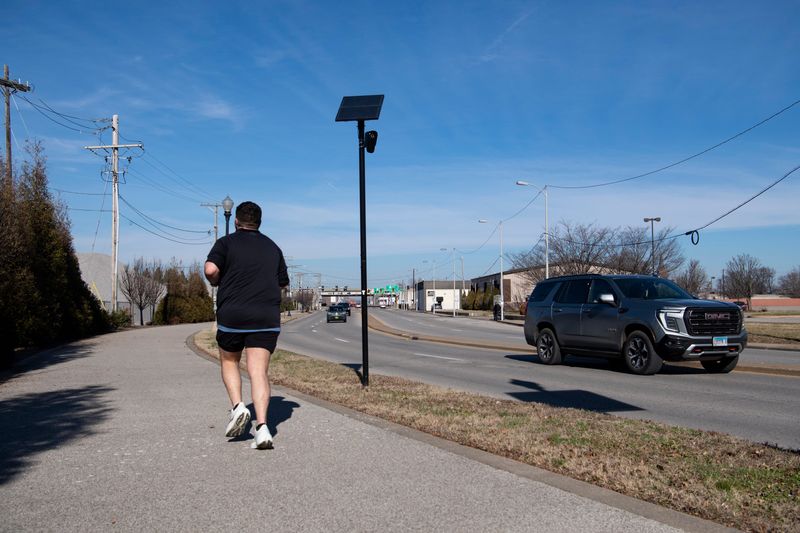
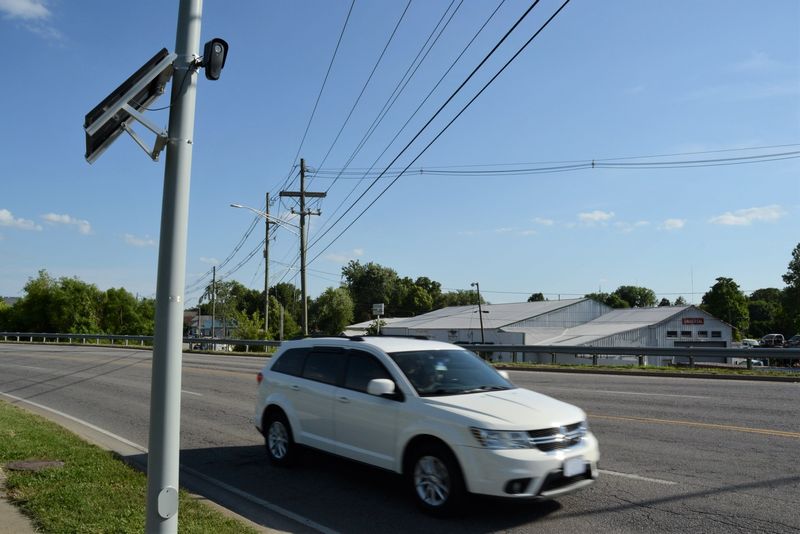
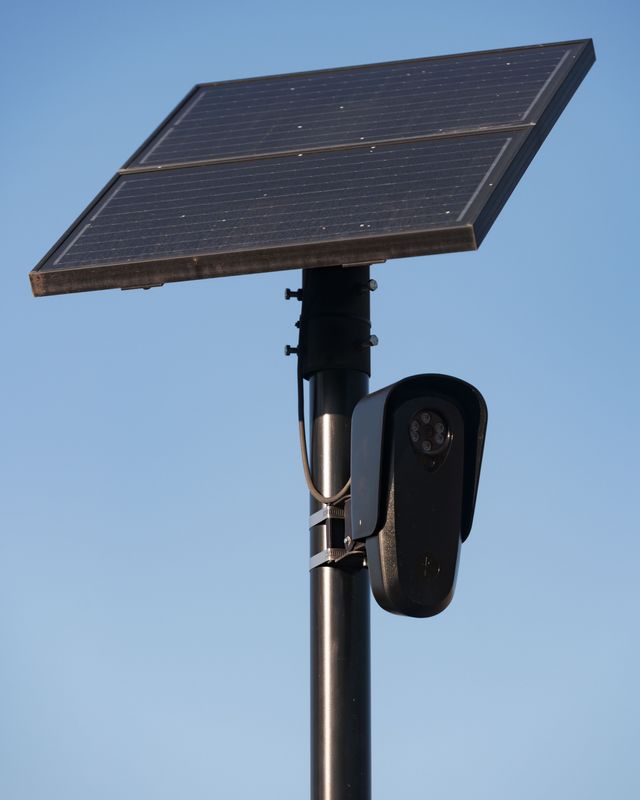
Flock Safety cameras – small, solar-powered devices affixed along city streets and highways – leverage machine learning to track all passing vehicles and allow officers to receive real-time alerts when a specific vehicle passes by a camera. The City of Evansville and Vanderburgh County lease 153 of the cameras, together comprising a small hub in a nationwide network of more than 90,000 which Flock Safety touts as a cutting-edge and highly effective crime fighting tool.
Sgt. Patrick McDonald, who oversees the Evansville Police Department’s use of Flock Safety cameras, said in a statement to the Courier & Press that the city maintains “complete control” over its data.
“The city’s use of Flock has had a legal review by a city attorney and the city’s use is in line with Flock Safety’s terms and agreements,” McDonald said.
Both the city and the county allow thousands of Flock-equipped agencies in the United States to search local cameras with few restrictions. That includes searches by outside agencies on behalf of federal agents carrying out the Trump administration’s immigration crackdown, which has prompted some Democratic-led cities to switch off data sharing features or to pull the plug on Flock cameras entirely.
The Courier & Press reported last year that nationwide searches of the Flock Safety network on behalf of U.S. Immigration and Customs Enforcement, better known as ICE, had queried cameras in Vanderburgh County. The Sheriff’s Office and Evansville Police Department maintain that local officers and deputies have never conducted immigration-related Flock searches.
FBI, Flock Safety called website a threat to officer safety
The FBI dubbed the haveibeenflocked.com incident a threat to officer safety, with federal officials writing in an intelligence bulletin that the interconnected nature of the system, coupled with mistakes by some local agencies within the network and conflicting public records laws, appeared to have put sensitive law enforcement data at risk.
The site, which Flock Safety has tried but thus far failed to shut down, includes analyses of thousands of Evansville-related records, including reports showing on which days city police conducted high volumes of searches and, at least through mid-December, which detectives made those searches — information the FBI singled out as particularly troubling.
“This poses a significant officer safety risk to law enforcement personnel because suspects can determine if they are the target of a criminal investigation and potentially retaliate against law enforcement and-or those cooperating with law enforcement,” the bulletin reads.
Flock Safety also appears to have deemed the data disclosures a threat to officer safety, writing in a letter to Have I Been Flocked’s creator, Cris van Pelt, that the site “poses an immediate threat to public safety and exposes law enforcement officers to danger.”
Asked about the data, McDonald said it appeared much of it could have been lawfully obtained under public records laws. But, the website includes a bevy of information the Vanderburgh County Sheriff’s Office redacted from Flock Safety records the Courier & Press requested in July.
Citing exemptions to Indiana’s Access to Public Records Act allowing law enforcement agencies to block the release of records pertaining to active investigations, the sheriff’s office redacted the reasons investigators listed for Flock Safety searches from an audit of the system it provided to the Courier & Press as well as the names of personnel performing the searches, license plate numbers, technical information and metadata.
Asked whether the city could assure the public more sensitive data collected by the system was safe, including the travel history of Evansville motorists, McDonald replied that Flock Safety cameras simply collect “the same information you could obtain by standing on a public sidewalk and writing down license plates of passing cars.”
“That contains no identifying information,” he said.
The trove of data ending up on a public website was not the result of a hack or data breach, according to Flock Safety officials. Local law enforcement agencies around the country mistakenly released tens of thousands of un-redacted Flock Safety records – including license plate numbers and, in the case of Evansville, at least six “partial names,” McDonald said – while fulfilling lawful public records requests, according to security researchers and Flock Safety officials.
Chad Marlow, a senior policy attorney with the American Civil Liberties Union, argues the incident shows local governments have less control over how Flock Safety data is used than officials may think so long as nationwide data sharing is enabled. He points to reports by the ACLU, the Electronic Frontier Foundation and others showing that in 2025 U.S. law enforcement agencies conducted nationwide searches of the Flock network pertaining to anti-Trump protest activities, immigration enforcement and, in at least one case, a Texas woman who had an abortion.
“They don’t have complete, lock-down control over the data they’re collecting,” Marlow said.
In public statements and in communications with police, Flock Safety officials have said they instituted new features and safeguards to protect sensitive police data, such as removing the names of individual officers from records that could be subject to public disclosure.
McDonald said Flock Safety told customers late last year that it would “help agencies with redaction capabilities” and provide support for handling public records requests with more precision.
Should Evansville follow other cities’ lead and limit Flock data sharing?
The accidental release of the un-redacted records by police in Illinois, Arkansas and elsewhere exposed the Evansville Police Department’s search history to the open internet in large part because the city integrates its Flock network with the nationwide system with few restrictions, according to officials and researchers.
The City of Evansville opts-in to national data sharing, a feature which is not enabled by Flock Safety’s software by default, the company has said. According to public records, the system gives local governments the ability to limit data sharing to agencies within a certain geographic zone or to a pre-approved list in addition to opening a local camera network up to thousands of outside agencies.
McDonald has said the Evansville Police Department opted for the largely unrestricted setting because it grants city police the ability to conduct their own nationwide searches. Without that feature, he and other local law enforcement officials maintain they would lose out on a valuable crime-fighting tool.
Vanderburgh County Sheriff Noah Robinson, a Democrat, voiced a similar position last year when asked about the potential for nationwide immigration-related searches to tap local Flock cameras.
“That feature is reciprocal and has proven invaluable to us in tracking criminal gangs that operate over large areas of the country,” Robinson said of nationwide data sharing. “One early example were a group of ATM burglars who were tracked on Flock operating in other states.”
Diana Moers, Vanderburgh County’s top prosecutor, has likewise praised the cameras as a powerful investigative tool. In a statement detailing her views, Moers brushed off criticism levied by some privacy advocates that Flock Safety’s sprawling network effectively amounts to a “surveillance state.”
“The law dictates that generally you have no reasonable expectation of privacy outside of your home,” Moers, a Republican, said. “While driving your car on the road, you must display a license plate for review by all law enforcement on the roadways. Those skeptical of Flock cameras as a ‘surveillance state’ are often complaining about the same from their cell phones — the largest, most comprehensive voluntary tracking and data-gathering device known to humankind.”
The position of Evansville and Vanderburgh County law enforcement is not universal among Flock-equipped agencies, and as reports detailing immigration-related searches put a spotlight on data sharing last year some jurisdictions sought to rework policies and, in some cases, cancel contracts.
In Spokane, Washington, officials limit access to search their Flock Safety cameras to agencies within the state. Spokane County Sheriff John Nowels said his agency “locked down” their data after a Texas law enforcement officer conducted nationwide searches of the Flock system for a missing woman who had an abortion. More than a dozen other cities have reviewed or adjusted data access settings to limit what officials said were searches that violated local policies.
On Jan. 14, Santa Cruz became the first city in California to cancel a Flock Safety contract, citing reports that the city’s data had likely been accessed by out-of-state agencies conducting immigration enforcement-related searches. The cancellation followed others by cities in Arizona, Massachusetts and Illinois, among other states.
After the Courier & Press reported that agencies outside of Evansville queried Flock Safety cameras in Vanderburgh County on behalf of ICE and the Department of Homeland Security, Evansville Police Department officials said they would continue to enable nationwide data sharing, citing the need to fight cross-jurisdictional crime.
In response to questions about the city’s policy, Evansville City Council President Ben Trockman said “recent public concern” had prompted “several council members” to meet with Evansville Police Chief Phil Smith and Robinson to discuss the issue.
“Both have been adamant — they have not directly shared any information with federal authorities as it pertains to immigration,” Trockman said in a statement. “I take both Chief Smith and Sheriff Robinson at their word. Does that mean I don’t have concerns with the federal government’s hard-line immigration policies? No — I do have concerns… For that very reason, Council should continue deepening our understanding of law enforcement tools like Flock cameras, because technology like this will only play a bigger role in the future of policing.”
Marlow said local governments who limit Flock Safety real-time data sharing to nearby agencies maintain greater control over local data while still retaining the ability to investigate complex criminal cases.
“When you collect data like this, it often ends up in the hands of people you did not intend, whether that is random people on the internet, other city law enforcement agencies, other state law enforcement agencies, federal law enforcement agencies, international law enforcement agencies — all those things fall into the bucket of people who regularly get access to (Flock) data,” Marlow said.
The FBI has likewise encouraged Flock Safety’s customers to limit nationwide searches to “mitigate the risk of information being released by an outside agency,” citing the potential for more disclosures of law enforcement data.
A thus-far small local movement seeks removal of Evansville’s Flock cameras, citing cancellations elsewhere
Debates over how Flock Safety cameras are used and how data is shared across a deeply polarized country show no sign of fading anytime soon.
In Olympia, Washington, lawmakers are considering legislation that would curtail how police and private security use Flock Safety cameras after a judge there ruled that nearly every image captured by one could be subject to public disclosure under the state’s records laws, creating the worrying prospect of stalkers tapping publicly funded and operated devices to surveil their victims.
“The cameras would be banned outside of hospitals, schools, food banks and churches,” InvestigateWest reported this month with regard to the legislation. “They couldn’t be used for immigration enforcement or to track protests. And crucially, only academic researchers would be allowed to make public records requests for the data.”
McDonald said Indiana’s Public Access Counselor, who issues opinions on public records matters, had not yet issued guidance concerning Flock Safety imagery. The Courier & Press has a pending records request with the Evansville Police Department for images captured by a Flock Safety camera.
In Washington D.C., Sen. Ron Wyden, D-Oregon, and Rep. Raja Krishnamoorthi, D-Illinois, urged the Federal Trade Commission to investigate Flock Safety in November after more than 35 Flock log-in passwords were reportedly stolen from local police and then listed on a public database in 2024 before going up for sale on a Russian cybercrime forum.
In a letter to the FTC, Wyden and Krishnamoorthi asserted that Flock had taken a “cavalier attitude towards cybersecurity” and exposed Americans “to the threat of hackers and foreign spies.”
Flock Safety has maintained it has “never been hacked,” and it does not consider the haveibeenflocked.com incident to have been a “leak.”
“Security is never done,” Flock CEO Garrett Langley said earlier this month. “It’s a commitment. And at Flock, it’s one we invest in every day.”
In Evansville, discussions over the cameras have largely stayed out of mainstream local politics. Lavender Timmons, a local progressive activist who heads up the substance use advocacy organization the Evansville Recovery Alliance, hopes to change that.
She penned a petition urging city leaders to cancel its contract with Flock Safety and with Clearview AI, the company behind the city’s controversial facial recognition technology. The cameras burden the city with unforeseen liabilities, Timmons argues, and have limited empirical data supporting their effectiveness as a crime-fighting tool.
“These systems collect data on everyone, not just suspects under investigation,” the petition states, in part. “Flock shares (license plate camera) data with hundreds of agencies – including law enforcement outside Indiana & U.S. Immigration Enforcement – without local oversight.”
As of Tuesday, Timmons’ petition had garnered a little more than 200 signatures.
In surveying the array of policy fights swirling around surveillance technology, Marlow said local leaders have an obligation to review how their cities’ Flock Safety cameras are used and thinks that debate should play out in public view.
There are really two debates, Marlow argues: “The first is, should the city be using automated license plate readers? The second is, should they be using Flock automated license plate readers?”
“I will concede there maybe should be a discussion around whether (license plate cameras) should be used, but there’s no justification for using Flock cameras, which are exposing the location records of anybody in the city to the entire nation, including some law enforcement agencies whose philosophies are not, I think, aligned with local philosophies.”
In response to a question about how Evansville officials had monitored reports that led other similarly situated cities to review Flock Safety policies and contracts, McDonald said the Evansville Police Department conducts a cost-benefit analysis on an ongoing basis.
And by answering questions for this article, McDonald said the city demonstrated that it is “proactively and publicly responding to public reporting on Flock.”
Houston Harwood can be contacted at houston.harwood@courierpress.com.
This article originally appeared on Evansville Courier & Press: Evansville Police Department’s Flock camera searches posted online
Reporting by Houston Harwood, Evansville Courier & Press / Evansville Courier & Press
USA TODAY Network via Reuters Connect