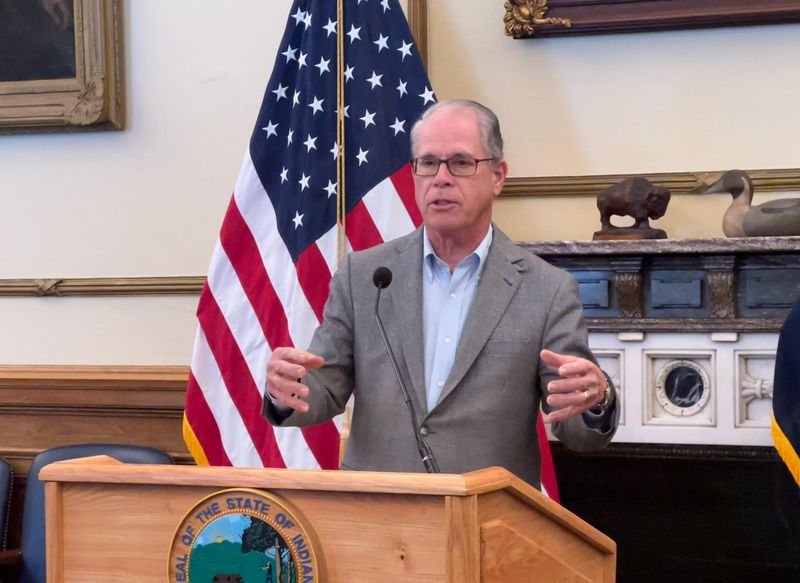
Gov. Mike Braun wants you to know that he’s doing things differently when it comes to tackling energy affordability, which he describes as one of the biggest issues facing Hoosiers right now.
At a press conference March 9, Braun touted the steps he’s taking to lower soaring electric bills. He’s replacing state utility regulators with “ratepayer conscious” individuals, he said. And he’s approved legislation that will restructure how electric companies can charge their customers.

While these solutions aren’t immediate fixes, Braun said he’s convinced they will be “transformational.”
“There’s a new sheriff in town,” he said.
Not everyone is convinced his approach will do much to lower electricity bills.
Braun blames rising rates primarily on inflation, but others like state Rep. Carey Hamilton, D-Indianapolis, a member of the House Committee on Utilities, Energy and Telecommunications, point to a state history of legislation that allows utilities to “cash in” on their investments.
The newly reorganized Indiana Utility Regulatory Commission (IURC) is launching a formal inquiry into utility affordability later this month, but Hamilton said the commission will need to convince legislators to undo policies she believes helped lead to the affordability crisis.
Why are bills going up? It depends on whom you ask
Braun blames big electricity bills on the country’s recent run in with inflation.
“The reason we’re in this pickle is from the prior administration that gave us 25 percent inflation over three years,” he said.
A 2025 Lawrence Berkeley National Laboratory study showed that average electricity prices for retail customers (a combination of residential rates an average Hoosier might pay and the lower commercial and industrial rates businesses and manufacturers pay) rose 23% from 2019 to 2024 nationwide — a trend that tracks inflation.
The same study also noted that residential customer rates alone have skyrocketed. The study attributes this discrepancy to “cost allocation decisions by utilities and their regulators.”
Hamilton sees such decisions backed by Indiana legislation dating back over a decade.
In 2013, legislators gave utilities the power to charge consumers for costs stemming from improvements to transmission, distribution and storage systems, which are called TDSIC charges. Then in 2022 and 2023, the General Assembly approved legislation that allows utilities to charge customers for the construction of projects like natural gas plants while they’re built — an incentive once reserved for clean energy projects like wind or solar.
Hamilton said she would like to see the state address the legislation she believes has led to steep electric bills for Hoosiers.
“Over the last several years, significant pieces of utility legislation that support the investor owned utilities have passed with Republican leadership,” she said at a press conference on Mar. 9. “That really ties the hands of the IURC.”
IndyStar’s environmental reporting is made possible through the generous support of the nonprofit Nina Mason Pulliam Charitable Trust.
Sophie Hartley is an IndyStar environment reporter. You can reach her at sophie.hartley@indystar.com or on X at @sophienhartley.
This article originally appeared on Indianapolis Star: Braun says he’s making energy affordable but will bills decrease?
Reporting by Sophie Hartley, Indianapolis Star / Indianapolis Star
USA TODAY Network via Reuters Connect