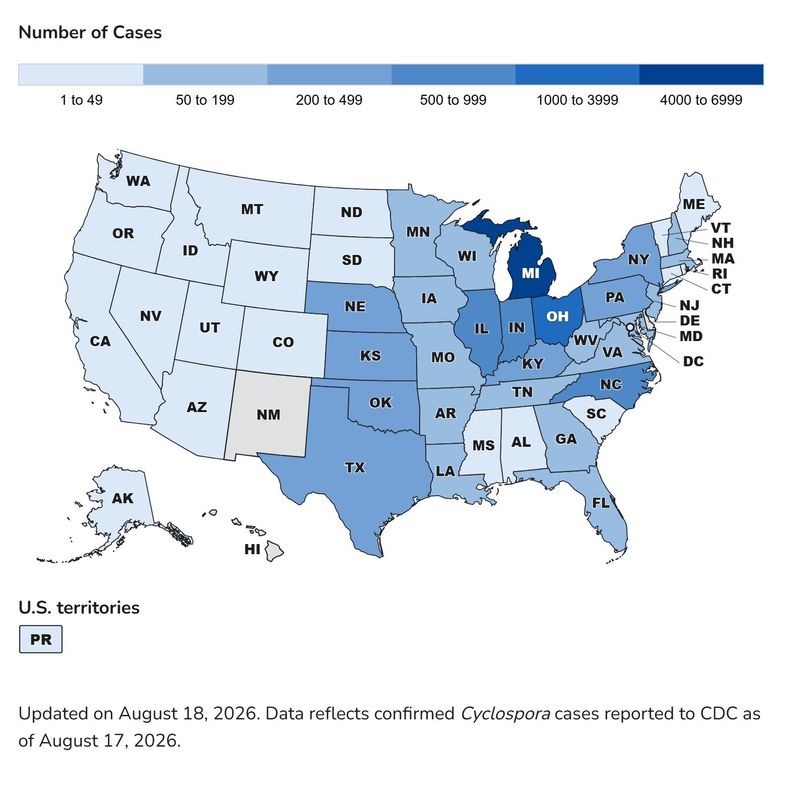
The rate of new cyclosporiasis cases is slowing down, but weekly numbers are still rising as the Centers for Disease Control and Prevention (CDC) continue to report lab-confirmed infections. As of Aug. 18, the CDC has now reported 15,716 cases of the foodborne illness that has been causing frequent, “explosive” diarrhea as well as nausea and cramps that can last for weeks.
The rate of increase is slowing as reports move farther from the largest outbreak’s most volatile period. The CDC’s latest weekly update added 1,821 cases, compared with the addition of 3,427 in the previous report.

The largest outbreak, discovered in 17 states, was linked to iceberg lettuce grown in Mexico and distributed by California-based Taylor Farms that was pulled from store shelves and restaurants weeks ago. Any lettuce purchased by consumers has likely long since become inedible and been discarded. The Food and Drug Administration is also investigating smaller outbreaks around the country.
Florida has reported 407 cases of the stomach-churning infection across 43 counties, between May 1 and Aug. 8. No deaths have been reported. Florida’s cases have not been linked to any specific outbreak.
Reported cases in the states are much higher than the CDC’s weekly update, especially in Ohio and Michigan, as state numbers include both probable and confirmed cases and have a faster reporting turnaround than the CDC’s six-week lag. As of Aug. 18, Ohio is reporting 5,526 cases, and Michigan is reporting 13,909 cases and two deaths.
Cyclosporiasis by the numbers
Between May 1 and Aug. 18, the CDC has confirmed reports of:
Cyclosporiasis cases in Florida
Florida continues to experience steady cyclosporiasis activity, with state health officials reporting 407 cases between May 1 and Aug. 1. That accounts for nearly all of the 417 cases reported statewide so far this year.
The Florida Department of Health recorded an average of 246 cyclosporiasis cases annually between 2015 and 2025. In recent years, however, case counts have climbed, surpassing 500 in both 2019 and 2022.
The state’s next update is scheduled for Aug. 20.
What are the symptoms of cyclosporiasis?
Symptoms of cyclosporiasis most often include watery diarrhea. Other people report loss of appetite, weight loss, cramping, bloating, increased gas, nausea, and fatigue, and some experience vomiting, body aches, headaches, low-grade fever, and other flu-like symptoms.
Others may show no symptoms at all.
For healthy adults, the illness can be miserable but manageable; for older residents, pregnant women, and people with weakened immune systems, the risk of dehydration and complications is significantly higher.
Symptoms can begin to show from two days to two weeks or more after infection, the CDC said. Without treatment, symptoms can last anywhere from a few days to a month or longer.
If symptoms persist, contact your health care provider.
C. A. Bridges is a journalist for the USA TODAY Network-Florida’s service journalism Connect team. You can get all of Florida’s best content directly in your inbox each weekday by signing up for the free newsletter, Florida TODAY.
This article originally appeared on Tallahassee Democrat: US cyclosporiasis cases top 15,700, where Florida reports stand
Reporting by C. A. Bridges, USA TODAY NETWORK – Florida / Tallahassee Democrat
USA TODAY Network via Reuters Connect
By C. A. Bridges, USA TODAY NETWORK – Florida | USA TODAY Network