

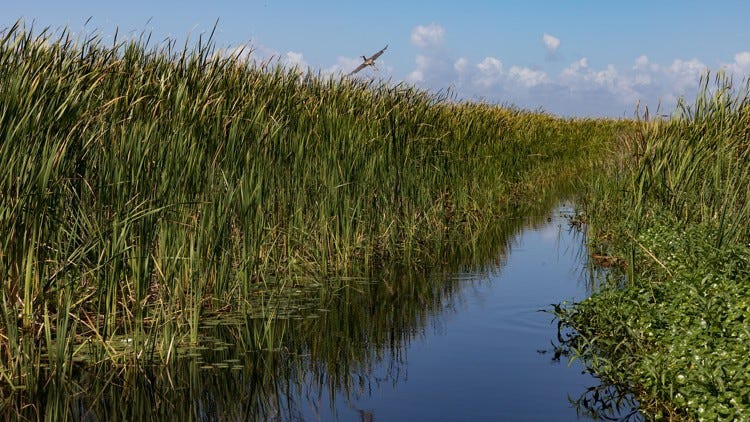
LAKE OKEECHOBEE — Water once clouded brown now runs clear with sunshine glinting off underwater fields of verdant eel grass and coaxing long dormant seeds to burst with life.
Newly planted native bulrush grows in contented clumps in Fisheating Bay.

Freshly uncovered sand scraped clean of up to 20 inches of black muck invites wetland loving spikerush, purple blooming pickerelweed and meadows of water lilies to put down roots.
In Lake Okeechobee, this year’s prolonged drought that withered parts of Florida is leading to a renaissance as water levels lower and sun reaches submerged plants that are the ecosystem building blocks in the largest lake in the southeastern U.S.
For the first time since 2007, the retreating water allowed state agencies to access and dredge portions of the lake this summer — areas that should be clear water over a sandy bottom but are instead coated in muck from decades of manure- and fertilizer-laden runoff.
The muck smothers native plants, sprouting a motley tangle of cattail and willow when water recedes.
“Right now, things are flourishing and it’s wonderful to see,” said Paul Gray, an expert on Lake Okeechobee for Audubon Florida. “If the lake doesn’t go up really fast and leave young plants in the dark, we should have a super strong recovery.”
What is the ideal water level for Lake Okeechobee?
Lake Okeechobee is 730 square miles, so big you cannot see from one side to the other, so vulnerable it can be choked by invasive plants, easily muddied by sediment-stirring winds and drowned by bulging water depths.
It is the backup water supply for surface-drawing West Palm Beach and provides water to the yawning farmland south of it. It also helps refill aquifers and keep taps flowing for the more than 6 million residents in southeast Florida.
But before it was girdled by the Herbert Hoover Dike, treated like a reservoir, and regulated by manmade canals poked into its sides like IV lines, the shallow lake would periodically overflow, spilling freshwater in a slow trickle south to nourish the Everglades.
Its water levels are now closely monitored and manipulated, with precautions against spewing water east into the St. Lucie Estuary, which doesn’t want freshwater, and dribbling only a specific amount west to the Caloosahatchee River, which wants a little freshwater, but not too much or it can grow toxic algae blooms.
Ideally for the health of the lake, water levels should not get much higher than 15 feet above sea level and they periodically need to drop to near 11 feet or lower for about three months for light to reach plants.
Plants clean the water and provide a place for bugs to live, which are then eaten by the fish, which are food for bigger fish and birds.
“Right now, you can go out there and see remarkably clear water and beautiful submerged aquatic vegetation growing and that is an immediate affect of the recovery,” said Florida Fish and Wildlife Conservation Commission Regional Director for the Southern Region Tom Reinert during a June 5 meeting. “That vegetation will allow baby fish to hide and grow and then our fishermen can go out and catch them.”
On Aug. 8, Lake Okeechobee’s water level was 10.93 feet based on the National Geodetic Vertical Datum measurement used by the Army Corps of Engineers.
That was 2.9 feet below what’s normal for that period in the wet season and the first time since at least 2019 that it was at or below 11 feet for more than a month.
The water level inched up to 11.05 feet above sea level on Aug. 11.
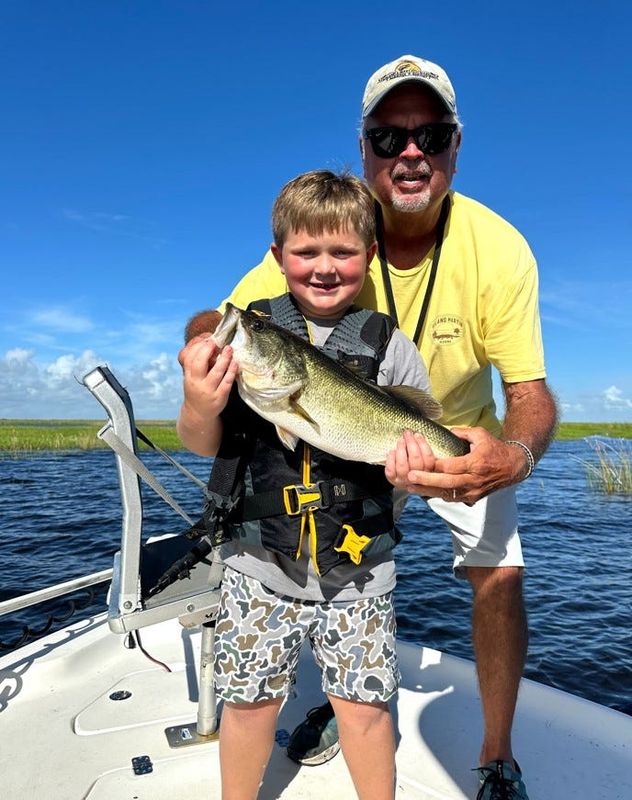
Fishing guide Captain Bo White at Roland and Mary Ann Martin’s Marina in Clewiston said the lake has been healing since last year as water levels dropped.
“The fishing has been excellent. The fish didn’t leave when the lake got dirty, they just found other places to go where you aren’t used to seeing them,” White said. “The longer that water stays lower, it stays cleaner. The lake is definitely on a rebound.”
Drought allowed for controlled burns, muck removal and native plantings
FWC has scraped 510 acres of muck from parts of the lake, depositing it at an upland disposal site called Yankee Point. The muck can be used as fertilizer for plants, but it’s bad for Lake Okeechobee and the Everglades whose habitats evolved and thrive on lower nutrient levels.
FWC also managed controlled burns and planted three acres of bulrush, two acres of eelgrass and have plans to put in six acres of sawgrass this fall in the Steamboat marsh. The South Florida Water Management District and the Corps have also done beneficial plantings in the south end of the lake.
“The potential for the lake is as good as it’s ever been,” Gray said.
It wasn’t so long ago that it was very, very bad.
A strong El Niño during the end of 2015 and early 2016 turned Florida’s dry season into months of rain. By February 2016, the lake was swollen to more than 16 feet. A dry spell followed in 2017 but torrential rains from September’s Hurricane Irma raised the lake three feet in 30 days.
By mid-October 2017 the lake measured 17.2 feet above sea level.
“If we have a hurricane tomorrow and the lake jumped up three feet, a lot of the baby plants would be under dirty water,” Gray said. “We can’t control how fast the lake will go back up. You just cross your fingers.”
And while low levels can be good for the lake, some wildlife suffer.
Gray said federally endangered snail kites didn’t nest on the lake for the second year in a row and that wading birds overall had a tough time with the dropping water levels that made foraging more difficult.
“We need a deep enough lake to grow crawdads and grass shrimp so when it draws down next year we have a good crop for the birds,” Gray said.
Mother Nature is more help than manmade efforts at Lake Okeechobee
Experts attribute the lake recovery more to the prolonged dry spell that has lasted about 18 months and less to recent muck removals and plantings, although those don’t hurt, they said.
This year’s drought has lessened in recent weeks, but it was characterized in the spring as the worst in 24 years statewide. As of Aug. 4, about 42% of the state was still in severe to extreme drought. About 28% was in moderate drought.
“Mother Nature is 100% responsible for the health of the lake,” said United Water Fowlers of Florida President Newton Cook. “One good storm and we’re right back to soup.”
Cook is less enthusiastic about the muck removal, which aids a tiny portion of the lake. Gray said the efforts are beneficial, but aren’t forever fixes.
“I don’t want to say it doesn’t matter but it’s not going to fix the magnitude of damage the lake has suffered,” Gray said. “It’s really not saving the lake.”
Kimberly Miller is a journalist for the USA TODAY NETWORK FLORIDA. She covers weather, the environment and critters as the Embracing Florida reporter. If you have news tips, please send them to kmiller@pbpost.com. You can get all of Florida’s best content directly in your inbox each weekday by signing up for the free newsletter, Florida TODAY, at palmbeachpost.com/newsletters.
This article originally appeared on Palm Beach Post: Thanks to the drought, Florida’s Lake Okeechobee is flourishing | Exclusive
Reporting by Kimberly Miller, USA TODAY NETWORK – Florida / Palm Beach Post
USA TODAY Network via Reuters Connect
By Kimberly Miller, USA TODAY NETWORK – Florida | USA TODAY Network
