Florida temperatures this week have had people talking.
And it’s about to get worse.

Bone-chilling cold is expected to be below or near freezing in most of Florida this weekend. Strong winds will send the “feels-like” temperatures into single digits in some locations.
➤ Weather alerts via text: Sign up to get updates about current storms and weather events by location
Even South Florida won’t be immune from the Arctic blast. Temperatures could drop as low as 40 in Miami Sunday night, with wind chills making it feel near freezing.
Heading to the theme parks in Orlando? Be prepared for temps as low as 24 Saturday night, Jan. 31, with a wind chill as low as 12, according to the National Weather Service.
➤ Gulf-effect snow possible in Florida as Arctic blast hits this weekend
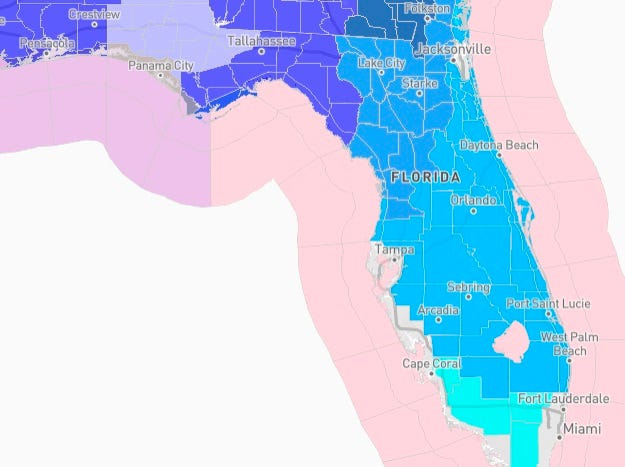
Most of Florida is covered by various cold weather watches, warnings and advisories. Here’s what they mean.
Freeze, extreme cold warnings issued for Florida
The National Weather Service has issued several cold-related warnings and advisories for Florida. The latest round as of 4 a.m. Jan. 30 are:
What is a freeze warning?
A freeze warning is issued when temperatures are forecasted to go below 32 degrees for at least two hours within the next 24 hours, according to the National Weather Service.
This temperature threshold kills some types of commercial crops and residential plants, while temperatures below 28 degrees for an extended period of time can kill most types of commercial crops and residential plants.
What is a freeze watch?
A freeze watch is issued when there is a potential for significant, widespread freezing temperatures within the next 24 to 36 hours.
What is a frost advisory?
A frost advisory means areas of frost are expected or occurring, posing a threat to sensitive vegetation.
Frost can occur even if air temperatures are slightly above freezing, up to 36 degrees.
“At night, heat radiates away from the ground, leaving the air very close to the ground the coldest. Therefore, when temperatures being observed by the sensor range between 32 and 36, the temperature at ground level may be cold enough to support frost formation, given light winds and high relative humidity,” the National Weather Service said.
What is an extreme cold warning?
An extreme cold warning is issued when extremely dangerous cold conditions or wind chill values are expected or occurring.
If you are in an area with an extreme cold warning, avoid going outside.
If you have to go outside, dress in layers, cover exposed skin, and make sure at least one other person knows your whereabouts. Update them when you arrive safely at your destination.
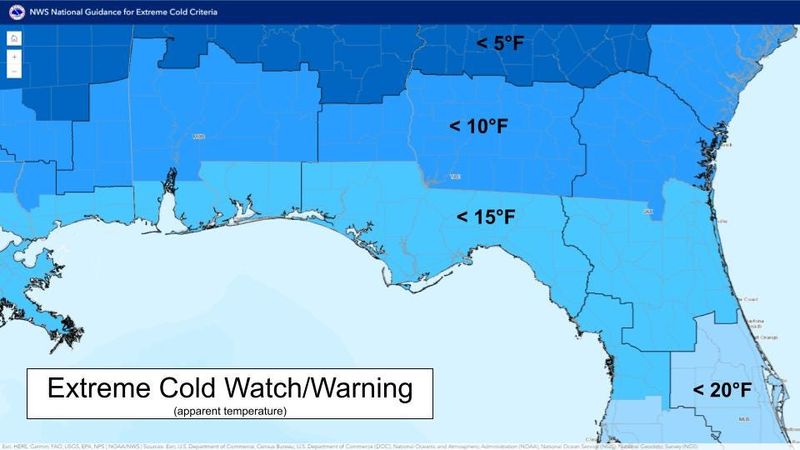
What is an extreme cold watch or warning?
An extreme cold watch is issued when extremely dangerous cold conditions or wind chill values are possible, but the occurrence, location, and/or timing is still uncertain.
Extreme cold watches and warnings are issued 24 (for a warning) to 48 hours (for a watch) in advance for temperatures or wind chills below 15 degrees in Florida.
As with a warning, adjust your plans to avoid being outside during the coldest parts of the day. Make sure your car has at least half a tank of gas, and update your winter survival kit.
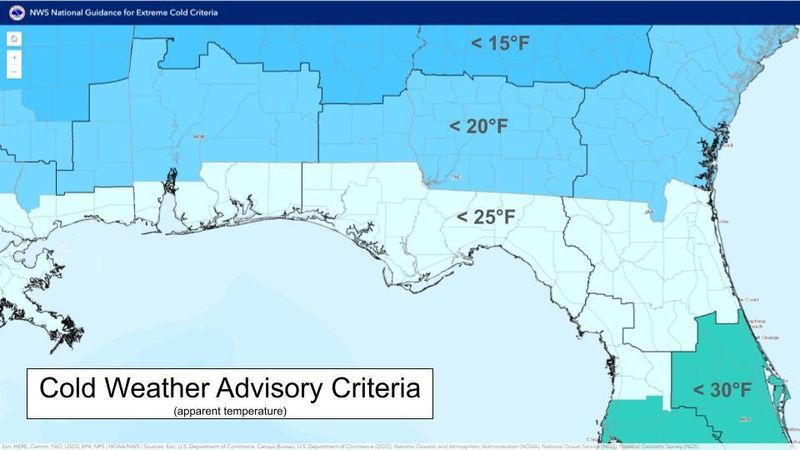
What is a cold weather advisory?
A cold weather advisory is issued for dangerously cold conditions that are not expected to reach warning criteria.
The advisory is issued up to 24 hours for temperatures or wind chills of 15 to 24 degrees or lower for Florida counties.
Dress appropriately and cover exposed skin when venturing outdoors.
What is wind chill?
Wind chill is the term used to describe the rate of heat loss on the human body resulting from the combined effect of cold temperature and wind, according to the National Weather Service.
“As winds increase, heat is carried away from the body at a faster rate, driving down both the skin temperature and eventually the internal body temperature.
“The National Weather Service issues wind chill advisories when the wind chill is forecast to be 35 degrees or less and the wind is forecast to be above 5 mph.”
Stay informed. Get weather alerts via text
What’s next?
We will continue to update our weather coverage as conditions warrant. Download your local site’s app to ensure you’re always connected to the news. And look for our special subscription offers here.
Cheryl McCloud is a journalist for the USA TODAY Network-Florida’s service journalism Connect team. You can get all of Florida’s best content directly in your inbox each weekday day by signing up for the free newsletter, Florida TODAY, at https://tallahassee.com/newsletters.
This article originally appeared on The Daytona Beach News-Journal: Extreme cold warning? Freeze watch? Here’s what NWS is talking about
Reporting by Cheryl McCloud, USA TODAY NETWORK – Florida / The Daytona Beach News-Journal
USA TODAY Network via Reuters Connect