It makes every bit of sense for the PGA Tour to use the word “major” to promote next month’s Players Championship.
Their field is major-level quality.

Their $25 million purse tops all majors.
And their venue is more recognizable than multiple major tournament sites.
The Tour leaned into it during the Phoenix tournament with a commercial titled, “March Is Going To Be Major,” its way of saying, “We may not be recognized as a major, but we are a major tournament.”
Bravo to the tour.
You think you have one of the best tournaments, say it.
Since 2018, the five Players winners have also won at least one major championship. Nine players have won the event multiple times and four are recognized by their first names — Jack (Nicklaus), Scottie (Scheffler), Tiger (Woods) and Rory (McIlroy).
You think your event produces the same kind of drama as the four majors, say it.
The margins of victory from 2019-25 were one, one, one, five and one stroke in regulation, and McIlroy’s playoff win last year over J.J. Spaun (the 2020 tournament was cancelled after the first round).
“Certainly the reason for the campaign was we wanted to spark conversation and we understood there would be a little bit of debate around that,” said Lee Smith, executive director of The Players Championship.
The strategy achieved starting a conversation.
Smith said the “response has been really, really positive,” citing more than 8,000 articles and social media posts in the first three days post-commercial launch with a positive-to-negative ratio of 3-1.
The bonus has been the local reaction. Smith said comparing the six days before the commercial debuted with the six days after, ticket sales were up 25%.
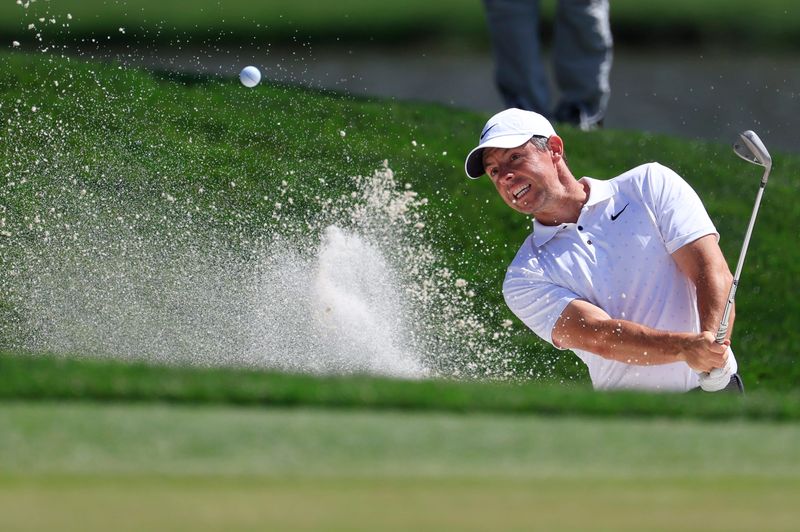
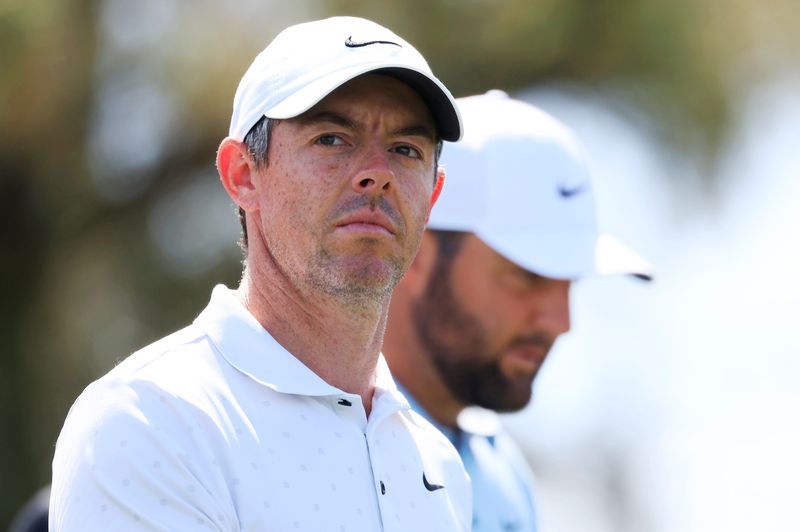
McIlroy, speaking earlier this week in Pebble Beach, Calif., called the Players “one of the best golf tournaments in the world … But I’m a traditionalist. We have four major championships. But it’s the Players — it doesn’t need to be anything else.”
McIlroy, a two-time Players champion, is probably right the event won’t gain much additional cache amongst the competitors if it’s termed a “major.”
But if the Players’ goal was to attract more casual golf fans who see the commercial and connect “The Players” with “major tournament,” the campaign will be an overwhelming success.
About the Daytona 500
1. New points format: In the previous NASCAR championship system, one win in the first 26 races advanced a driver into the playoffs.
The revamped system is simple: The top 16 drivers in points after the regular season will advance to the 10-race chase, the points will reset (for example, the first-place driver will have a 25-point advantage over the second-place driver and a 100-point lead over the 16th-place driver) and there are no longer any playoff elimination rounds. Sixteen drivers for 10 races. Most consistent driver wins.
“The format is better; it’s better for the top 6-7 (cars) who run up front every week,” No. 11 driver Denny Hamlin said. “That’s who will benefit and who your champion will be.”
Will urgency be cranked up if a driver gets off to a slow start at Daytona (where anything can happen) and Atlanta (where a lot can happen)?
“Is it critical? No, but it is more important,” Hamlin said. “Starting the season (with poor finishes at) two super speedways will cause panic. I won’t panic.”
The main issue I have with NASCAR is the length of its season — it’s too long (Feb. 15-Nov. 8). I’m a casual observer who catches parts of most every race … until NFL training camps open in late July. Then it’s all football save for making sure I watch the night race in Bristol, Tenn. (Sept. 19 this year). Will the new championship format maintain summer viewership numbers? I doubt it, but NASCAR is at least trying something.
2. Managing expectations for Zilisch: Winning 10 races last year in the second-tier series (now called the O’Reilly Series) has created high expectations for 19-year old Connor Zilisch (No. 88). History, though, suggests patience is required.
Check out the debut Daytona 500 finishes for notable drivers in this year’s field — Jimmie Johnson (15th in 2002), Kyle Busch (38th in 2005), Hamlin (30th in 2006), Joey Logano (43rd in 2009), Brad Keselowski (36th in 2010), Kyle Larson (38th in 2014), Ryan Blaney (39th in 2015) and Chase Elliott (37th in 2016). Rookie Austin Cindric won the 500 in 2022, but this is a tough race for a rookie because of the bump-drafting, the skill of the competitors and the luck-of-the-draw nature of the event.
“I appreciate the excitement — it’s cool that people are excited to see how I race this year,” Zilisch said. “But it sometimes gets a little outlandish and people are expecting a lot without realizing how big of a jump it is.”
Zilisch finished 15th in the second duel race on Feb. 12 and will roll off 32nd in the 500. Encouraging for Zilisch was his 139 green-flag passes tied for eighth in the second duel field.
“Running all the laps is the biggest thing,” Zilisch said of his goal for the 500. “I first came to this race in 2022 and I didn’t even know enough people to get a pit pass. It just shows you how quickly life can change.”
About the NFL
1. Combine invitations: A total of 319 players were invited to the scouting combine in Indianapolis (Feb. 23-March 2), including 10 from Miami, nine from Georgia, eight from Florida, two from UCF and, gulp, one from Florida State.
The combine invitees who attended high school in the Times-Union’s coverage area are quarterback Carson Beck (Mandarin/Miami), left tackle Austin Barber (Trinity Christian/Florida), left guard Joshua Braun (Kentucky/Suwanee), defensive end Jack Pyburn (LSU/Bolles), cornerback Jadon Canady (Oregon/Sandalwood) and left guard Micah Morris (Georgia/Camden County).
Texas A&M led with 13 invitees, followed by Alabama (12), LSU and Ohio State (11 apiece) and Miami and Oklahoma (10 apiece).
2. Franchise valuations: Sportico updated the NFL team valuations and the Jacksonville Jaguars checked in at No. 31 ($5.57 billion), up 17% from last year ($4.76 billion). Shad Khan was approved as the owner in December 2012 for a purchase price of $775 million. The only team valued at less was the Cincinnati Bengals ($5.5 billion).
The top five teams are the Dallas Cowboys ($12.8 billion), Los Angeles Rams ($10.43 billion), New York Giants ($10.25 billion), New England Patriots ($8.76 billion) and San Francisco 49ers ($8.6 billion).
Contact O’Halloran at rohalloran@gannett.com
This article originally appeared on Florida Times-Union: Bravo to Players Championship for linking event with ‘major’ status
Reporting by Ryan O’Halloran, Jacksonville Florida Times-Union / Florida Times-Union
USA TODAY Network via Reuters Connect