Some of Polk County’s most exclusive and luxurious homes overlook lakes — Scott Lake, Mountain Lake, Lake Hollingsworth.
But how many homes are surrounded by a lake on all sides? Some lucky (and affluent) buyer could soon acquire just such a property.

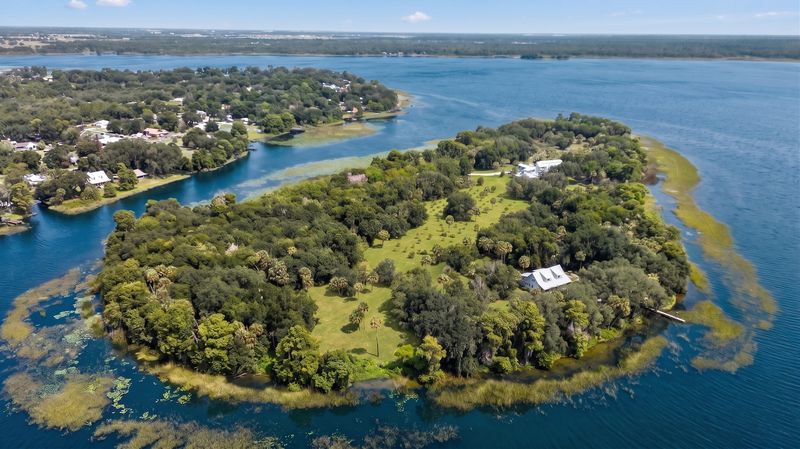
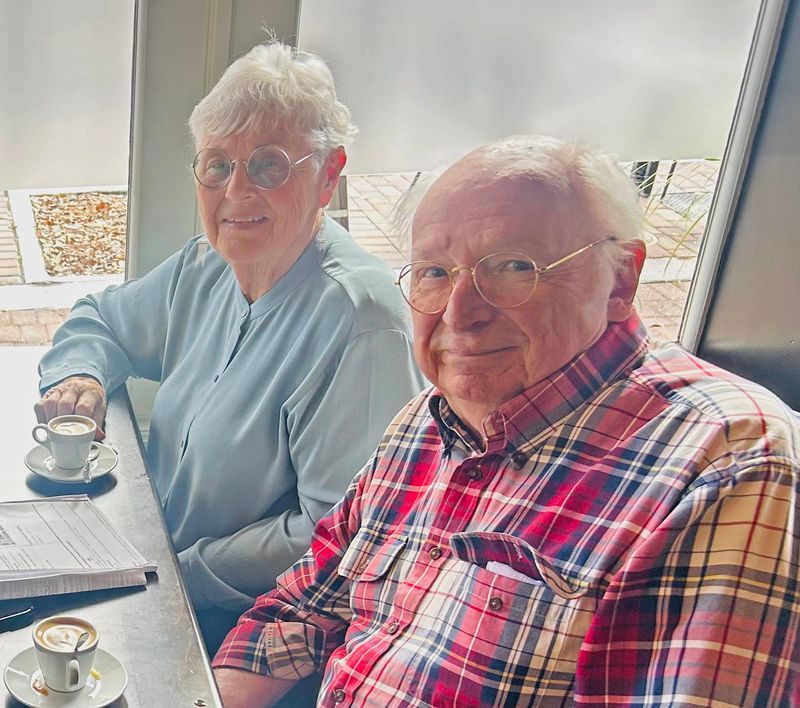
Dr. Patrick O’Leary and his wife, Sam, have decided to sell Bannon Island, the 24-acre outpost in Lake Marion that the family has owned since the 1880s. The O’Learys are reluctantly ready to depart with their home, an architectural masterpiece connected to the restored pioneer dwelling built by family patriarch Patrick Bannon.
Bannon Island, one of only four privately owned islands in Polk County, is on the market with a listed price of $12 million. A property listing from Red Bird Realty describes Bannon Island as “one of the last remaining legacy properties of Old Florida where nature, architecture, conservation, and history still coexist.”
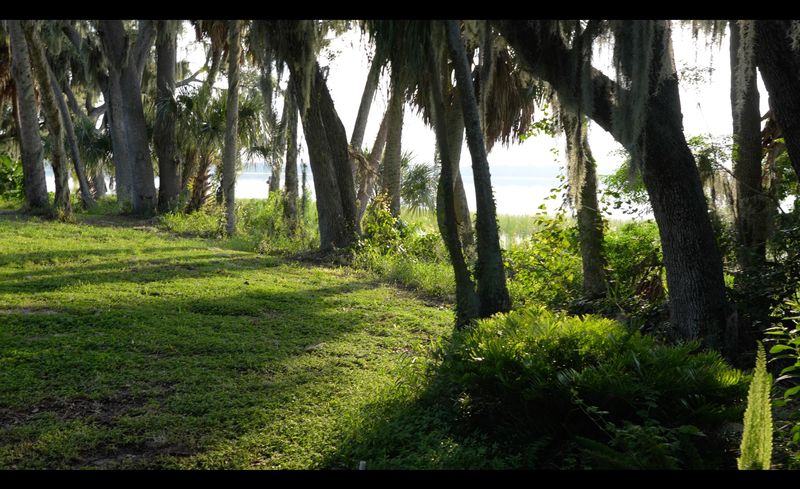
The island lies on the western side of Lake Marion, only about 300 yards from the shoreline, with Haines City to the west and Poinciana to the east. Mostly undeveloped, the island holds a mixture of cypress trees, live oaks and sabal palms, along with open meadow and citrus groves, remnants of those first planted in the 1880s.
Patrick O’Leary, 85, likens his family’s history to the story of the MacIvey family in Patrick Smith’s beloved Florida novel, “A Land Remembered.” He said the decision to sell the island first owned by his grandfather, Patrick Bannon, is logical but still painful.
“I feel kind of guilty about it because I’m the one who’s going to pass this on to somebody else,” O’Leary said. “Over the years, the Bannon family suffered through many, many adverse times – the Depression, the loss of the suit against Haines City (over a property seizure), times when money was really short. And now, all of a sudden, I’m going to sell it, and I do feel very twisted or pulled in two directions about that.”
He added: “But I think it’s the right thing to do. I don’t have somebody to pass it on to.”
None of the O’Leary’s three grown offspring are willing to take over the island, he said.
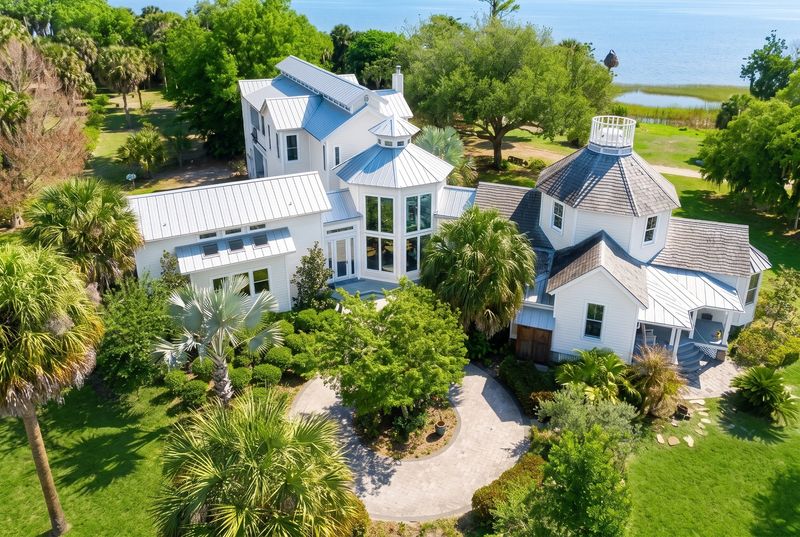
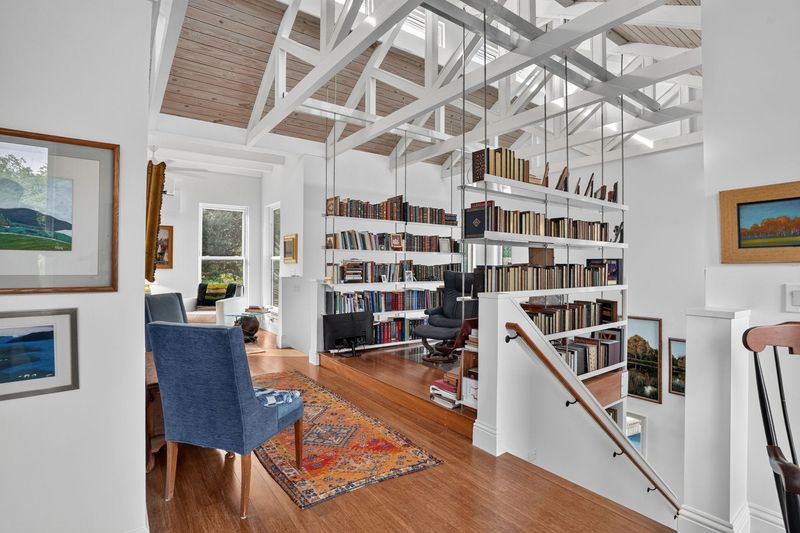
Bannon Island holds a 5,034-square-foot main residence, which combines the restored house built by Patrick Bannon from the 1880s to the 1910s, with the glorious and modern home the O’Learys occupy. Across the island lie a 2,698-square-foot duplex residence and four accessory buildings.
The Florida Department of Agriculture and Consumer Services recognized Bannon Island this year as a Florida Century Pioneer Family Farm.
Patrick and Sam O’Leary share the island with deer, bobcats and otters, many varieties of birds, including barn and barred owls and, of course, alligators.
Patriarch acquired island in 1880s
Bannon, born in 1858 in Ireland’s Tipperary County, immigrated to the United States in the late 1870s and first lived in New York, where he met his future wife, Annie Mary Ryan, also from Ireland. (Descriptions are from O’Leary, articles in the Polk County Historical Quarterly and a Red Bird Realty media packet.)
A skilled carpenter, Bannon worked for the Vanderbilt family and was commissioned by Thomas Edison to craft cabinets for early radios, O’Leary said. But Bannon developed what his grandson suspects was tuberculosis, and health concerns prompted the couple’s move to the wilderness of Florida in 1882.
Arriving by train in Orlando, Patrick rode on horseback into Polk County and purchased a site east of Haines City, building a small cabin.
At that time, the Seminole Chief Chipco occupied a camp on the island in Lake Marion. According to family lore, Bannon acquired the island from the chief, though the details have been lost to time.
“We do know that there was a blend of Cherokee, Seminole and Creek Indians in the area, and Patrick Bannon, my grandfather, warned the Indian tribes that there was a vigilante trade group out there trying to get to them,” O’Leary said by phone from the island. “And so, they abandoned their campsite, and for that he was received friendly by the Indians, and ultimately the land was acquired by him, and we really don’t know how that happened.”
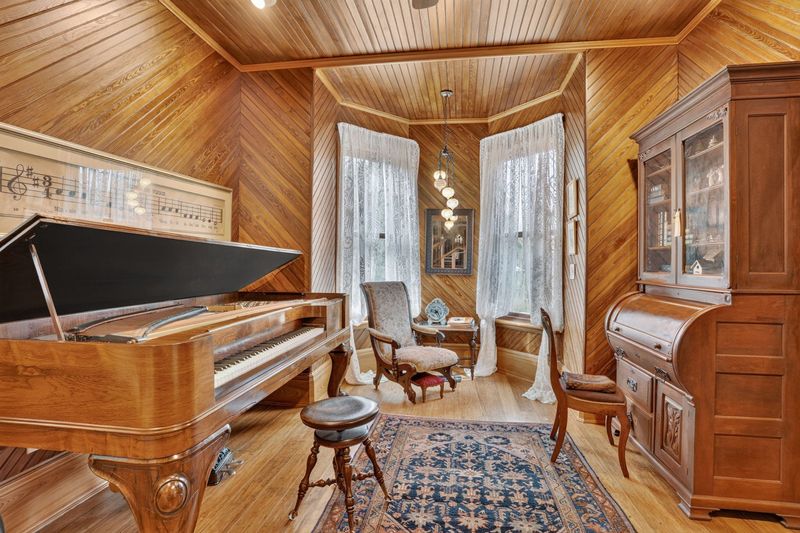
The family, which eventually included six children, lived in tents on the southeast side of the island as Bannon began construction of a permanent home. Using wood milled from the island, he created a dwelling shaped like a Celtic cross, with an octagonal main section two stories tall. Exterior rooms — two bedrooms, a piano room and a dining room held the interior segment in place.
“All the lumber was crafted on the site,” stated a 1977 article in the Polk County Historical Quarterly. “The interior paneling is hand-grooved and installed diagonally. The carpentry on the ceiling, converging from six sides, is superb craftsmanship.”
O’Leary marvels at his grandfather’s work.
“Every beaded board is tongue-grooved,” he said. “Every bead is lined up at 45 degrees, and then at the bottom of that junction, the beaded board is precisely right. And at the top of it, maybe eight feet tall, it’s still precisely the same. I don’t know how somebody with no power tools could make that happen.”
Rugged life for early Bannons
The Bannon family referred to the island as “Emerald Isle,” in reference to Ireland, according to a 1939 article in the Orlando Sentinel-Star.
O’Leary’s sister, Eileen O’Leary, wrote a family history for the December 1996 edition of the quarterly, drawing upon notes from her aunt, Bridget Mary “Biddie” Bannon.
Living on the island, the family caught and dressed fish to be sold, Eileen wrote. They grew string beans and onions, using a plow horse, to sell to a market in Boston. Patrick Bannon hired a French governess to teach the children, who wore clothing their mother fashioned from feed and potato sacks. The children had no shoes until reaching age 15.
The children arose at 3 a.m. and did field work for hours until their lessons began, then returned to work the fields from 3 p.m. until dark.
Trips off the island required a boat. The islanders also created a system for shuttling cars across the lake, using a floating platform and a hand-operated cable connected to an oak tree on the island, O’Leary said. (It has since been removed.)
After a freeze in 1886 wiped out the crops, the Bannons planted orange groves, growing both Parson Brown and Valencia. The family would pick the oranges and load them onto a 1920s International truck (which O’Leary still owns), place it on the cable barge and shuttle it to the mainland before driving the oranges to a packing house in Haines City.
Patrick Bannon also designed and oversaw construction of many buildings in Central Florida, according to a 1939 article in the Orlando Sentinel-Star. Those included the first Catholic church in Tampa and the first brick jailhouse in Orlando.
In his early years on the island, Patrick Bannon made difficult journeys by horse and wagon to attend Catholic Mass in Tampa. The Bannons later led the formation of St. Ann Catholic Church in Haines City. One of the Bannons’ daughters, “Biddie” Bannon, entered the Sisters of St. Joseph in St. Augustine in 1924 and became Sister St. Anthony.
O’Leary, born in 1941, has limited memories of his grandfather, who died when the boy was young. After Patrick Bannon’s death, his wife and two of the children moved to “the mainland.” But some of O’Leary’s aunts and uncles continued living on the island for a few more years.
O’Leary, whose family lived in Winter Haven, would go to the island every weekend for Sunday dinner.
“We’d drive out from Winter Haven, and then we’d come to the landing on the mainland,” O’Leary said. “And then you blew your horn. You had to get somebody’s attention to bring a boat over to get you.”
Alternatively, visitors might fire a gun to signal the island dwellers – one shot, a pause, and then two more.
The island had no electricity until the 1990s. O’Leary recalls sometimes being bored during the weekend visits. The only power came from a six-volt generator, which the family could only run for a few hours a day.
“And then when 9 o’clock came at night, you had no light, unless you had a propane lantern,” O’Leary said. “And so that was fairly light enough to read, but that was not long-lived in that environment.”
O’Leary said his elders left the island in 1951, buying a house on the “mainland” in Haines City that offered electricity, running water, air conditioning and sewage service, luxuries they had lacked on the island. The family continued to maintain the groves, O’Leary said.
Retiring to family’s island
O’Leary, a graduate of Winter Haven High School, attended the University of Florida’s medical school and began an accomplished career as a surgeon and an academic leader. He had an endowed chair at Louisiana State’s medical school in New Orleans, and he helped create the medical school at Florida International University.
Polk County Public Schools inducted O’Leary into its Hall of Fame in 2016.
Bannon Island remained uninhabited for decades. Patrick and Sam O’Leary (given name Mabel), who had four children, sometimes visited the island during that period.
“We would look at the island and say, ‘Oh, that’s really neat,’ and not really do anything to help,” Patrick said. “And so, in about 1989, my wife and I sat down and we said, ‘You know, either we need to get rid of the island or we need to take it on and do something with it that would be productive.’”
From that point on, the O’Learys spent all their vacations at the island, working to clear the overgrowth, replant the citrus grove and have electricity installed. The couple’s son, Jim, a contractor, oversaw construction of a “dogtrot” duplex on the southeast side of the island.
The O’Learys and their children’s families began regularly spending time on Bannon Island, staying in the 2,698-square-foot duplex.
As O’Leary approached his retirement, he and Sam decided to build a house connected to the historic dwelling.
The original home had deteriorated badly over the decades, and then Hurricane Charley passed over Bannon Island in August 2004, O’Leary said. He and Sam were on the island at the time, and he suspects that the hurricane spawned a tornado.
“A part of Charley came onto the island and took out a lot of trees on the south and west side of it, and almost like providence, it bounced over the historic house and came down and ripped apart an ancient oak tree,” he said. “It took us a year to get the oak tree finished, to get it out of there.”
Modern home attached to original
Even before Charley, the historic house had crumbled nearly to the ground, O’Leary said. But his uncles had wrapped the inner structure in tin in the 1940s, and that provided protection against the elements.
“It took us a couple of years to take all of the tin off, expose the infrastructure, take the floor up, and use the wood from the floor, which was pristine after 110 years or something,” O’Leary said.
The family removed some walls damaged by termites, milled wood from the floor and molded it to match the original design. Jim O’Leary also used a portable Wood-Mizer to mill wood from fallen trees on the island.
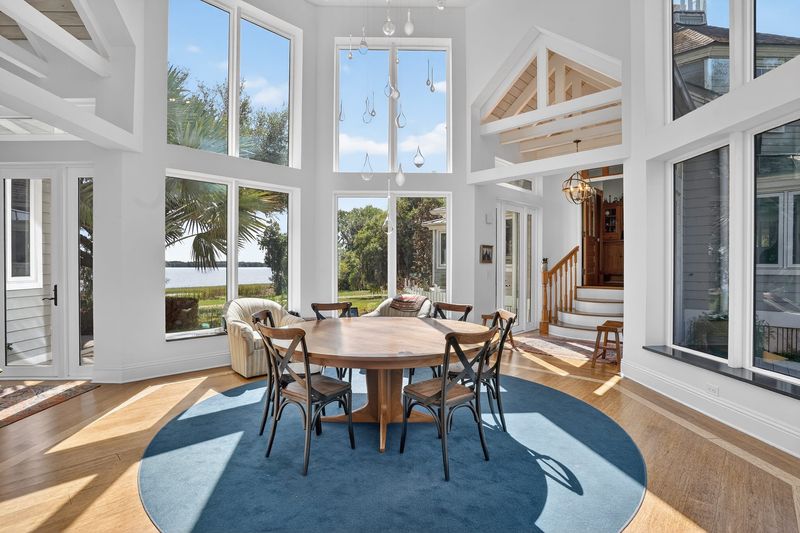
Jim led the construction of the connected house, following a design prepared in the 1990s by the late William H. Phillips, a Georgia-based architect. The dwelling complements the original structure but has modern features. The highlight is the “L’orangerie,” a glass-walled kitchen and dining area that yields inspiring views in every direction.
The family restored the historic house, adding electricity and air conditioning and enclosing two porches but otherwise leaving it much as it looked when first built.
Patrick and Sam O’Leary have occupied the connected dwelling since it was completed in 2019.
Going to the “mainland” still requires a boat. O’Leary said that he makes the trip almost daily, at least to check the family’s mailbox, but usually doesn’t stay off the island for long.
Though their children’s families visit Bannon Island for Christmas and other occasions, none of the three surviving offspring wish to take ownership. While generally healthy, Patrick and Sam know that before long it will be too difficult for them to manage the island lifestyle.
The couple own property on the shore of Lake Marion and plan to move into a home there, within sight of Bannon Island.
“It has been very difficult, and we’ve seen it coming for, probably oh, since we moved over here,” O’Leary said. “We’ve been able to cope, but again, we’re not in as good of health as we were.”
Gary White can be reached at gary.white@theledger.com or 863-802-7518. Follow on X @garywhite13.
This article originally appeared on The Ledger: Bannon Island, a link to pioneer era in Lake Marion, is up for sale
Reporting by Gary White, Lakeland Ledger / The Ledger
USA TODAY Network via Reuters Connect
By Gary White, Lakeland Ledger | USA TODAY Network