The following information was provided by the Marco Island Historical Museum.
The final day to see the Key Marco Cat at the Marco Island Historical Museum is April 18. After that, the artifact returns to the Smithsonian Institution’s National Museum of Natural History in Washington, D.C.

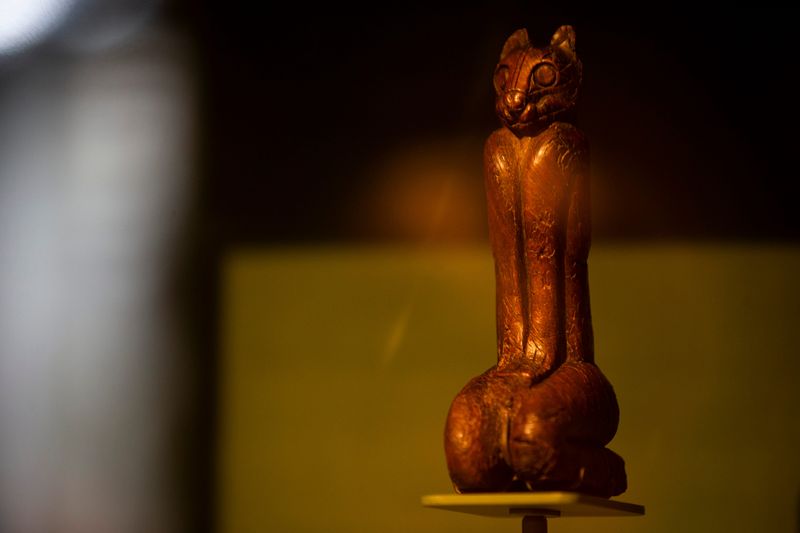
The Key Marco Cat, half cat/half human wood carving is remarkably well preserved. It is considered by archaeologists to be one of the finest pieces of pre-Columbian Native American art ever discovered in North America. It was discovered in 1896.
At just six inches tall and carved from native hardwood, the Key Marco Cat was created some 500 to 1,500 years ago by Southwest Florida’s early Calusa people or their Muspa ancestors. The artifact was unearthed during a Smithsonian sponsored archaeological expedition led by archaeologist and anthropologist Frank Hamilton Cushing.
“The Key Marco Cat from the Smithsonian collections is an extraordinary object that attests to the unique archaeological record of Key Marco and the people and cultures who lived there for millennia,” said Torben Rick, chairman of the Department of Anthropology at the Smithsonian Institution’s National Museum of Natural History.
Showcased at the Marco Island Historical Museum in the permanent exhibit, “Paradise Found: 6,000 Years of People on Marco Island,” the priceless object is surrounded by other Marco Island artifacts and displays showing the history of the island and its peoples.
The exhibit features an immersive life-size Calusa village, more than 300 pre-Columbian Native American artifacts from Marco Island and surrounding areas, activity stations, animations, and original artwork depicting the 1896 archaeological dig and lives and ceremonies of the Calusa.
“Bringing home this amazing symbol of our island and the early peoples who populated it was an island-wide effort,” said Pat Rutledge, Marco Island Historical Society CEO. “We raised the funds to build a museum worthy of this irreplaceable artifact. Our members and supporters throughout the community joined with us with passion and financial support to bring this precious object back to its place of origin.
“Since opening in 2010, the Marco Island Historical Museum has welcomed nearly 300,000 visitors eager to explore the island’s rich history. Remarkably, 155,000 of those guests have come since the arrival of the Key Marco Cat, drawn by the opportunity to discover its origins and gain insight into the lives of the ancient people who created it.”
The Marco Island Historical Museum is located at 180 S. Heathwood Drive. The museum is open Tuesday through Saturday, 9 a.m. until 4 p.m. Admission is free and the site is fully ADA compliant and accessible to all visitors. For information, call 239-389.6447 or visit theMIHS.org.
This article originally appeared on Naples Daily News: Archives: See the Key Marco Cat before it returns to the Smithsonian
Reporting by Naples Daily News / Naples Daily News
USA TODAY Network via Reuters Connect