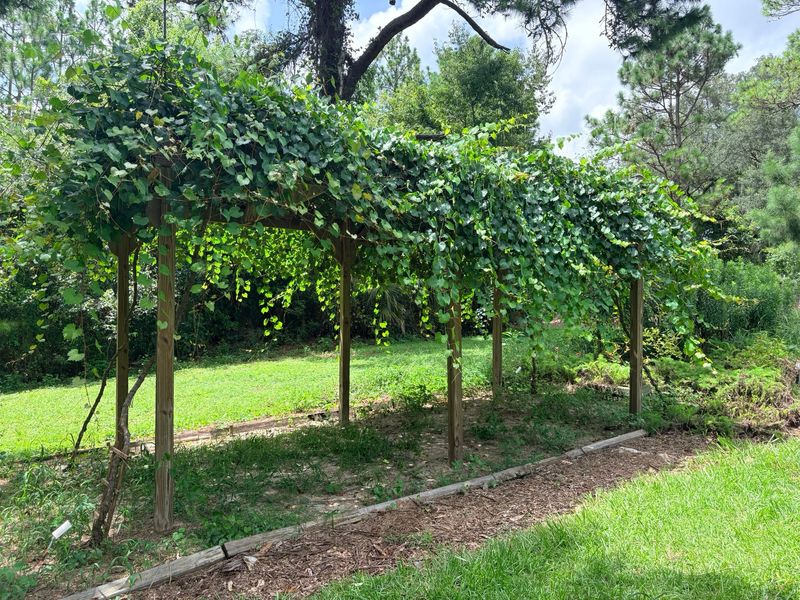
The muscadine grape (Muscadinia rotundifolia) is native to the southern United States and is the foundation of Florida’s grape and wine industry. During winter muscadine vines are dormant, a natural resting period.
A good time to learn more about grapes and grape vines is at FAMU’s annual Grape Harvest Festival this year on Aug. 22.

When spring approaches pruning is an essential part of muscadine vine care. One-year-old shoots are commonly pruned back to short spurs with three to four buds to maintain vine health and productivity.
Muscadine vines are vigorous growers, capable of producing up to 20 feet of growth in a single season. While pruning is necessary, it also produces a large amount of vine material usually treated as waste to be removed or burned.
However, clipped muscadine vines represent an underutilized resource that can be repurposed in creative and practical ways in arts and craft projects.
Crafting with grape vines
Vine cuttings are often easy to find and usually free at local vineyards and wineries during the winter pruning season.
Once collected, the vines can be stored and used throughout the year for a variety of projects.
Vines may also be collected from wild muscadine plants on private property. Always obtain permission before collecting from someone else’s land, and keep in mind that removing plants or plant material from public lands is generally prohibited without proper authorization.
When selecting vines for craft projects look for long, straight flexible shoots free of damage. Thinner vines are easier to bend for smaller projects.
Thicker vines provide structure for larger efforts. In most cases, canes ranging from 1/8th to 3/8th of an inch thickness work well.
How to handle shoots and tendrils
Before crafting remove side shoots and tendrils using hand pruners to create a single, manageable cane about six feet long. Wear gloves and safety glasses, and use sharp, good-quality pruners, as cut ends can be sharp and vines may snap back during handling.
Pruned muscadine vines can be used fresh or after they have dried. Fresh vines are more flexible and ideal for weaving or tight bends.
The fresh vines may shrink slightly as they dry and create slack in finished projects.
Dry vines are more rigid and better suited for structural elements. They can be softened by soaking in water for 24 to 48 hours before use. Store fresh vines in a cool, well-ventilated area to prevent mold.
Simple projects
One of the simplest craft projects is a vine wreath. A wreath is formed by shaping vines into a circle and wrapping or weaving them around one another to hold their form.
This project requires minimal tools and is suitable for crafters of all ages.
To begin, bend a long, flexible vine into a loose circle to form the base. Additional vines can be wrapped around the base, following the circular shape and tucking ends into the weave.
Continue adding vines until the desired thickness is reached. Customize wreaths by adjusting size, vine thickness, or weaving style, and by adding decorations such as ribbons, dried flowers, or greenery.
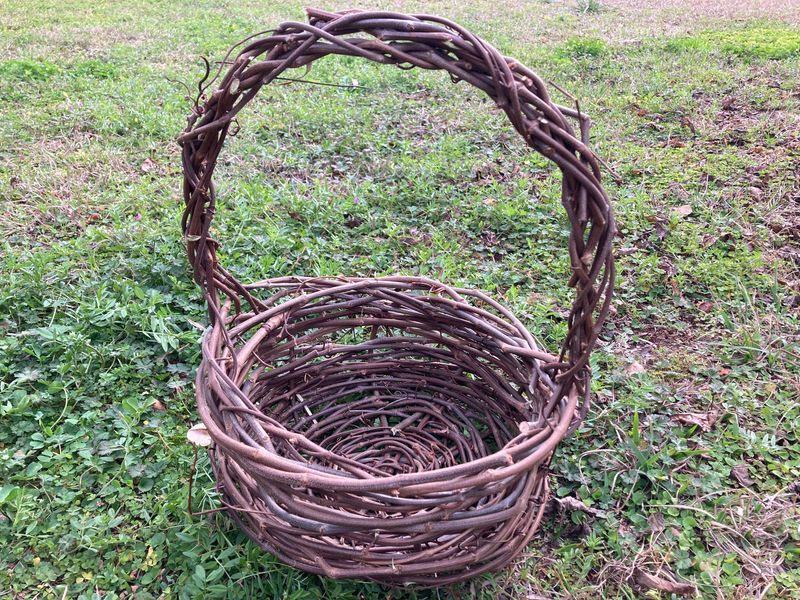
Weaving a basket with muscadine cuttings is more challenging. To begin, select several thicker vines to form the base and structure.
Arrange them in a crisscross pattern and secure the center by wrapping a thin, flexible vine around the intersection. Weave additional thin vines over and under the structural vines in a circular pattern.As the base expands, gently bend the structural vines upward to form the sides of the basket.
When the basket reaches the desired height, finish the rim by bending the ends of the structural vines inward and tucking them into the weave or weave them together to form a handle.
Propagation and rootings
During pruning some shoots have already developed roots where vines rested on the soil. This natural process, called layering, provides an easy way to propagate new vines.
Muscadines can be more difficult to root from dormant cuttings than many European grape varieties. If roots are well developed, trim the shoot so that two nodes remain above the soil surface and two are placed below the soil, including the rooted node.
When potting, ensure the buds are oriented upward and keep the soil moist until new growth begins in spring.With a little creativity and effort, dormant muscadine vine cuttings can become far more than pruning debris. From handcrafted décor to new vines for the home vineyard, seasonal pruning offers opportunity — not waste.
Frank Humphries is Research Enologist at Center for Viticulture and Small Fruit Research, College of Agriculture and Food Sciences, Florida Agricultural and Mechanical University.
If you go
What: FAMU Grape Harvest Festival
When: 8 a.m.-2 p.m. Saturday, Aug. 22
Where: Center for Viticulture and Small Fruit Research, 6361 Mahan Drive
Cost: $10, with free entry for children under 12 and FAMU students
Details: cafs.famu.edu
This article originally appeared on Tallahassee Democrat: After the grapes are gone, vines are fine for crafting projects
Reporting by Frank Humphries, Special to the Tallahassee Democrat / Tallahassee Democrat
USA TODAY Network via Reuters Connect
By Frank Humphries, Special to the Tallahassee Democrat | USA TODAY Network