Black Americans who came to Northern California in the 1800s carved their niche in Gold Rush history. They joined immigrant and white miners who hoped to strike it rich in the rivers and lands from the Sacramento area to Siskiyou, Shasta and Trinity counties.
Historians said Californian John Sutter kicked off the Gold Rush when his carpenter found gold on Sutter’s property in January 1848. But word didn’t reach the whole country until August of that year. Sutter was overrun by prospectors with gold fever, and robbed until he was penniless in 1852, the peak of the rush. By then, prospectors had spread out over Northern California.

At the Gold Rush’s height, some Black prospectors and miners bought their own claims while others teamed up with other ’49-ers. Together they mined hillsides and caves, or panned for gold in the Sacramento, Klamath, Salmon, Trinity and other California rivers, historians said.
While U.S. Census data shows many Black Americans lived in far Northern California in the mid-1800s, their contributions aren’t widely recognized, said author, historic filmmaker and theatrical artist Mark Oliver.
For 75 years most historians failed to recognize Black Americans’ place in California’s Gold Rush
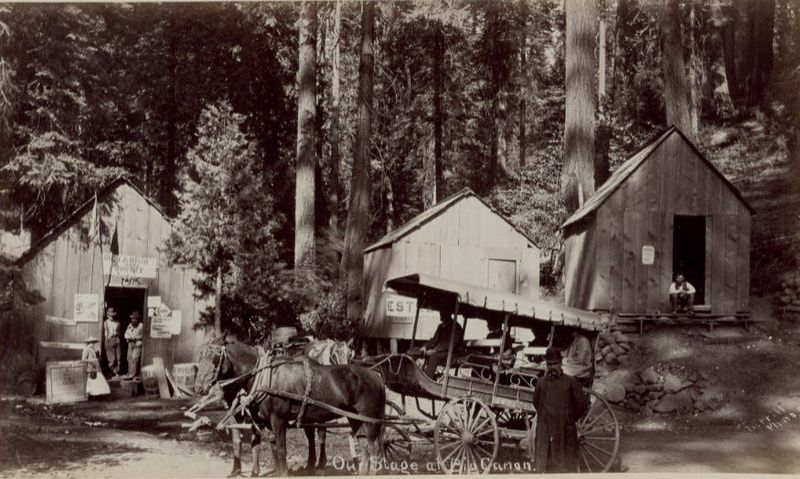
While U.S. Census data shows Black Americans lived in far Northern California in the mid-1800s, their contributions aren’t widely recognized, author, historic filmmaker and theatrical artist Mark Oliver said. But historic photos, census data and mined sites dotted around Northern California helped historians piece together Black Gold Rush miners’ stories.
In his book “Voices of the Golden Ghosts,” Oliver wrote that by 1852 more than 2,000 Black men worked mines after the discovery of gold at Sutter’s Mill in the small El Dorado County town of Coloma in 1848.
Note to readers: If you appreciate the work we do here at the Redding Record Searchlight, please consider subscribing yourself or giving the gift of a subscription to someone you know.
With no California laws blocking slavery, slave owners brought Black slaves to California as early as 1849; many from Texas, Mississippi, Missouri and Arkansas, historical documentary series “American Experience” reported. Roughly 200 to 300 were “enslaved people brought by their enslavers to mine gold,” according to the California State Library.
Mining was dangerous for free Black Americans, too, Siskiyou County archaeologist Patrick Brunmeier said. California was founded as a free state, but for Black people “if you didn’t have papers proving you were free … you could be arrested and sent back” to slave owners in other states.
Another risk to Black prospectors was robbery. “There are documented cases of white miners stealing black miners’ claims at gunpoint,” Oliver said. “When you think that 40% of the non-native (miners) were from the South, it doesn’t take a lot of imagination to understand how black miners must have been treated.”
Still, by 1860, more than 5,000 Black Americans had made the long rough journey to California in the hopes of striking gold, according to Rudolph Lapp, in his 1995 book “Blacks in Gold Rush California.”
Many old census records burned in fires, and few kept mining records until the 1880s and 1890s, said Brunmeier, who in 2023 and 2024 helped Oliver research parts of the North State where Black Americans worked mines. “We looked at the old maps and found several place names that had African America references.” Most were on remote private land, likely because Black people wanted to avoid confrontations.
In other places like Forks of Salmon, Black Americans were paid laborers, Brunmeier said.
Where did Black Americans go after the Gold Rush?
California’s Fugitive Slave Act of 1852, which allowed captured Blacks to be sent back to slave owners and traders in other states, sent many Black prospectors fleeing to Canada, Oliver said.
Those who stayed didn’t remain long. The gold eventually dried up and most Black prospectors who mined in Yreka and on the Salmon River did the same thing other prospectors did: They left the wild Northwest — with or without riches to establish towns elsewhere.
“There really isn’t much evidence of people who stayed…” Oliver said, and little is known about the lives of Black miners after the Gold Rush.
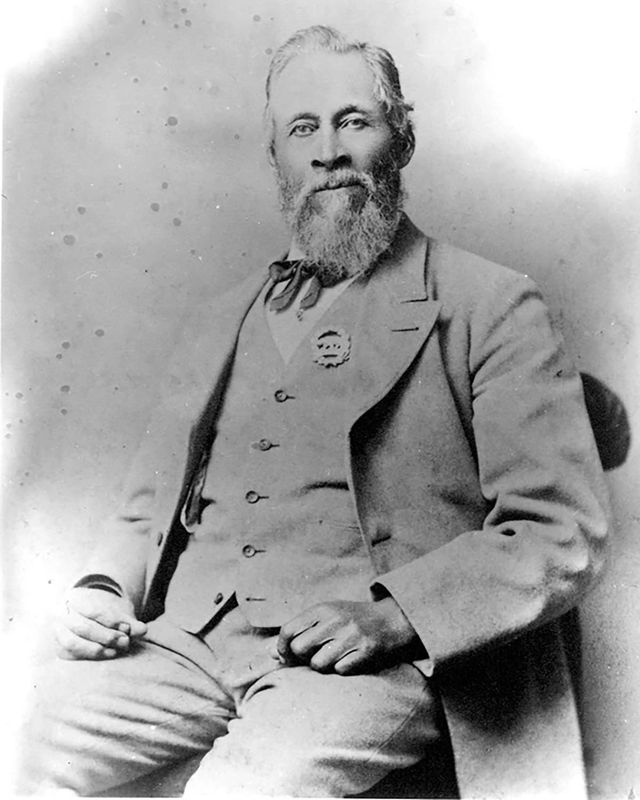
With one notable exception. The most famous of Black prospector is Alvin Coffey — known to historians thanks to his autobiography preserved by the California Society of Pioneers.
Coffey went from slave to California Gold Rush success story
Born into slavery on July 14, 1822, Coffey was “owned” by several slavers, was cheated out of his freedom and traveled to California three times before settling in the state, according to the National Park Service. During the first two visits he prospected for gold as a slave.
On his second trip to the Golden State (1854 to 1857), Coffey worked for his owner “and himself at the Shasta and Sutter mines. There he made enough to buy freedom for himself, his wife, and his children,” the park service said in his biography.
Coffey took his family to Shasta County in 1857 where he opened a school for African American and Indigenous children in 1858. Over the next few years, they moved to Red Bluff where they “prospered as farmers, turkey ranchers, and laundry operators,” the park service said.
From Tehama County, the Coffey family moved south, eventually landing in the then-tiny agricultural community of Woodland, according to the Museum of the City of San Francisco.
He died at 80 as a well-to-do farmer in 1902. The park service said he died in an Alameda County facility he helped found: The Home for the Aged and Infirm Colored People of California.
Coffey was the only Black person inducted into the Society of California Pioneers, the park service said.
Jessica Skropanic is a features reporter for the Record Searchlight/USA Today Network. She covers science, arts, social issues and news stories. Follow her on Twitter @RS_JSkropanic and on Facebook. Join Jessica on Record Searchlight Facebook groups Get Out! Nor Cal , Today in Shasta County and Shaping Redding’s Future. To support and sustain this work, please subscribe today. Thank you.
This article originally appeared on Redding Record Searchlight: How Black miners carved a legacy in the Gold Rush
Reporting by Jessica Skropanic, Redding Record Searchlight / Redding Record Searchlight
USA TODAY Network via Reuters Connect
By Jessica Skropanic, Redding Record Searchlight | USA TODAY Network