

By Jim Bloch

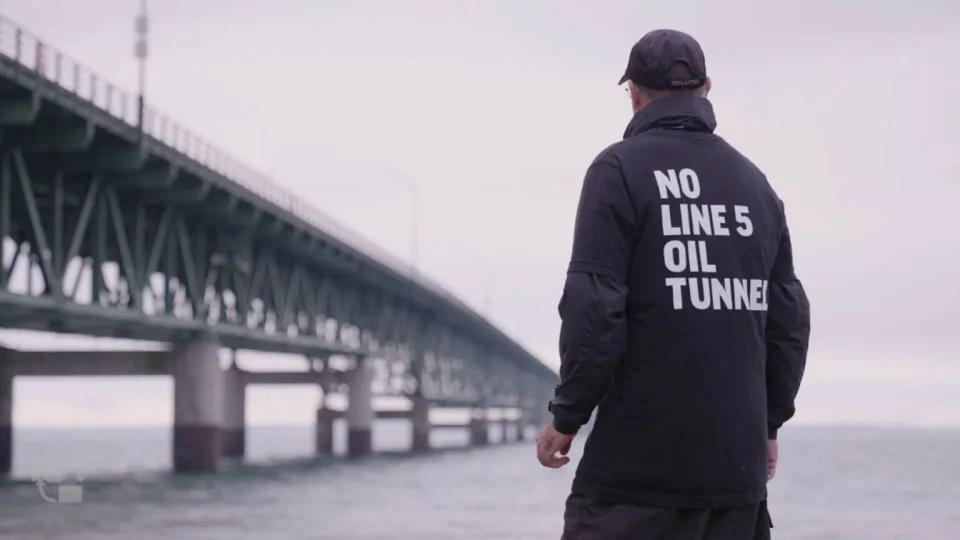
Canada’s support of Enbridge’s controversial oil pipeline known as Line 5 and its proposed tunnel under the Straits of Mackinac may amount to a failure to protect the rights of Indigenous communities.
That’s the opinion of the United Nations’ Committee on the Elimination of the Discrimination, as expressed in a Dec. 8 letter to Leslie Norman, permanent representative of Canada to the UN Office in Geneva.

“The letter echoes concerns raised by Anishinaabe Indigenous communities from the U.S. and Canada earlier (in 2023) that Line 5 poses a direct threat to their Tribal sovereignty and essential resources,” said Alejandro Davila, a spokesperson for Earthjustice which, along with the North American Rights Fund, represents the Bay Mills Indian Community.
The UN committee received information of the possible violations under its early warning and urgent action procedure.
The letter bulleted a dozen potential rights violations.
“The continued operation of the 70 years old Line 5 pipeline, owned and operated by Enbridge, a Canadian corporation, poses a foreseeable risk of a catastrophic oil spill and threatens vital natural and cultural resources, thus disproportionately and discriminatorily endangering the culture, health, and lands of dozens of Indigenous communities in Canada and the U.S.,” said CERD in the letter.
Line 5 carries an average of 542,000 barrels of light crude and natural gas liquids per day on its 645 mile route from Superior, Wisconsin to Marysville, Michigan; a 30 inch pipeline runs through the Upper Peninsula to St. Ignace, where it divides into two 20-inch pipes that snake along the lakebed of the Straits, before combining back into one pipe for its run through the Lower Peninsula to Marysville, where it crosses under the St. Clair River in a pipeline directionally drilled below the riverbed in 2020.
“There are several documented failures and previous spill history of Line 5, which reportedly has spilled over 1 million gallons of oil over 33 incidents since 1953,” said CERD. “In 2020, the pipeline was damaged so severely that a court in Michigan ordered Enbridge to temporarily shut it down.”
On Dec. 1, the Michigan Public Service Commission voted 2-0, with one abstention, to approve the proposal by Enbridge to build a tunnel under the Straits of Mackinac to house a roughly four-mile section of Line 5. Four tribes are challenging the ruling. The Mackinac Straits Corridor Authority and United States Army Corps of Engineers still must approve the project.
The committee said that erosion along the Bad River in Wisconsin puts the pipeline at risk of rupture.
“The ongoing operation of Line 5 contributes to significant climate-induced harm to the Great Lakes and the natural resources vital to Indigenous Peoples, such as the Anishinaabe communities surrounding these lakes in Canada and the U.S.,” CERD said. “In some areas, Enbridge is operating the pipeline without legal permission to cross tribal and state lands, and in June 2023 a Wisconsin court ordered Enbridge to decommission the stretch of the pipeline on the Bad Rive Band’s property, but gave Enbridge up to three years to reroute the pipeline primarily due to Canada’s assertion that such a measure would cause economic harm.”
Enbridge has continued to operate Line 5 despite the State of Michigan terminating the easement in November 2020 that allowed Enbridge to operate a pipeline in the Straits. The termination was based on Line 5’s threats to the environment and Indigenous communities.
“… Enbridge has continued its operations in total disregard of the right to free, prior, and informed consent of affected Indigenous Peoples,” CERD said. Nor have the tribes consented to the proposed tunnel.
“Affected Indigenous Peoples from both sides of the border have been excluded from the ongoing negotiations between Canada and the U.S. regarding Line 5, despite their requests to participate,” said CERD. “The information received also alleges that the State party has failed to properly regulate Enbridge to ensure that its Line 5 operations respect Indigenous Peoples rights. It is further alleged that the State party continues to actively advocate for the operation of Line 5 despite the opposition of affected Indigenous communities and the recommendations made by the UN Permanent Forum on Indigenous Peoples and the Special Rapporteur on Indigenous Peoples to decommission Line 5.”
The committee asked the government to respond to the allegations by March 15.
The letter was signed by Verene Shepherd, chair of the committee.
Jim Bloch is a freelance writer based in St. Clair, Michigan. Contact him at bloch.jim@gmail.com.
