

By Jim Bloch

In October, the Port Huron Statement was memorialized with a Michigan Historical Site marker in Lakeport State Park near the location of the old union camp where the document was finalized.
What was Port Huron, southeastern Michigan and U.S. like in 1962 when four or five dozen young people from Students for a Democratic Society wrote the Port Huron Statement, their radical vision for America?

Try to picture as many as 60 college kids on a Lake Huron beach in June 1962, just days after wrapping up their final exams.
Typical post-Eisenhower teens might have been doing the twist in the sand to Chubby Checker’s hit on AM radio, chugging bottles of Goebel’s beer and tooling up M-25 to the A&W in Lexington in ’55 Fords for root beer floats.
But there was something different about the young SDS activists.
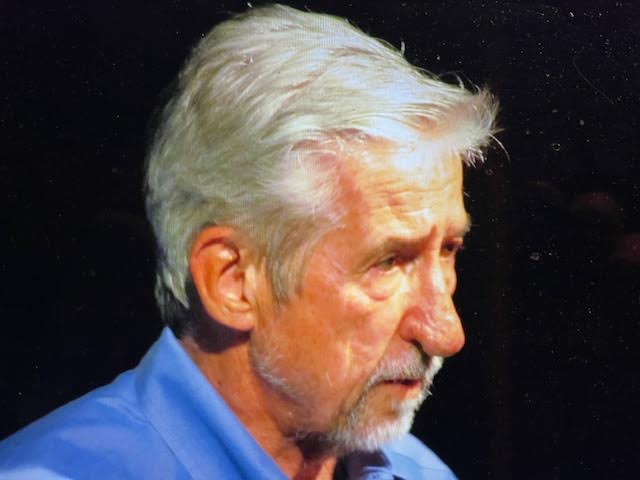
Not long before composing the initial draft of the Port Huron Statement, “I was reading Mad magazine,” said Tom Hayden in a 2002 interview. Hayden graduated from Royal Oak Dondero before attending the University of Michigan and becoming one of the most recognizable radicals of the 1960s.
He was also reading On the Road by Jack Kerouac, dozens of books on political theory and philosophy, participating in the Freedom Rides for civil rights in the American South and writing about the civil rights movement for the Michigan Daily.
“Royal Oak in 1962 was no better, no worse than any place else,” Hayden said. “It was quiet. Northland had just been built, maybe the first mall in the country.”
A growing network of freeways was in the process of welding the far-flung nation together, a civil defense byproduct of the Cold War. But in 1962, I-94 stopped at Harper Woods.
SDS members would have car-pooled northeast out of Detroit on Gratiot Avenue, rumbling through Mount Clemens, the old farm-towns of Muttonville and Richmond, and into Marysville, where they headed north on River Road toward Port Huron and the lake.
“We always drove in cars filled to the brim with people,” Sharon Jeffrey, one of the founders of SDS, told me in 2002.
Port Huron’s population stood at just over 31,000. Its first pro sports team was about to debut, the Flags in the International Hockey League. Ray Mathieson served as mayor.
“In looking at our Tour Book from 1962, I see basically nothing,” a senior editor at AAA said in a 2002 interview. “In Port Huron, we listed only one restaurant, Richert’s. It says it has air conditioning and is popular with the local residents. Dinners cost between $1.75 and $4.”
If Port Huron was full of “nothing,” America was full of aggressive optimism. The Dow Jones index hit its high mark of 726 on Jan. 3. Mercury astronaut John Glenn took a heroic lap around the planet. On Valentine’s Day, JFK announced that US advisors in Vietnam, if fired upon, would return fire. In March, the US tested an H-bomb in the Pacific, sending the country hurtling toward the scariest Halloween in history: A nuclear showdown with the USSR over Cuba.
The optimism, however skewed, turned out to be critical to the young people on the beach in Lakeport.
“JFK was close enough to us in age that we really listened to him,” said Hayden. Kennedy urged young people to get involved in the life of their nation. With initiatives like the Peace Corps, Kennedy created an inspirational atmosphere that made it seem like all things were possible.
The burgeoning civil rights movement gave purpose to the young radicals and a suggested a course of action to right the wrongs of America. The life and death struggle taking place in the South overshadowed relatively trivial diversions like Bonanza, Perry Mason and The Beverly Hillbillies on TV, shopping at new discount Meccas like Walmart and Kmart and following their home teams in the early days of televised mass sports. Highlighting America’s pastime in 1962, Dodger Stadium opened in L.A., a palm-studded headstone commemorating the killing of baseball in Brooklyn by big business. In Detroit, the Tigers would finish fourth.
Not that it mattered to SDS.
“Sports became quite secondary in the Sixties,” said Hayden, who at age 12 pitched a no-hitter for a Little League team sponsored by Dunn’s Camera Shop in Royal Oak.
The barbiturate-induced suicide of Marilyn Monroe on Aug. 5 suggested that even the most fairy-tale of American lives were wormed with malaise.
“America as a whole created a lot of malaise for anyone who had a flicker of curiosity,” Hayden says.
In short, these were not your typical Coppertone college kids. For the moment, arriving at the Lake Huron beach in overcrowded cars, they were misfits, advocates of racial equality, direct democracy, banning the bomb, stopping imperialism, and overhauling American culture.
“It was an extraordinary time,” said Jeffrey, a graduate of Cody High. “I really felt that we were deepening and expanding the meaning of democracy. It’s such a young political form. It’ll take a long time to fill itself out.”
Timing might not have been everything, but it was important.
“I don’t know what would have happened to me if I had graduated from high school in 1955 (instead of two years later),” Hayden says. “Get a car, get a wife, get a career. It’s what you did. By 1965, I would’ve been locked into a day job.”
Although it bears the city’s name, Hayden and his fellow radicals wrote the statement at what now is the day use area of Lakeport State Park. The young radicals may have been
perched on the lip of history, but chances are that they drove straight through city and never noticed it.
Hayden said: “I don’t know if any of us came into the town of Port Huron then.”
Jim Bloch is a freelance writer based in St. Clair, Michigan. Contact him at bloch.jim@gmail.com.
