High fashion and luxury vehicles go hand-in-hand at General Motors, and newly available images from a fashion designer showcase how spectacle-fueled car sales in the company’s golden age.
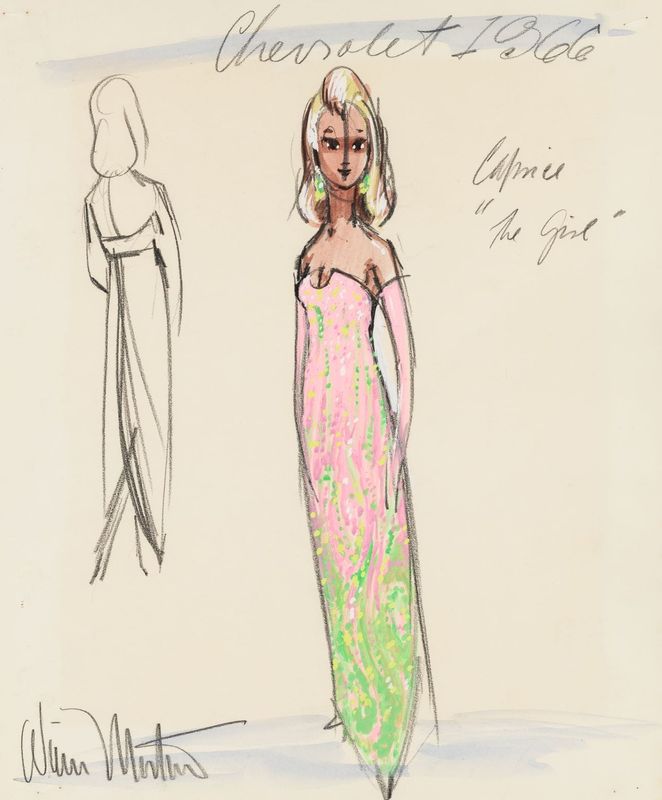
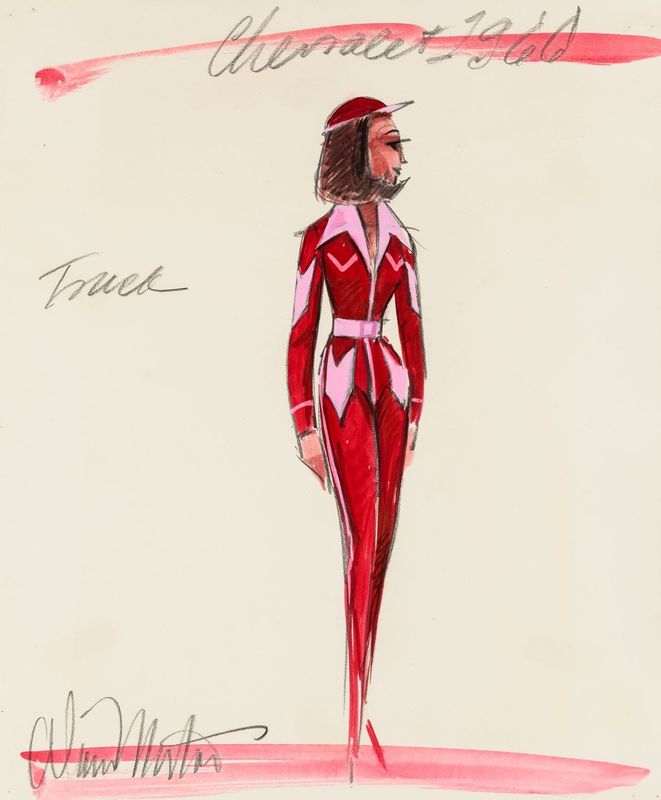
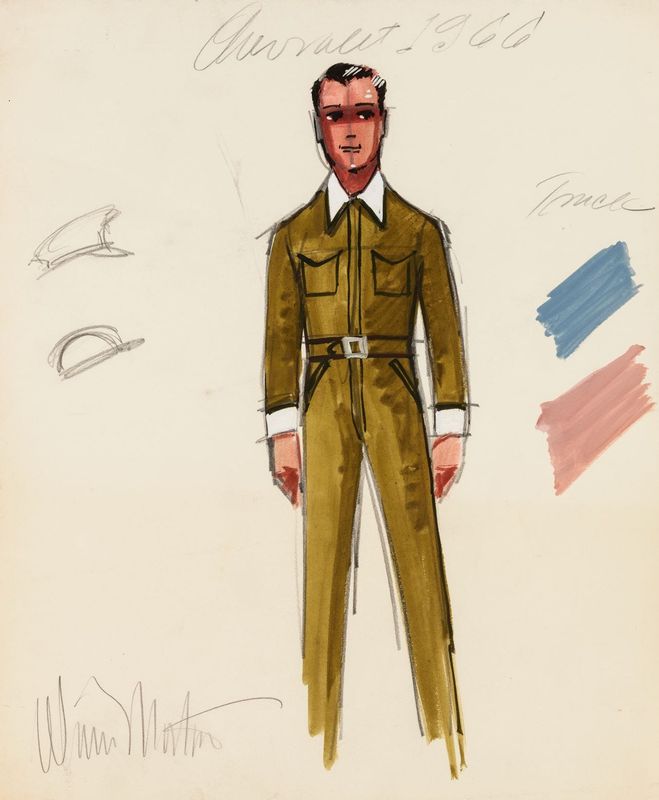
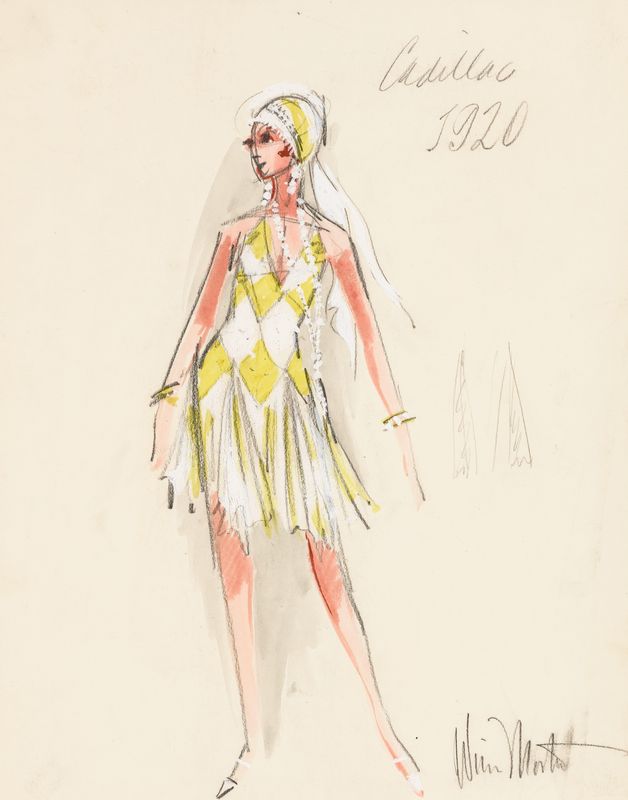
Sketches from the estate of the late John “Winn” Winniford Morton, privately housed at the General Motors archives at its Warren Tech Center, offer a glimpse into the many ways the company imagined its idealized vehicle owners.

GM shared images of the private collection with the Detroit Free Press after concluding an internal exhibition of Morton’s work at the company’s Global Design Center in Warren.
The aim of the exhibit was to inspire the over 1,000 GM designers who work in Michigan.
Morton, who died in 2022, worked as a theatrical designer for over 80 years. The Dallas-born designer created costumes for on- and off-Broadway productions as well as for those used in Ringling Bros. and Barnum & Bailey Circus.
What separates Morton from other designers GM has worked with? His organization, according to GM archivist and curator Natalie Morath. After Morton’s death, his friend and estate manager Myra Walker offered GM roughly 400 of his GM-commissioned sketches for donation, which Morath archived and digitized for internal company use.
The digitized images also were shared with Walker who used them to complete a new book on Morton titled “Dreams and Ideas: The Artistry of Costume Designer Winn Morton.”
“We were interested right away,” said Morath, who led the team of seven archivists. “This is the only fashion material we have in the archive.”
GM’s musical, theatrical past
To understand the value of the sketches, it’s important to consider the importance of industrial musicals in GM’s history. Appealing to customers through lavish presentations, including the Motorama extravaganzas, which where in-person shows staged in major cities from 1949 to 1961, allowed GM to spark excitement over its products and drive traffic to its dealerships across the country.
But GM staged industrial musicals just for its dealer body ― spectacles to help sell the American dream. In the mid-1960s, when GM hired Morton for his costume sketches, the company had over 10,000 dealerships and wanted engaging ways to introduce upcoming product lineups.
During the booming economy following World War II, automakers could more than justify the hoopla and production value of a stage musical to train car dealers, said Matt Anderson, curator of transportation at the Henry Ford Museum and Greenfield Village in Dearborn.
“There was a lot of selling to do, the economy was booming,” he said. “It’s hard to look at it now as anything but cheesy, but at the time they were taken seriously.”
Automaker design teams may start with an archetype, a mood or vision for the vehicle to capture the ideal audience, but in the case of Morton, he began with a vehicle and worked to create the customer through what they might wear.
Melanie McClintock, chair of color and materials design program at the College for Creative Studies in Detroit, said GM wielded fashion alongside automobiles to highlight qualities of the customer that would draw them to the brand.
“Why would you hire a fashion or a costume designer? … I would say it’s about defining aspiration. Today, we spend a lot of time looking at data to define the identity of the future consumer for products, but during that time it was a different approach to designing identity,” she said. “Clothing is functional, fashion is aesthetic ― fashion brings a certain soul to a product that may feel quite cold at times.”
Across the two decades of GM’s private dealer productions, Morton’s sketches cover maybe a handful of years in the mid-1960s.
Morton’s contract work likely occurred while he was represented by a union of theater employees, but his time working with the company is shrouded in speculation.
The events for which he designed the costumes “were not for the public, so we have very little information about those or records,” Morath said. “By the time he received the images of the cars, the GM designers would have already moved on to the next project.”
A hand-built car and a hand-built dress
A great deal of care went into outfitting the model or dancer performing at a GM production, Morath noted. Morton’s sketches were living documents, she said, and include notes on the name of the person wearing the sketch or what other accessories they may wear.
For the internal company exhibit, Morton’s sketches were supplemented with photography, videos and scrapbooks documenting the Motorama events, which the company has better records of, to compare to the stage shows for which Morton would have designed.
A trim shop technician, Riley Jarvis, re-created one of the gowns to display with the drawings, Morath said, among other displays.
Morath posits that GM design would have likely shared with Morton the design and marketing materials as well as information about the possible sets and stages to better envision how that car owner would dress.
“Often, a show car or dream car would be paired up with a major couture fashion house like Dior, who would create a gown that would go with the car onstage,” Morath said. “It’s a hand-built car and a hand-built dress.”
Morton’s contract with the company made perfect sense at the time, McClintock said. In the 1960s, the Hollywood musical was an ideal “vehicle” for aspiration.
“People were already drawn or thinking in that way,” she said. “Entertainment was manifested through musicals; they were the pinnacle of fantasy.”
That old razzle dazzle
While the Morton sketches showcase some of GM’s long legacy of using different mediums to reach its customers, it also conveys how far the American consumer has drifted from the style and fantasies of the 1960s.
“All design is linked. Fashion informs interior, automotive, product design ― the shifting modes in fashion are connected to the shifts in automotive,” she said. “We’re not looking for pure aesthetics; we’re looking for emotional connection and value. Before it was about aspiration and status; we’re now leaning into comfort and sustainability.”
While many companies used music and fashion to sell products, the auto industry was one of the main progenitors of this form of marketing, Anderson said. And starring in an industrial musical likely paid quite well, he added.
“This was all done before the internet. You’re not going to look like you’re selling out starring in a musical for GM or Ford,” he said. “It’s an almost-forgotten chapter of corporate history, that would seem as if that could not possibly have existed ― but they did, and were quite popular.”
Jackie Charniga covers General Motors for the Free Press. Reach her at jcharniga@freepress.com.
This article originally appeared on Detroit Free Press: Why GM hired a theater designer to sketch what car owners might wear
Reporting by Jackie Charniga, Detroit Free Press / Detroit Free Press
USA TODAY Network via Reuters Connect
By Jackie Charniga, Detroit Free Press | USA TODAY Network