LANSING — Gov. Gretchen Whitmer is proposing an $88.1 billion state budget for 2027 that gives tax breaks to seniors and families with school-age children while hiking a wide range of taxes and fees, from online gaming to tobacco to license fees for hunting, fishing and boating.
For the second straight year, Whitmer did not participate in the budget presentation. But she said in a news release that Michigan “is open for business and on the move, and this budget will deliver on the kitchen-table issues that make a real difference in people’s lives.”

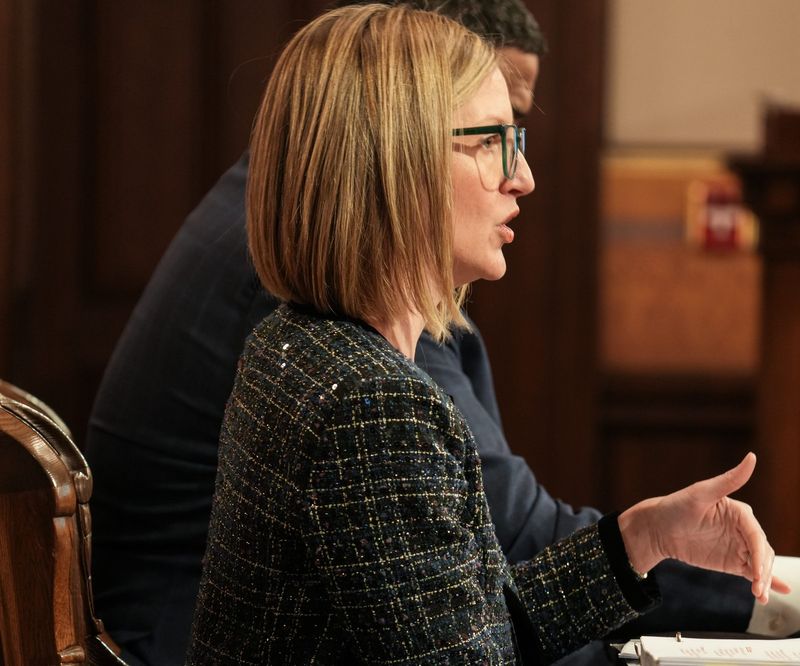
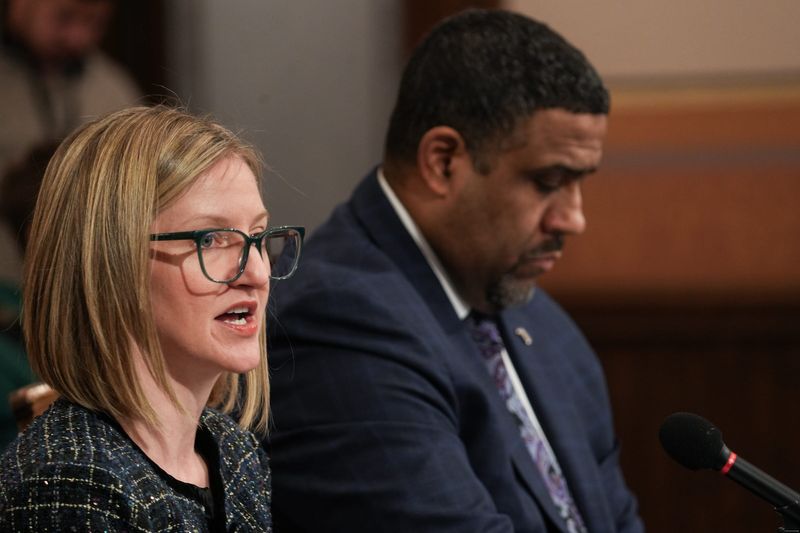
The spending plan, which State Budget Director Jen Flood presented to lawmakers at the Capitol on Feb. 11, received blowback from House Republicans, based on leaks of its contents, even before Flood’s afternoon presentation began.
“There will be no tax increases in this budget,” once a final agreement is reached with the Legislature, House Speaker Matt Hall, R-Richland Township, said at a morning news conference on Feb. 11. “We’re going to have to live within our means,” and “we’ve got to make more cuts.”
Though there was unusual disagreement about the total size of the 2026 budget, due to complications related to the way certain health-related taxes were accounted for, the nonpartisan Citizens Research Council of Michigan pegged it at $84 billion, down slightly from the 2025 budget of $84.1 billion, once all 2025 supplemental spending bills are included. Based on those numbers, Whitmer’s eighth and final budget proposal represents a 4.9% increase from the current year.
Flood noted that the budget for the general fund, which is the state’s main checking account, would decrease 3.5% under Whitmer’s proposal, to $13.6 billion for 2027, from $14.1 billion this year. That’s despite significant budget challenges related to reduced federal support for certain programs and increased health care and Medicaid costs, she said.
Here are highlights:
Tax cuts
As first reported by the Detroit Free Press, the budget includes a proposed property tax break for eligible seniors age 65 and older. The $90 million plan would make more than 355,000 seniors eligible for property tax rebates of up to 10%, with average savings of $345 a year, Flood said.
There would be an income cap to be eligible for the property tax credit, Flood said Feb. 11. Details on income eligibility were not immediately available.
The budget also includes a sales tax holiday on back-to-school supplies, which the budget said would provide tax relief totaling $15 million.
According to a budget briefing paper, online purchases and those from brick-and-mortar stores would be eligible for temporary exemption from the 6% sales tax for back-to-school clothing of up to $100 per item, school supplies of up to $20 per item, and computers for personal use of up to $1,000.
Details, such as when the proposed sales tax holiday would begin and when it would end, were not immediately disclosed.
Tax and fee increases
New tax increases proposed in the budget include $232 million from increased tobacco taxes, $95 million from a vape tax, $195.4 million from higher taxes on online gaming and sports betting, and $282 million from a digital advertising tax.
The state cigarette tax would increase to $3 for a pack of 20 cigarettes, up from $2 per pack currently. Whitmer also proposed increasing the tax on other tobacco products, such as pipe tobacco, moist smokeless tobacco, and snuff, from 32% of the wholesale price to 57%. A new excise tax on vaping products and alternative nicotine products would equal 57% of the wholesale price.
Higher gaming taxes proposed include: a higher tax rate — 36% up from 28% — on online gaming that exceeds a certain threshold at the largest casinos, netting $135.5 million for the state; $38.8 million for a per-wager sports betting tax; and $21.1 million from the elimination of a free-play deduction that online casinos receive.
The digital advertising tax is described in budget documents as a 4.7% excise tax on the Michigan share of digital advertising revenue, with exceptions for broadcast and news media. Platforms such as Facebook, Instagram and Google would be subject to the tax, according to the State Budget Office.
The budget also proposes a range of smaller tax and/or fee increases, many of which were proposed by Whitmer in past budgets and rejected by the Legislature. Those include $29.4 million from increased hunting and fishing license fees; $11 million from increased landfill tipping fees to support cleanup of contaminated sites; $7.3 million from increased land and water permit fees, $5 million from increased hazardous waste fees; and $465,500 from increased underground gas and storage fees. The budget also proposes higher fees for boat licensing and airplane registrations.
Rainy Day Fund
To meet expenses, the budget proposes withdrawing about $400 million from the state’s Budget Stabilization Fund, better known as the Rainy Day Fund, where the balance recently reached $2 billion.
Flood noted that the Legislature’s fiscal agencies calculated that an even larger withdrawal — $540 million — can be justified.
Hall said Michigan’s economy is stable and there is no justification for withdrawing money from a reserve fund intended to address an economic downturn.
The budget proposes a 2.5% increase in the per-pupil grant, to a minimum of $10,300 per pupil.
It recommends that cyber schools, which face lower costs for items such as buildings and transportation, be funded at a rate 20% lower — $8,240 per pupil.
Whitmer proposes $2.9 billion for students with special needs, a $154 million increase.
The budget also proposes big funding boosts for literacy programs, which Whitmer has announced as a top priority in her final year. Those include: $100 million for “high-impact” tutoring; $100 million over two years to purchase and implement high-quality literacy curricula; $50 million to continue implementation of “science of reading” instruction, and $10.5 million for additional literacy coaches in intermediate school districts.
Whitmer’s budget also continues funding for two programs she launched or expanded earlier in her governorship: $200 million for free breakfast and lunch for all K-12 students, and $765 million for preschool for all 4-year-olds.
Colleges and universities
The budget mostly freezes operational funding for community colleges and universities, while providing one-time grants to help mitigate what would otherwise be a loss of funding due to inflation.
This approach “prioritizes fiscal responsibility” in “a constrained ongoing revenue environment,” according to budget documents.
For community colleges, Whitmer proposes one-time grants of $11 million to maintain operational funding levels and $33 million for infrastructure, technology, equipment, maintenance, and safety. For universities, she proposes grants for the same two purposes, of $52.3 million and $26.7 million, respectively.
Transportation
The budget says that this year, Michigan will receive $1.6 billion in new transportation funding from the package passed last year, under which annual funding will eventually grow to more than $2 billion.
Of the new funding for 2027, 69% will support local road projects and 10% will support transit and rail programs, according to budget documents.
Other highlights
The budget proposes closing Michigan State Police forensic laboratories in Northville and Grayling and consolidating those operations at other labs. Currently, the MSP has seven forensic labs around the state.
On economic development, Whitmer is also proposing a 2026 supplemental budget that would include $150 million for “strategic site readiness” to “position Michigan for important projects that will create jobs for Michigan residents,” according to budget documents.
The budget proposes $59.4 million in ongoing funding for business attraction and community revitalization and $16 million for the Pure Michigan advertising program, which promotes tourism.
Contact Paul Egan: 517-372-8660 or pegan@freepress.com.
This article originally appeared on Detroit Free Press: Whitmer 2027 budget has tax cuts for some; tax hikes for others
Reporting by Paul Egan, Detroit Free Press / Detroit Free Press
USA TODAY Network via Reuters Connect