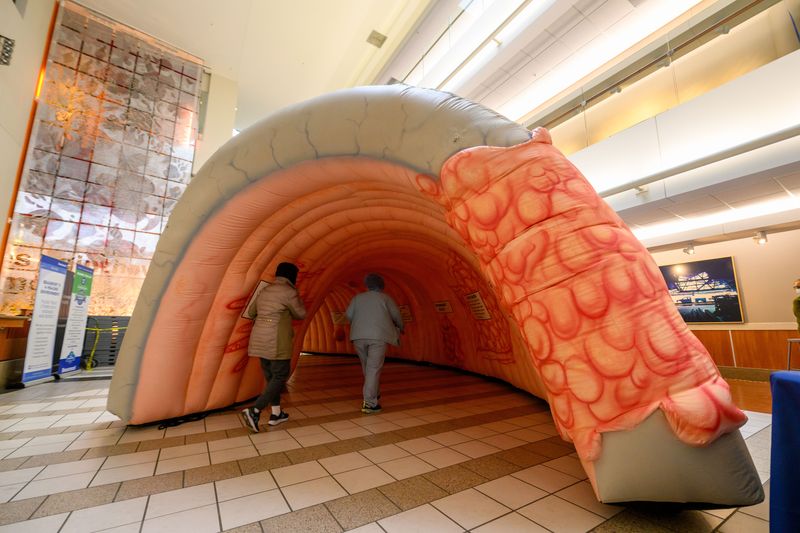
According to the Mayo Clinic, many people with colon cancer don’t have symptoms at first.
When symptoms do appear, they’ll likely depend on the cancer’s size and where it is in the large intestine.

Colorectal cancer screening is recommended for most adults at average risk starting at age 45 and continuing through age 75, according to the Centers for Disease Control and Prevention. The American Cancer Society and the U.S. Preventive Services Task Force suggest regular screening, with options ranging from annual stool tests to a colonoscopy every 10 years.
Symptoms of colon cancer can include:
Some may need to be tested earlier than 45, or more often than other people, for those who have: inflammatory bowel disease such as Crohn’s disease or ulcerative colitis; a personal or family history of colorectal cancer or colorectal polyps; or a genetic syndrome such as familial adenomatous polyposis (FAP) or hereditary non-polyposis colorectal cancer (Lynch syndrome).
For more details on different types of screenings, go to the CDC’s website.
This article originally appeared on The Detroit News: What are the warning signs of colorectal cancer?
Reporting by The Detroit News / The Detroit News
USA TODAY Network via Reuters Connect