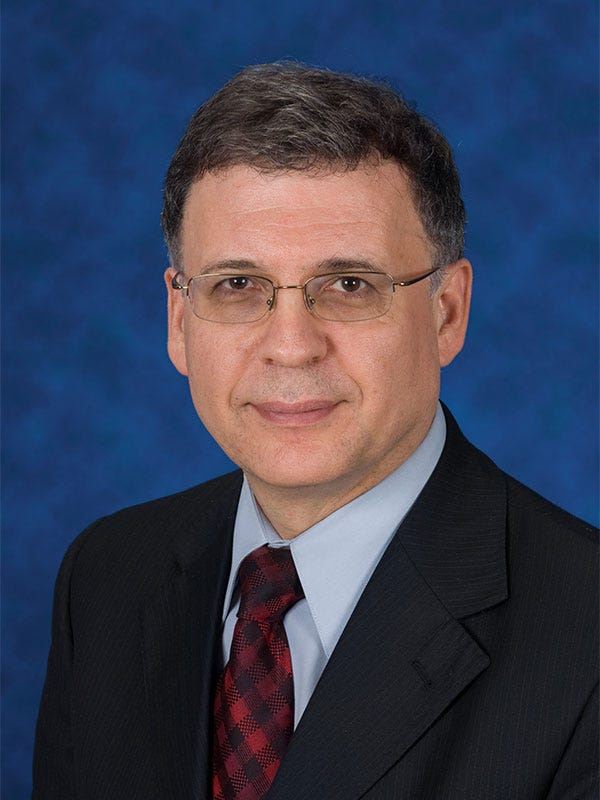
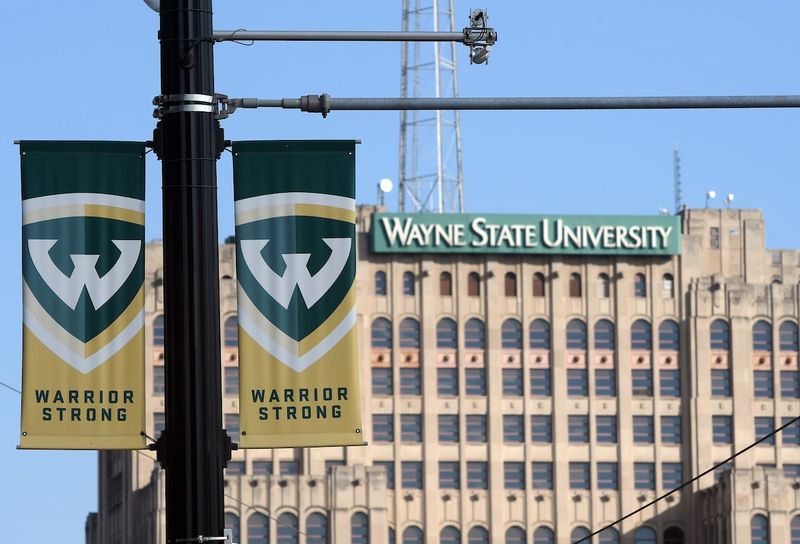
Wayne State University School of Medicine Dean Wael Sakr was accused last year of creating a toxic work environment, including screaming at subordinates, slamming doors, disrespecting colleagues and even playing Minecraft on his work computer while important deadlines loomed.
Documents obtained by the Free Press show for the first time publicly why the university placed Sakr on paid administrative leave and launched an investigation into his conduct. They also show why he was reinstated six weeks later: The investigation failed to find conclusive evidence that Sakr violated university policy.

The controversy surrounding Sakr became part of a larger rift within university leadership which culminated in the resignation of Wayne State’s then-President Kimberly Espy.
The records, released to the Free Press under a Freedom of Information Act request that took more than five months to complete, show that Sakr’s boss, Dr. Bernard Costello, senior vice president for health affairs, addressed Sakr’s behavior.
In an Oct. 31 letter following the investigation, Costello ordered Sakr to undergo six months of executive coaching for “emotional self-regulation, conflict management, constructive feedback, decision discipline and trust-building.”
“The evidence reflects that you have engaged in behaviors on multiple occasions that are inappropriate, unprofessional and unbecoming of a dean of the School of Medicine,” Costello wrote. “Further, your behavior has had a significant impact on the work environment and morale of numerous employees, at least some of whom have stated that they left the university due to the environment that you have created.”
The records don’t say whether Sakr completed that coaching. Wayne State spokesman Matthew Lockwood said the university couldn’t discuss personal matters due to privacy considerations.
“Wayne State University expects its employees to conduct themselves in a professional, ethical and respectful manner,” Lockwood said in a statement. “Workplace concerns are reviewed and addressed through established university policies and procedures.”
Reached this week for comment on the findings, Sakr declined an interview request but said he was proud of his more than 35 years with the university.
“I am glad that after an investigation into the only complaint that was filed, that there was no violation of university policies, and the university granted me the return to my position and responsibilities,” Sakr said in a statement.
Mysterious absence
Sakr’s suspension was a mystery when it was announced in August with no details. It prompted a backlash against Espy. Almost 200 faculty and staff members signed a letter demanding due process for Sakr and urging his reinstatement if the accusations proved unfounded.
“It’s very hard to get faculty riled up, to be honest, about anything,” Jennifer Sheridan Moss, then-president of the Wayne Academic Union told the Free Press at the time. “But the School of Medicine faculty were very angry. They were angry about the way in which Dr. Sakr was put on leave, implying that he had done something wrong.”
In September, Espy resigned as president barely two years into a six-year contract. In addition to the Sakr controversy, Espy had been under fire for other things as well, including her handling of Gaza war protesters on campus.
Espy cited personal reasons for her resignation. The university agreed to pay her one year’s salary, $760,499, as part of a separation agreement, which included a non-disparagement clause applying to both Espy and the university.
‘Walking on eggshells’
The university redacted the copy of the investigative report into Sakr it released to the Free Press, blacking out the policy that Sakr was accused of violating and other details.
The report noted that a female employee at the School of Medicine reported that Sakr came into her office, sat very close to her and said something to her. The words Sakr is accused of using are redacted in the report.
The report goes on to note the woman said Sakr was “angry, hostile and sitting a foot from me.”
The woman told investigators that she worried about Sakr’s mental state as he was frequently screaming at her and others behind closed doors. She said Sakr “consistently loses it” and has the office staff “walking on eggshells.”
She also said Sakr would ask her to attend online meetings but make her sit silently out of camera frame so other attendees wouldn’t know she was there. She also accused him of telling her to use personal email to “keep things off the record.”
In an interview with university investigators, Sakr acknowledged having the woman sit in on an online meeting, but said it only happened once and the woman agreed to it. He said he would not do it again. Sakr also acknowledged using personal email but said it was for private things like medical advice.
The woman’s complaint prompted the university to interview others who worked with Sakr.
Video games
One male colleague, whose name is redacted in the report, told investigators Sakr demanded loyalty and would scream at him as well.
“The dean was struggling to get things done, which resulted in constant interruptions and having to drop everything to help him at the last minute,” that witness said, adding that he would find Sakr “… in his office playing Minecraft or Timebomb on his computer.”
A female colleague accused Sakr or brushing her off saying “he seems to respond better to men.” Yet another female colleague said Sakr “was just mean. I would greet him in the morning, and he would not speak.”
One former employee was asked whether she would consider returning to Wayne and said “Hell, no,” adding that Sakr “is not publicly yelling at people as much as he was, but is still condescending. Heis vindictive, and no one wants to be in that situation.”
Sakr’s eventual reinstatement drew instant reaction from people who had been interviewed by investigators.
“When advised that Dr. Sakr would be returned from administrative leave, the complainant and another high-level witness broke into tears during separate meetings, which appeared to be a genuine reaction and consistent with the concerns they had previously reported,” the report says.
The investigators wrote that Sakr didn’t show signs of remorse.
“During his interview, when Dr. Sakr did admit to anything (which was minimal), he routinely deflected and tried to blame his subordinates,” the investigators wrote. “This very pattern of behavior was consistent with statements taken from the complainant and witnesses.”
Two witnesses expressed concerns that they could face retaliation from Sakr and investigators touched on those concerns as well.
“Both in his interview and upon returning, Dr. Sakr did not seem to express any responsibility, accountability or ability to reflect on the concerns raised,” they wrote. “Rather, he only suggested that someone is going to have to answer for the time that he was on leave.”
In his response to the Free Press inquiry, Sakr said he was aware of the additional allegations against him.
“I was subsequently advised that a few others who were interviewed made comments about me, but no investigation ensued,” he wrote. “I was deeply saddened about allegations concerning my collegiality and professionalism as I have always tried to conduct myself in a professional and respectful manner throughout my service.”
He added: “I understand that there is always room for improvement.”
Sakr wrote that in more than three decades at Wayne, he had worked with hundreds of colleagues who could attest to his good character.
Dr. David Rosenberg, who stepped into Sakr’s role as dean on an interim basis, could be considered one of them. Rosenberg resigned that post, citing how the university treated Sakr. In his resignation letter, he said a lack of explanation from the university was part of his decision.
“Dean Sakr and I have been close colleagues and good friends for many years, and I have always known him to be a man of good character with unwavering devotion to the School of Medicine and University,” Rosenberg wrote.
Prior to being placed on leave, Sakr had received a positive evaluation on his job performance.
“Based on your activities and progress toward goals during FY 2024, I have rated your performance as effective,” Provost Laurie Lauzon Clabo wrote to Sakr in December 2024. “Your base salary will increase by $10,300 bringing your new salary to $422,300.”
Others have praised Sakr as well.
In April, Dearborn-based ACCESS – Arab Community Center for Economic and Social Services, honored Sakr as Arab American of the Year, calling him “a visionary whose leadership has left a lasting mark on our community and our nation.”
Sakr is Syrian American and earned his medical degree at the University of Damascus, according to his university biography.
Contact John Wisely: jwisely@freepress.com. On X: @jwisely
This article originally appeared on Detroit Free Press: Wayne State’s medical dean accused of creating toxic workplace
Reporting by John Wisely, Detroit Free Press / Detroit Free Press
USA TODAY Network via Reuters Connect