

Voters in Wayne County have a handful of issues to decide in Tuesday’s elections, including whether all 43 cities and townships — some for the first time — will renew a 1-mill property tax that funds the county’s SMART bus service, while Highland Park’s mayor faces a bunch of challengers to gain a spot on the November ballot.
Livonia residents will decide whether to renew a public safety operating millage that provides funding to the police and fire departments. The property tax, which voters have overwhelmingly approved in the past, has generated controversy this year because of some residents’ anger over the city’s handling of a separate issue of whether to replace Livonia’s current police headquarters building.

Other communities also have millages to vote on. In Grosse Ile Township, a five-year, 1.92-mill property tax to fund the police department is on the ballot. Northville Township voters will decide whether to renew a 7.21-mill tax for public safety, senior and youth services. Lincoln Park residents will consider an extension of a three-year, 3.45-mill tax for the police and fire department that overrides the state’s limitations imposed by the Headlee Amendment.
And Wayne County Executive Warren Evans, who has been in the post since 2014, faces a Democratic primary challenger in Sigmunt J. Szczepkowski Jr. in a race that effectively decides the winner in the county, which is a Democratic stronghold. Michael A. Evans is running unopposed for the Republican nomination.
Wayne County Transit Millage
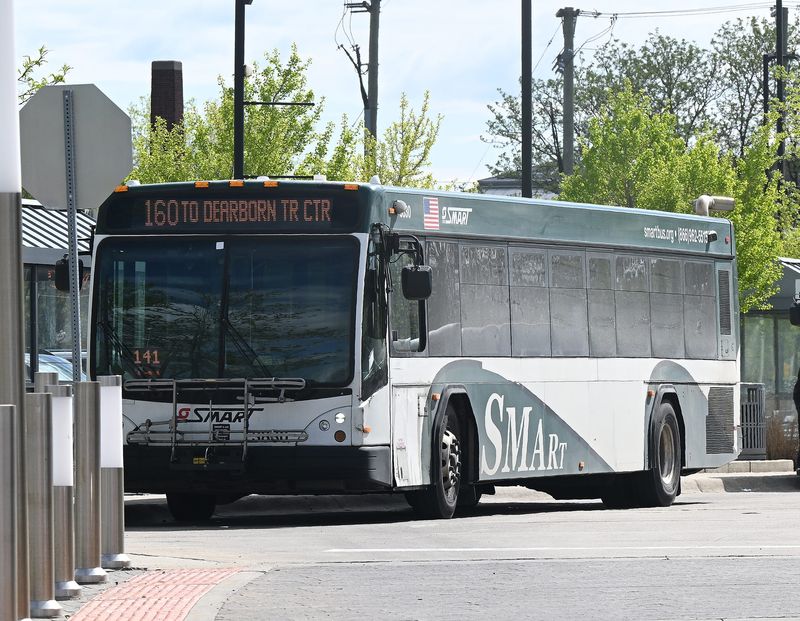
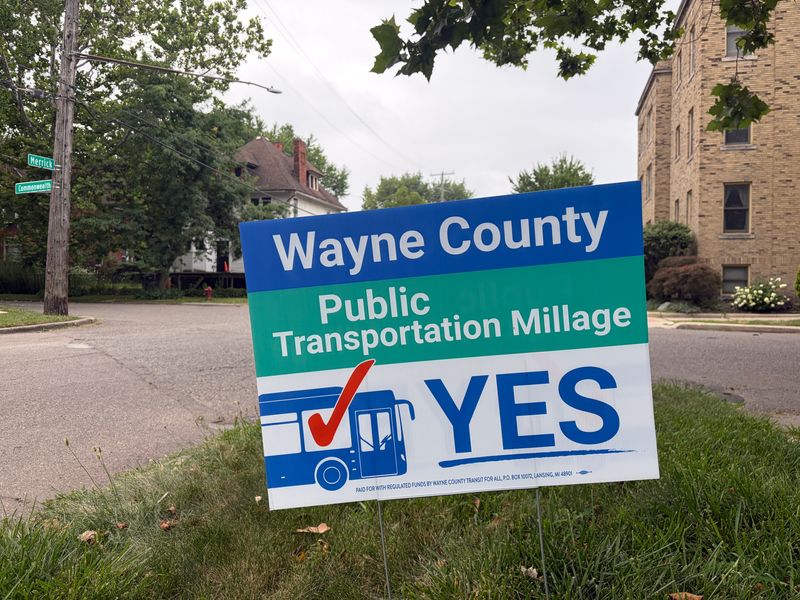
Wayne County voters in 17 of 43 communities will vote for the first time this year on a 10-year renewal of a roughly 1-mill property tax proposal that funds Metro Detroit’s SMART bus system. It would be expected to collect about $56.7 million in the county in its first year if voters pass it Tuesday.
While Wayne County communities were previously allowed to opt out of the transit millage, all 43 cities and townships in the county will vote on it this time. Michigan’s Legislature passed a bill in 2024 prohibiting the county’s communities from opting out, which Gov. Gretchen Whitmer signed in January 2025. Notably, Detroit is among the 17 communities that have previously opted out of the millage, but has gotten SMART bus service anyway because of routes on major arteries such as Woodward Avenue.
Tax advocates said SMART provides a critical service for people who rely on public transit to get around. CEO Tiffany Gunter has previously said the bus system has improved in recent years based on some key measures. She told The News previously that SMART added three new routes in Oakland County since 2022, the last renewal of the millage that also eliminated the opt-out choice for the county.
The millage also counts the transit advocacy group Transportation Riders United and Evans among its supporters. He urged residents to vote “yes” at a news conference in July.
“It is extremely important that we think of transit in terms of opportunities. That’s really what transit does,” Evans said. “It creates opportunities for people to live the lives that they like to live; for people to economically be able to get from point A to point B, and if people really think about this, this also has a strong economic impact.”
But the millage renewal has also drawn vocal opposition. Attorney Matthew Wilk formed the ballot question committee Not Smart Wayne to make his case against the millage renewal.
He argued that SMART buses have too low a ridership and generate too little revenue from fares to make the millage a worthy taxpayer investment or reduce emissions by replacing car rides. He filed a campaign finance complaint alleging county officials partnered with a transit group at a recent event to advocate for passing the millage renewal. Wilk also filed a now-dismissed complaint alleging the Wayne County Transit Authority violated the Open Meetings Act by not giving proper notice of a March meeting where it approved the ballot language.
“It is a fantasy that these transit rider people have in their heads that somehow we can overlay a European transit system on a suburban community with suburban-type density,” Wilk said. “Number two, it has all kinds of delivery problems. Throwing more money at a bad system doesn’t work.”
Highland Park mayoral primary
Highland Park’s mayoral candidates see promise for the roughly 3-square-mile city that is surrounded by Detroit. The five candidates are Mayor Glenda McDonald, first elected in 2022; Shamayim “Mama Shu” Harris; Joshua LaMere; Elene Robinson; and write-in candidate J. Douglas Hollie.
Highland Park, once a wealthy enclave of Detroit about a mile north of the city’s affluent Boston-Edison neighborhood, has had well-documented struggles with blight, economic development and infrastructure. It had a Chrysler headquarters and the now-abandoned Model T assembly plant, the birthplace of Henry Ford’s assembly line method of mass production. About 1,400 streetlights were repossessed in 2011 because of unpaid bills to DTE Energy.
After switching to using Detroit’s water system, tens of millions in unpaid water bills to the Great Lakes Water Authority led to a state-brokered agreement over about $55 million in disputed water bills. And the city hasn’t had a high school since 2015, when low enrollment led to the shuttering of Highland Park Renaissance Academy High School.
Under McDonald, who has also served on City Council, the community received $500,000 from the state in July to renovate the Highland Park Justice Center. It also celebrated renovating the city’s Boys & Girls Club in 2025.
But she also faced a recall effort in 2024 by political activist Robert Davis, who pursued ousting her partly over her support of the council’s approval of the state-brokered settlement of Highland Park’s water and sewer debt. Davis had criticized the settlement because it led to a temporary increase in residents’ bills. The recall effort did not go to a vote.
McDonald couldn’t be reached for an interview.
J. Douglas Hollie’s view on redeveloping Highland Park’s vacant buildings is, in a way, allegorical for how he sees the city’s fortunes: If a foundation is strong, it can be saved.
“I tell everyone all the time that Highland Park is the heart of Detroit,” he said. “The foundation is strong. You just need to remove the milkweed and crabgrass from the surface, and re-till it and re-plant the seeds.”
Hollie, 65, was raised in Highland Park, and moved back to the city in 2012. He’s a former National Football League player who served as president of the NFL Players Association and worked in the San Francisco District Attorney’s Office. If elected mayor, he wants to prioritize reviving the city’s school system and support robust social programs for kids, redeveloping abandoned buildings into housing and business hubs, taking care of the needs of Highland Park’s senior citizens, bringing industry back by transforming the city into a tech hub and strengthening the police department.
Hollie would like to see the vacant Model T plant on Woodward Avenue turned into a mixed-use space with restaurants and a farmers’ market, which he believes — along with the Joe Louis Greenway — could be a key part of rebuilding a vibrant downtown that can attract more people to the city. He would also love to see a senior citizens’ center near the greenway.
Addressing blight is a top priority for Harris, who said she would create a “Blight to Beauty” task force focused on making way for new developments and housing.
“The city has to be cleaned up in all kinds of ways, and so that is one of my top priorities,” she said.
Harris is known for revitalizing a block of Highland Park, just off Woodward Avenue, into a development known as Avalon Village. The project has torn down blighted buildings and installed gardens, a small business collective, a “city hall” called Village Hall and a park named after her late son, Jakob RA.
Harris has also worked within city government in roles including chair of the Highland Park Charter Commission, vice president of the city’s housing commission and president of the Board of Education.
At the site of the Highland Towers apartment building, which burned in a fire in 2010 and is set for demolition, Harris would like to see mixed-use development including retail space and cafes.
She also wants to continue work of replacing the city’s streetlights, because she’s cognizant of how street lamps affect safety. A nonprofit called Soulardarity has worked to raise money to install a small number of solar-powered streetlights in Highland Park, and Harris wants to see those small steps continue.
“That has something to do with the safety and security of a neighborhood,” she said.
Robinson and LaMere couldn’t be reached for comment.
Livonia public safety operating millage
The renewal of a 1.7-mill property tax that funds public safety operations in Livonia, which was last renewed in 2016 with 80% of voter support, has drawn detractors this year because of its entanglement in a separate controversial issue: The city’s consideration of funding a new police headquarters building.
Most recently, some residents have been angry about the possibility of the city issuing up to $45 million in bonds to replace the existing 1961 building. Objections to proposals by the city’s administration have covered everything from the currently proposed location, because of a nearby residential area and wetlands it would be built on, to the potential cost and the funding sources.
“Can the plan, or lose the millage,” said resident Steve King at a March meeting of City Council.
Voters also slapped down a project plan a year ago as part of a much larger, $150 million bond package to overhaul Livonia’s civic center campus.
The president of the Livonia Police Officers Association, Officer Tyler Vines, said in an email the millage renewal has nothing to do with any of the recent building construction proposals. He said a failure of the millage this year would eliminate almost $10 million from the police and fire departments’ budgets, and lead to staffing and emergency services cuts. The millage funds first responders’ pay, benefits, equipment and training, he said.
“All citizens, not just Livonia voters, are the true benefactors of this millage renewal. Investing in this millage is an investment in your safety, family, neighborhood, schools, parks and the core fundamentals that first responders protect each day,” Vines wrote.
jcardi@detroitnews.com
This article originally appeared on The Detroit News: Wayne Co. voters face SMART tax renewal. Highland Park has mayoral choices
Reporting by Julia Cardi, The Detroit News / The Detroit News
USA TODAY Network via Reuters Connect
By Julia Cardi, The Detroit News | USA TODAY Network
