Self-driving cars are headed to the Motor City.
Waymo, the fully autonomous ride-hailing service, said Nov. 3 that it has earmarked Detroit for the first Midwestern city to expand its business ― thanks to a soon-to-be released upgrade designed to safely navigate snowy conditions.

Detroiters can glimpse Waymo vehicles manually driven around the city starting Nov. 3 so the company can record the necessary data to scale up driverless ride services.
Though Waymo has never operated commercially in Michigan, the tech company has had a presence in the state since 2016 after establishing an engineering facility in Novi that builds prototypes. The facility also works on integration for the Waymo Driver, which is what the company calls the proprietary hardware and software that enables self-driving.
After recording massive amount of data testing in Denver and New York City, the autonomous driving technology company views Detroit as the next frosty frontier, according to Waymo’s Jake Tretter, a technical program manager. Waymo expects a smooth ramp up due to its familiarity with the region, though Tretter notes that Waymo rideshare won’t appear overnight.
“We need time to vet our safety framework in the city. Before we remove the driver and go fully autonomous, our autonomous specialists collect data in the city to make sure everything is performing as we expect,” Tretter told the Detroit Free Press. “When we’re ready, we’ll make further announcements about public usage of the service.”
Outfitted for Michigan winters
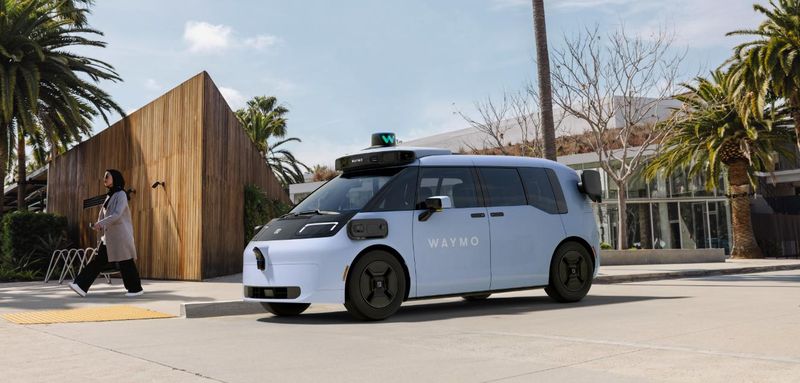
Waymo arrives in Detroit with a mixed, all-electric fleet, testing Jaguar I-Pace vehicles outfitted with the fifth-generation Waymo Driver and Zeekr RT vehicles with sixth-generation Waymo Driver.
Zeekr, a Tesla competitor, is a single-brand luxury electric Chinese car company founded in 2021. Geely Automobile Holdings, which owns many automobile brands including Volvo Cars, is a majority stakeholder in Zeekr.
The sixth-generation Waymo Driver — which is being tested but has not yet been deployed commercially — uses lidar (which stands for Light Detection and Ranging), radar and cameras to perceive areas around the vehicle while it operates, which makes it ideal for scanning parts of the road not even the driver can see. Each vehicle uses a suite of sensors that includes 13 cameras, four lidar and six radar, and an array of external audio receivers, according to the company’s website.
If that seems excessive, that’s because it is ― the sensors on the sixth-generation Waymo Driver combine to produce overlapping fields of view around the entire vehicle up to 500 meters away, in any light or weather conditions.
Those sensors have also been engineered to self clean throughout a journey so that snow and ice aren’t able to accumulate fast enough to disrupt the vehicle’s line of sight, according to Tretter.
“Think of each sensor as a mini car windshield,” Tretter said. “We can melt off snow and ice with powerful heaters, clear away debris with miniature wipers, and we can apply wiper fluid to remove salt and road grime as things like that build up.”
Waymo’s road to the Midwest
Though it primarily operates in warm, stable climates, Waymo is expanding operations into areas with less predictable weather.
Waymo launched in 2009 as a Google self-driving car project with the goal of driving autonomously over 10 uninterrupted 100-mile routes in Toyota Prius vehicles. Today, passengers take hundreds of thousands of fully autonomous trips each week across San Francisco, Los Angeles, Phoenix, Atlanta and Austin, Texas.
Waymo operates an electrified commercial fleet of over 2,000 vehicles across the U.S., providing approximately 250,000 weekly trips, according to the company.
Waymo said the company has likewise driven “tens of thousands of miles” in diverse, snowy conditions in Upstate New York, Michigan’s Upper Peninsula and the Sierra Nevada mountains.
In addition to Detroit, Waymo also said on Nov. 3 that it plans expansions into San Diego and Las Vegas.
While the vehicles will be on the roads quickly, the process to fully autonomous trips requires several steps. Waymo said close coordination with local officials and local partners will happen as the technology ramps up in the city.
Waymo plans to lean on public infrastructure when helpful and relevant, though a company spokesman noted that Waymo may need more than what Detroit currently offers in order to effectively operate its all-electric fleet.
Waymo could not provide specifics on what is needed to properly deploy its services, but the spokesman pointed out an operations facility would be required to store and maintain the vehicles.
“We may temporarily use public charging infrastructure in this early phase of testing, but we will establish operations centers for charging, maintenance, and cleaning as we scale our fleet and prepare to welcome public riders,” said spokesman Chris Bonelli, noting that in the San Francisco Bay Area Waymo operates almost 1,000 vehicles alone.
Jackie Charniga covers General Motors for the Free Press. Reach her at jcharniga@freepress.com.
This article originally appeared on Detroit Free Press: Waymo to start testing self-driving vehicles in Detroit, with a human at the wheel
Reporting by Jackie Charniga, Detroit Free Press / Detroit Free Press
USA TODAY Network via Reuters Connect