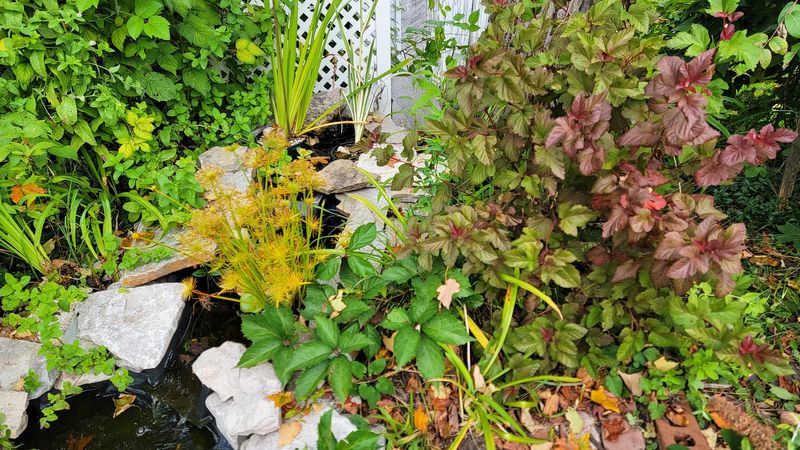
We often put the garden to bed in early October, but for a host of reasons, the start date had to be moved up this year by almost a month. My husband — a relatively recent convert to gardening — wasn’t buying it.
“It’s really sad to take the garden down this early,” he complained as we whacked away at the scattered clumps of phlox that were still blooming like mad after a late spring and unusual August rains that gave the entire garden a renewed burst of energy. But take down the garden we must or risk mold and fungus next season from all that foliage lying around over the winter.

The hosta take-down was a mixed blessing: an opportunity to do some shuffling and moving around of these spectacular plants to fill bare spots in one of the borders. Ice storm damage once again changed shade-sun patterns in the yard, which meant some plants also were getting sunburned where they were.
Thinning out hydrangea roots was a brutal job, made more bearable by the fact they had a place to go in our neighbor’s new garden design. I simply cannot bear to just “kill” a plant. And as foliage thinned, we could see where “volunteers” could be transplanted to support established but struggling clumps of the same plant.
With foliage at a minimum, suddenly we also could spot weeds that we never knew were there despite all our hard work attacking them last spring. Pull one now and save pulling two next season, the old saying goes. And so we went at it, one bed at a time.
Some jobs were sadly a result of poor planning on our part. While some bushes like ninebark and hydrangeas can be trimmed in fall without hurting next season’s blooms, the cut-backs we made on the lilacs and forsythia ought to have been done with a more aggressive pruning last spring.
“It’s hard to see the yard losing its identity like this,” my husband said. “That garden out there is what makes the place seem like home.”
I had to smile. He was only expressing out loud the inner grieving process even more seasoned gardeners experience this time of year. Whenever it comes, the fall garden takedown is emotionally wrenching. A garden ultimately will be healthier for it — tons of decaying vegetation is not the best mulch. But despite our efforts to minimize mold or provide some shelter for the plants, there are no guarantees. A hard winter can still wreak havoc with even our sturdiest perennials.
And so we put our beloved gardens to bed — wistful, maybe even a little guilty because the garden was showing so few signs of slowing down. In the chill of evening we watch the flames dancing in our patio fire table, surrounded by the sleeping garden, dreaming of gardens past and new life in the garden to come. Right now, that wild flowering of July seems so very far away.
Author of the 2006 regional best-selling novel “Time in a Garden,” Mary Agria is an 8-time first prize winner of the Michigan Garden Club’s statewide feature writing contest. Her “An Itinerant Gardener’s Book of Days,” gardening novels and books on gardening and spirituality are available online and from local bookstores.
This article originally appeared on The Petoskey News-Review: Time in a Garden: Putting the garden to bed
Reporting by Mary Agria / The Petoskey News-Review
USA TODAY Network via Reuters Connect