EAST LANSING — Three Michigan university boards could be revamped if recently proposed legislation gains enough traction to make its way onto the ballot.
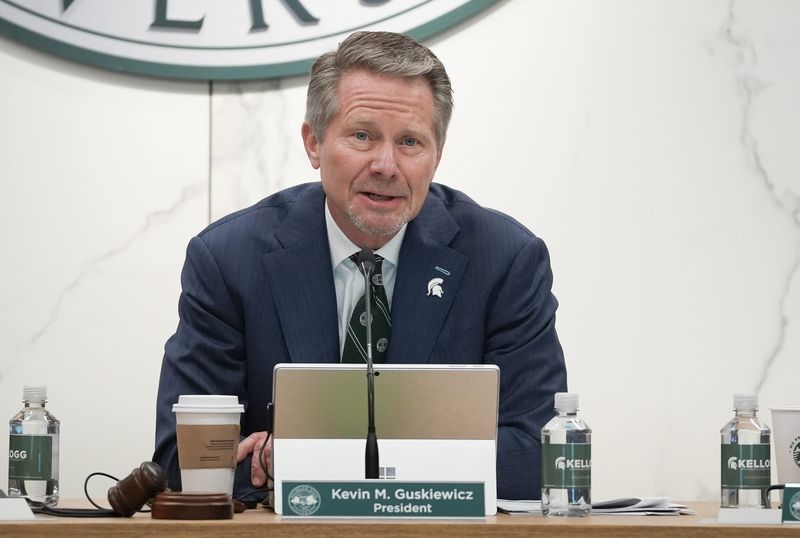
After Michigan State President Kevin Guskiewicz announced his plans to leave the university because of an “unsustainable situation” he blamed on the Board of Trustees, a joint resolution is gaining more support to change how the boards are seated at MSU, the University of Michigan and Wayne State University.

Michigan is one of just four states in the country that elects its university board members through a public vote. However, the mitten state is the only one that elects board members through a statewide vote. Colorado, Nebraska and Nevada elect their board members through district votes.
Now, a bipartisan group of lawmakers is working to change the way university board positions are filled. And the effort has the backing, at least for now, of some big political names. At least one MSU trustee told the State Journal the proposal is not the cure-all it’s expected to be.
The House resolution was sponsored by state Rep. Greg Markkanen, R-Hancock, and Rep. Joe Tate, D-Detroit, and the Senate proposal was sponsored by Sen. Ed McBroom, R-Vulcan.
The initiative would align Michigan’s Big 3 universities, MSU, UM and Wayne State, with the other 12 public colleges in Michigan, which have their board members appointed by the governor with consent from the Senate.
If the joint resolution is passed with a two-thirds vote from both the House and Senate, it will be placed on the ballot for Michiganders to vote on. If a majority of the electorate votes in support of the change, the state constitution would be amended.
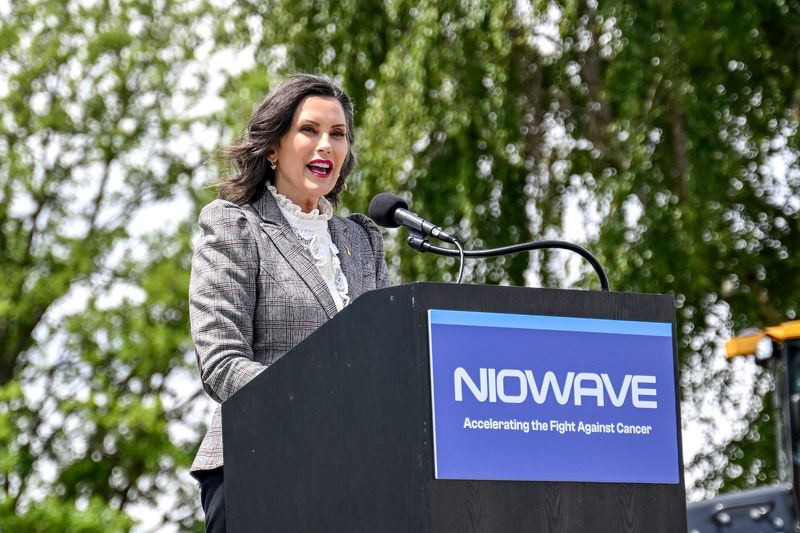
“The way we’ve selected board members needs to change,” Gov. Gretchen Whitmer said in a statement, according to The Detroit News. “The bipartisan proposal to appoint university board members would help ensure institutions have the leadership and expertise to get things back on track.”
2 former governors back proposal
Two former governors are advocating for the change as well, The Detroit News reported. Democrat Jim Blanchard, who was governor from 1983-1991, and Republican John Engler, who was governor from 1991-2003 and then served as interim president at MSU for one year, have been advocating for the change. Engler led MSU during the fallout of the Larry Nassar scandal, filling the seat after former President Lou Anna K. Simon’s resignation.
“The selfishness of these trustees, they don’t put the interest of the university or the students or the faculty or the state of Michigan first,” Engler told The Detroit News. “It’s petty, petty politics — and to what end? No one knows.”
McBroom said he’s been advocating for a similar policy for years, saying there is a proven model that works more effectively to limit the tension and dissent within boards.
“It’s not that our other 12 universities don’t periodically have tension and board resignations or problems,” McBroom said. “Every board or body does, right? That’s the nature of people. But clearly our other 12 have a lot less than these three do. And so, I think that it’s just time to say, ‘Let’s switch to a model that works so well everywhere else.’ It’s not perfect, but its track record is way further ahead than our party nomination, conventions and statewide elections process.”
McBroom said the current process is flawed from start to finish, from candidates being selected at party conventions, to many voters not even knowing that they’d be asked to vote.
“It’s one of the least participated in parts of our ballot,” McBroom said. “Most people just leave them blank and they’re primarily only elected through the straight party selection, and it’s just proven to be a very faulty system. It has many problems that add up to dysfunction we’re seeing at the board level.”
Current system ‘generally works,’ trustee says
MSU Trustee Mike Balow, R-Plymouth, said it feels like the proposed legislation, which would require changing the state constitution, is a response to the disagreements at MSU, and that people are taking advantage of the situation to push through their own agendas on how boards are seated.
“The system we have right now, even though it’s not perfect, it generally works,” Balow said. “If there’s problems with it, it may not be because of how the trustees or regents are elected, but it might be what it going on particularly at those schools where there is friction on large issues … and some university presidents just don’t want to deal with that.”
Balow said moving a board to an appointment and vetting process wouldn’t necessarily reduce friction, citing controversy at the University of North Carolina System’s Board of Governors as part of the reason Guskiewicz left his position as chancellor there in 2024. The Board of Governors is made up of 24 voting members, all of whom are elected by the state’s House of Representatives and Senate.
“That was an appointed board there (at UNC). If there was friction with our board, which is elected, what’s the difference?” Balow said. “The issue is still proper governance, shared governance between the executive, which is the president, and the board, whether they’re elected or appointed. If you get it right, and people respect each other, it works.”
In the gubernatorial appointment process, McBroom said candidates apply and are vetted − sometime for a months-long period − before a governor’s recommendation is given to the Senate, who then decides whether to approve the candidates.
“We end up with a board of very competent people who are very focused on what’s best for the school and not what’s best for a party or best for their future candidacy,” McBroom said.
MSU Board Chair Brianna Scott, D-Muskegon, did not respond to messages left by the State Journal.
Proposal would remove current elected board members
As the policy is currently written, the trustees at MSU, the regents at UM and the members of the Board of Governors at Wayne State would immediately be swept out office, and the governor’s office would select people to serve each role. McBroom said he’d be willing to compromise on that issue, though the fastest way to bring change would be to allow a new board to be appointed.
If passed, the boards would each consist of nine people, and the sitting governor would appoint two board members with terms ending in 2028, two with terms ending in 2030, three with terms ending in 2032, and two with terms ending in 2032.
McBroom added that it’s not an unprecedented change, noting that when the boards were first established and seated by a statewide vote, the sitting boards were removed. According to the MSU Board of Trustees website, the state constitution of 1908 switched the seats to being six-year terms voted on by the people. In 1963, the constitution established eight-person boards with eight-year terms.
Balow said he would be concerned about that change because it would effectively overturn not only the last three elections where trustees were voted onto the board, but it could also overturn the general election scheduled for November, where two seats at MSU are up for grabs. Both incumbents are running for reelection, board Chair Brianna Scott and former board chair Kelly Tebay.
The proposed legislation was presented before the start of the Mackinac Policy Conference, an event Balow was originally credentialed to attend as a trustee before he had his access pulled as a punishment for not signing a new code of ethics and conduct the board approved during a last-minute meeting on Sunday, May 17. Balow couldn’t get onto the grounds of the Grand Hotel without a conference credential, but he said he went to the island to talk with people.
“(Guskiewicz) utilized university resources to send out an email to hundreds of thousands of people where he basically threw certain allegations against a portion of the board … and I did not appreciate that,” Balow said. “I think that was uncalled for and I will do whatever I can to set the record straight and tell people what’s really going on there.”
Trustee Rema Vassar, D-Detroit, also had her credentials pulled the day before the Mackinac Policy Conference began. Vassar did not immediately respond to request for comment regarding the proposed constitutional change.
“I’m just very disappointed in the tone of the conversation at Mackinac, as it was a reaction to a story that some people were trying to really use for their own purposes,” Balow said.
At MSU, the elected trustees have eight-year terms. The most recently elected trustees, Rebecca Bahar-Cook, D-East Lansing, and Balow have terms that run through 2032.
Two sitting board members were appointed to the position by Whitmer. Renee Knake Jefferson, D-East Lansing, was first appointed to complete Nancy Schlichting’s term in December 2019, and was elected to her seat in 2022. Sandy Pierce, D-Northville, was appointed to the board in 2022 to complete Republican Pat O’Keefe’s term.
The proposed constitutional change would also place the secretary of state and attorney general nominees on the August primary ballot, rather than having those candidates chosen at party conventions.
Contact Karly Graham at kgraham@lsj.com. Follow her on X at @KarlyGrahamJrn.
This article originally appeared on Lansing State Journal: Should MSU trustees be appointed, not elected? Effort gaining steam
Reporting by Karly Graham, Lansing State Journal / Lansing State Journal
USA TODAY Network via Reuters Connect