Detroit — Every Wayne County voter will have a chance to weigh in Aug. 4 on a renewal of the county’s SMART bus millage, a property tax of just below 1 mill.
If residents choose to renew Wayne County’s participation in SMART service, which would last 10 years and collect an estimated $57.6 million in the first year, it would be the first time all of the county’s 43 cities and townships opt in. Since the millage was first put to voters in the mid-1990s, 17 cities have historically opted out from participating. The state Legislature passed a bill in 2024 prohibiting the county’s communities from opting out.

In Oakland County, communities had been allowed to opt of SMART until 2022, when voters approved a 10-year, 0.95-mill countywide property tax for transit. Macomb County has never allowed communities to opt out; it has a dedicated 0.95-mill property tax for SMART.
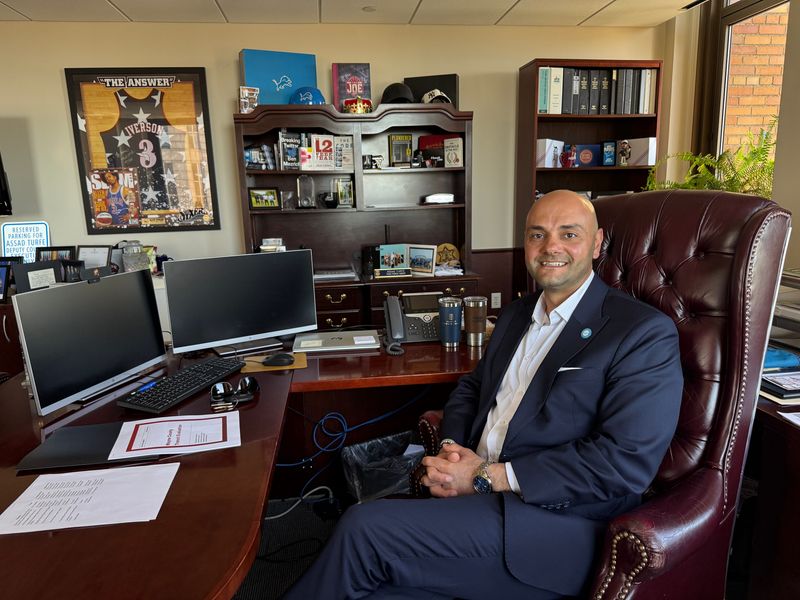
Deputy Wayne County Executive Assad Turfe said the millage, if passed by Wayne County voters this August, will cost an average Wayne County household $8 per month. He believes SMART provides a crucial public service in exchange for that price tag for those who need public transit to get around, including seniors, people with disabilities or special needs, and anyone who can’t drive.
“This is about independence and dignity for people who cannot drive. Transit gives them the ability to live a fuller, more independent life,” said Turfe, who chairs the Wayne County Transit Authority.
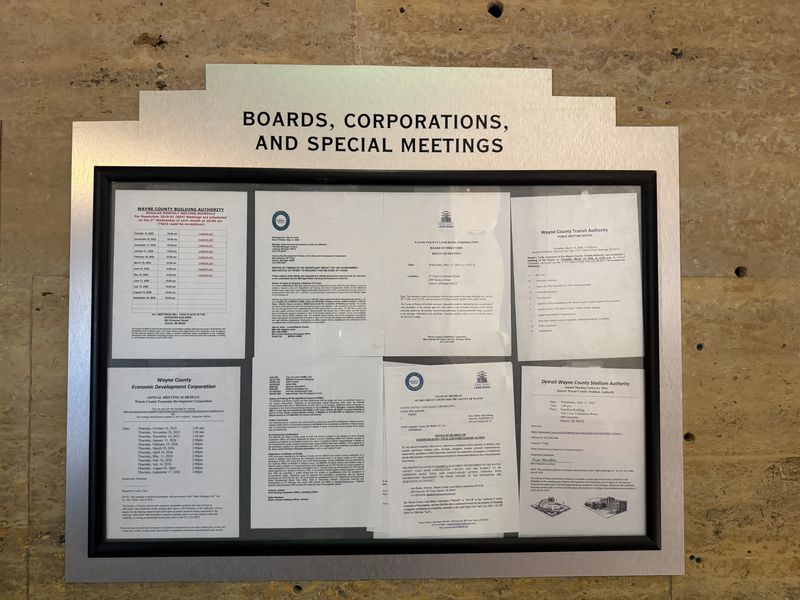
Turfe also firmly disputes the contention, made in a lawsuit filed earlier this month by a group opposed to the millage, that the transit authority didn’t give proper legal notice of a March 19 meeting when the body approved the ballot language for August. The group contends the ballot language was illegally approved and wants a Wayne County judge to stop the measure from appearing on the August ballot with its current wording.
The group, called Not Smart Wayne, contends the buses have low ridership and generate too little funding from fares to make the millage a worthy taxpayer investment.
The Detroit News spoke with Turfe about his confidence that SMART service would expand in Wayne County should all communities vote to opt in, why he believes it would mean more funding to improve all kinds of transit services, and why he doesn’t agree with the opposition committee’s math on the bus service’s ridership numbers.
Question: Give me your elevator pitch for this SMART millage.
Answer: When you look at our region … Macomb County’s had an all-in transit community plan going back a couple decades, maybe more. Oakland County went all-in 2022 when they ran their millage, and they were successful. Wayne County still has gaps, and it’s time for us to catch up to Oakland and Macomb County. Locally right now we are in a situation when we get opportunities to go out for grant money to add additional services to transit, we’re not really competitive because of the gaps that we have within our county currently.
Once Wayne County is all-in, all three counties could hold hands, go to the state of Michigan, and go to the federal government, and be able to receive more resources to bring back to the region to start thinking about a regional transit plan overall for Wayne County, Macomb County, and Oakland County.
The reality is, the residents are paying the taxes now, but the resources are going somewhere else, because they’re not coming to the region because of the gaps that we have right now in our system. You can’t get on a bus right now and go from downtown Detroit to Canton Township, and take Michigan Avenue straight up. As simple as that sounds, we cannot do that in Wayne County right now, and that’s a challenge that we’ve got to get over.
County Executive Warren Evans always says brilliance is evenly spread among all walks of life. What isn’t evenly spread is opportunity, and we are creating an opportunity here for more good to come back to Wayne County, and ultimately to the region.
Q: When you said Wayne County is not competitive right now, is that competitive in the sense of federal and state funding that you also mentioned?
A: Yes. So when we apply for grants … we have to be able to make a pitch of why it’s important to get more additional services here. When 17 communities don’t participate in a transit system, it really puts us at a disadvantage. When we run a SMART system in Wayne County, it has to navigate around all the opt-out communities. Think about that. That costs time, that costs resources, and it’s honestly a piecemeal system and it’s not working to its full potential.
I was the oldest sibling of two immigrant parents. We grew up poor. We didn’t have the ability to afford an automobile. We never had a vehicle in our house, and the only places we could get to were where our feet took us. Growing up, I could probably count on one hand how many times I actually left the three or four-mile radius from my own home, and what that did is put us in a situation where the only opportunities we had were right in our neighborhoods, and what we’re trying to do here now is create a system to give people an opportunity. Even though for me, it was 30 years ago, we still have those same issues.
There’s communities in Wayne County right now that don’t have the ability to be able to access public transportation, to be able to go see family, to be able to go see their health care appointments. I want you to think about that. We say we want health care for people. If you have health care, but don’t have access to health care, you don’t really have health care.
We are sitting in downtown Detroit, and we’ve all seen the business opportunities that have grown over the last 20 years in downtown Detroit, and that happened because business came here, and when business comes here, the first question they’re going to ask is, ‘Do you have the talent?’ We have the talent here. The second question they’re going to ask is, ‘Do you have the way to get that talent to work?’ And right now, for 17 communities, we can’t make that argument, and it’s hard, and we know we have missed on opportunities.
Q: Drilling down into the cost a little bit more, for the $8 a month that it would cost if this millage were to pass countywide in the summer, is that $8 a month for the new communities on top of the communities that have already been paying into it? Would you anticipate the county needing to increase the millage over time if you want to increase the SMART routes in Wayne County, if more communities are participating?
A: Yep, so with more communities participating, keeping the same millage rate, we’re going to be able to collect more of the entire millage. The millage is a 10-year millage. There are no plans to increase the millage rate. This is the same millage rate we’ve always historically levied. Q: Can you tell me about the history of why Detroit gets SMART bus service despite not paying into the millage?
A: When you’re creating transit plans, you look at the data, and the data shows that suburban communities that are opted in right now are coming to Detroit. They’re coming here for entertainment reasons. They’re coming here for health care appointments. They’re coming here for jobs. SMART has to provide a service for the residents that are opted in, and that data shows that the residents in suburbanite communities are coming to downtown Detroit, so that’s why you see routes currently right now coming into the city of Detroit.
Q: What would your message be to a Detroit resident who might say, ‘Why would I want to start paying into a system that I’ve been getting for free? What’s the benefit for me to vote yes on this millage?’
A: Your DDOT (Detroit Department of Transportation) services within the city of Detroit are going to get better, because the money that’s collected from Detroit residents is going to be invested into DDOT … which means DDOT has the opportunity right now to expand even more routes within the city of Detroit. With the ability to be able to fund SMART in our suburbanite communities, you’re going to have more opt-in communities now … which means more opportunities for Detroiters to be able to get to the suburbanite communities to be able to go shopping, to be able to go to health care appointments, to be able to see family. And it’s about ultimately connecting our county and our 43 communities.
Q: I want to make sure we talk about the Not Smart Wayne opposition group here a little bit. One thing that they are saying is, they’re looking at what they say are total rider miles versus vehicle miles, and essentially they say that on average, a SMART bus has three or four people on it at any given time. What’s your take on how they’re doing that math?
A: I don’t agree with that math. I know SMART doesn’t agree with that math. Public transportation isn’t like a school bus, where it’s picking up children from a school or taking them on a field trip and loading up the bus and taking them to one destination, and you have 30 people on that bus. Public transportation is, individuals get on a bus, they’ll ride for a mile, two miles, maybe three miles, get off; someone else gets on. And through a bus route, that number is much higher than the three that they’re indicating. SMART has all that data to support that. They’ve had significant increases on all their major routes. People are using public transportation. Public transportation is growing in the county, and it’s only going to grow even further.
The average SMART bus from when a route starts to when it finishes has over 26 people on it. People don’t just get on the bus and take it the whole entire route. It happens in some cases, but that’s not how you calculate ridership. Ridership on our busiest routes right now are up 30%. Overall in the system, they’re up by 17%. And what we anticipate is once we are all-in and have a connected Wayne County, and it works for everyone, we know ridership is going to go up. How do we know ridership is going to go up? Because it’s gone up significantly in Oakland County, and in some places they’ve doubled the amount of ridership on some routes, just because new communities are participating in it.
Q: Can you comment on the meeting where the millage language was approved, in response to what the group claims? What kind of notice was given in advance of that meeting? How far in advance? Where was that notice posted?
A: So first, the transit authority followed all legal rules and guidelines related to the public meetings. We conducted a very transparent series of meetings, and all stakeholder communities in Wayne County followed the legal guidelines related to the notification. We posted it in the same manner that we’ve always posted it. There’s a bulletin board in the Guardian Building where it says ‘special board meetings.’ It was posted there. We followed all the guidelines, and we were very transparent in the process.
Q: And how much advance notices is required by law of a public meeting?
A: Eighteen hours. We did it in advance of beyond the minimum legal requirement.Q: And are the meeting notices generally posted online in advance?
Answer: No.
We are in the process of creating a website. It was always the plan. Historically, the Wayne County Transit Authority used to meet once a year to levy the SMART millage. Some years you might have multiple meetings when it was election time to be able to put the millage on the ballot, but in most cases it was one meeting a year. It was always posted in the same manner downstairs, on the bulletin board, and there may have been some one-off times where it was posted online. The historical way is we’ve always posted it in the lobby.
We made sure that we followed all the legal requirements. We are confident that the courts will be in favor and agree with us. We’ve had lawyers look at this. Lawyers have been involved in our entire process from the beginning. We’ve sought legal counsel advice through the entire process. We are confident that we have a sound legal millage that is transparent; that has all the information for the public to be able to review and to know exactly what they are voting on.
The website is being created right now. We have plans that it’s going to be live for the Wayne County Transit Authority by mid-June, for the public to be able to go on the website and to be able to get even more information regarding this millage and other information.
jcardi@detroitnews.com
This article originally appeared on The Detroit News: Q&A: Wayne County’s Assad Turfe on his case for SMART millage
Reporting by Julia Cardi, The Detroit News / The Detroit News
USA TODAY Network via Reuters Connect