Michigan’s 2026 seemingly interminable primary season is — finally — over.
We had to wait an extra day to find out who won the closely-contested Democratic U.S. Senate primary, but before you get too comfy, it’s time to face the reality that elections are like pesky reporters: Every answer begets more questions.

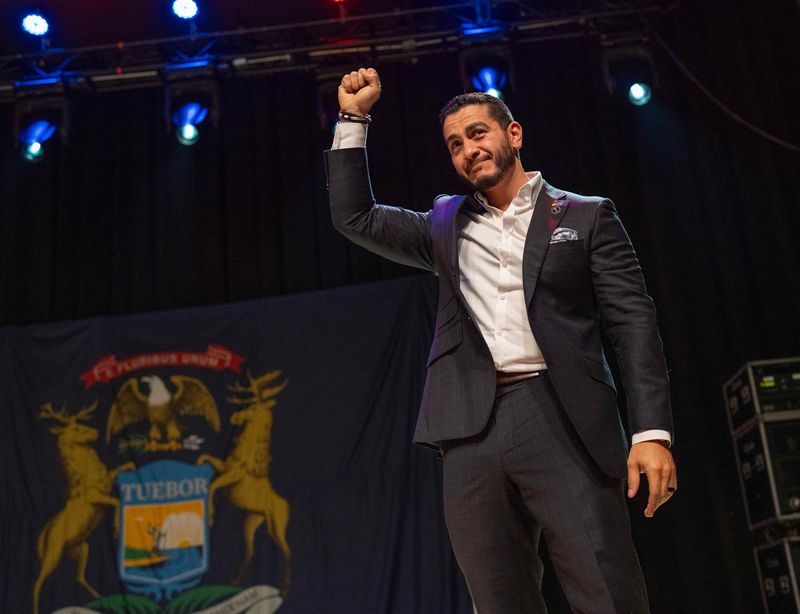
Abdul El-Sayed answered the question of whether the Democratic wave of progressive candidates would wash away another establishment candidate, but his victory in the Michigan U.S. Senate primary raises questions about whether either of Detroit’s two most recent mayors are going to get involved in the campaign, the accuracy of polling and the value of endorsements, and whether a very different “uncommitted” movement than the one that kneecapped Democratic presidential nominee Kamala Harris in 2024 could hinder El-Sayed’s ambitions.
John James answered the question of how much value President Donald Trump’s endorsement has in a Michigan Republican primary, but the number of voters who cast ballots for candidates who dropped out of the race and endorsed James raises questions about his popularity among Michigan GOP voters.
This is weighty stuff, people!
If you believe the pundits who use terms like “inflection point” and “existential crisis” so often that the phrases now sound funny, the fate of the Great State of Michigan and the very Republic itself hinge on the answers to these questions.
Before I let you get back to more pressing questions — like whether the Tigers still have a chance to make the playoffs after trading away their two best pitchers — we’ll also touch on less portentous topics including:
“How did a congressional candidate who dropped out of his primary — and endorsed a rival — end up winning his race by double digits?” and “Which Madonna song — which you might consider the least likely to hear at a victory party for a candidate who wants to get the big money out of politics — got a spin while supporters waited for election results?”
For answers to those questions and more, Gentle Reader, read on … !
Conspicuously absent
El-Sayed’s victory over U.S. Rep. Haley Stevens, of Birmingham, was especially impressive when you consider that Stevens beat El-Sayed in Michigan’s most populous counties of Wayne, Oakland and Macomb.
Drilling down even deeper, Stevens and state Sen. Mallory McMorrow, of Royal Oak, got nearly twice as many votes in Detroit as El-Sayed. Stevens and McMorrow, who dropped out before Election Day but not in time to get her name off the ballot, received 64,897 votes in Detroit — or nearly 66 percent of the vote — compared with El-Sayed’s 33,786 votes, which amounted to just over 34 percent of ballots cast.
While big-name Democrats across Michigan signed on to Stevens’ campaign, Detroit’s most successful and prominent progressive politician — Mayor Mary Sheffield — stayed out of the race.
That didn’t stop El-Sayed from trying to bask in a bit of the mayor’s reflected glory by dropping her name in his news release announcing that her father, the Rev. Horace Sheffield III, had endorsed him. The third paragraph of the campaign’s Nov. 13, 2025 bulletin highlighted that Sheffield is the “proud father of Detroit Mayor-elect Mary Sheffield.”
The news release also noted that the Rev. Sheffield “holds key leadership roles” with multiple organizations, including the Detroit Ecumenical Ministers Alliance.
Perhaps coincidentally, El-Sayed’s campaign made the first of at least seven $7,500 payments to the alliance on Oct. 21 — three weeks before the Rev. Sheffield publicly announced his support of El-Sayed. According to the most recent campaign finance reports available, El-Sayed’s campaign has paid the alliance $52,500 for consulting.
Assuming those monthly payments continued after the March 2 disbursement listed in the period covered by the campaign finance report, the alliance collected another $37,500 before Tuesday’s Aug. 4 primary election. If those monthly payments continue through the Nov. 3 general election, the alliance could receive up to $112,500 by the time the race is done.
With the exception of the 2025 mayor’s race — when the Rev. Sheffield campaigned with his daughter, was involved in advertising purchases and played a leadership role on the mayor’s transition team — the mayor has emphasized throughout her political career that she is independent from her father.
With or without the Rev. Sheffield’s help, El-Sayed surely will be working to win over the mayor to improve on his paltry performance in Michigan’s richest trove of Democratic votes.
Hizzoner on hiatus
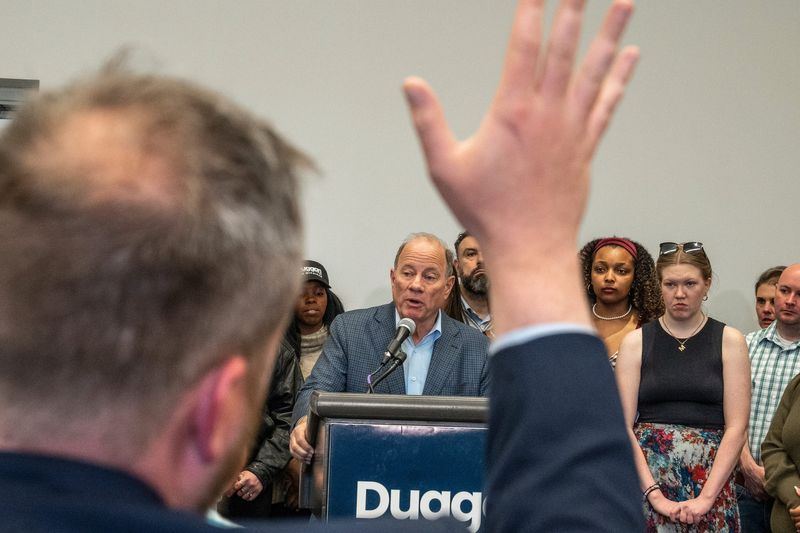
Days after Mike Duggan dropped his independent bid for governor in May, I asked him whether he expected to support other candidates. He said he would decide in the fall whether to get involved in any races.
Duggan will have plenty of familiar faces to choose from.
He hired El-Sayed to run the city’s health department, worked with Attorney General nominee Eli Savit and Secretary of State nominee Garlin Gilchrist II in Detroit city hall, and made gubernatorial nominee Jocelyn Benson’s husband Ryan Friedrichs his chief development officer during his first term as mayor. (After five years, Friedrichs left in 2020 for a job in the private sector.)
Based on the number of people who have told me their biggest complaint about the primary election was that Duggan’s name would not be on the ballot, the former three-term Detroit mayor could play a pivotal role in winning over voters — especially the coveted independents who often decide elections.
But I’m told Duggan is, as the kids say, “living his best life.”
Hizzoner is traveling and spending time with family and appears to be in no hurry to return to the political fray, where he excelled for more than 40 years.
He told me back in May that he would evaluate candidates and might help state House and Senate hopefuls who espouse his anti-partisan, problem-solving message. I asked him if there was any chance he would not endorse a Democrat, figuring that even though he left the Democratic Party to run for governor as an independent he would still lean more blue than red.
“I’m going to wait and see how the candidates are in the fall,” he said. “And who wants my support and who’s running the campaigns about what they’re going to accomplish.”
Few politicians hold their cards closer to the vest than Duggan, but it’s possible he may keep his peace throughout a general election campaign that will likely be prodigiously polluted with the kind of partisan politics he now pooh-poohs.
The eternal question
Political junkies love horse race polls and politicians covet endorsements from elected officials.
I’ve never put much stock in either.
I didn’t do any polling when I ran for Detroit City Council back in 2021, but people connected to pollsters occasionally shared intel that I was either last or first in the latest sounding. I suspect these whispers were meant to entice me to hire the pollsters, but in the end the candidate who finished first in the polls where I ranked last didn’t even make it through the primary. I finished second in that election, which is the only poll that really matters. Detroit municipal elections are nonpartisan, so I advanced to the general election … where voters overwhelmingly endorsed my return to journalism.
Highly-touted polls conducted in the homestretch of the Democratic U.S. Senate primary showed El-Sayed with a double-digit lead over Stevens. In the end, the good doctor won by less than one percentage point.
By then, Stevens had won the support of two former Michigan governors, our current governor, a beloved former U.S. Senator, and the popular senator she was running to replace.
So were the pollsters wrong — or did the results motivate independents and undecided voters to rally for Stevens?
Were the endorsements useless — or did the last-minute blessings of Gov. Gretchen Whitmer and Sen. Gary Peters help virtually eliminate El-Sayed’s massive lead?
Beats me, but this much I know: Democracy works best when you do your homework and make up your own mind.
Uncommitted — with a twist?
Democratic skepticism and, in many cases, outright hostility toward President Joe Biden’s handling of the war in Gaza cost Democratic presidential nominee Kamala Harris tens of thousands of votes she needed to win Michigan in 2024.
Democrats who abandoned the party declared themselves “uncommitted” and declined to cast a ballot for Harris. Others voted for third party candidates or Republican Donald Trump. Many of those voters live in cities like Dearborn, which have large populations who hail from the Middle East.
For months, we’ve heard that some of those same voters might not support Stevens if she won the Democratic U.S. Senate nomination, because of her support for Israel and the tens of millions spent on her behalf by a political action committee associated with the American Israel Public Affairs Committee. Some Democrats speculated that Stevens could suffer the same fate as Harris.
Those fears were allayed when El-Sayed won a staggering 78% of the vote in Dearborn.
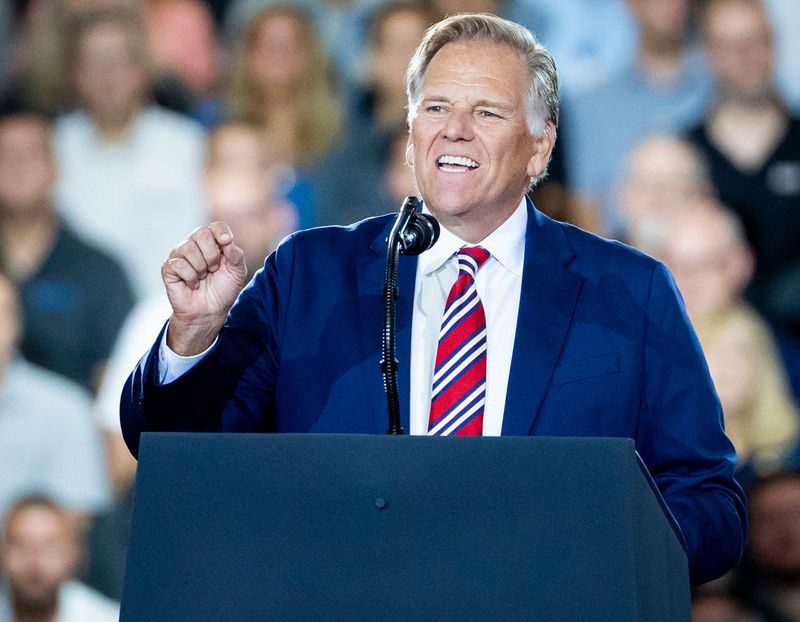
Now, some Democrats are concerned Jewish voters and others offended by El-Sayed’s call for an end to U.S. military spending on Israel will mount their own uncommitted effort in the U.S. Senate race or, worse, vote for Republican Mike Rogers.
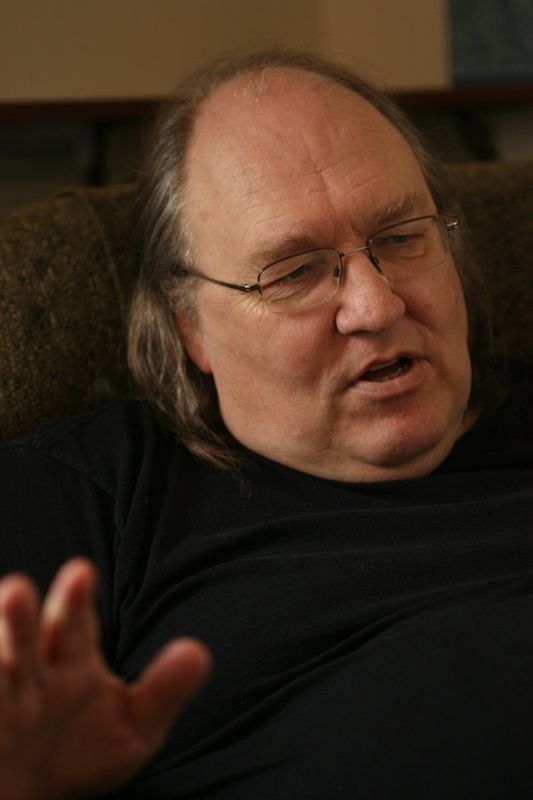
To gauge the potential peril for El-Sayed, I turned to Mark Grebner of Practical Political Data, who I’m sure has spent more time studying Michigan voting data than anyone in our state’s 189-year history.
Grebner is a Democrat, but his expertise is acknowledged by pols on every point of the political compass.
He offered several observations that should give El-Sayed some peace.
First, he says Arab American voters outnumber Jewish voters in Michigan. While Grebner said Arab American voters tend to favor Republicans, political attacks on El-Sayed, a Muslim whose family emigrated from Egypt, combined with the wars in Gaza and Iran has turned them, at least temporarily, into reliable Democratic voters.
Second, he says Jewish voters tend to favor Democrats, and a significant portion of those voters are also critical of Israeli Prime Minister Benjamin Netanyahu.
Grebner also says that his analysis of results in certain down ballot races persuades him that 47.5% of Michigan voters favor Democrats and 42.5% favor Republicans, with the remaining 10% splitting their ticket.
If he’s right, Republicans need to win over three out of every four ticket-splitters to overcome the Democrats’ built-in 5% advantage.
That’s some mighty high-falutin’ thinking for my little brain, but primary voting totals suggest El-Sayed could lose some hardcore Stevens and Israel supporters and still have an advantage over Rogers.
Rogers got virtually all of the 880,000 votes in the Republican U.S. Senate primary.
El-Sayed got only 741,000 votes in the Democratic U.S. Senate primary, but nearly 1.5 million Democrats voted in that race. So he should be in good shape as long as he wins over a nice chunk of the 787,000 people who voted for Stevens and McMorrow.
Some pundits believe you can’t compare red and blue turnout because the Democratic U.S. Senate primary was so fiercely contested, but the Republican gubernatorial primary was way feistier than the Democratic governor’s race — and there were still only 929,000 votes cast in the GOP primary while Dems, again, collected 1.5 million votes.
The caveat is that primaries have much lower turnout than general elections.
Still, Democrats have got to feel good that their candidates got 50% more votes than Republicans in the top races.
Lame James?
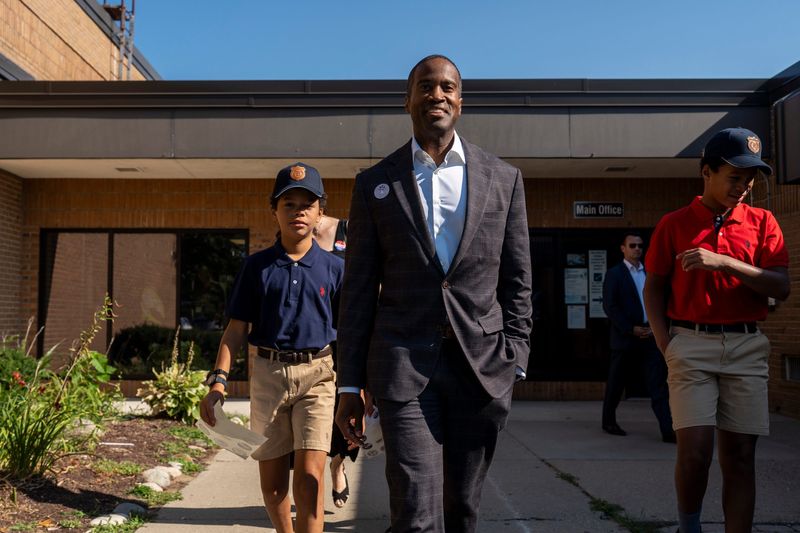
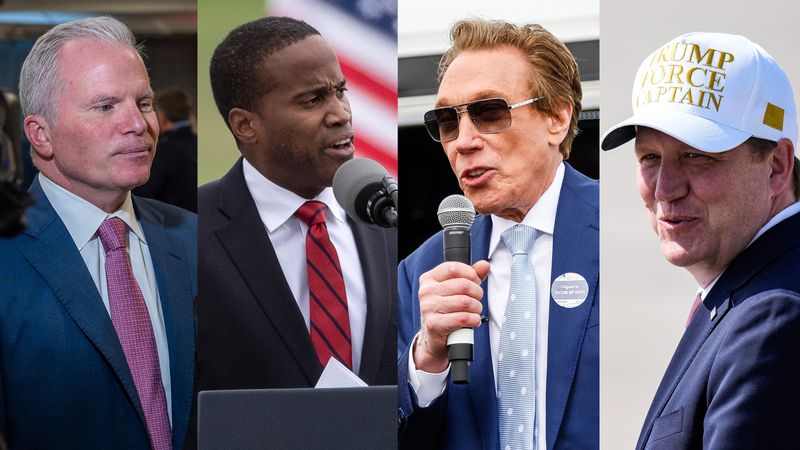
A win is a win, but Republican gubernatorial nominee John James can’t be thrilled that his opponents — including two who dropped out of the race and endorsed him — got more primary votes than he did.
James, a congressman from Shelby Township, got 465,000 votes.
Businessman Perry Johnson, former Michigan Attorney General Mike Cox, state Senate Republican Leader Aric Nesbitt and write-in candidates combined to collect a hair more than 50% of all votes cast in the GOP primary.
Cox, who dropped out less than three weeks before the polls closed, got a surprising 13% of the vote. Nesbitt, who dropped out six weeks ago after Trump endorsed James, got about 2% of the vote.
This could be a sign James will need to work hard to win over large chunks of the Republican base at the same time he woos independent voters to build a winning coalition.
He should enjoy one advantage over his Democratic opponent, however.
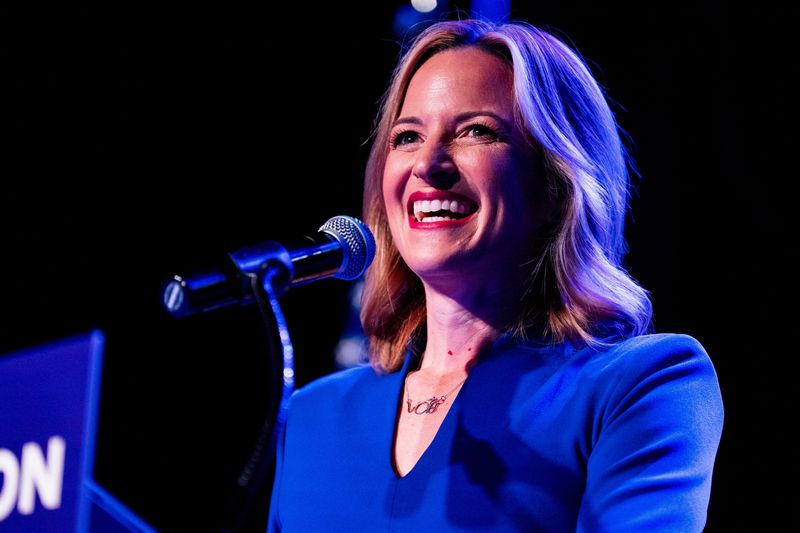
While Benson faced little opposition from Genesee County Sheriff Chris Swanson in the Democratic gubernatorial primary, James is battle-tested after a vigorously-contested race in which he performed well in debates where Cox and Johnson tried to destroy him.
Don’t try this at home
If you count my time at the college newspaper, I’ve been covering politics and government for nearly 40 years — but I’ve never seen a candidate pull off the kind of victory Thomas Smith, of Flint, celebrated on Tuesday.
Smith won the Republican nomination to challenge U.S. Rep. Kristen McDonald Rivet, of Bay City, less than a month after dropping out of the race and endorsing another candidate. Smith, unintentionally, also overcame Trump’s endorsement one of his former rivals, Amir Hassan.
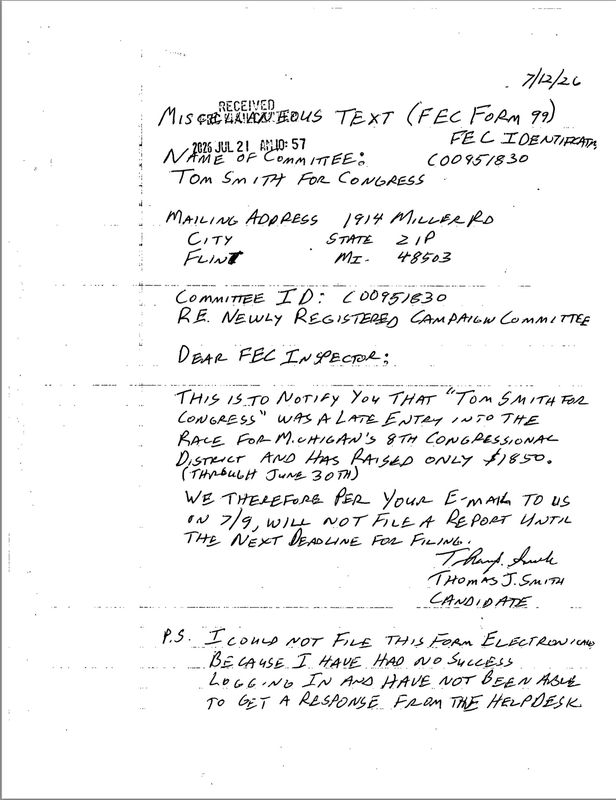
Smith’s campaign had put up a nice website, but he claimed in a handwritten letter he sent to the Federal Election Commission that he couldn’t file a proper campaign finance report because he couldn’t log into their system and had “not been able to get a response from the help desk.” In any case, he said he only raised $1,850.
Nevertheless, Smith won the three-way primary with more than 50% of the vote.
Al Lemmo, the candidate Smith eventually endorsed when he dropped out of the race in mid-July, finished last with 16% of the vote.
Lemmo told the New York Times his campaign’s attacks on Hassan, who had won Trump’s support and finished second with 33% of the vote, may have backfired.
He said his staff created ads that “didn’t so much appeal to bigotry against Muslims as kind of counted on it,” adding, “But I really didn’t like that because I live in a community with a lot of Muslims. They’re really nice.”
Various media reports said Hassan was a Muslim who converted to Christianity. The Times reported that Hassan said he “studied other faiths” but was a Christian.
Lemmo had also questioned the sincerity of Hassan’s recent conversion to the GOP, calling him a “lifelong Democrat” and a “Trojan horse.”
Without a hint of irony, Republican National Committee Chairman Joe Gruters congratulated Smith for becoming the GOP’s nominee in the 8th Congressional District after “a hard-fought, well-earned primary victory.”
Because Smith dropped out too late to get his name off the primary ballot, he will represent the GOP in the general election. And, this time, he’s indicated there’s no turning back.
Smith updated his website last week with a statement that said he is “humbled and honored that Republicans have chosen me to take the fight to Kristen McDonald Rivet” and that he looks forward to working with GOP leaders “to expand our House majority and advance President Trump’s America First agenda to lower costs for working families and make America affordable again.”
Here’s hoping he hears back from the help desk before his next campaign finance report is due.
Name that tune
The wait for results in the Democratic U.S. Senate primary may have run so late that the deejay ran out of options — or maybe the El-Sayed campaign just has a healthy sense of humor — but I couldn’t help chuckling as supporters of the campaign that wants to get “money out of politics,” were treated to Madonna’s “Material Girl” over the sound system around midnight as we waited for El-Sayed to finally take the stage at the Majestic Theatre.
Several hours later, after everyone had gone home, we learned that their love, and votes, had pushed El-Sayed over the “Borderline” — and on to the general election contest with Rogers.
M.L. Elrick is a Pulitzer Prize- and Emmy Award-winning investigative reporter, director of student investigative reporting program Eye On Michigan, and host of the ML’s Soul of Detroit podcast. Contact him at mlelrick@freepress.com or follow him on X at @elrick, Facebook at ML Elrick and Instagram at ml_elrick
This article originally appeared on Detroit Free Press: Primary night was full of close races, surprise winners — and Madonna
Reporting by M.L. Elrick, Detroit Free Press / Detroit Free Press
USA TODAY Network via Reuters Connect
By M.L. Elrick, Detroit Free Press | USA TODAY Network