LANSING — In 1944, Hubert Thane Bauman II traveled a few blocks west from his home on Ferguson Street to the train station on Michigan Avenue and said what turned out to be his last goodbyes to his family.
Bauman grew up in the Eastfield Neighborhood, directly south of where Lansing Catholic High School is today, about a block east of the University of Michigan Health – Sparrow Hospital. His youngest sister, Rita Bauman, still lives in the house, where he slept in the attic.

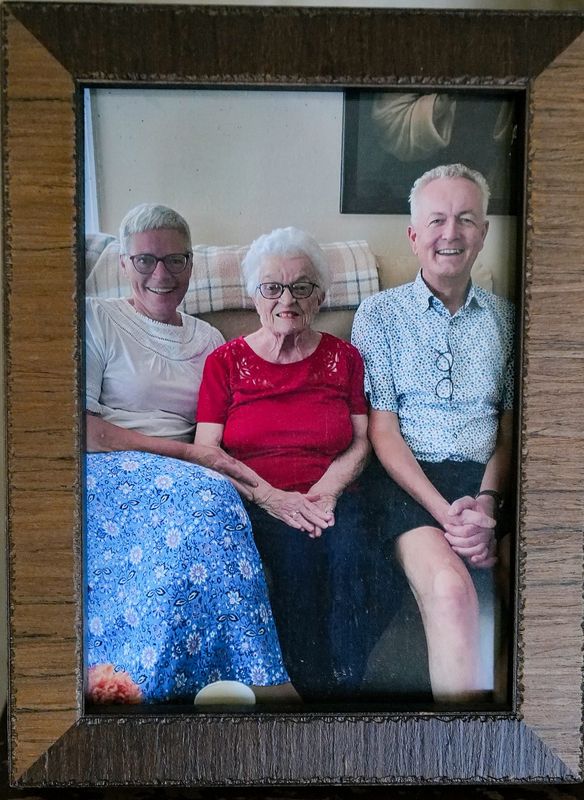
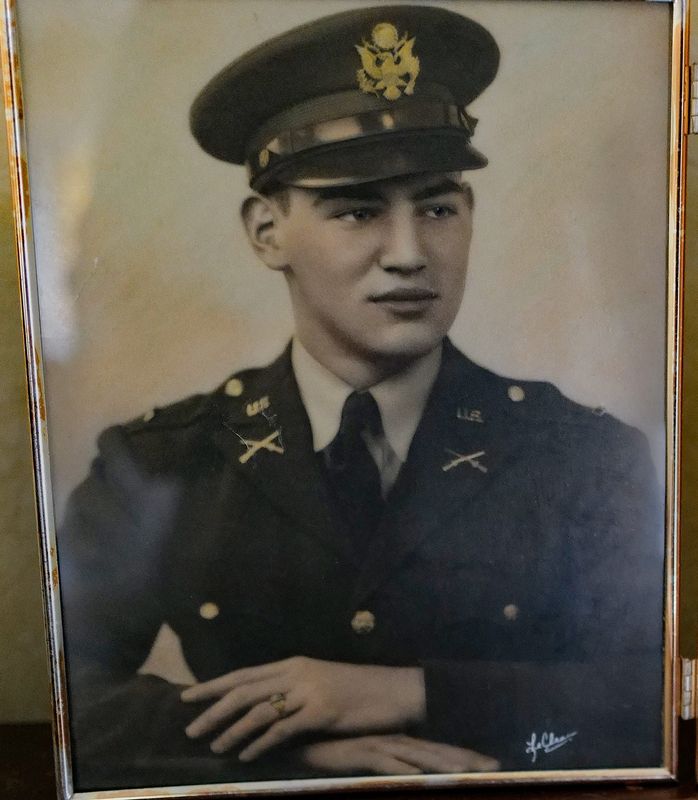
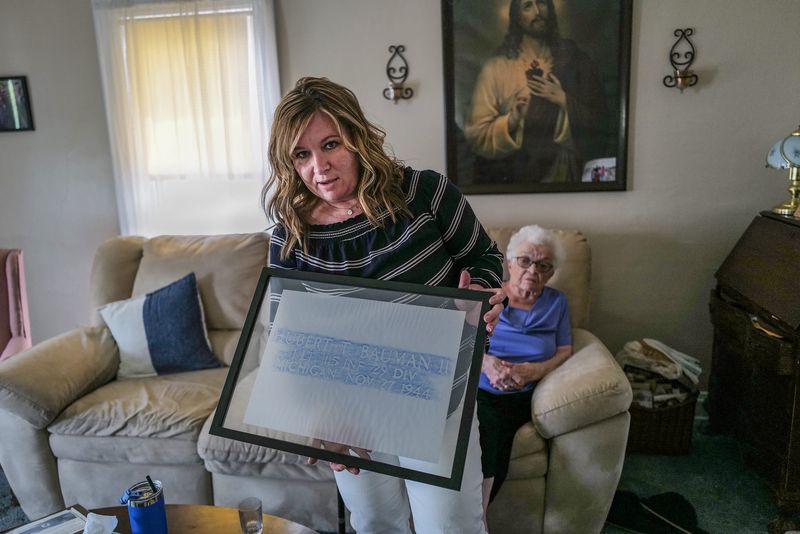
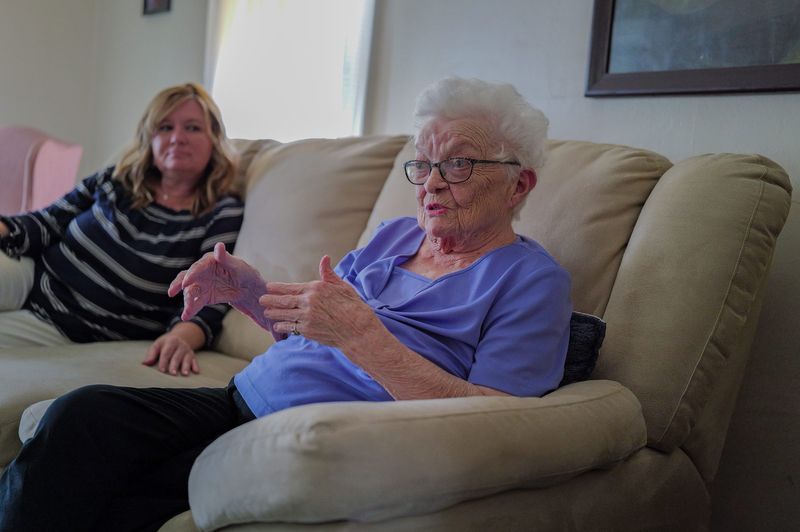
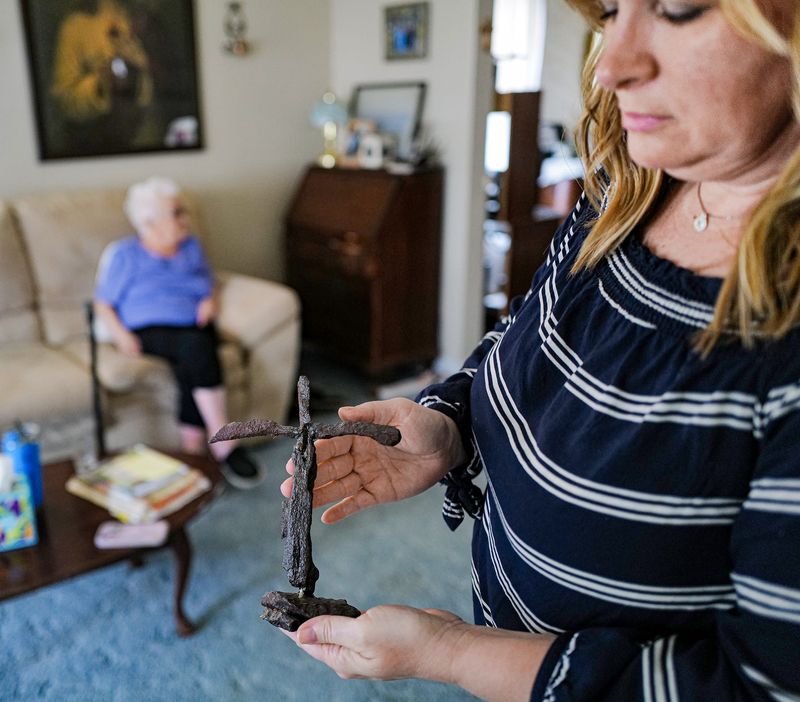
Rita, 92, didn’t know her brother very well – she was only 10 when he died – but knew he was the man of the house after their father, Hubert Thane Bauman, died in 1938. Even today, photos are framed on the walls and bookshelves of the home honoring her brother.
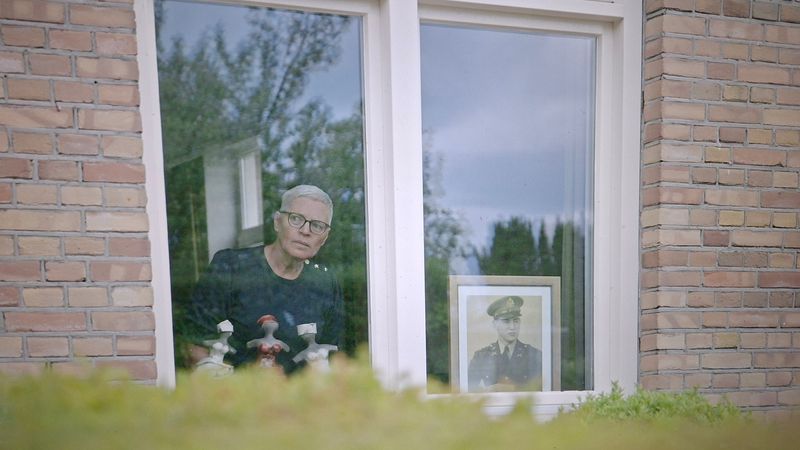
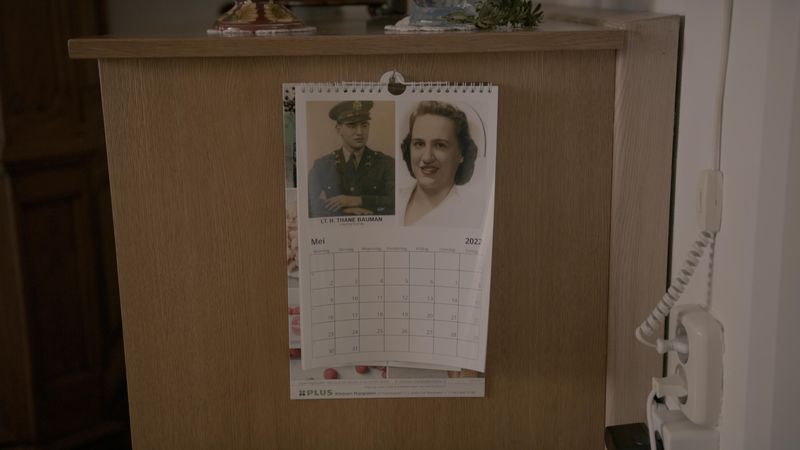
But the house in Lansing isn’t the only home where Hubert Thane Bauman II’s picture is hung on the wall.
A family in the Netherlands has his image proudly on display too.
Dutch family sees Bauman as ‘our soldier’
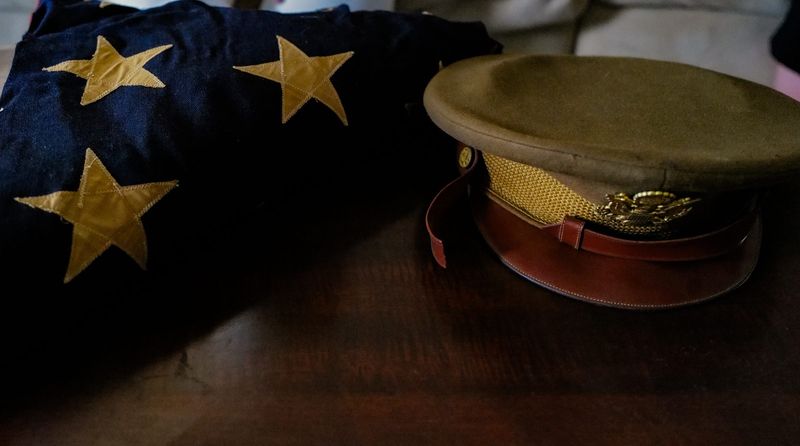
Hubert Thane Bauman II, who was called Thane by his family, was killed in action months after leaving Lansing on Nov. 27, 1944, fighting German soldiers in Kirchberg, Germany. A first lieutenant, he was killed leading his troops into battle.
He was 23 years old when he died.
Thane’s family was asked if they wanted his remains sent home, and Rita said she and her sisters left the decision up to their mother, who ultimately decided to have Thane’s remains buried overseas.
Huub Bessems was 13 when he saw thousands of graves dug on farmland near Margraten.
In the small, southern Netherlands town, about 8 miles east of the Belgium border and 12 miles west of the border to Germany, more than 8,300 American soldiers are buried at the Netherlands-American Cemetery.
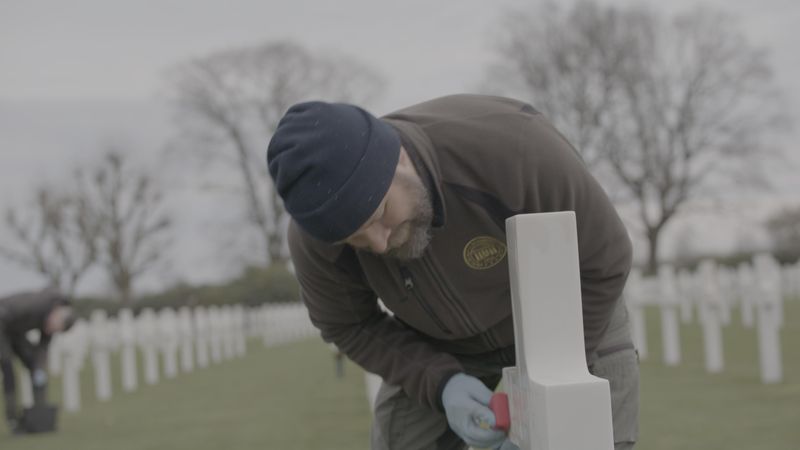
Each soldier’s grave has been adopted by a local family, and the waiting list to adopt a grave is in the hundreds. The Dutch families who adopt graves visit the sites multiple times a year.
The care the Dutch have given the American graves has brought peace to Rita Bauman.
“It feels good because over the years, I had kind of wished that we’d have brought him back,” Rita told the State Journal. “It was my mother’s decision, but we told her no, so it was amazing someone was looking after him and his grave.”
She said she worked at St. Joseph Catholic Cemetery on West Willow Street in Lansing after she retired, so she knows there are many resting places that go unvisited and uncared for. Her brother’s isn’t one of them.
In 2016, John Belen, Rita and Thane’s nephew, received a message on Facebook from Maria de Graaf-Bessems in the Netherlands. She wrote that her father, Huub Bessems, had been caring for Thane’s grave since the 1980s.
“I was like, ‘Holy guacamole, what just happened?’” he said. “My world got much, much smaller at that point in time.”
Belen, who lives in Florida, said the family had known about the grave because his late mother, Rosemary (Bauman) Belen, one of Thane’s five sisters, received a letter decades ago from a woman in the Netherlands named Connie Sluijsmans. Thane had stayed at the Sluijsmans’ home before entering Germany.
As the story goes, Belen said, Sluijsmans didn’t know Thane had been killed in action until Rosemary (Bauman) Belen told her, at which point, Sluijsmans went to the cemetery to visit his grave.
“She was truly one of the original adopters of all graves in that cemetery,” he said.
The family lost touch with Sluijsmans in the 1980s, later learning she had died. de Graaf-Bessems, who made contact with the Bauman family in 2016, told Belen that their family tried to adopt the grave one of her late aunts cared for, but at the time, there was disorganization at the cemetery. She said she doesn’t know for sure if Sluijsmans was a relative of hers, but she had an aunt with a similar last name who might have been related, with names and spellings potentially getting lost in translation.
Two years after Belen and de Graaf-Bessems connected on Facebook, they met in person 2018 in Texas.
The following year, Belen said he and other family members committed to taking a trip to the Netherlands, visiting their own found family, and their own ancestor’s gravesite as well.
“When we walk into their house and you see my uncle’s photograph on the mantle with their family photographs, and you hear them talk about ‘our soldier,’ they have absorbed my uncle as family,” Belen said. “And as a result, they are now family to us.”
Prior to Huub Bessems’ death earlier this year, he and his family were able to make their way to Lansing to see the home Thane grew up in and meet Rita, the last surviving sister.
From valedictorian to decorated combat hero
Thane was the valedictorian and class president of the class of 1940 at Resurrection School in Lansing and attended Michigan State University. He joined the Reserve Officers’ Training Corps before shipping out to Europe to fight in the war. When Huub Bessems and his family came to visit Michigan, Thane’s surviving family took them to the ROTC Center on MSU’s campus, as well as the train station where he said his goodbyes. He left the city from the old Lansing Union Railroad Depot, which later became Clara’s Lansing Station restaurant.
Belen said they were able to bring the Bessems family into the attic his uncle slept in, and shared postcards Thane sent home to his five sisters.
“They found postcards that my uncle had sent back when he went to boot camp,” Belen said. “To read those postcards, it was kind of funny because you got to see, in my uncle’s writing, what kind of person he was.”
He said each postcard had humor laced within it, helping him get to know the relative he never got to meet.
“(I’m) asking myself how is it that I deserve to be a part of this crazy story?” he said.
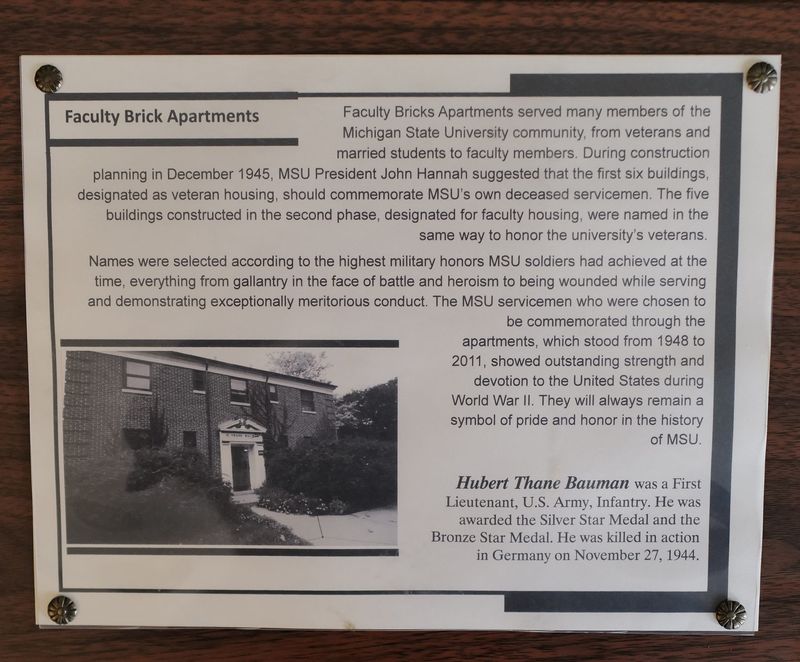
Thane was a decorated soldier, awarded both a Silver Star Medal and Bronze Star Medal. After his death, a faculty apartment building on MSU’s campus was named in his honor, and stood from 1948 to 2011. He was one of multiple veterans who died in World War II recognized by the university, with building names selected according to the highest military honors.
Dutch Cemetery honors American tradition
Each year, Memorial Day is celebrated at the Netherlands-American Cemetery.
The cemetery hosts an annual ceremony on the Sunday before the American holiday every year, honoring the soldiers buried at the site. The observance includes an American flyover, and each white marble headstone has sand ground into the names to add to the contrast.
“It’s a huge celebration that they do, and they do a whole ceremony at the cemetery,” said Theresa Myrick, Rita Bauman’s daughter, who also lives in Lansing. “The reverence that they show for our soldiers, it’s so touching and it’s something you don’t see here anymore, which is really sad. The honor that they show, and the respect, it’s really amazing.”
The Bauman family try to make their way to the cemetery 4,000 miles and a continent away for celebrations annually, visiting with the Bessem family who adopted Thane’s grave.
Belen said the Dutch families see the celebration as a way of honoring the people who helped liberate them from Nazi Germany.
History all around
In the Netherlands, history is everywhere, said Rob O’Brien, a filmmaker based in the Netherlands who is making a documentary about both families connected to Thane. The Dutch are surrounded by pieces of the past, he said, including small copper stones placed outside homes where Jewish families were deported to Poland and killed by Nazis.
“We live history daily here, but we do need reminding, however, that the past is present,” O’Brien said.
He said both of his grandparents served during World War II, with his grandfather fighting in a Scottish Regiment and his grandmother working as a nurse in the British army.
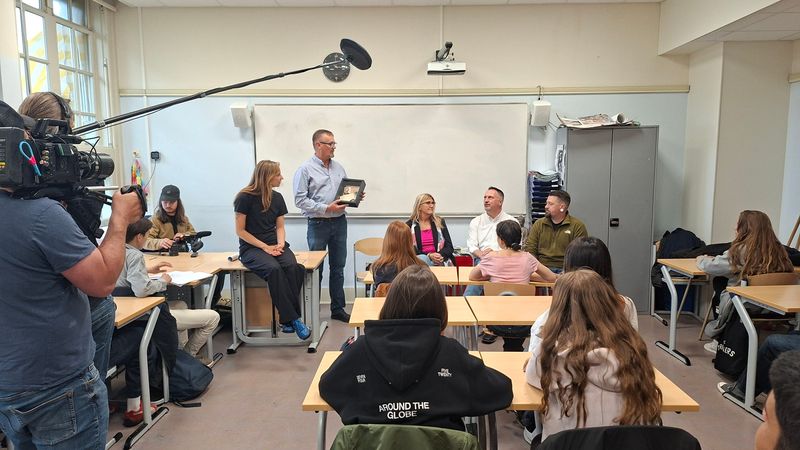
O’Brien told children in a school in Amsterdam about his grandparents, sharing all the places they traveled and the things they saw, while showing the kids that World War II is much more recent history than people may remember.
Myrick said she thinks history should be recognized the same way here in the United States.
“I wish it was taught here more,” Myrick said. “I don’t ever remember ever being taught much. World War II is just a blip in the history book. I don’t feel like it’s a priority to talk about history in our education system.”
O’Brien said he was visiting the Netherlands-American Cemetery with his wife’s family when he first learned about the grave adoption process.
Families endure a long waiting list to even get their chance at an adoption, while others pass the responsibility for maintaining graves on for generations. He wanted to learn more. He reached out to the cemetery, who put him in touch with Huub Bessems, who told O’Brien about being a young boy as the graves were dug, filled and closed.
“We wanted to see what it would look like when two families from two different countries come together for one soldier,” he said.
O’Brien told the State Journal that through the film, he wants to help remind people that the American soldiers who fought in World War II left their families and lives behind to help liberate others. The documentary is still being produced.
“They come over because they love their uncle, they want to make sure he’s not forgotten, but they also want to honor the people who honor him,” O’Brien said. “I think it’s a part of the connection between the Americans and the Dutch, it’s a mutual respect, a mutual gratitude.”
Contact Karly Graham at kgraham@lsj.com. Follow her on X at @KarlyGrahamJrn.
This article originally appeared on Lansing State Journal: One war, two families. How a Dutch family adopted fallen Lansing hero
Reporting by Karly Graham, Lansing State Journal / Lansing State Journal
USA TODAY Network via Reuters Connect