Since its start in 1988, Detroit Blight Busters has been known for demolishing or renovating abandoned houses, cleaning up neighborhoods and helping patrol the city’s streets against arson on what was once called “Devil’s Night.”
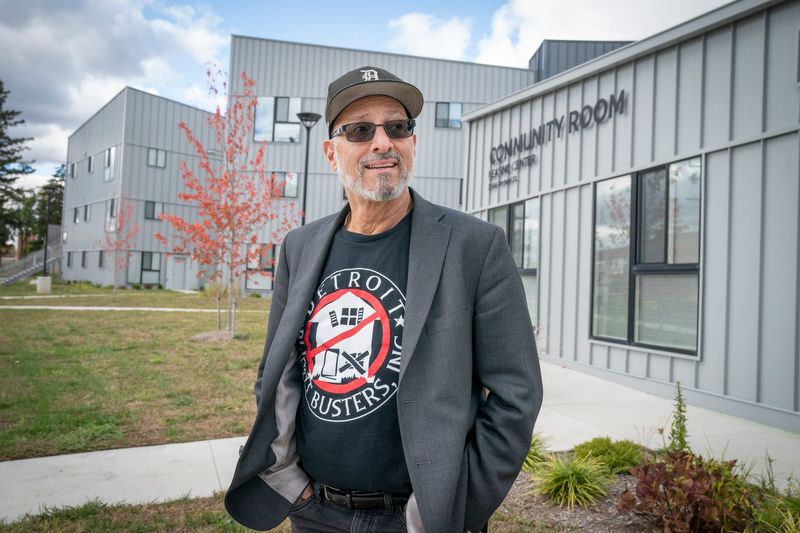
Lately, following significant improvements to Detroit’s blight and arson situations, the nonprofit organization and its energetic co-founder, John George, 67, have branched into large-scale affordable housing development — particularly projects involving federal Low Income Housing Tax Credits that are located near Blight Busters’ headquarters in the city’s northwest neighborhood of Old Redford.

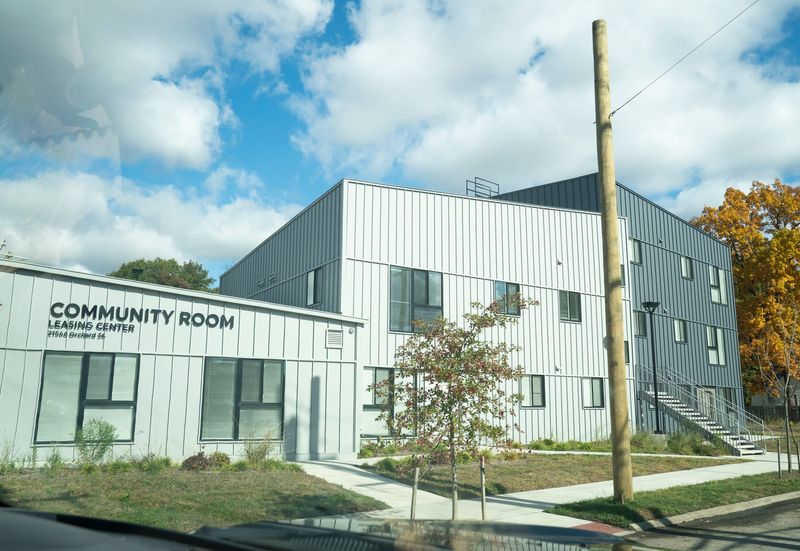
This spring, a newly constructed 48-unit development, Orchard Village Apartments, opened on what had been vacant lots at 21665 Orchard St., just off Grand River, as a joint project of Blight Busters and the nonprofit Cleveland-based developer CHN Housing Partners.
With rents starting at $525 a month, the development’s four buildings leased out quickly.
And last month, the Detroit Economic Growth Corp. announced that Blight Busters, in partnership with Columbus, Ohio-based developer Wallick, had been chosen to develop a vacant 19-acre portion of the city’s former 120-acre Rogell golf course site near the corner of Lahser and Seven Mile.
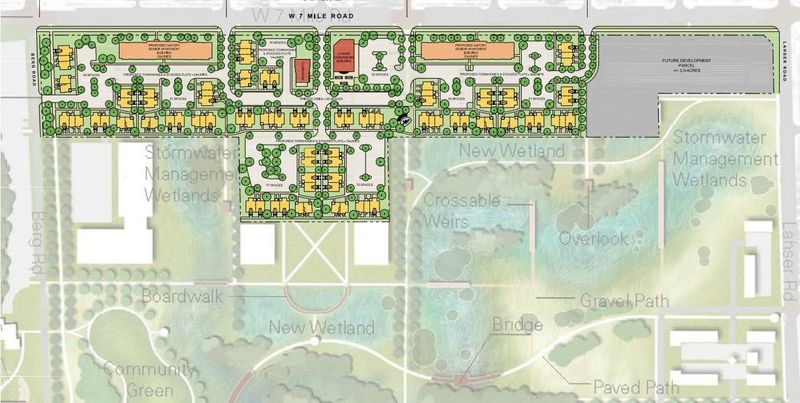
This $88 million project calls for 304 units of affordable and senior housing, to be spread across town houses and three-story apartment buildings. There also is room on the site for future commercial development, such as a grocery store.
George, a lifelong Detroiter who has resided in Old Redford for 40 years, said the housing would be going up on what was once “a long par 5.”
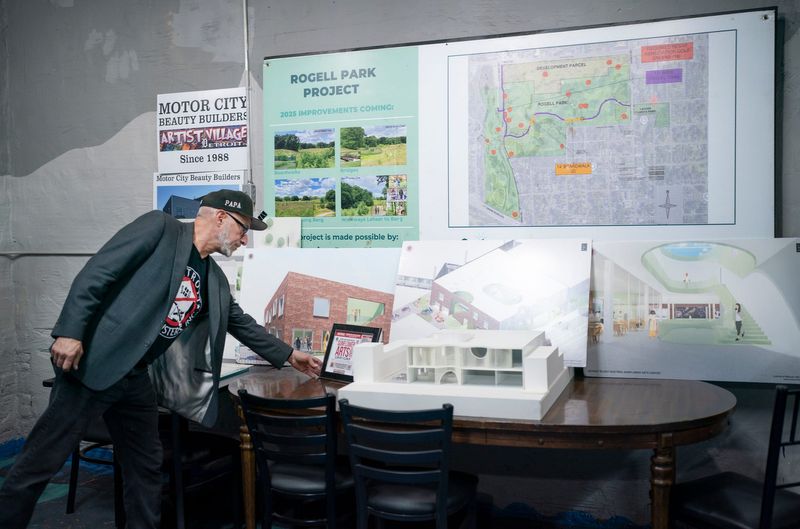
As for the remaining 100 acres of the abandoned golf course, the city is busy transforming that land into the new Rogell Park with winding trails, grassy meadows and a series of wetlands.
While the Rogell housing is still in its early planning phase, Graham Welling, senior development manager for Wallick, said they would like to begin construction in 2027 and finish in 2029.
However, the development will depend on approval from state housing officials for federal Low Income Housing Tax Credits, known as LIHTC. Without those credits, the project and its deeply affordable rents — reserved for households earning no higher than 30% to 80% of area median income, or $21,210 to $56,560 for an individual — wouldn’t be possible.
Blight Busters’ involvement could help the project win approval in the state’s highly competitive selection process for LIHTC.
That is because the Michigan State Housing Development Authority gives extra points to developers who partner with local community groups in project proposals.
“While these points can be beneficial, they are unlikely to be the determining factor in the competitive scoring process,” Katie Bach, a spokesperson for the development authority, said in an email.
The selection process takes into account other factors as well, she said, such as the degree of housing affordability in a project, developer experience, energy-efficient building standards and how close a site is to everyday amenities.
For the recently completed Orchard Village Apartments, the decision by CHN Housing Partners to collaborate with Blight Busters was less about improving chances for the LIHTC award and more about helping Blight Busters accomplish its mission in the community, according to CHN President and CEO Kevin Nowak.
“When they started, they were really focused on engagement in the community and addressing housing issues, particularly in terms of blight,” Nowak said in an Oct. 28 interview. “And, as we were thinking of our work in Detroit, and as Blight Busters was thinking of its next step in terms of creating new affordable housing, we couldn’t think of any better partner.”
George said Blight Busters was an active partner in Orchard Village’s development.
“In that project, we were involved every step of the way, as far as the design and what we were looking for,” George said. “We insisted that it have a community space. We insisted that it be affordable, which it is. We insisted that it didn’t look like a prison camp or substandard housing — we wanted it to look like every other normal apartment complex. So yes, we had a lot of input and feedback and back-and-forth.”
As for Wallick, the Columbus-based housing developer working with Blight Busters on the Rogell development, bringing in community partners who have deep familiarity with their cities is a major benefit in itself, Welling said.
“Especially when we’re entering a new market like for us with Detroit, we can’t do that by ourselves,” Welling said.
Community groups that partner with developers for LIHTC projects can be eligible for a portion of the project’s developer fee as well as revenue based on their ownership interest.
The ownership split for Orchard Village Apartments is 75% CHN Housing Partners and 25% Blight Busters.
Welling said the ownership split for the Rogell development is still being negotiated.
Rogell golf course
The old 18-hole Rogell golf course was designed by Donald Ross and opened in the mid 1910s. The city acquired the course in the 1940s and eventually sold it in 2007 for $2.1 million to Greater Grace Temple of the Apostolic Faith.
The church operated the golf course for several years, and church officials later told reporters it never was profitable.
In 2013, the church shuttered Rogell and attempted to sell the property to a cemetery company. However, the cemetery plan proved controversial in the neighborhood and the city’s Board of Zoning Appeals denied the necessary zoning change.
Ultimately, the city bought the golf course back from the church in 2018 for about $2 million.
The DEGC chose the Blight Busters-Wallick housing plan from five total responses to a request for proposals. The developers will eventually purchase the city-owned site, a DEGC spokesperson said, although for how much has yet to be decided.
Blight Busters
Blight Busters got started in 1988 when George and two neighbors boarded up an abandoned crack house in their neighborhood in northwest Detroit.
Since then, organization and its legion of volunteers have demolished over 300 blighted houses, renovated and painted many more and helped to construct over 100 new homes.
Blight Busters also has built a vibrant “Artist Village” of community and event spaces on the same Lahser Road block as the Redford Theatre, as well as a nearby community garden known as Gordon’s Garden at Farm City Detroit.
Back in the early 1990s, Detroit was still plagued by widespread arson fires on the nights leading up to Halloween, with the evening of Oct. 30 becoming informally known as “Devil’s Night.”
Blight Busters took part in the arson-prevention patrols that were happening throughout the city and played a key role in the effort to rebrand the night as “Angel’s Night.”
The city officially ended its Angel’s Night anti-arson campaign in 2017.
By then, the amount of arsons in the three-day period leading up to Halloween had fallen dramatically from the 1984 peak of over 800 fires. Last year, just seven fires were reported over those three days, a Detroit Fire Department spokesperson said.
Even though Angel’s Night is no longer an official city event, Blight Busters still marks the occasion with an annual Oct. 30 dinner.
“It’s more ceremonial,” he said. “We don’t roll until 4 in the morning like we used to do, sometimes until dawn.”
Government blight busting
The city of Detroit has demolished tens of thousands of blighted houses over the past 13 or so years under Mayor Mike Duggan and then-mayor Dave Bing.
Those massive, organized and government-led demo programs did change how Blight Busters focused it efforts.
George said his organization has, in recent years, been spending more time on community beautification projects and improvements, such as recent sidewalk repairs in Old Redford made possible by state grant funds. It also started working to bring more affordable housing.
“When Mayor Duggan became mayor, he asked me to stop tearing down houses illegally,” George recalled. “Because a lot of the stuff that we’ve torn down over the years, we didn’t have the permit, we didn’t own it — it wasn’t even ultimately our responsibility.”
“When he came in, he said, ‘Look, John, I’ll tear down the abandoned stuff. I want you to focus more on fixing stuff,’ ” George said. “He always teases me — ‘You should change your name to the Motor City Beauty Builders.’ I said, ‘I don’t know if my board is going to like that, but I can ask.’ “
While giving a tour to a reporter last week of where on the old Rogell course the new housing will go, George said he had some “Motor City Beauty Builders” T-shirts printed up just for fun.
“I think I’m going to distribute them on Angel’s Night this year,” he said. “For the mayor’s going away present, he’ll get his wish.”
Contact JC Reindl: 313-378-5460 or jcreindl@freepress.com. Follow him on X @jcreindl
This article originally appeared on Detroit Free Press: Once known for demoing, Detroit Blight Busters now building housing
Reporting by JC Reindl, Detroit Free Press / Detroit Free Press
USA TODAY Network via Reuters Connect