K.I. SAWYER AFB — Sarge was pointing out the obvious. At least to him.

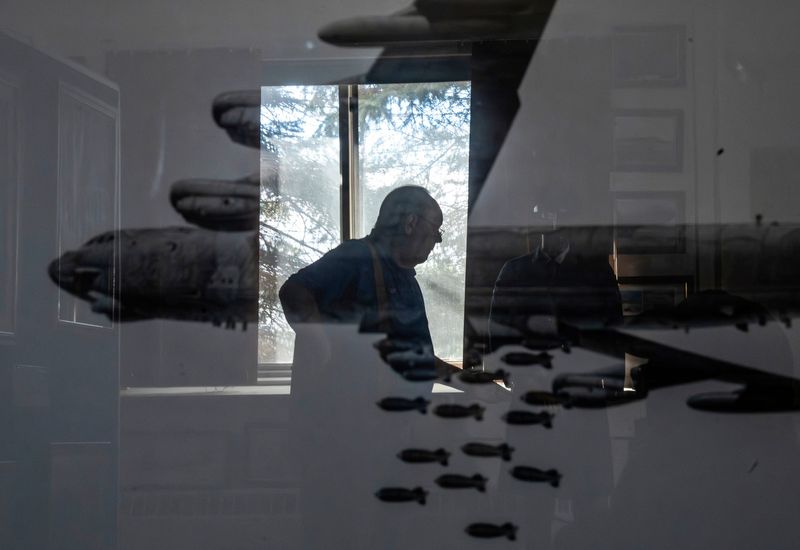
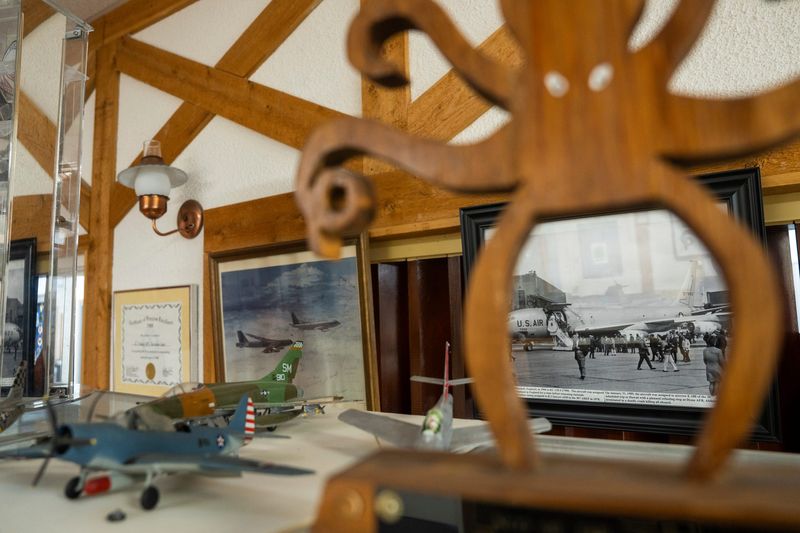
“This little bird right here is the T37, of course,” he said, standing before a museum exhibit. “In Vietnam, they used it as the A37 dragonfly; slightly larger engines. But it could carry 15,000 pounds of bombs. They called it the ‘Tweet.’ As a trainer, obviously.”
Obviously.
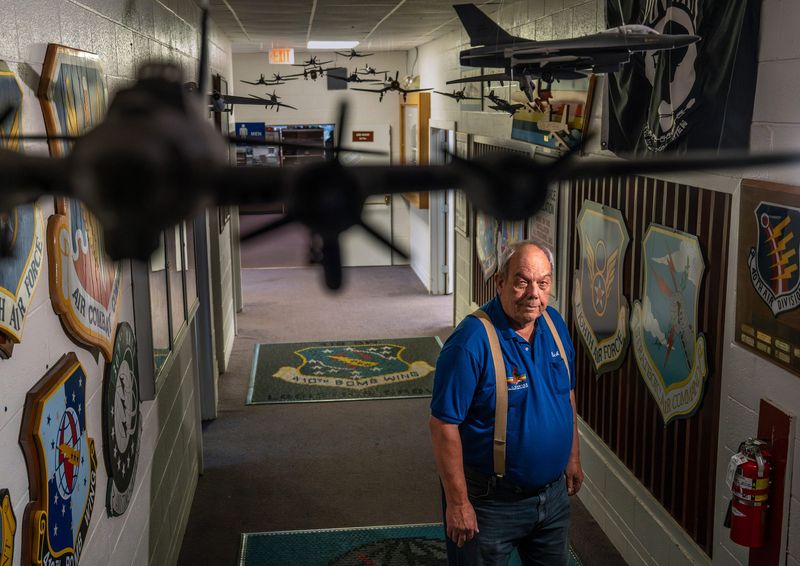
Richard Verwey, retired senior master sergeant of the U.S. Air Force, is the president of the K.I. Sawyer Heritage Air Museum and your tour guide to the arcane subject matter at this obscure place on this defunct Air Force base in the Upper Peninsula.
He walked down the hall, pointed to the squadron patch on the wall and began explaining its symbolism. “Four-hundred tenth,” he said. “Four original A20 squadrons: 644th, 645th, 646th, 647th. Thirteen white stars are the 13 colonies. The three stars represent major campaigns: D-Day, Battle of the Bulge, Crossing of the Rhine. The 40th Air Division, four squadrons, four lightning bolts: 449th at Kincheloe, 416th at Griffiss, 410th’s here, 379th at Wurtsmith.” And so on.
As expected from a lifelong airman who spent decades serving here, who lives and breathes what this place used to be, the 78-year-old speaks in a shorthand language best understood by his fellow airmen, a military jargon he assumes is obvious to his visitors.
Usually, it is. This remote museum gets few guests these days, but most of them know exactly what he’s saying, and they recognize everything that’s on display. Because like him, this had been their world.
Until it vanished.
The K.I. Sawyer Air Force Base was established in 1954 just south of Marquette as a first-line defense in case the Soviets came attacking over the North Pole. It was like a real city, with its own schools, its own police and fire departments, well-ordered rows of housing, and a small-town’s worth of things to do and places to go. At its peak, 7,000 military personnel and their families lived here.
But the Cold War ended and so did the need for the base, and by 1995, the Air Force packed up and left, taking away 5,000 jobs and a fifth of Marquette County’s economy.
“We lost everything,” said Sue McNeill, the museum’s 78-year-old librarian. “We lost the library, we lost the hospital, we lost the bowling alley, the gymnasiums. I mean, we just lost everything. And it wasn’t necessary. They could have kept it going.”
A few of the men wanted to preserve what they could before the base was scrapped, so they gathered enough artifacts and mementos to fill a few small rooms in the former gymnasium. Through donations, the collection grew enough over the years to warrant its own building.
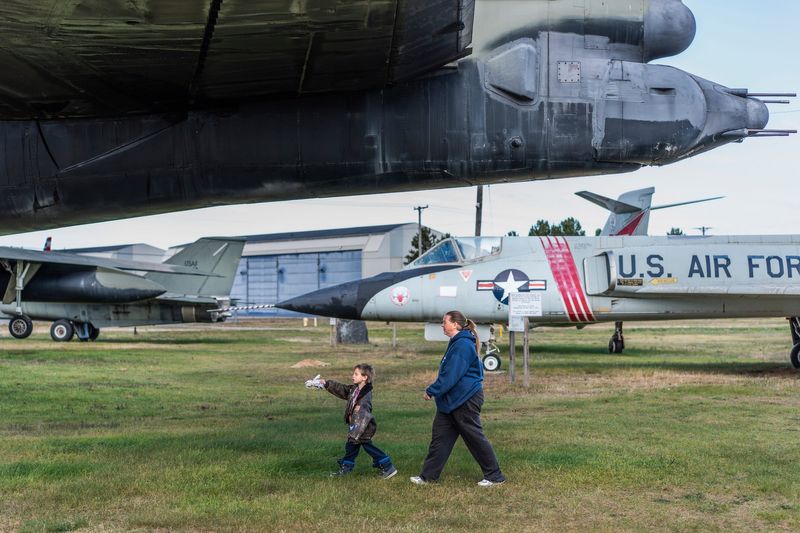
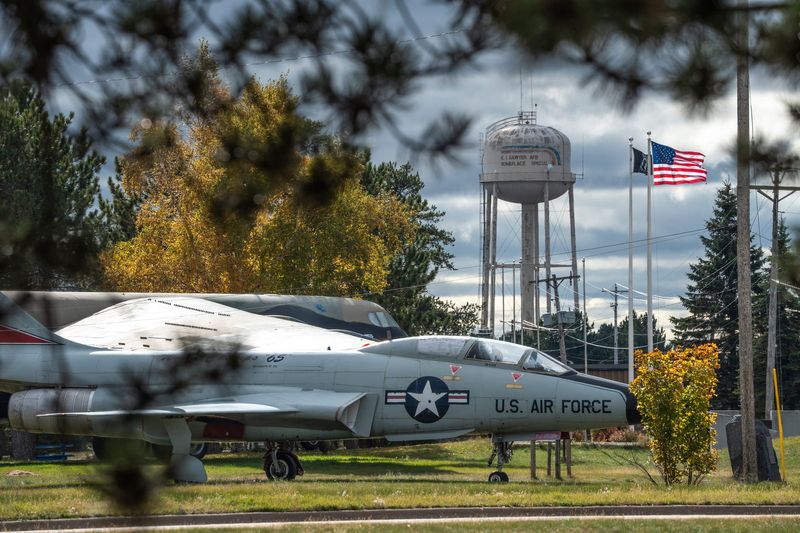
“The Museum is committed to developing and promoting aviation, both Military and Civilian, by understanding the history of aviation in the Upper Peninsula,” its mission statement dryly notes. Fittingly, there are model aircraft on display, along with replicas of weaponry, mannequins wearing decorated Air Force uniforms, and four real fighter jets parked on grassy lots outside.
But beneath that surface, this museum is really about everyday people trying to live ordinary lives in an extraordinary place.
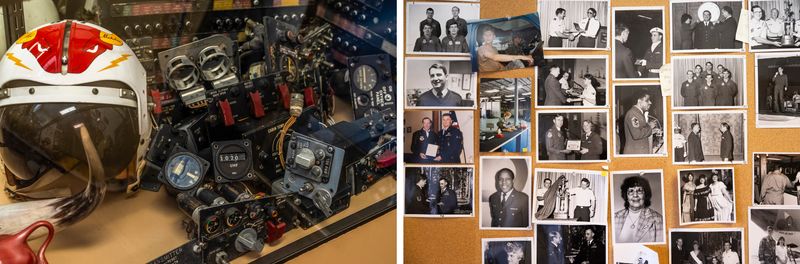
There are trophies on display that were won by the K.I. Sawyer baseball team, and monthly awards for the best-kept yard, and souvenirs such as décor from the bar inside the officers club. Photos show buddies gathered and posing beneath the massive noses of aircraft, and families smiling and standing on manicured lawns in the summer, and Halloween costume parties for the kids living on the base.
A corkboard on a wall displays dozens of old photographs of unknown people whose identities are being sought: A man in uniform saluting a superior officer at some formal event. Three wives standing and smiling in black and white. A bespectacled man doing paperwork at a desk. “Do you know these people?” a sign implores.
One wall features yellowed news clippings in frames, chronicling the doomed fight to keep the base open and capturing the stages of denial and grief in headlines, going from “Sawyer effort winning many battles” to “State makes last stand to save Sawyer” to “Reality of closure closer” and then, finally, “Shot down: Panel votes 7-0 to close Sawyer.”
These days, the roads on the old base still have the names of aircraft and missiles (Panther, Liberator, Invader), but now they wind past abandoned barracks and empty fields. A few thousand people live in the low-income housing left behind, and after years of crime ruined the area’s reputation, a new wave of families has moved in and gradually made it livable again.
Sarge walked toward a wall featuring four large plywood boards on which hundreds of little gadgets had been arrayed in military precision. It was a menu for aircraft parts that once stood over the counter at the Field Maintenance Squad building, where a mechanic could walk up and place an order. He pointed proudly to a toggle switch.
“And everybody says, ‘You used ordinary toggle switches. You can go to the local five and dime and buy those,’ “ he recounted incredulously. “And I said, ‘No, you can’t. They aren’t 6 volt. They aren’t 12 volt. They aren’t 18 volt. They aren’t even 24 volt. They’re 28 volt! And they were tested to 99.999% reliability, of course.’ ”
But of course.
Verwey was born in Kansas, grew up in Pontiac, joined the Air Force and retired to a home just outside the base where he spent years serving. A few years ago, he volunteered to help out at the museum and got recruited almost immediately into its presidency, just as its bank account was down to its last few hundred dollars.
“If it wasn’t for him, they would have closed the doors already,” said 45-year-old Missy Derby, the museum’s secretary. “He’s gotten security cameras. He got donations. He got computers. He found people to donate money for certain things. He got the new windows in there because the windows were so thin that you could see the curtain blowing. He puts in so much time and so much effort, at one point I think his wife said, ‘Look, I would like you home too, sometimes.’ ”
Verwey got the finances in better shape through fundraisers, through donations by local businesses, from the few bucks people leave in the donation boxes that stand next to the idle fighter jets, and sometimes by paying for repairs out of his own pocket.
“Nobody gets paid here,” he said. “We’re all volunteers. Every penny that we raise goes into the maintenance of the museum.”
There’s a gift shop that brings in a few dollars when people buy K.I. Sawyer mugs or T-shirts. And the building has a large ballroom that get rented out for charity dances, or meetings, or weekly Jazzercise classes. But the museum desperately needs a new roof and new windows, and it’s hard to put that kind of money into an old structure that’s merely being leased.
“If we own the building, I’ll raise the money and I’ll spend it,” Verwey said. The museum board has made an offer to the out-of-state investment firm that owns the property, but so far it’s well below the asking price.
Like most small-town museums nowadays, this one needs more money, more volunteers and more interest from people besides those few who once lived here, for a simple reason he thinks is the most obvious thing of all here.
“It’s important that we pass it on to the civilian sector and the kids that are coming up,” Verwey said. “They’ve got to know that what you’re enjoying isn’t free. People paid for it with their lives. And I’m doing everything I can to preserve it.”
With that, Sarge marched down the hall to the next leg of the tour.
“This is the display case for the 62nd,” he said. “This is the aircraft that’s on display. William Tell was the Air Force version of Top Gun. The 62nd won the William Tell competition in ’65. And over here is the display on the 87th. The 87th replaced the 62nd in 1971, of course.”
Of course.
John Carlisle writes about Michigan. His stories can be found at freep.com/carlisle. Contact him: jcarlisle@freepress.com. Follow him on Twitter @_johncarlisle, Facebook at johncarlisle.freep or on Instagram at johncarlislefreep.
This article originally appeared on Detroit Free Press: Obscure Upper Peninsula museum chronicles a lost world
Reporting by John Carlisle, Detroit Free Press / Detroit Free Press
USA TODAY Network via Reuters Connect