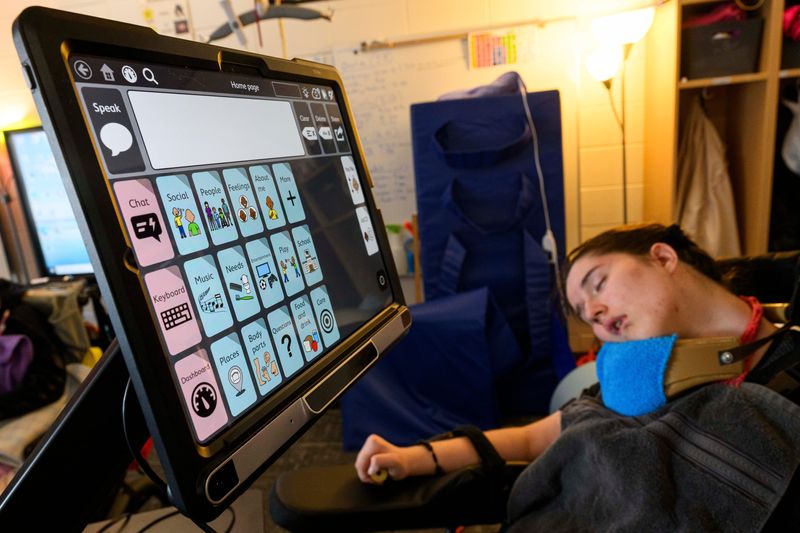
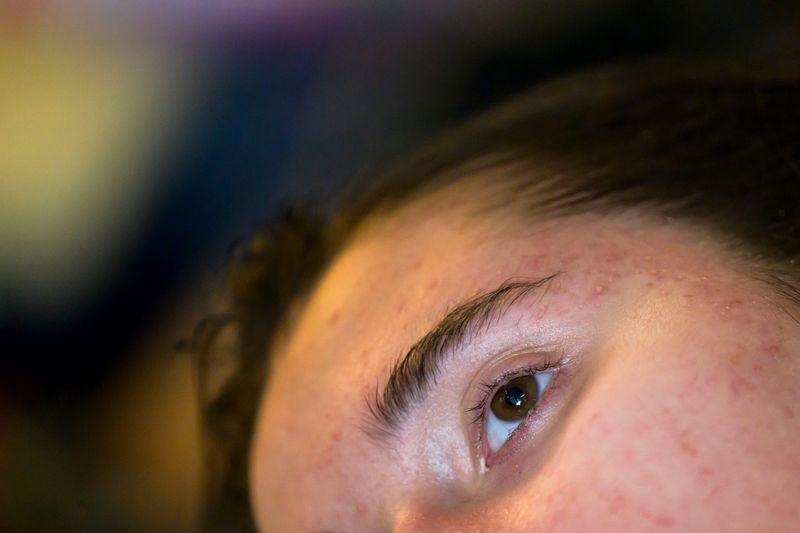
St. Joseph — Path Appleton’s big brown eyes locked in on the tablet screen as a tiny cursor hovered over the words she wanted to say.

“S—. F—,” the computer vocalized on behalf of the 17-year-old, also displaying the curse words just in case there was any misunderstanding. She alternated between profanities a few more times and threw in a couple of pre-programmed Gaelic profanities her Scottish grandfather had taught her, too, just for good measure.
Her mom cackled. Her father had just been explaining the features of her new iPad-like assistive communication device that allows Path to have a voice. Just as he mentioned the section of “strong words,” Path drew her eyes right to them on the screen.
Any chance that was a fluke? No chance, her mother said. While likely said in good fun, those strong words were warranted.
“If anybody has a right to swear about the past year, it would be Path,” Elizabeth Appleton said.
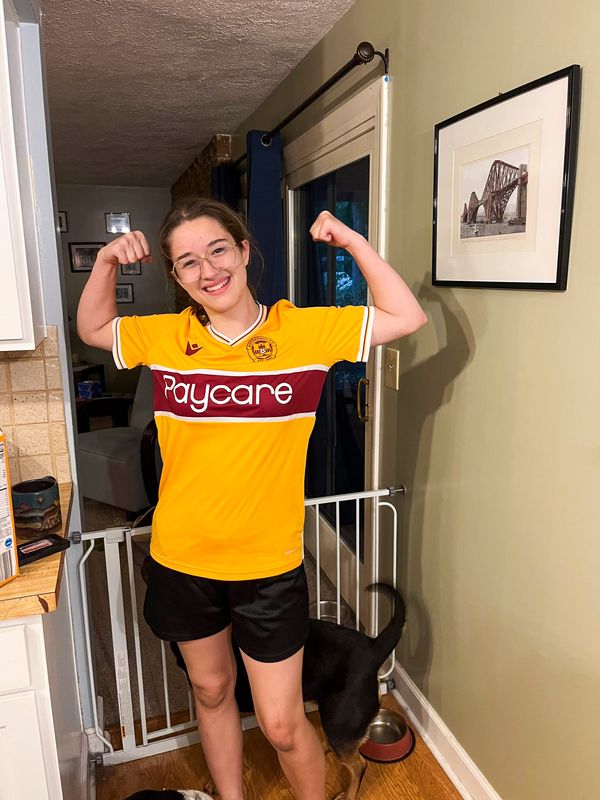
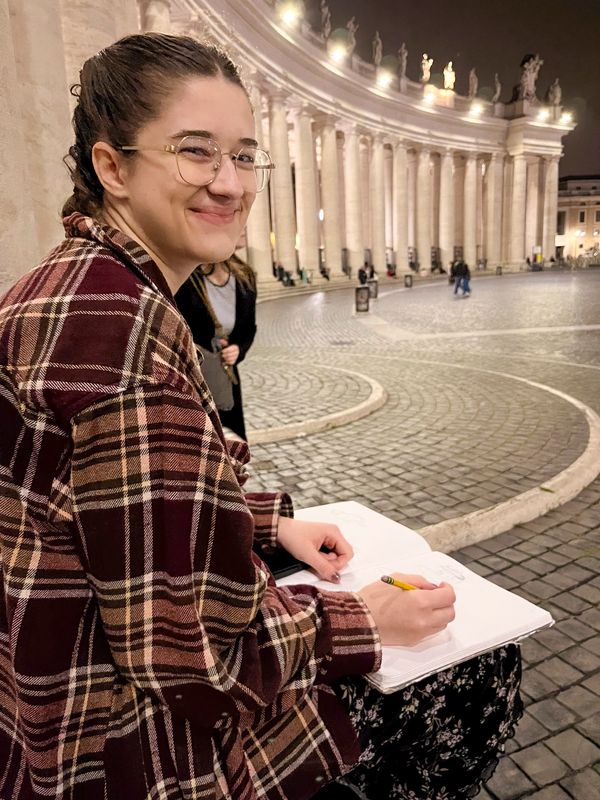
Sixteen months ago, Path was a healthy, typical teenager with round, wire-rim glasses and dark curly hair. She was a rugby player, a 100-books-a-year reader, sketch artist, rock climber and world traveler who was perpetually behind on her math homework. A trip to Italy’s Mount Vesuvius got her hooked on volcanoes. Her life was Hozier concerts and trips to the beach with her friends.
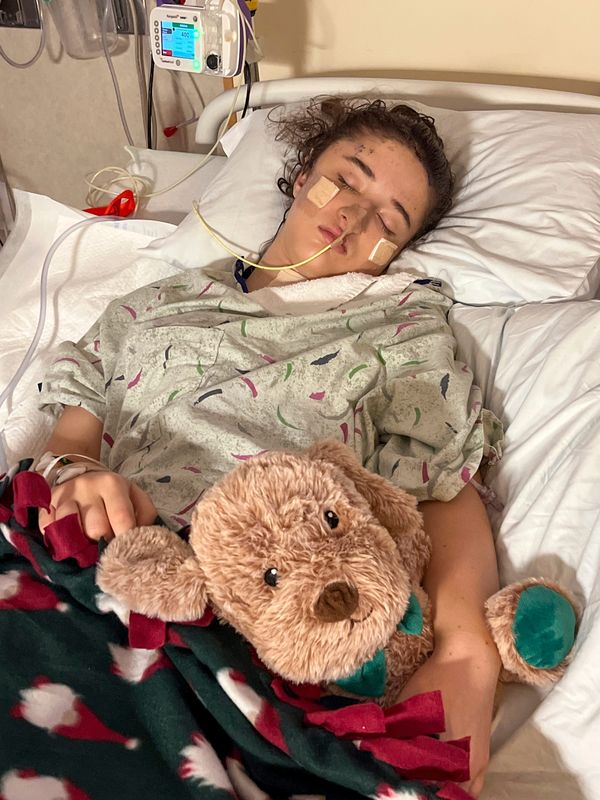
One December day in 2024, Path, then a sophomore at St. Joseph High School, thought she had a headache. It turned out to be a massive brain bleed, caused by an underlying birth defect no one knew she had.
Path endured five surgeries, including one to remove a section of her skull and another to replace it, and months of debilitating muscle spasms. She now almost entirely lacks the ability to eat, move or speak, making only small hand and body movements and a few sounds. She’s allowed the smallest of sips of orange juice. But she appears to still be who she was, aware of herself, her life and what happened to her.
Every day, her family watches as Path’s friends go on college visits, play their sports and get ready for prom. They grieve the life she was supposed to be living now.
They know Path’s recovery is likely to be measured in inches, not miles. But they also hold on to the hope that Path will make a meaningful recovery, to be able to speak, to eat, to read books and go out with her friends.
They hope, one day, she will drive away from them.
“She’s a bloody fighter,” said Stephen Appleton, her father, a native of Scotland who still speaks with a thick Scottish accent. “She’s amazing. She will not give up. She wants to get better. She wants to move forward.”
Given the name Rosemary at birth, Path chose her new name for herself after middle school, trying to set herself on just that, a new path.
Now, Path’s journey has taken a significant detour.
‘One sick kid’ has a brush with death at school
The last time Path went to school, it was snowing.
It was snowing so much that Elizabeth drove Path to school herself, instead of letting the then-16-year-old hit the road with lake-effect bands set to pound Michigan’s left coast.
It was the Monday after Thanksgiving break.
Path’s grandfather was in town from Scotland. The Appletons had hosted him along with Elizabeth’s parents for Thanksgiving. After the holiday meal, they regaled the table with the story of Path’s birth in Scotland, how she took “forever to arrive,” that August 13th of 2008.
“She loved hearing the story from everybody’s different perspective of how happy we were that she had entered the world,” Elizabeth said.
Days later, she nearly left it.
Just before the end of the school day that Monday, Path called to tell her mom she had a migraine and asked to be picked up early. Elizabeth told her no problem, she was on her way.
In the car, Elizabeth received a second call, this one from the office assistant.
“You’ve got one sick kid,” Elizabeth remembered hearing her say.
By the time Elizabeth arrived at the school, Path was unconscious.
The staff had already called 911 and cleared a path through the students, cars and snow for the ambulance. Still, the medics couldn’t get the gurney into the office. They scooped Path into their arms and ran. The school’s resource officer drove the ambulance to the hospital, as both medics worked on Path.
About the time they pushed through the doors of the hospital emergency room, Path’s heart stopped. For about 10 minutes, hospital staff performed CPR until she regained a pulse.
Because of the cardiac arrest, they first thought something was wrong with her heart, Elizabeth said. A CT scan revealed the bleeding in her brain.
Path suffered a ruptured arteriovenous malformation, or AVM. A rare congenital defect, AVMs are a tangle of blood vessels in the brain that leak or rupture under pressure, causing bleeding, which can lead to brain damage and death.
Path was transferred by a specialized ambulance, as it was snowing too hard for a helicopter to come get her, to Bronson Methodist Hospital in Kalamazoo. She required an emergency surgery to cut off the blood flow to the AVM, then a second surgery within hours to remove it.
They were successful, but Path remained unconscious for most of the next two weeks.
“For days afterward, I was just like — it was just a headache,” Elizabeth said.
After 18 days, Path was transferred to Mary Free Bed Rehabilitation Hospital in Grand Rapids. For weeks, Elizabeth and Stephen were ships in the night, alternating who was at the hospital or the rehab center and who was home with Path’s younger brother James, now 16, who has autism.
That Christmas, the same family members from Thanksgiving gathered around a table again, an impromptu dinner and a morsel of normality for the beleaguered family. All that was missing was Path.
How Path’s rupture changed her parents’ lives: ‘We haven’t slept for a year’
Elizabeth and Stephen were both working for Whirlpool, Elizabeth in color engineering and Stephen as a materials engineer for the cooking platform, when Path’s AVM ruptured.
They quickly learned caring for their daughter at home would be another full-time job.
“We haven’t slept for a year,” Elizabeth said.
They had one weekend of reprieve over their anniversary, thanks to Elizabeth’s sister and a group of friends who banded together to watch both of the Appleton kids. Elizabeth and Stephen went to a hotel and slept for 19 hours straight.
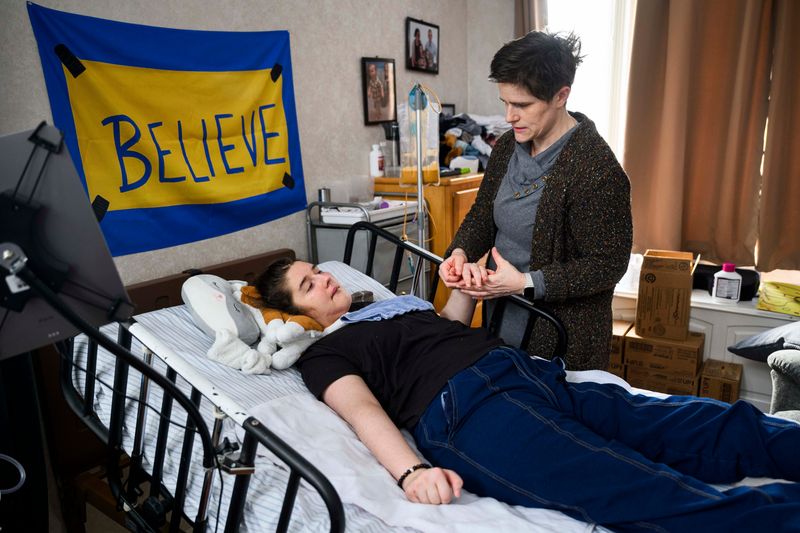
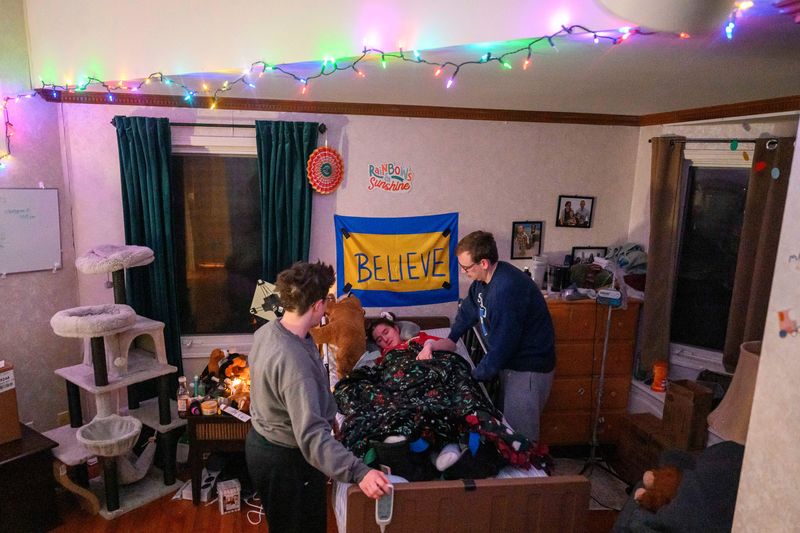
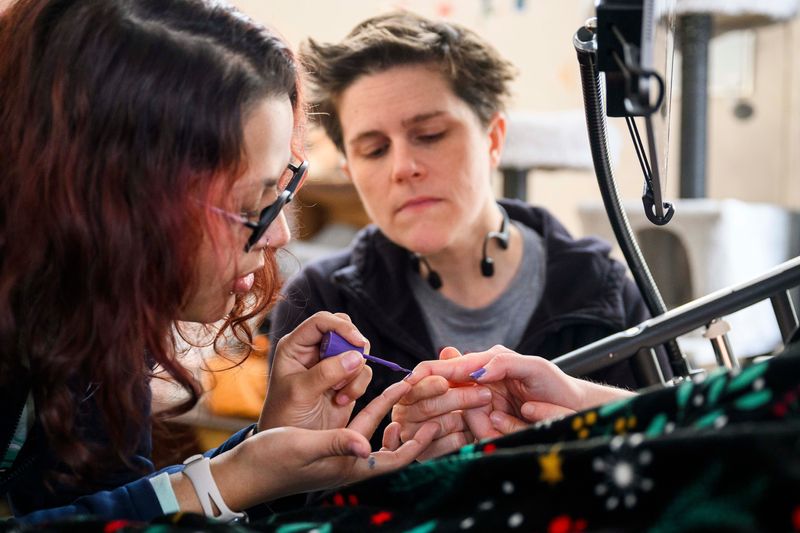
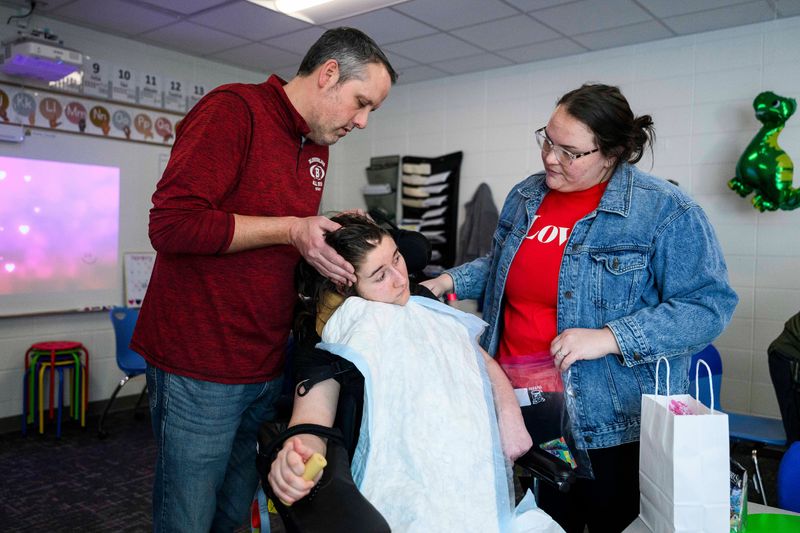
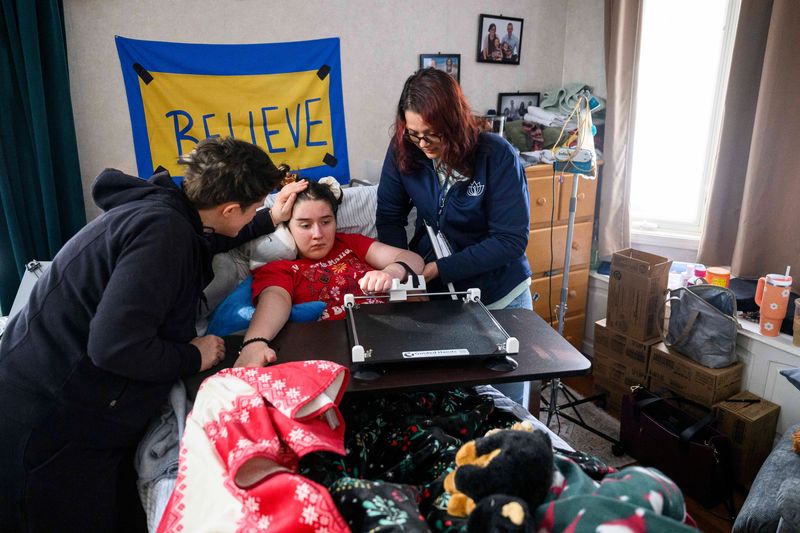
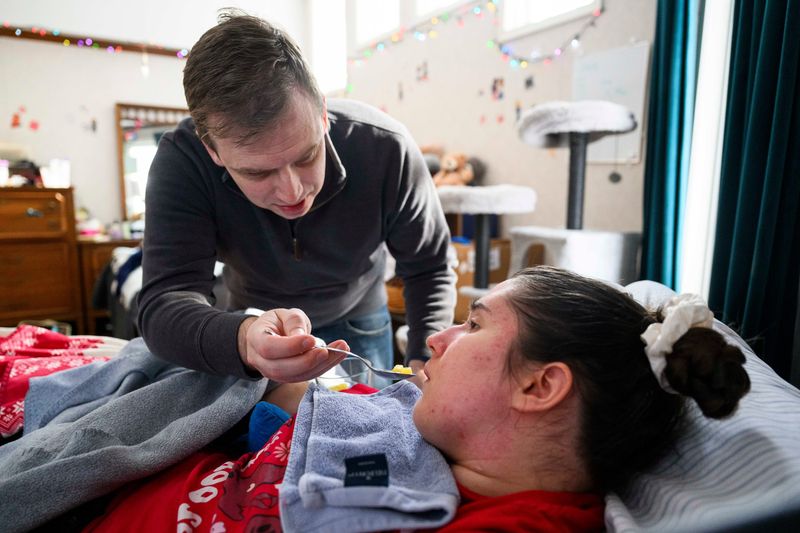
Everything from Path’s skin care routine to filing her nails is now in their hands. Saturday is their “spa day,” when an aide comes to help them give Path a full bath and wash her hair.
Elizabeth braids Path’s dark brown curls, just like she used to do for her before school and at night. If she angles the braid to the side, it almost covers the circular scar on Path’s scalp.
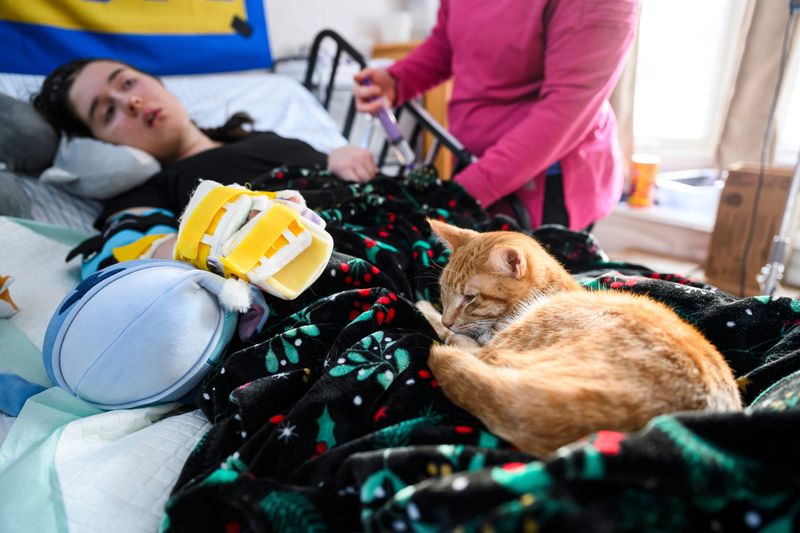
Path’s head tilts heavily to the right, her eyes often looking up and to the left to compensate. A pain pump inserted into her back has provided some relief from the muscle spasms, but they still sneak up on her. Her right foot is always fixed at a point, almost as though it were trying to do ballet. Any shoe on that foot always falls off. Her right arm was hyper-extended for nearly five months. Both her hands are almost always gripping something, usually a ball of socks or a small stuffed animal.
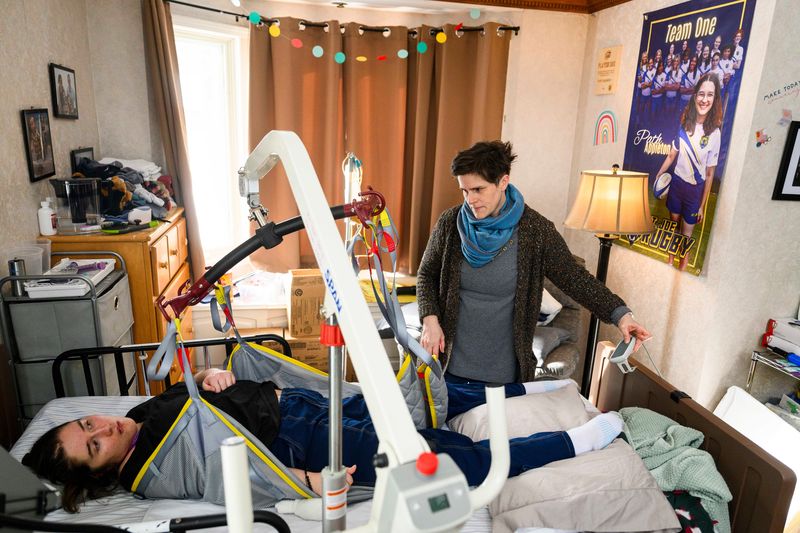
Her parents regularly stretch her muscles, move her joints and readjust her position.
“It’s draining, but it’s an absolute privilege to have her here and be able to do that,” Stephen said.
Elizabeth said it was a “steep learning curve” to care for their daughter in her adult body, and sometimes hard to remember through all the small tasks that they were caring for a whole person. They assume Path has a running list of grievances in her head for every time they have said or done something ridiculous while trying to care for her.
They joke about giving Path one-time-only permission to punch her dad in the face, just to give her something to work toward.
Path also has a strict schedule for her tube feedings, medication and liquid intake so she doesn’t get dehydrated. Her parents have to stay on top of appointments and insurance filings and make room in their day for their son, James, who is finding more independence but still needs his parents more than most 16-year-olds.
“The weight of just the responsibility at times, it can be — if you think too hard about it — it’s overwhelming,” Elizabeth said.
Path can only be transported in a wheelchair-accessible van, which the family was able to purchase after a GoFundMe raised money to help with their mountain of costs.
Elizabeth left Whirlpool after taking a leave of absence and now works part-time at a community college.
Fighting with the insurance company has become their other part-time job. They hope to get Path back into Mary Free Bed for intensive inpatient therapy to catapult her forward, but their insurance has denied such previous requests. Anticipating more insurance roadblocks, they are hoping to raise the money for her to stay three weeks. Max’s mom has been managing a GoFundMe for the family, which raised the initial funds for the van and other needs early in Path’s care.
Stephen said it isn’t fair to judge the little progress Path made in the early months, as she was either unconscious, in need of another surgery or in significant pain from muscle spasms. Now that the acute medical needs are behind her and the pump appears to be doing its work to calm the muscle spasms, they have seen her engaging more in physical therapy.
They can see the progress Path has made just in the last two to three months, as incremental as it may be in the grand scheme, but meaningful for her day-to-day life. Little things, like doing a supported bicep curl, give Elizabeth and Stephen hope that anything could be possible with time. Elizabeth puts college brochures that come to the house in a “not yet” pile. They believe this stage is temporary.
They know she has a mountain to climb, but are determined to propel her forward. Even if it just means she can tell them how she’s feeling.
Path was ‘Player One’ on St. Joe’s girls rugby team
Path’s bedroom in her family’s ranch house in a wooded neighborhood in St. Joseph used to be her parents’ room. But with the extra space and en suite bathroom, it made sense to convert it into Path’s room. Her hospital bed sits under the vaulted ceiling, with a blue and yellow “BELIEVE” flag from the TV show “Ted Lasso” pinned to the wall behind her. A twin bed is tucked into a corner, where her parents trade off sleeping, as one of them has to move her every two hours.
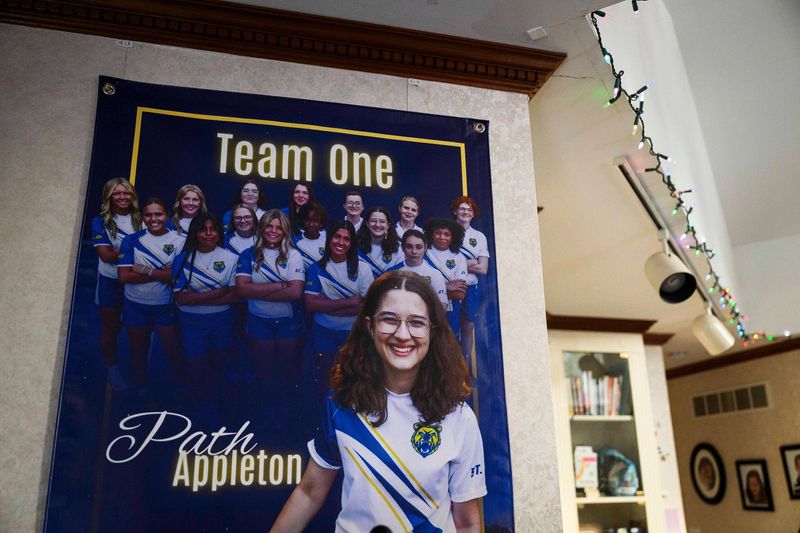
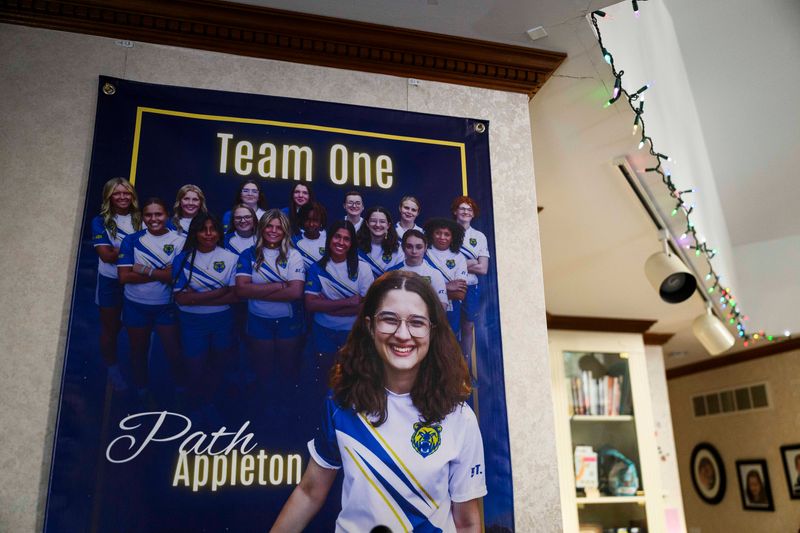
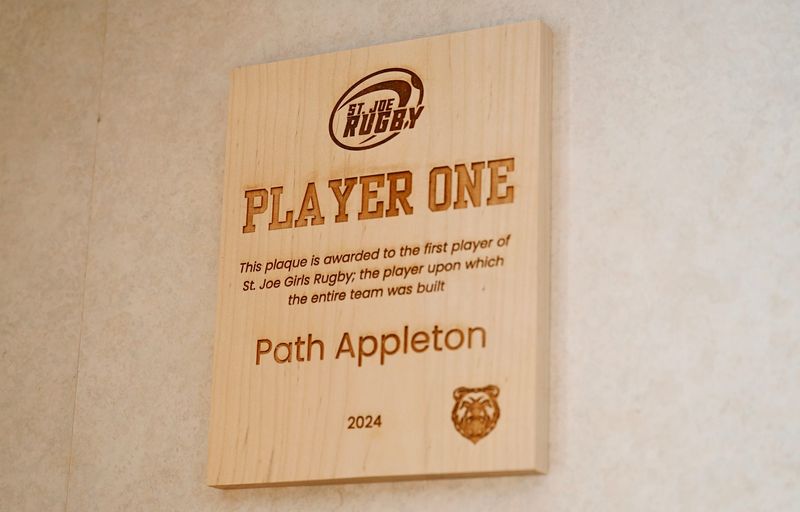
On the wall facing Path’s bed is a piece of her old life: A poster with her official rugby portrait. Next to it is a plaque that reads, “PLAYER ONE.”
Path wasn’t much into team sports growing up. But when St. Joseph rugby coach Dan LaFond approached her about starting a girls’ team, Path jumped at the chance. She became the first player on the first girls’ team and fell in love with the sport.
For a while, LaFond said, she trained with the boys’ team during the summer. They would run on the beach, something Path wasn’t yet used to, but she kept pushing, never complaining.
“She just had this kind of intensity about her,” LaFond said. “When you look at her, she doesn’t look physically imposing — and man, in tackling drills and playing defense, she never backed down.”
Path recruited her friends to play, until they had enough girls to host games the fall of her sophomore year.
At the end of the season awards banquet in November, a month before Path’s AVM ruptured, they presented her with the plaque.
“This plaque is awarded to the first player of St. Joe Girls Rugby,” it reads. “The player upon which the entire team was built.”
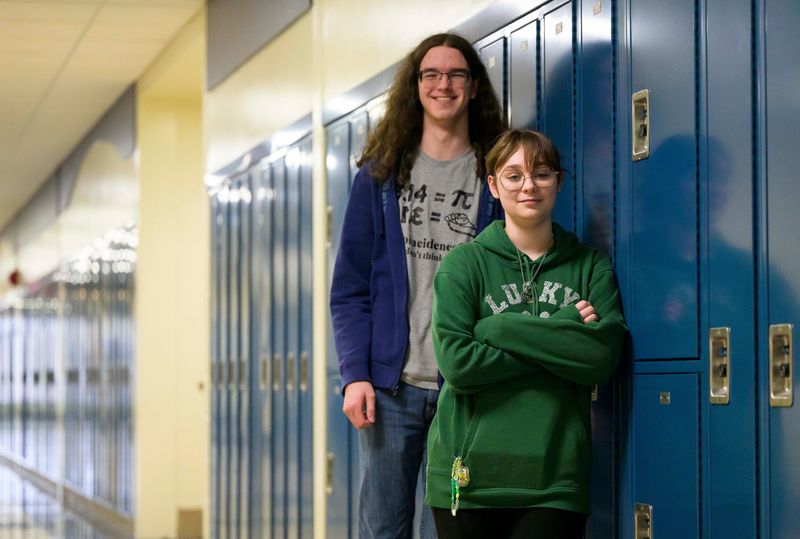
One of her best friends, 17-year-old Jordan Bader, was one of Path’s first recruits. Jordan said Path seemed to enjoy the sport for its connection to her Scottish roots and found it to be “a big confidence booster.” She joined the boys’ team and “refused to leave until she got a girls’ team.”
“It was wonderful,” Jordan said. “Honestly, I think it’s inspired a lot of us.”
When they heard what happened to Path, Jordan and another friend, Max Woosley, 17, were in shock.
“It didn’t really feel real at all,” Jordan said.
Max immediately headed for the hospital. When he was allowed to see Path, she had a tube in her mouth to breathe and was hooked up to several machines.
“I went into the room with Path, and I found I couldn’t speak anymore,” Max said.
A year has passed without their friend being able to talk to them, but that hasn’t stopped Max and Jordan from talking to Path.
They regularly visit, Max coming just about every weekend.
“It wasn’t even really a choice in my mind,” Max said. “We’ve been friends for so long, there is no choice. I’m going to visit her, hold on, help out however I can.”
Elizabeth and Stephen know how special it is for the two teenagers, now juniors with full high school schedules and college visits on their plates, to visit as often as Path’s friends do.
“I just wish I had friends like hers when I was in high school,” Stephen said.
After 399 days, Path goes back to school
As Path became more comfortable at home and able to tolerate trips out of the house, the conversation turned toward what could be next for her. Could she go back to school? And if she could, how does a school address her medical needs, while also recognizing she could plausibly pass an AP English test right now, but can’t tell them about it?
It was Stephen who suggested during a meeting of several county and local school officials, why don’t we ask Path what she wants to do? Did she want to go back to school? Her answer, they said, was a clear “yes.”
St. Joseph Principal Joe Rommel, who had to lead a staff meeting moments after the ambulance carried Path away that December day, said the school district had to assess Path over a course of weeks to figure out where would be the best placement for her.
They determined she would attend Blossomland Learning Center, a specialty public school within the Berrien RESA for students with significant disabilities, usually cognitive ones. It’s not yet clear whether Path has any cognitive disabilities, but with her high medical needs and low ability to communicate, Blossomland made the most sense.
“This is the appropriate placement for now,” Rommel said. “And then we’ll let her guide us.”
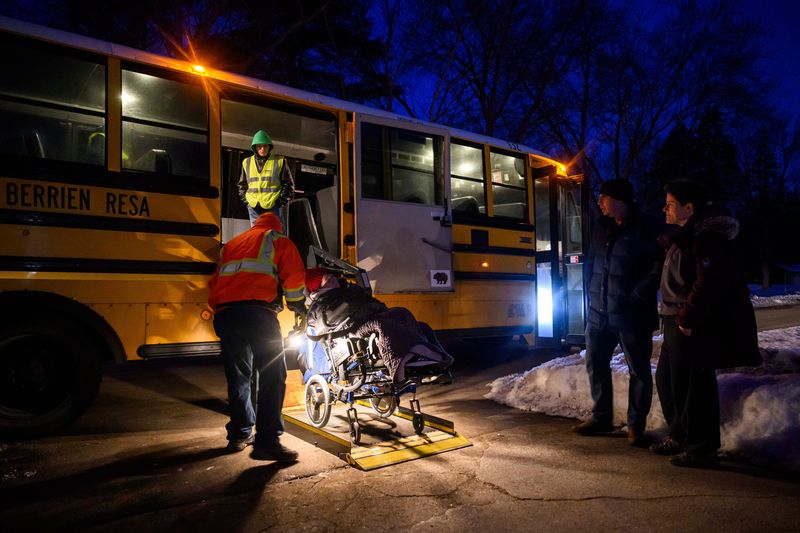
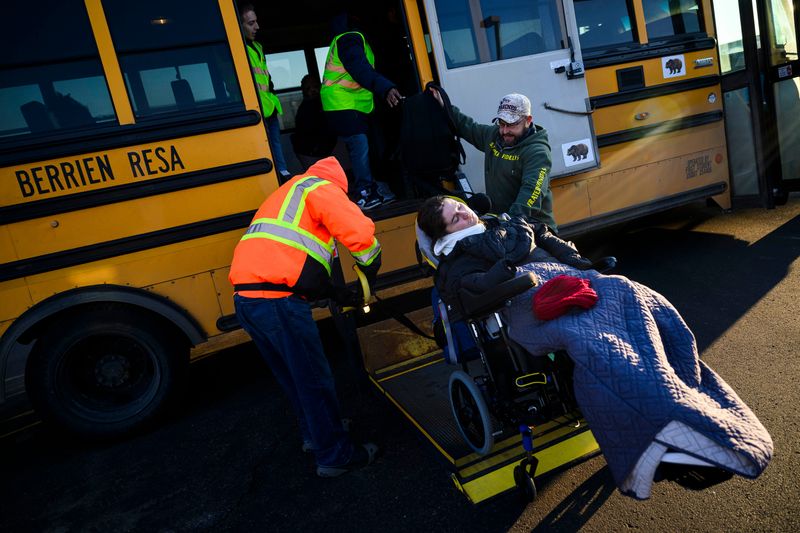
After 399 days at home and in hospitals, Path finally went back to school. The handicap-equipped Grizzly Bear yellow school bus — all of Blossomland’s buses are named after animals — came to pick her up Jan. 5 for her first day. She’s on the bus by 7 a.m., and has over an hour ride every morning to go just to go about five miles down the road. Her ride home is shorter, as the bus drops her off first after school to spare her more time in transit.
Principal Craig Kuhn said Path is a rare case for a school like Blossomland, where most students have dealt with their disabilities since birth or early childhood. Kuhn could count on one hand the number of students who have come to his school at her age after a catastrophic event changed their lives. It’s usually a car accident or another kind of traumatic brain injury caused by the outside world. Their lives always have a distinct before and after.
For many students with special needs, Kuhn said, their home public school is the best place for them, allowing them the least restrictive environment to learn and socialize among their peers. But in some cases, he said, students with higher needs can thrive at a place like Blossomland. The school has two nurses on staff, an indoor pool for physical therapy and a calming sensory room. Students can have physical, occupational and speech therapy multiple times a week.
Traditional public schools often focus more on academics, Kuhn said. That’s still a priority for Blossomland, he said, but the bigger emphasis is on building students’ skills toward independence. That is true even for Path.
“Even though a tragic event happened, life drastically changed, there’s still something there that’s K-12,” Kuhn said. “It looks different, it feels different, we’re hoping to get further, but we’re here to support her and build her level of independence.”
Students in Michigan with disabilities can stay in public schools until they are 26. The goal, Kuhn said, would be to return Path to St. Joseph to finish her educational journey. Whether she will ever be ready for that will be up to her.
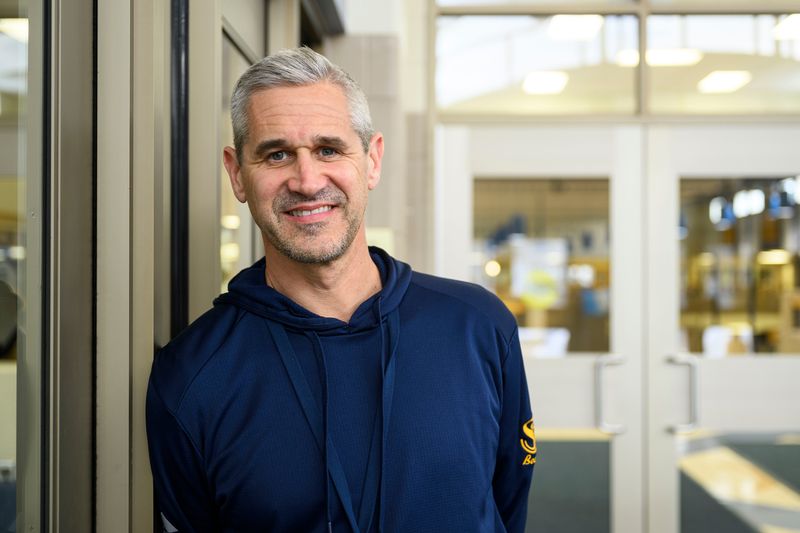
Path’s special education teacher finds calling after Marine Reserves
For a moment, Path was doing something, anything, that resembled her old life.
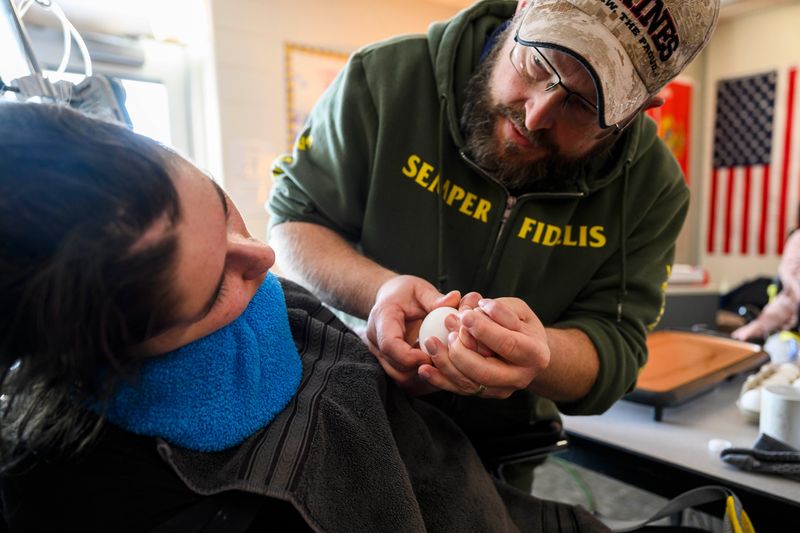
On a recent day at Blossomland, Path gently wrapped her fingers around an unboiled egg, her skin feeling the coolness of the shell, her hand absorbing its weight.
Her teacher, Tim Matthews, issued a gentle reminder: “Don’t squeeze.”
He pried the egg from her hand and cracked it against the bowl in front of him, but deposited the liquid egg into a cup suspended midair above the bowl. It was Path’s job to dump the egg into the bowl.
But Path, who used to bake ginger snaps by the dozen, couldn’t just flip the cup with her hands anymore. Her wheelchair rolled up to the table, Matthews gave Path a handheld switch attached to a motor under the cup of egg. With a little coaxing from Matthews, Path’s hand pushed down on the switch, the cup flipped over, and the egg went plop into the bowl.
“This is going to make a mess,” Matthews realized out loud. “You know what, if you don’t make a mess, you’re not cooking.”
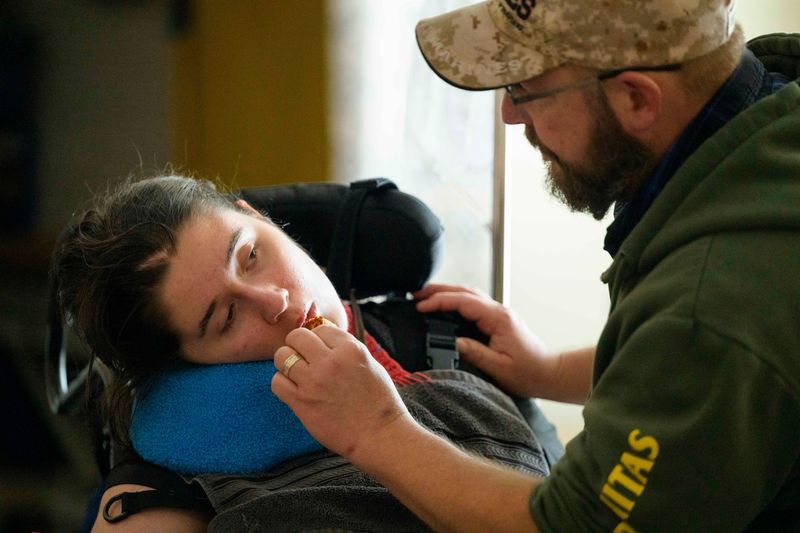
Having whipped up French toast on his griddle, the smell of butter and maple syrup seeping into the air, Matthews put a stick of warm toast to Path’s lips and watched her eyes widen.
Matthews’ classroom, for older students with the most significant medical needs, is cozy. He keeps the lights low. A banner of student artwork hangs behind his desk. Music plays from his computer. A poster on the wall reads, “Everyone has a chance to make a difference.”
Every student in the class uses a wheelchair, but the room has an adaptive rocking chair that students take turns using throughout the day. A lifting mechanism is built into the ceiling, so staff members don’t have to strain their arms or back to move a student.
That was new in 2018, Matthews noted. He’s had five hand surgeries over the years to repair injuries from lifting students. He’s an educator first, he said, but spends his days doing tube feedings and making sure his students are comfortable and maintain their dignity.
“This job is not for everyone,” Matthews said. “It takes a special type of person.”
Matthews almost wasn’t that person. He was in the U.S. Marine Corps Reserves and had to make a decision on Sept. 11, 2001, whether to reenlist or complete his student teaching. He chose his student teaching, knowing he would otherwise certainly be called up and deployed to Afghanistan in the wake of the terror attacks on New York City and Washington, D.C.
He still holds on to guilt over the decision, knowing now what happened to his unit, which lost several people. He still wears a Marines sweatshirt and hat to school. A Marine Corps flag hangs in his classroom next to the American flag.
“I regret it,” Matthews said. “I do. Then again, if I did reenlist, I wouldn’t be here.”
Matthews gave Path another taste of the French toast. He makes breakfast for the class every Friday, a tradition he’s kept up for over 22 years.
He has been meaning to ask Path’s parents for the recipe for her ginger snaps.
Maybe the smell of the cookies she used to make will light a spark, he thought.
Path speaks her first sentences in a year, from swearing to love
Born in Scotland to an American mom and Scottish dad, Path picked up a distinct Scottish accent by the time she started kindergarten. The family moved to the U.S. soon after, and the little girl’s adorable accent faded, much to her mother’s sadness.
For the past year, Path’s system of communicating with her parents and medical team has been through blinking yes and no. Recently, they acquired the iPad-like device that activates with eye movement so Path can use it to communicate, as well as listen to music and audiobooks, from Sabrina Carpenter and Hozier to “Percy Jackson” and “Harry Potter.”
When setting up the device, the speech therapist asked Elizabeth if there were any “strong words” that Path liked to use. Elizabeth thought this was a question best posed to her friends. She texted Jordan and Max: What swear words should they program into the device?
They had multiple suggestions. Elizabeth said they never realized how much their daughter swore until she couldn’t speak anymore.
“She’s saying a lot of curse words in her brain,” Max said when asked what people should know if they meet Path now. “All the swear words in all the languages.”
Path is only starting to get the hang of the device. Her eyes also tire quickly, and she often closes them and sighs.
But in a demonstration of her capabilities, after her enthusiastic expression of profanity, Path then gravitated to another grouping of words.
“I love,” Path said with her eyes. “I love, I love, Mom. Dad. I need, Mom.”
They were the first sentences she said in over a year.
Rehab doctor assesses Path’s timeline for improvement
Hearing that Path had spoken a sentence using her device brought tears to the eyes of Dr. Doug Henry, Path’s rehabilitation doctor from Mary Free Bed.
“That takes a lot of different areas of the brain working together,” Henry said. “You have to hear conversation, you have to understand it, you have to decide to do something with it. What do you do with it? I have this new toy to communicate with. Let me try to figure that out and move stuff around. It’s just a lot of areas of the brain (that) are working.”
For Henry, it was a significant sign that Path is improving. How much she will improve, he said, no one knows, although he agreed her medical needs certainly stood in her way for much of the first year.
Path’s case is complicated. Not only did she have a brain bleed, which puts pressure on the brain against the skull, but Path’s heart stopped for 10 excruciating minutes, depriving her brain of oxygen. Her deficits are a combination of the damage from the AVM and hypoxic brain injury.
“Her recovery has been very limited, and we’re over a year out from her injury,” Henry said. “The recovery has been minimal, and the farther you get out from an injury like this, the less optimistic you are about ongoing improvements. Not to say that she can’t improve. I mean, even adults can improve.”
Henry said if Path continues to show progress, including better use of her communication device (swearing aside), and possibly sitting up more and swallowing better, she could benefit from an inpatient stay at Mary Free Bed, even more than a year after her initial injury to her brain.
“That does happen when they’ve made some improvements, and we’ve got a lot of different things that we can work on, and it’s hard to do that on an outpatient basis,” Henry said.
Because of her young age, he said, “She can keep improving for years.”
“Certain aspects of her function are going to improve more than others,” Henry said. “Right now, her communication is taking off. Hopefully, someday her physical abilities, arms and legs, will start taking off.”
He remembered a patient from 25 years ago who started walking for the first time seven years after a traumatic brain injury. That’s why, Henry said, he never puts a limit on anyone’s potential for recovery.
Path’s family ponders what-ifs, but ‘it hurts you more to do that.’
Elizabeth and Stephen said they sometimes think of the irony that Path played one of the highest contact sports out there, but in her short tenure, she never got a concussion. If she had, they believe the doctors would have scanned her brain and found the AVM.
They usually stop themselves short of going too far down that road of hypotheticals.
“It hurts your heart more if you do that,” Elizabeth said.
The what-ifs work both ways, though. If it hadn’t been snowing, Path would have driven herself that day. She could have been driving home when her AVM ruptured, or on the side of the road when her heart stopped. The office staff at the school immediately recognized the severity of Path’s illness and called 911, saving crucial minutes before her heart stopped.
Elizabeth and Stephen can’t believe the village that stepped up to care for their children and for them. They have a list of people, including neighbors they barely knew before, that they can call for help at any hour of the day. Lowe’s donated the materials to build a ramp in front of the home. Coworkers built it, and neighbors stained it.
For Stephen, not being at the hospital in the early days with Elizabeth and Path was excruciating. He felt he should be the one to absorb that pain and grief.
Now, he said he feels the same way when he watches Path writhe in pain from a muscle spasm, or unable to do the things she wants to do, or say the things she wants to say.
“You want to do things, but you can’t, you can’t do anything. You can’t speed things up,” Stephen said. “It’s your kid doing it, and that’s like, I don’t think there’s a worse kind of hell than that. You want to try to protect your kid at all times. And bad happens to them ― makes you f—— furious.”
The goal for Path: ‘to drive away from us’
As soon as Path came home last April, Elizabeth went to a local shelter and adopted two kittens, fulfilling a promise made during the days in intensive care.
Path can’t yet tell them what she named the cats, so for now, they are Gray Cat and Ginger Cat. Every day, Ginger Cat waits for Path to come home from school, jumps into her lap, and they both settle in for a nap.
They hope to see Path’s world open up more, to start being able to spend more time with her friends and away from her parents.
“That poor kid,” Elizabeth said. “She’s so sick of us.”
Path had been a bit reluctant to learn to drive, her mother said. But once she got her license, she was off exploring the world. She would announce she was headed to the library or to the beach with her friends.
“My goal for her for the future would be for her to drive away from us,” Elizabeth said.
Stephen said he was sure she would, just based on her “stubbornness” and “sheer force of will.”
“She’s the strongest woman I’ve ever met,” Stephen said. “She’s my hero.”
From her wheelchair next to them, Path let out a deep sigh.
“I hear you,” Elizabeth told her. “But it’s OK.”
jpignolet@detroitnews.com
This article originally appeared on The Detroit News: Michigan teen’s brain bleed changed her life, but not her spirit
Reporting by Jennifer Pignolet, The Detroit News / The Detroit News
USA TODAY Network via Reuters Connect