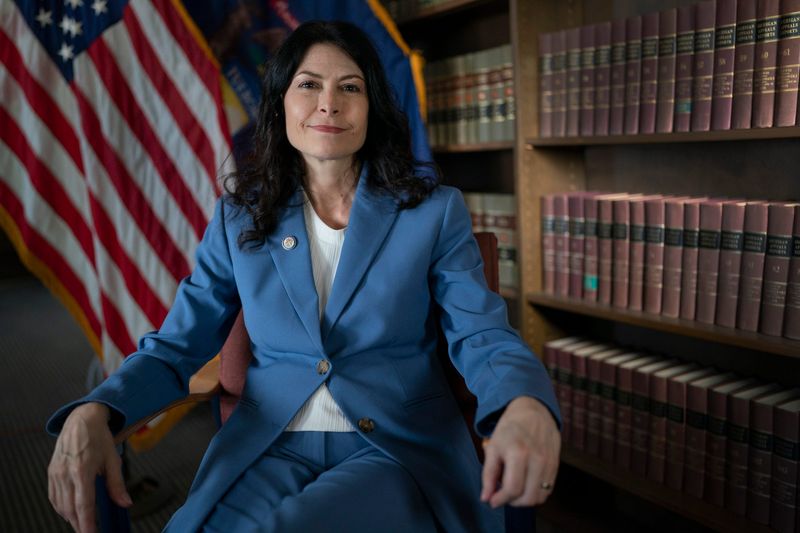
Michigan Attorney General Dana Nessel said Nov. 10 that while she is pleased the U.S. Supreme Court decided not to hear a case challenging its 2015 ruling legalizing same-sex marriage for couples across the nation, proponents of marriage equality shouldn’t rest easy.
Nessel was one of the attorneys who represented April DeBoer and Jayne Rowse, a Michigan couple whose case seeking to overturn the state’s ban on same-sex marriage — a state constitutional amendment prohibits it ― ended up in the U.S. Supreme Court.

Consolidated into Obergefell v. Hodges, along with same-sex marriage cases from other states, Nessel and the women celebrated victory when the nation’s high court ruled 5-4 on June 26, 2015, that same-sex marriage was a constitutional right that applied to couples across the nation.
The Supreme Court ruling nullified the state’s ban.
“I am relieved for today’s decision reaffirming same-sex couples’ continued right to dignity and protection under the law, but we cannot take those protections for granted,” Nessel said in a news release. “Members of this Supreme Court have already told us they are willing to overturn Obergefell. It’s only a matter of time before they do.”
Justice Clarence Thomas has said the court should reconsider its Obergefell v. Hodges decision. And Justice Samuel Alito has criticized the Obergefell decision but last month said he wasn’t suggesting it be overturned.
Nessel said the Supreme Court’s decision not to hear a case brought forth by Kim Davis, a county clerk from Kentucky who refused to issue licenses to same-sex couples despite the court’s 2015 ruling, “allows us a reprieve, an opportunity to bring our state Constitution into alignment with the protections our residents are entitled to and have enjoyed for more than a decade. Now is the time to act.”
Otherwise, if the Supreme Court were to rule against Obergefell someday and allow states to make their own rules, same-sex marriage could be illegal in Michigan.
To strike the amendment from the state constitution, Michigan voters would need to decide the issue at the voting booth. To get the issue on the ballot, two-thirds of each chamber of the state Legislature would need to vote to put it on the ballot, which is unlikely, or enough Michigan voters would have to sign petitions seeking a repeal.
Jayne DeBoer — she changed her last name after marrying April DeBoer ― shares Nessel’s concern. “We are relieved (the Supreme Court is) respecting the decision for now but concerned about the future,” she told the Free Press. “Our right to marry was a four-plus year battle that we don’t take for granted. Unfortunately our rights will continue to be challenged by those who feel we are not worthy of marriage. Sadly the battle isn’t over.
“I believe there will be several groups who will start the next challenge. I think we need to focus on getting marriage equality in the Michigan Constitution.”
Contact Georgea Kovanis: gkovanis@freepress.com
This article originally appeared on Detroit Free Press: We can’t take same-sex marriage protections for granted, Michigan AG Nessel says
Reporting by Georgea Kovanis, Detroit Free Press / Detroit Free Press
USA TODAY Network via Reuters Connect