Sterling Heights ― A plan to transform the former Lakeside Mall in Sterling Heights into a massive city center with housing, restaurants, and shops cleared a key hurdle on Tuesday as city officials approved a tax incentive plan for the project.
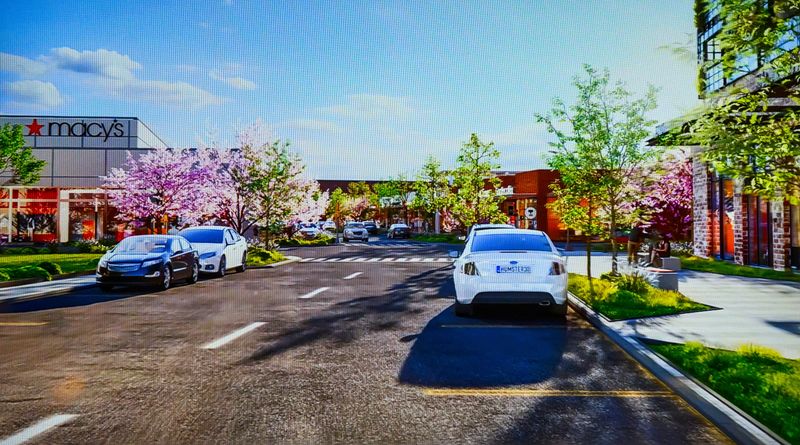
Miami-based real estate firm Lionheart Capital plans to redevelop the former Lakeside Mall on M-59 into a mixed-use development called Lakeside City Center.

To help pay for the project, the Sterling Heights City Council unanimously approved a Combined Transformational Brownfield Plan for the $573 million first phase on Tuesday evening. Luke Bonner, Sterling Heights’ senior economic development adviser, said given the project’s size, it requires a “public finance tool” to help move it forward.
“This is a massive chunk of their financing,” he said, referring to the developer, “so without this, they wouldn’t be able to do the project.”
Bonner said a Combined Transformational Brownfield Plan combines revenue from local tax increment financing with state tax increment financing. With tax increment financing, increased tax revenue from higher property values is set aside for future investments in the property.
Lionheart Capital will be able to use the revenue from the plan on anything related to “hard construction costs,” such as buildings, demolition, and water and sewer infrastructure, he said.
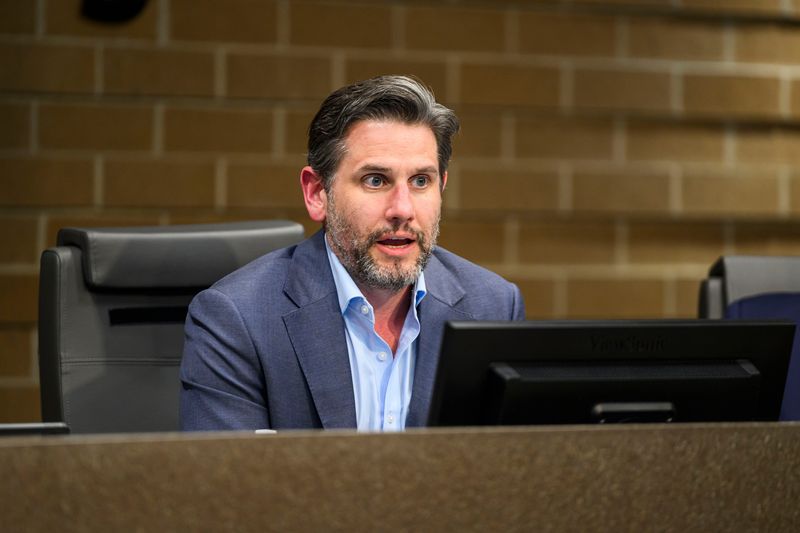
Councilman Henry Yanez voiced concerns about the brownfield plan, but later voted for it. He said that once people start moving into the development, they will start calling 911 for emergency services, and the roads will need to be plowed when it snows.
“And none of the money to cover the cost of this project is going to come from the project, because … we’re using the money to pay off the developer’s bonds,” he said.
But City Manager Mark Vanderpool said there will be excess revenue generated from tax increment financing “beyond what is required to pay off” the bonds that the city and the developer will take out.
Jennifer Varney, the city’s finance and budget director, said an additional roughly $64 million will be captured than what is needed to pay off the debt service, and that money will be split between the city and the developer. The city could use its portion for initiatives such as building a satellite fire station or park maintenance.
More on the Brownfield Plan
Some estimates have put the total cost of redeveloping Lakeside, which permanently closed in 2024, at $1 billion. Bonner told The News that because of the size of the Lakeside project, the cost of its infrastructure and the cost of construction, it requires the use of tax increment financing.
The plan approved on Tuesday is for phase one of the project, which has a construction cost of about $573 million, Bonner said. The phase includes 1,365 residential units, 180 senior units, over 154,000 square feet of new commercial and retail space, and a central park. Once the phase starts, it needs to be completed in five years, Bonner said.
About $270.7 million in revenue is expected to be captured through the brownfield plan. Most of the revenue is coming from property taxes, but some is coming from construction taxes. Bonner said there is an income tax on construction workers and a sales use tax on construction equipment.
He said Lionheart Capital will borrow traditional debt and also plans to issue a private bond for the project. He said the developer “fronts the costs” and is paid back over time by the Brownfield Plan tax revenue.
The city of Sterling Heights also plans to issue a bond to build the infrastructure it will own as part of the Lakeside project, Bonner said. The city will receive revenue from the Brownfield Plan that it will use to pay off the bond.
“What we should be doing, from my opinion, is trying to create things that will last for generations and generations,” Taylor, the mayor, said of the city. “When we talk about planting trees, when we talk about building new parks, when we talk about investing in the city, we’re doing things that may not even benefit me, 20, 30, 40 years from now ― certainly aren’t going to benefit everybody in the community.”
But, he said, if the city had $10 or $15 million in new tax revenue coming to it this year “because a council did something” 30 years ago, “imagine that.”
What comes next
Bonner said the Michigan Strategic Fund Board will also have to approve the Brownfield Plan. He said the targeted date for the board to consider the plan is June 23.
Colin Carby, director of development at Lionheart, told The News that the Sterling Heights council members and staff members have been “stellar.”
“This is a gold star example of true public-private partnership,” he said.
Union representatives ask questions
But before the vote to approve the brownfield tax plan, some raised questions about whether local workers would be hired to work on the project.
James Soosik, one of two representatives of the International Brotherhood of Electrical Workers Local 58, asked if the developer would use local contractors.
“Is there any type of responsible contracting, prevailing wage, safety standards?” said Soosik, the business manager/financial secretary for International Brotherhood of Electrical Workers Local 58. “Are they going to hire local ― people that live in our communities?”
Carby later said that “when it comes to local construction participation,” Lionheart is “absolutely looking to partner and work with everyone.” He noted that the design and engineering team for the project includes people who live locally.
Several union officials spoke with Carby outside of the City Council meeting after the plan was approved.
Don Thieke, a business representative for IBEW Local 58, told The Detroit News that the union wants to make “our presence known.” He said they wanted Lionheart to understand that the union is part of the community and represents workers. He said the union fights for fair wages and changes “trajectories of lives and of families.”
“When they talk about changing this stuff for the generations of Sterling Heights, we want to be part of that dream,” he said. “…We’re lock step in all of that.”
He said he thinks talking with the developer is “good.”
“I’m sure there’ll be plenty more conversations here in the future,” he said.
What is planned for Lakeside City Center
Phase one of the project will include nine multifamily buildings. The 154,007 square feet of new retail space will be spread out over seven different buildings and centered around a central community park and green space, the brownfield plan said.
“The mixed-use site is centered on the central park where the green space is surrounded by a mix of food and beverage options, specialty retail and upper level residences and this neighborhood will be known as The Lakeside Heart,” the document for the plan said.
The plan also includes surface parking lots and street parking for visitors as well as dedicated lots for residents.
asnabes@detroitnews.com
This article originally appeared on The Detroit News: Lakeside Mall redevelopment clears key hurdle as Sterling Heights OKs tax plan
Reporting by Anne Snabes, The Detroit News / The Detroit News
USA TODAY Network via Reuters Connect