Detroit — An involuntary manslaughter case brought by the family of a teen who died in a car crash has been dismissed after a Wayne County Circuit Court judge found a different judge should not have authorized a rare citizen’s warrant brought by the teen’s family.
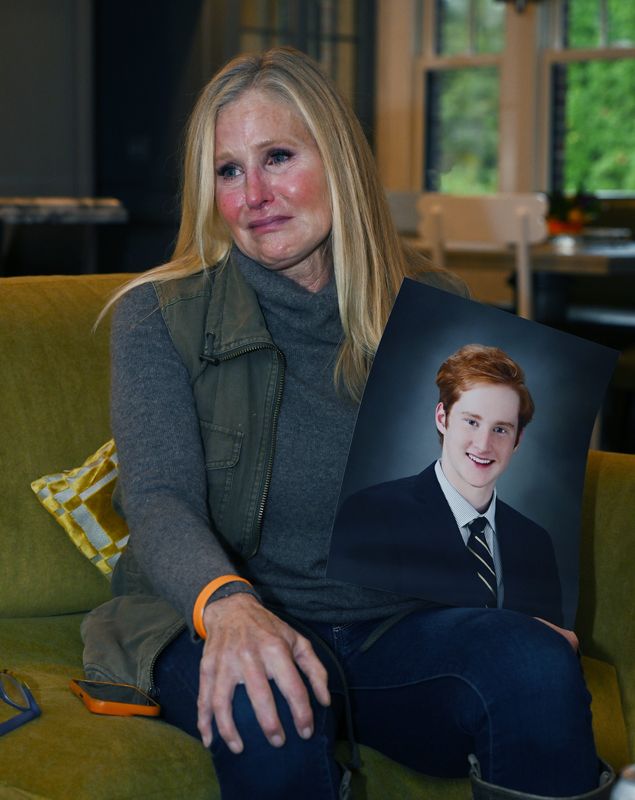
Elizabeth Puleo-Tague was charged with involuntary manslaughter by the mother of the teenager whose son killed her son while driving recklessly. The mother, Anne Vanker, used an infrequently used law to ask Grosse Pointe Farms District Judge Charles Berschback to charge Puleo-Tague for a fatal accident that killed one of her son’s friends. Puleo-Tague’s son lost control of the BMW he was driving, causing the car to roll over multiple times and hit a utility pole and a tree, killing Flynn MacKrell.

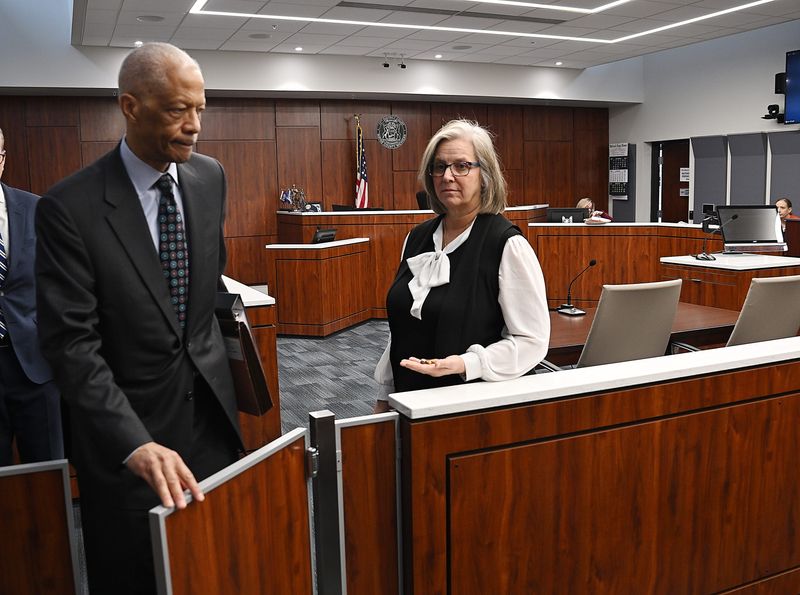
Wayne County Circuit Court Judge Nicole Castka ruled on two appeals Wednesday, one filed by special prosecutor Paul Stablein, who Berschback appointed to handle the case after the Wayne County Prosecutor’s Office declined to charge it, asking to remain the prosecutor on the case, and the other filed by Puleo-Tague’s attorney, Gerald Evelyn, asking for the case to be dismissed.
Castka declined to allow Stablein to remain the special prosecutor on the case and granted Evelyn’s request to dismiss the charge against Puleo-Tague. Evelyn confirmed after the hearing the judge’s decision meant the case would no longer move forward, but declined to comment further.
Castka said Berschback did not have the authority to appoint a special prosecutor in the case, a ruling that Dearborn District Court Judge Sam Salamey also made in March.
“There is no current statute cited by the plaintiff appellant (Stablein) that would authorize a court to appoint a special prosecutor to prosecute criminal charges initiated by a citizen’s complaint,” Castka said, reading from her written ruling. “The Grosse Pointe Farms Municipal Court exceeded its authority and violated separations of powers when the special counsel prosecutor was appointed to prosecute this matter.”
Stablein said he plans to appeal Castka’s ruling to the Michigan Court of Appeals.
Evelyn previously filed a motion challenging the method of charging, which was a rare use of a law that dates back to the 1920s that allows citizens to present their own findings to a judge to ask them to approve charges. Salamey said in March he believed the complaint is proper at this time, but Castka reversed his ruling and dismissed the case.
Castka said a judge does not have the authority to initiate criminal proceedings, as only prosecutors and the Attorney General can do that. She said a district court judge can only issue an arrest warrant, not an indictment or complaint.
But Vanker’s attorney, Art Weiss, said Castka’s ruling was erroneous, as Berschback never did issue an indictment.
“I don’t know where she came up with an indictment,” Weiss said. “There was no indictment issued. It was always an arrest warrant.”
Weiss said he hopes the appellate courts will “give life” to the use of the statute that the legislature enacted, as this is the type of issue that “begs for” the Supreme Court’s decision.
“The Legislature can’t create a right for citizens and then not provide a mechanism to effectuate that,” Weiss said. “Two jurors (Berschbank and Salamey) indicated there was sufficient probable cause to go forward.”
Despite the dismissal, Vanker said she is not disheartened. She knows the case is likely going to end up in front of the Michigan Supreme Court.
“It’s a valid statute,” Vanker said. “We followed the process. I think it’s disrespectful to the magistrate in Grosse Pointe.”
Vanker maintains that Puleo-Tague knew her son was driving recklessly because she’d been using an app, Life 360, that lets parents track driving behavior like speeding, hard braking and cellphone use. Puleo-Tague had texted her son multiple times about his speeding before the November 2023 crash, Vanker said.
MacKrell was home from college and in the passenger seat of his friend’s car when he was killed. The then-16-year-old driver, who The News is not naming because he was tried as a juvenile, was sentenced to a blended juvenile and adult sentence of an undetermined amount of time in a juvenile facility and an adult sentence of 19 to 38 months in prison if he gets in trouble during the programming at the juvenile facility.
Prosecutors declined to file charges against Puleo-Tague, citing a lack of evidence, when Vanker asked them to look into the case and charge her under the legal precedent that was set after the parents of Oxford High School shooter Ethan Crumbley were convicted of involuntary manslaughter.
kberg@detroitnews.com
This article originally appeared on The Detroit News: Judge tosses rare citizen’s warrant case against Grosse Pointe mom
Reporting by Kara Berg, The Detroit News / The Detroit News
USA TODAY Network via Reuters Connect
By Kara Berg, The Detroit News | USA TODAY Network