Despite the backbreaking work, Carly McAndrews loves farming, growing carrots, beets and other vegetables that land on restaurant plates and family dining room tables in eastern Iowa.
She grows 50 different kinds of vegetables on two acres she leases at Johnson County’s Historic Poor Farm in Iowa City.

“There’s always something getting planted,” said McAndrews, who owns Trowel & Error Farm. “And something’s getting harvested.”
Even though she’s been farming since she was 19, McAndrews says it’s unlikely she’ll ever be able to buy her own land. Buying two acres in the fast-growing university city could easily cost $100,000 or more, given intense competition for residential and commercial development.
Costs are even greater for farmers who want to grow corn and soybeans. Purchasing an average-sized 345-acre farm in Iowa would cost nearly $4 million at the state’s average of $11,467 an acre.
“I’ve loved the work, and I’ve gotten so much out of it,” McAndrews, 33, said.
But the Connecticut native has little left over for a down payment.
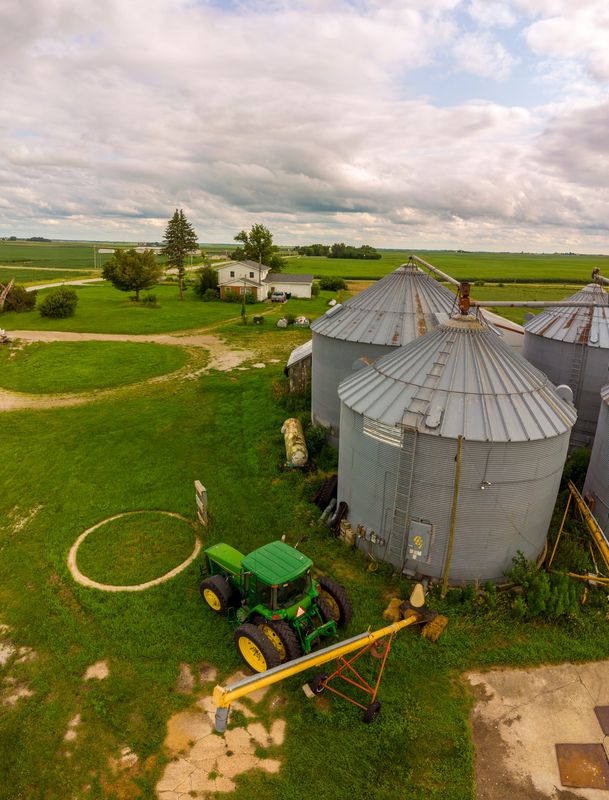
Access to farmland — already a major hurdle for beginning farmers — likely will become even more difficult in the future as fewer and fewer people own more and more of Iowa farmland.
The number of Iowa farmers growing crops on 2,000 acres or more has tripled over the past 25 years, outstripping the spike nationally of 12%, U.S. Census of Agriculture data shows.
Iowa has lost nearly 9,800 farms since 1997, a 10% decline, and the U.S. has about 315,400 fewer operations, a 14% drop.
At the same time, 20 million of Iowa’s 30 million acres of farmland is owned by people 65 and older, and nearly 40% is owned by people 75 and older, according to Iowa State University’s 2022 Farmland Ownership and Tenure Survey.
That means Iowa could see a “tidal wave of land transition,” said Martha McFarland, Practical Farmers of Iowa’s senior farmland viability coordinator.
Steve Bruere, president of the Peoples Co., a Clive farmland brokerage and management firm, said Iowa expects about half of its $330 billion in Iowa farmland change hands over the next two decades.
So far, about 70% of Iowa land annually is purchased by the state’s farmers. But large players are moving in: The Mormon church and Microsoft co-founder Bill Gates are among the state’s largest landholders.
Given “the sheer amount of land that’s going to transition over the next 20 years,” Bruere said, “it begs the question: Can these farm operators continue to buy at the level they’ve historically bought?”
If not farmers, “who should own it,” he asked, noting that Iowa already restricts some foreign, large corporate and institutional investors from buying farmland.
More consolidation will hurt Iowa’s economy, especially rural communities, said Aaron Lehman, president of the Iowa Farmers Union board.
If fewer farmers are spending money, “our Main Street businesses feel it. Our churches feel it. Our schools feel it,” the Polk County farmer said. That harms the whole state, he said.
“This is where our roots are,” he said.
‘Money is easier to split up than land’
Maggie McQuown is taking an unusual approach to passing on her southwest Iowa farm.
After deciding her young relatives didn’t have a strong interest farming, the 73-year-old began looking for a family who would farm her land near Red Oak with diverse crops, livestock and conservation that helps build and protect soil.
It led her to Matt and Jocelyn Vermeersch, a couple raising cattle, goats and other animals on pasture near Council Bluffs.
McQuown and the Vermeersches began talking about their values around farming and a match was made. Last year, the Vermeersches moved to McQuown’s farm, where she and her husband, Steve Turman, also live after building a home.
Now, McQuown and the Vermeersches are transitioning cropland to pasture, updating the farm’s barn, adding water and other infrastructure to support a livestock operation.
McQuown is still deciding the best way to transfer the land to the Vermeersches — possibly selling it at a discount, in shares over time or through her will.
While McQuown returned to her family’s farm in 2012 after living most of her life outside Iowa, 55% of Iowa farmland is owned by people who don’t farm, and 53% of them have no farm experience at all.
And 20% of Iowa farmland is owned by people who live outside the state, some of them investors or farmers’ children or grandchildren who inherited the property but who have no ties to farming.
ISU’s data shows that 80% of farmland going to auction comes from heirs selling an estate or retiring farmers. Land often is a farmer’s greatest asset, and the family’s retirement nest egg, experts say. When multiple family members own farmland, sometimes selling it is the best solution.
“Money is easier to split up than land,” said David Whitaker, who owns Whitaker Marketing Group in Huxley with his wife, Ann.
Among the large auctions so far this year: About 1,400 acres sold in Hardin County for $19 million and about 636 acres in Guthrie County sold for $9.5 million.
Logan Lyon, who farms in eastern Iowa, said he understands farmers’ need to get the best prices they can at auction to fund their retirement. But he hopes they’ll consider taking a little more time to sell at least part of their land to a beginning farmer.
The 34-year-old said he and his wife, Emily, were lucky to buy 40 acres they rented for three years after the owners agreed to a private sale. But young farmers such as Lyon and his wife often don’t have an opportunity to purchase land.
Lyon says he learned about the farm he rented and then bought through his in-laws.
“Without them, I wouldn’t have had a seat at the table to have a rental conversation or a purchase conversation,” said Lyon, who works full time as well as farms.
Buying land at an auction means a young farmer would need 20% of the purchase price to get in the door. For example, buying 160 acres at $15,000 an acre would require a $480,000 down payment.
“I probably wouldn’t have an opportunity to participate,” said Lyon, who bought his land through a U.S. Department of Agriculture program for beginning farmers.
Farmland cost ‘only makes sense’ spread over many acres
Driving farmland consolidation is the massive investment needed to farm today, said Rabail Chandio, an Iowa State University assistant professor who leads ISU’s annual land value survey.
“When you invest in large equipment, it costs millions of dollars,” Chandio said. “That cost only makes sense if divided over a whole lot of acres.”
In addition to land, a new tractor can cost $450,000; a planter, $230,000; and a combine, $650,000. Corn and soybean heads used to harvest the crops can cost $100,000 or more each.
“Farming is going to become even more concentrated,” Chandio said. “It’s the only way to make money, with the investment (needed) in equipment and precision ag.”
Farmers try to get around the costs by buying used equipment; sharing it with neighbors; or leasing, renting or providing labor in exchange for machinery use, experts say.
While Iowa farmland values dipped 3% last year compared with 2023, they’re 44% higher than a decade ago, ISU’s annual farmland value survey shows.
And they’re nearly 4.5 times more than two decades ago. That has attracted investors such as Cincinnati Bengals quarterback Joe Burrow, former Boston Celtics forward Blake Griffin and Toronto Blue Jays pitcher Kevin Gausman, who spent $5 million buying a 104-acre farm in north Iowa two years ago.
And although President Donald Trump’s tariff threats are creating “a ton of bad news in ag,” buyers mostly have shaken it off, said Jim Rothermich, vice president of Iowa Appraisal in Des Moines.
“The land market is not worried about it.” Long term, farmland buyers believe the market will be positive, “even though short term, there might be some pain,” he said.
Higher interest rates may curb investor returns, potentially dampening land prices, said Bruere, the Peoples Co. president. The federal funds rate, which lenders use to set the costs for borrowing money, has climbed from nearly zero in 2020 when the global pandemic hit to 4.33% in June.
But big investors like that farmland is insulated from Wall Street fluctuations and that continued improvement in crop yields means increasing revenue over time, Bruere said.
Chandio and other researchers created an index assessing how much corn, soybeans and other major crops were consolidated among large farm operations in Iowa and elsewhere.
The report showed 42% of Iowa’s 2.5 billion bushels of corn, for example, comes from large farmers, defined as those working 1,000 or more acres. Small- and medium-sized Iowa farms grow 58% of the state’s crop.
“It’s still pretty balanced,” Chandio said.
Consolidation has increased across all major Midwest states, climbing rapidly after the 1980s, when the farm crisis drove hundreds of Iowa and Midwestern farmers out of business.
Chandio expects “technological advancements” will help farmers grow crops more efficiently. “But that does come at a cost,” she said, with “larger farms able to introduce and benefit from those technologies more quickly, kicking up the (consolidation) curve more steeply.”
Reduce the number of farmers, reduce the number of Iowa’s economic engines
Farmland is the foundation of Iowa agriculture, helping make it a national leader in corn, soy, pork, egg, beef and dairy production.
Agriculture drives about a quarter of Iowa’s economy, with farmers buying equipment, seed, chemicals, insurance, fuel and other products. Their spending ripples through rural communities but also Iowa’s largest cities.
For example, Deere & Co., the farm equipment manufacturing giant, has large production facilities in Ankeny, Waterloo and Davenport, part of the Quad Cities on the Iowa-Illinois border; seed giant Corteva Agriscience’s regional hub is in Johnston, with production operations across the state; and Sukup Manufacturing, the maker of iconic grain bins, is based in Sheffield but also has operations in Manly, Clear Lake, Hampton and Ames.
Fewer Iowa farmers and more consolidation among farmland owners may not significantly hammer the state’s overall economy, experts say. But it could devastate rural economies, forcing more schools, churches, hospitals and Main Street businesses to close.
ISU’s Chandio says Iowa’s 23 million acres of corn and soybeans will still need to be planted and harvested every year. And while large farms can cut costs, buying seed and chemicals in bulk, for example, they would still need those inputs, she said.
How consolidated farming becomes will matter to the Iowa economy, said Chad Hart, an ISU agricultural economist. And where those large operators buy their supplies will matter.
“As we reduce the number of farmers out there, you’re limiting the way they impact the economic engines of the rural communities,” Hart said.
Rural Iowa is already suffering. The 2020 U.S. Census showed that 69 of Iowa’s 99 counties lost population, continuing a trend for many counties that began decades ago.
Hart and Chandio says new technology, including drones and artificial intelligence that supports driverless tractors and combines, could help reduce the size and cost of farm equipment — and help farmers cope with labor losses.
“Instead of one machine that costs $1 million and is unaffordable, we’ll have several small machines that costs $100,000,” Chandio said.
Drones, for example, already are used to seed and fertilize crops and spray for weeds and pests.
Rural cities and towns, like farmers in the future, will need to find niches that enable them to grow, despite continued consolidation, Hart said, pointing to places like the Okoboji lakes region, which has built a thriving economy based on tourism.
And to farmers like Vermeersches and McAndrews, who raise meat and vegetables for local consumers.
McAndrews says she finds meaning in farming. “I think that’s what keeps me in it,” she said. “I feel like I’m doing something tangible that benefits the community.
“But it’s not rewarding financially or for providing for the future,” she says. “I take it one season at a time. It’s tough.”
This article originally appeared on Farmers Advance: Iowa farmland consolidation expected to grow as state faces ‘tidal wave’ of transition
Reporting by Donnelle Eller / Farmers Advance
USA TODAY Network via Reuters Connect