Nearly a month after Detroit’s largest private residence sold for $800,000, a fraction of its original $9 million asking price, the next chapter of the Bishop Mansion is beginning to take shape.
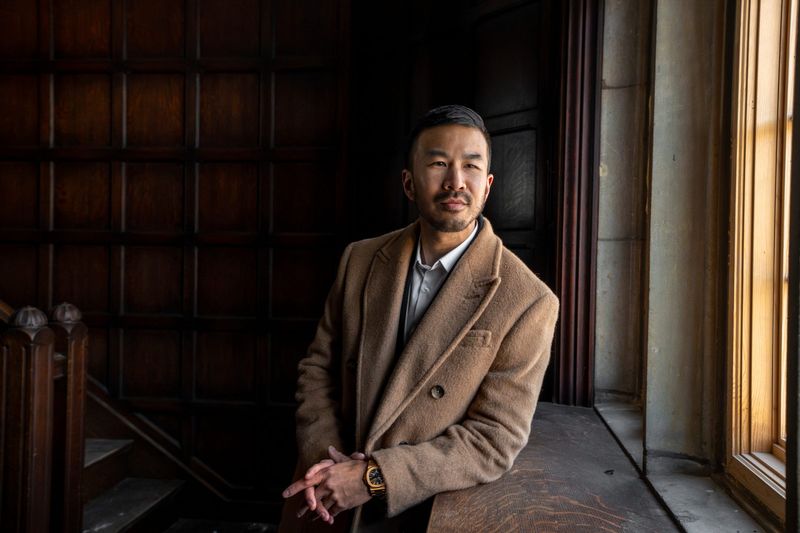
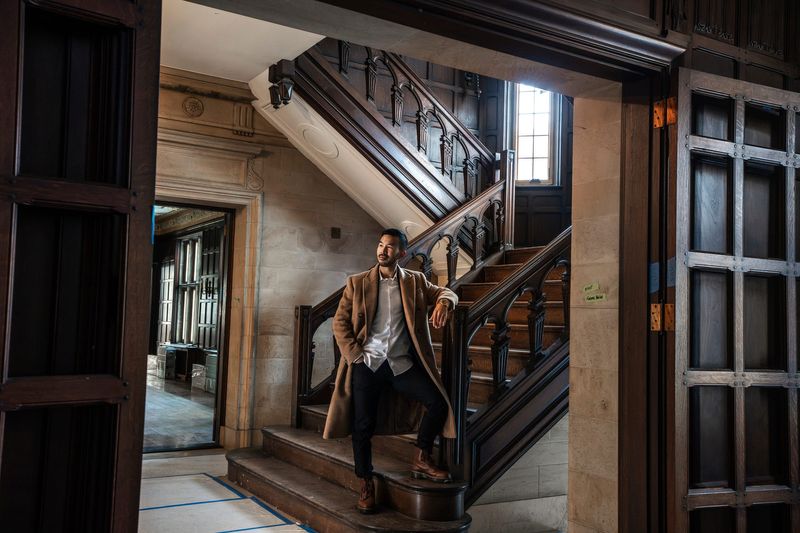
During a recent visit to Detroit, new owner Calvin Gee walked through the 35,000-square-foot Palmer Woods estate with the Detroit Free Press ahead of planned renovations, offering a firsthand look inside the century-old mansion before major restoration begins.

“It’s a massive undertaking, but the bones are great,” Gee said. “I’ve had my eye on this place for a long time. I never knew it would even be a possibility to purchase it.”
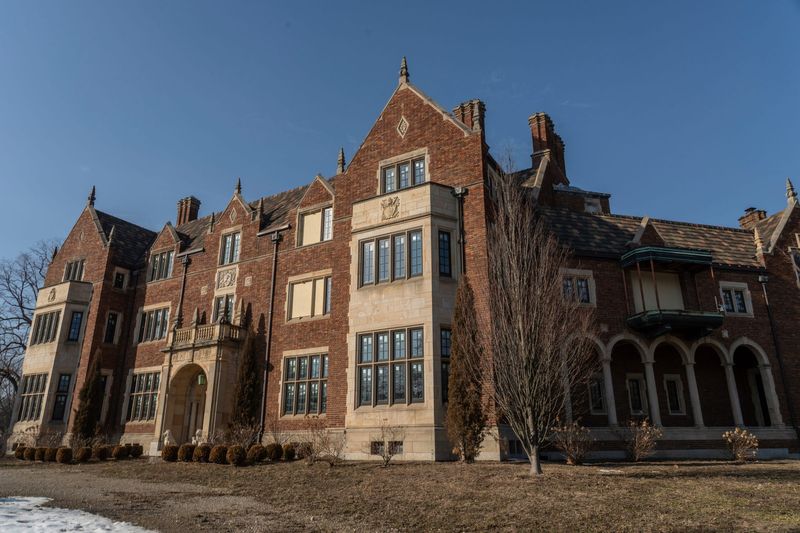
The stately three-story brick and limestone estate at 19366 Lucerne Drive, west of Woodward and south of Eight Mile, spans roughly 35,000 square feet on 2 acres. It closed last month after years on and off the market and multiple price reductions.
Gee, 35, who grew up in West Bloomfield and graduated from the University of Michigan, plans to move into the mansion while relocating his artificial intelligence and robotics company, Engage, from Austin, Texas, to Detroit.
He estimates renovation will cost millions given the scope of work and the rarity of materials throughout the home.
“It’s a significant amount of money,” Gee said. “But it’s money I’m willing to invest. This is a passion project as much as it is a personal one.”
“I’ve spent the past few years in tech building out different companies around the world,” he added. “I wanted to bring a piece of that back to the city.”
Outside, Gee pointed to improvements completed by previous owners, including the roof and windows. Intricate stonework and carved detailing wrap the symmetrical façade, which includes covered patios. A restored carriage house with a four-car garage, along with a pool and hot tub, also are on the property.
“The whole building is a work of art,” he said.
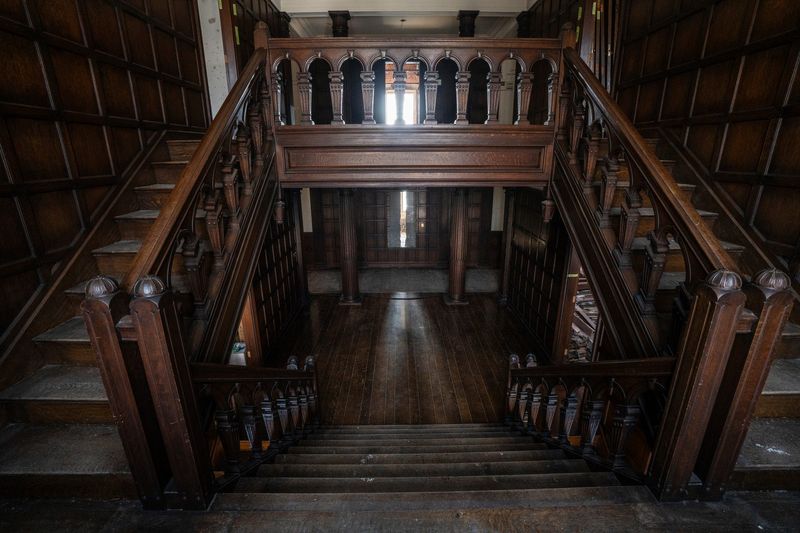
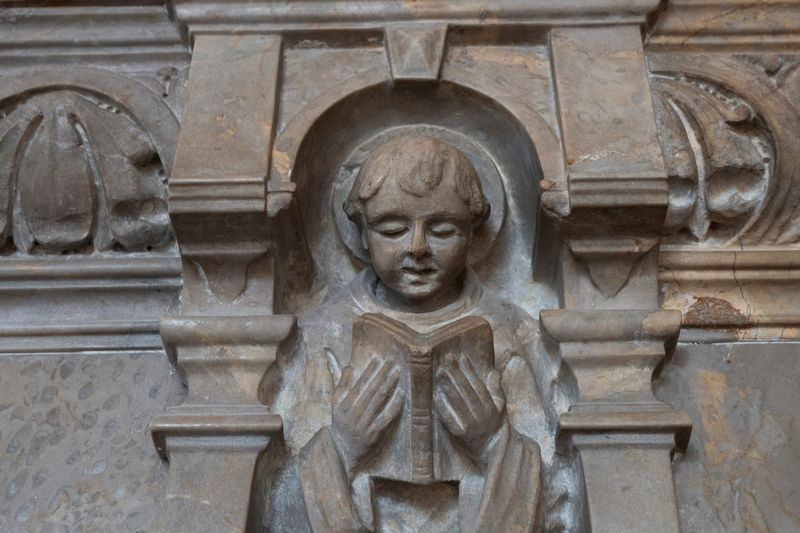
Two lion statues stand guard at the front entrance. Inside, the grand foyer is anchored by two towering Sicilian marble pillars imported from Italy. Limestone and carved wood extend throughout the interior, including Black Forest wood crafted in Germany and shipped to Detroit in the 1920s, according to Gee.
“I couldn’t believe this was actually a house,” Gee said of his first visit. “It was so massive, so stunning. What really sold me was walking into the entryway with the pillars and wood. You just feel the history there. That was really when I fell in love with it.
The mansion was commissioned in 1925 by members of the Fisher brothers, founders of Fisher Body, which became a key supplier to General Motors during the automotive boom. As automobile production transformed Detroit into one of the wealthiest industrial cities in the country, fortunes made in manufacturing financed the construction of grand estates throughout neighborhoods such as Palmer Woods and Boston-Edison.
He said that legacy deepened his apprecation.
“What inspired me was their craft and what they built. The legacy of their business was incredible.”
In Gee’s vision, the spirit that once powered Detroit’s auto industry could find a new expression in robotics and artificial intelligence.
The first floor unfolds into expansive formal rooms, former dining and sitting areas, a kitchen awaiting reconstruction, a library, sunroom, tearoom, den, vaults and multiple fireplaces.
Despite past renovations that removed some interior walls, many historic elements remain intact, including chandeliers, an antique intercom system, a dumbwaiter, intricate detailing on ceilings, original Pewabic tile, details carved into limestone, unique craftmanship in rooms and around fireplaces, wood-sculpted features, hardwood floors over cement floors, wall sconces, wood-paneled walls, marble features, exposed brick walls, open spaces plumbed for bathrooms, and elevator shafts running from the basement to the third level. Several staircases connect the home’s sprawling layout.
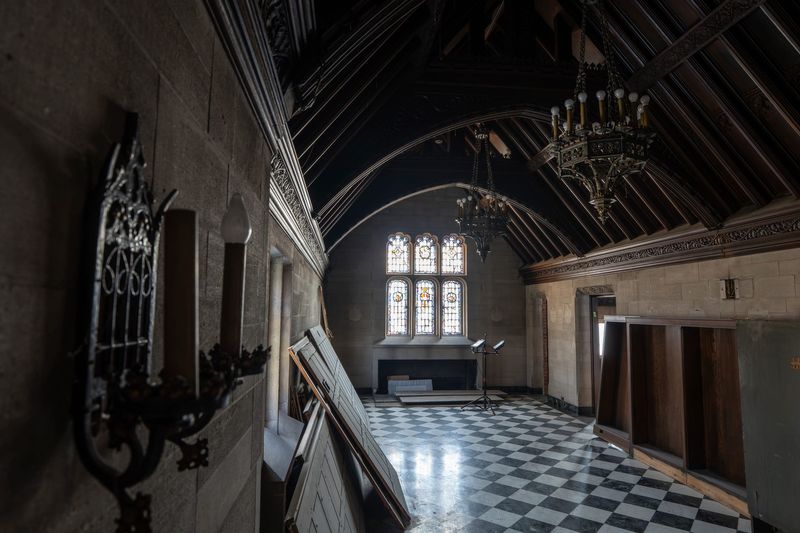
“The entryway reminds me of some of the museums I went to growing up,” Gee said, noting that if he had to preserve a feature exactly as it is, it would be the entry and the chapel.
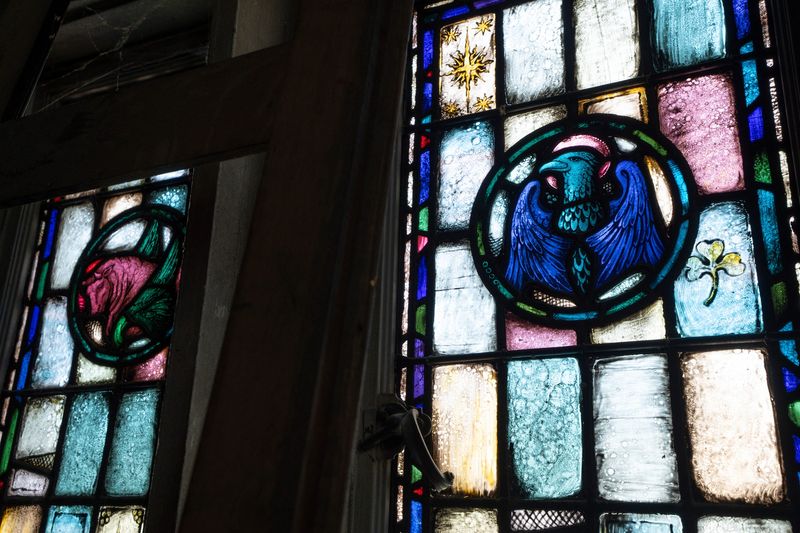
On the second floor, in addition to bedrooms, sits a chapel with wood ceilings and stained-glass windows.
The third floor remains largely open, where Gee envisions additional rooms. There are views overlooking the chapel area below from the third floor.
The basement, comparable in height to the upper floors, contains numerous rooms, including preserved elements like sinks and doors, and a dedicated firewood storage room.
While previous owners left modern renderings proposing extensive redesigns, Gee said his approach will prioritize preservation.
“I want to preserve as much as possible,” he said. “We’ll add modern amenities and make sure everything is up to code and built to last another 100 years, but I don’t want to over-modernize it.”
Future hub for innovation
Renovations will unfold in phases, beginning with mechanical, electrical and plumbing systems, followed by restoration floor by floor or wing by wing.
“I’m in no rush,” he said. “This place deserves the care and time to do it the right way.”
Beyond serving as a private residence, Gee envisions the mansion as a hub for innovation where his robotics team from around the world can collaborate and build in Detroit.
“I want this to be a symbol of not just Detroit innovation, but global innovation based in Detroit, where people are willing to bet on and believe in the city,” he said.
He also hopes the home may one day open to the public in some capacity.
It’s kind of crazy,” Gee said. “This place was created in 1925, and I purchased it almost exactly 100 years later.”
For Gee, the purchase represents stewardship.
“It’s an honor to be a steward of this place,” he said. “I want to preserve its historical character but also innovate it in a way that contributes to Detroit’s legacy and story.”
Five years from now, he hopes people will say he respected both the house and the city.
“That I didn’t just make it a home for myself, but that I added to it,” he said. “That I understood what this place stood for and carried on the legacy on what they’ve created before me.”
Brendel Clark (previously published as Brendel Hightower) writes about real estate and other topics for the Detroit Free Press. Contact her at bclark@freepress.com.
This article originally appeared on Detroit Free Press: Inside Detroit’s Bishop Mansion after $800K sale to tech entrepreneur
Reporting by Brendel Clark , Detroit Free Press / Detroit Free Press
USA TODAY Network via Reuters Connect