

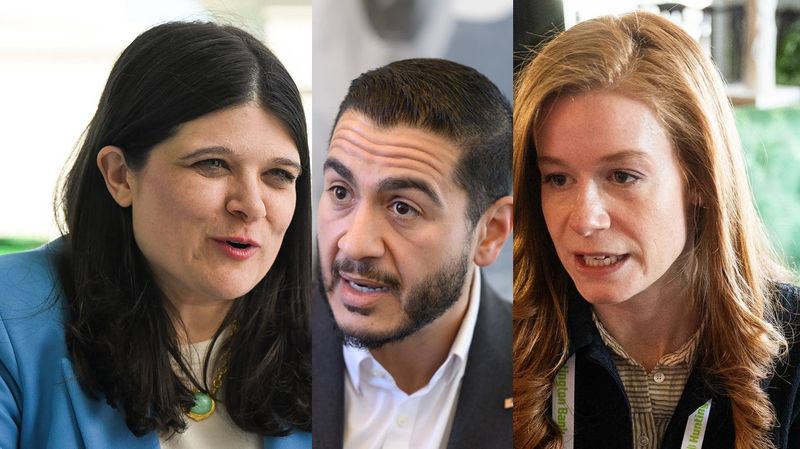
All three Democratic Senate hopefuls in Michigan agree on one thing about regulating the rapidly developing artificial intelligence industry: They said Congress hasn’t moved quickly enough to erect guardrails and protections for consumers, jobs or national security.
But from there, their positions splinter on what federal policymakers should prioritize on AI and how to go about it.

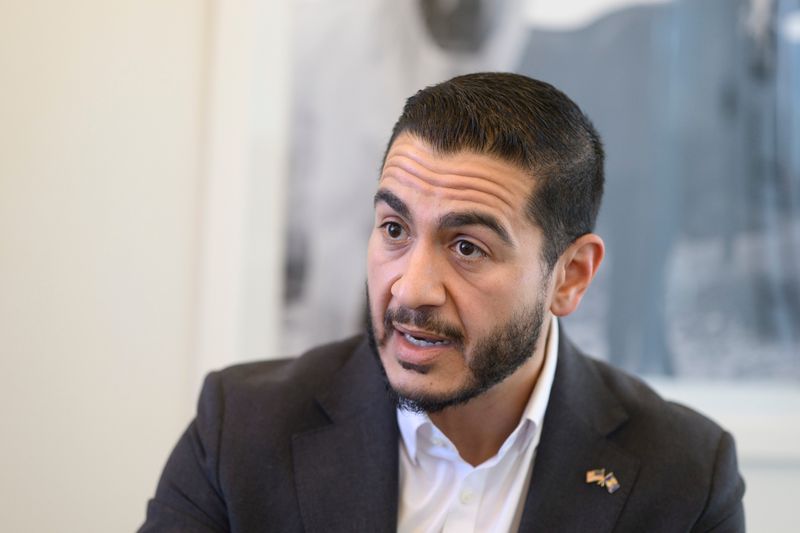
Progressive Abdul El-Sayed of Ann Arbor said he wants Congress to regulate AI companies like public utilities and is backing Vermont Sen. Bernie Sanders’ proposal to give the federal government a 50% ownership stake in the largest AI companies.
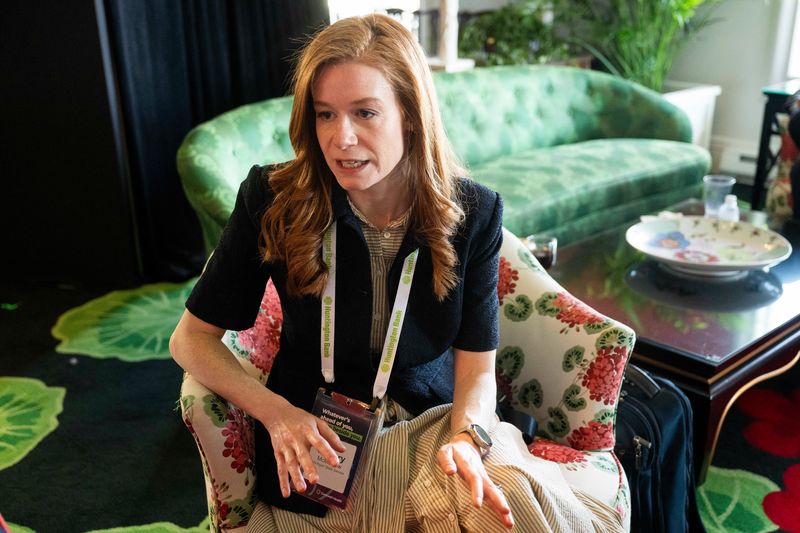
State Sen. Mallory McMorrow of Royal Oak, who has made AI regulation a centerpiece of her platform, wants to see more transparency, whistleblower protections and independent testing of AI models before they’re released to the public. She has proposed a “token” tax on commercial use of AI to fund apprenticeships for skills like people management “that AI is bad at.”
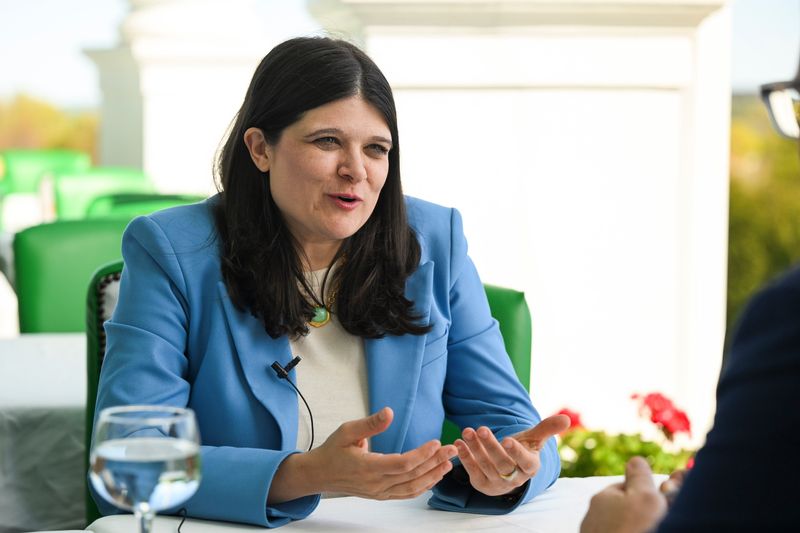
U.S. Rep. Haley Stevens of Birmingham is prioritizing worker training to stay competitive in the AI era and wants to put protections in place for the auto industry. Unlike her primary rivals, Stevens is open to Congress preempting state regulations on AI because a patchwork of state laws is “not good for the long term,” she said.
AI regulation has emerged as a top, late-season issue in the contentious Democratic primary as Michigan and other states debate how to respond to the fast-growing industry and the proliferation of data centers needed to support the computing power.
The three Michigan Democrats are vying to win the nomination to fill the seat of retiring Democratic U.S. Sen. Gary Peters of Bloomfield Township, who decided not to seek a third term. The contest is expected to be among the most expensive and closely watched of the 2026 midterm elections. The winner of the Aug. 4 primary will face Republican Mike Rogers of White Lake Township in the November general election. Rogers’ campaign did not respond to a request for an interview about his position on AI regulation.
In recent weeks, Democratic Gov. Gretchen Whitmer joined OpenAI CEO Sam Altman and other AI tech leaders at a groundbreaking for a sprawling new $16 billion data center on farmland in Saline Township. That complex and others have prompted pushback from residents objecting to their significant energy and water demands and how the large footprint of the warehouses can affect an area.
AI also sparked an animated exchange at last month’s Senate candidate debate at the Mackinac Policy Conference, with El-Sayed hitting McMorrow for a 2024 vote that would exempt large-scale data center developments from the state sales and use tax, even though no companies have applied for the exemption yet.
After McMorrow pitched her AI proposal, he said her “token” tax on commercial AI use was insufficient.
“I don’t think that it is enough to do this token thing,” El-Sayed said, calling for the regulation of AI companies as public utilities.
“This is coming faster than we can even imagine, and we need to have the foresight to understand that we need new regulatory infrastructure around taking it on, and we need people who are not bought off by the industry,” El-Sayed added.
El-Sayed seeks public stake in AI
In an interview, El-Sayed said his proposal for regulating AI as a public utility could mean a new federal agency similar to the Federal Reserve with appointed leadership that oversees the industry and regulates what it can do.
Alternatively, El-Sayed said he could see requirements to have certain representation on AI corporate boards.
Sanders, a self-described democratic socialist who has endorsed El-Sayed, has said his proposal would give the public, through its 50% voting shares, the ability to ensure corporate decisions on future AI programs are made in the best interest of all people and not a “handful of Big Tech oligarchs.”
“I support Bernie’s plan around 50% ownership, but ownership is not the same as control, so we need mechanisms of public control to prevent them from, in effect, exploiting our entire future to make a quick buck now,” El-Sayed said.
He said he is opposed to preemption efforts to override state laws on AI regulation, viewing them as attempts to block any AI regulation in the absence of congressional action.
“When we get congressional oversight, that’s the time when we can say, OK, those laws that actually create some real governance might be able to preempt it,” El-Sayed said. “But in the absence of anything, the idea that we’re passing preemption without any option is insane.”
El-Sayed hasn’t echoed Sanders’ call for a temporary ban on data center construction.
He said he’d rather see community benefits agreements governed by a “federal floor” that protects utilities, water and union jobs and requires AI companies to pay into communities where they build.
McMorrow wants ‘People over AI’
McMorrow’s “People over AI” framework calls for mandatory testing of new AI models similar to how new car models must be “vigorously” tested and verified to be safe and done so by an independent, democratically appointed lab ― not the companies themselves.
She said she opposes state preemption, wants export controls to “keep American AI American” and sees a need to engage with other countries to ensure AI isn’t used in nuclear weapons.
“The third plank is keeping humans at the center of it, so we’re ensuring AI is not being used to make decisions to kill another human being, that lethal force should be decided by people only, and that AI should not be used to make decisions about your job or your health care,” McMorrow said in an interview.
“If it is, you have a right to know, and if you feel a decision has been made incorrectly, you should have the right to appeal.”
McMorrow acknowledged the tension between labor unions ― which generally support data centers creating construction jobs ― and the concerns that many people have about the technology that they house.
She spoke of a building trades member she met in Troy who was excited about local construction jobs but wary that what he’s building could be used to surveil him or drop bombs on other countries.
“I was so taken aback. It is such a heavy question,” McMorrow said. “Here is this guy who is questioning himself and saying, ‘I just want to be able to sleep at night knowing I am not building something dangerous.'”
Like El-Sayed, McMorrow is concerned about attempts in Congress to cancel out or preempt state AI regulations when “states are the ones leading,” including the Michigan Legislature’s passing a law to require disclosure of AI use in political ads, she said. McMorrow said another package of bills is coming soon to build on the guardrails within the state’s tax incentives for data centers.
McMorrow faulted Congress for failing to set real guardrails on social media companies and the dire consequences that had for children’s and teens’ mental health, especially, warning that today’s policymakers must not “whiff” again.
McMorrow said that, already, industry is driving too much of the conversation in Washington on regulation.
“My plan is really about how do we just assert that technology has to serve us and benefit us and we can’t let it hurt us,” she said.
“My hope is that it does not take catastrophic events to happen to push for sensible regulations. We know by now about how unregulated industries can go horribly wrong.”
Stevens seeks job preservation
In an interview, Stevens emphasized her work on AI safety and research bills during her time in Congress, including a 2020 bill that she says is helping researchers today understand how deepfakes are made and how to identify them online.
She’s concerned about preserving human-led decision-making in the military chain of command and in fields like medicine, insurance and the legal field.
Asked about the greatest threat posed by AI, she said she wants to ensure no jobs are lost to AI in Michigan.
“I have been hard at work for my four terms in Congress, driving on this policy and not being asleep at the wheel,” said Stevens, who is the top Democrat on the Science, Space and Technology Subcommittee on Research and Technology.
Stevens noted that, in the last session, she served on a bipartisan task force in the House that put forward a report outlining where AI laws need to go and to help guide policymaking decisions. That panel was led by Republican Rep. Jay Obernolte of California, who last week put out a discussion draft of a bill with Democratic Rep. Lori Trahan of Massachusetts that would impose federal safety and transparency rules on top tech firms and prohibit new state rules for AI developers.
Stevens said she’s still reviewing that legislation but stressed the need to “go far” to protect safety, civil rights and privacy of Americans first.
“But we also don’t want to see Michigan’s innovation, job creation capabilities and or competitiveness (suffer) on the national and world stage,” Stevens said.
“The best, best way to preserve these things and to protect our national security is to have a single, federal standard. I am not going to support or vote for anything that preempts state law unless it is accompanied by robust safeguards at the federal level.”
At the Mackinac debate, Stevens said she supports the construction of data centers as long as Michigan residents and electric rate-payers aren’t paying “a penny” for those costs, meaning AI companies should be using their own resources to build them and utility companies should not raise rates.
“I’m eager to see Michigan continue to lead on the moon shots of the 21st century,” she said.
mburke@detroitnews.com
This article originally appeared on The Detroit News: How Michigan Democrats running for Senate differ on AI, data center rules
Reporting by Melissa Nann Burke, The Detroit News / The Detroit News
USA TODAY Network via Reuters Connect
By Melissa Nann Burke, The Detroit News | USA TODAY Network
