Lansing — The Michigan House passed its annual spending plan late Wednesday for state departments, K-12 schools and post-secondary education institutions, ushering in a spending plan that makes steep cuts to the state’s universities, increases per-pupil funding and shakes up the state’s approach to economic development.
The budget for state departments and the education spending plan passed 56-51 and 56-49, respectively, largely along party lines. Two Republicans — state Reps. Jim DeSana of Carleton and Steve Carra of Three Rivers — joined Democrats in voting against the spending bills.

Budget documents indicate the face value of the total budget is $75.8 billion. But House Republicans have previously not included some spending in the traditional appropriations, making their budget appear smaller than it is.
The general omnibus budget, which funds more than a dozen departments and agencies, makes cuts across nearly every department, with some of the most targeted reductions occurring at the state’s economic development agency. The GOP-led House cuts large-scale business incentive and grant programs but pushes additional funding toward small-business support grants and workforce training programs.
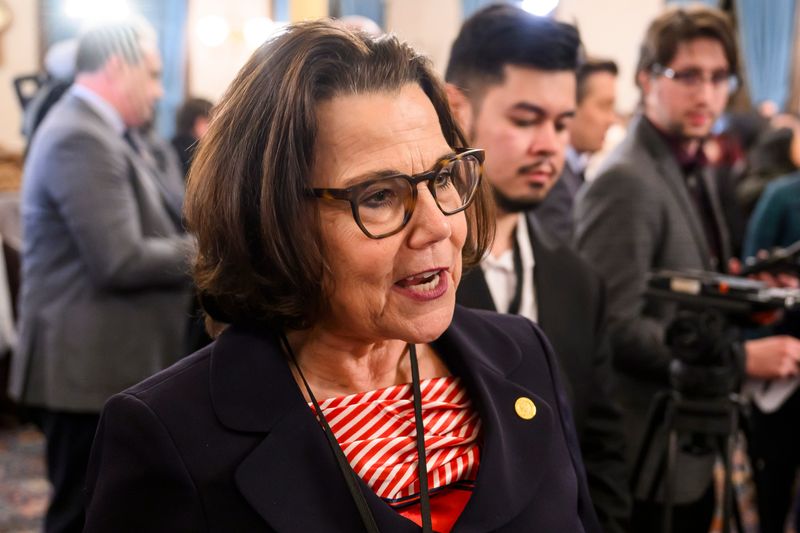
Republicans have argued that the cuts across departments in this year’s spending plan reflect a closer adherence to actual costs. Lawmakers and budget officials reviewed about three years of spending data to determine what was actually spent by departments and lowered this year’s budgets to meet those actual costs, said state Rep. Ann Bollin, chairwoman for the House Appropriations Committee.
“HB 5619 is a real budget based on real dollars on real spending,” Bollin said. “For too long, Lansing has relied on inflated assumptions and automatic increases that don’t reflect reality. We changed that.”
The budget was greeted with opposition from House Democrats, who argued it failed to address the holes in health care, workforce development and food aid created by federal funding cuts.
“This budget does not meet the moment,” said state Rep. Alabas Farhat, D-Dearborn. “The moment we’re in demands bold solutions that go right at the problems people are facing.”
The budget moves next to the Michigan Senate, which is also working to pass its own budget. Once the upper chamber moves its budget, the House, Senate and Gov. Gretchen Whitmer’s office will negotiate a final spending plan for the state.
There is a statutory deadline of July 1 to pass the final budget, but constitutionally, the budget doesn’t need to be passed until the end of the fiscal year on Sept. 30.
More changes in economic development
In the spending plan for the Michigan Department of Labor and Economic Opportunity, which houses the Michigan Economic Development Corporation, the GOP-led House’s budget makes a raft of changes to longstanding business attraction and development programs as lawmakers continue their efforts to reform economic development policy.
The budget diverts about $145.3 million from the state’s flagship business incentive program, the Strategic Outreach and Attraction Reserve fund, to create a new legislatively directed earmark fund. It also lapses $206.7 million from SOAR back into the general fund. And another $300 million from the SOAR fund will be deposited into the state’s rainy day fund.
Lawmakers, unhappy with the program’s performance, already cut off additional funding to SOAR. But the program still had a sizeable balance untouched by last year’s actions.
The budget also removes about $59.4 million for the Business Attraction and Community Revitalization program and cuts about $8.7 million in one-time funding for the Department of Labor and Economic Opportunity’s entire arts and culture program. The cuts at LEO also include about $2.25 million for the Community and Worker Economic Transition Office, which was intended to help workers transition from internal combustion engine manufacturing to electric vehicles.
The spending plan also cuts $41.9 million for the Office of Global Michigan, an office that largely deals with equity and inclusion programs and immigrant and refugee supports.
While the budget makes a variety of cuts to business attraction programs, it does replace some of that spending with an addition of $40 million toward Going Pro, additional funding for Michigan Works and another $40.4 million toward small business support program.
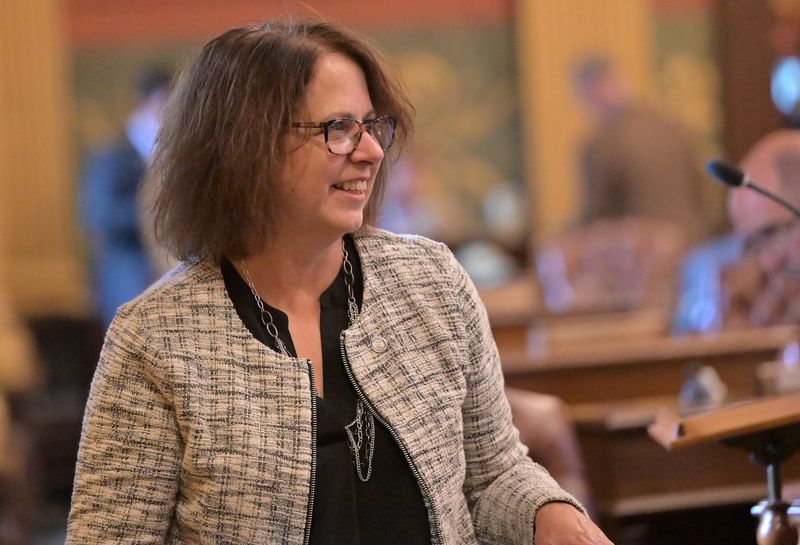
“This budget reflects a shift in strategy,” said state Rep. Nancy Jenkins-Arno, a Lenawee County Republican who helped shape the economic development budget. “We are directing our support to companies already here, small businesses and job creators that are committed to Michigan.”
DNR, IT programs on the chopping block
The House also reduced the Michigan Department of Natural Resources’ law enforcement budget by $19 million, and its wildlife management program by $6.7 million amid months of Republican scrutiny of the department’s enforcement of conservation, hunting and fishing laws.
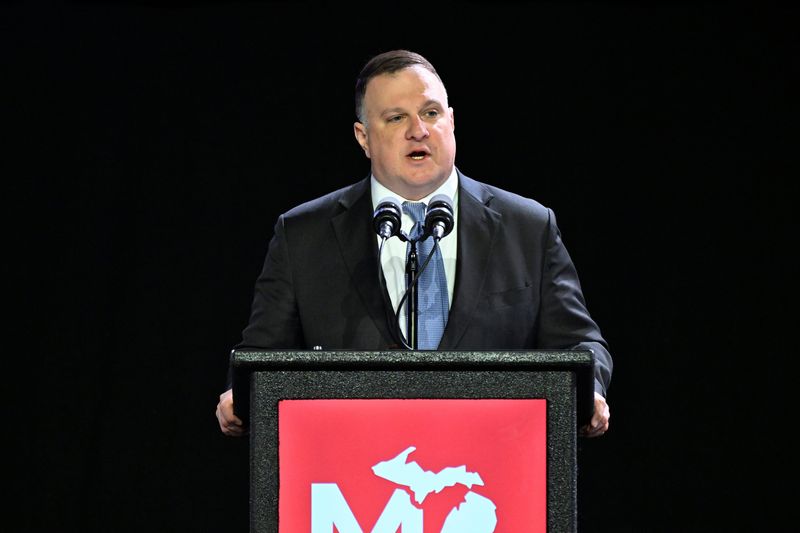
“We don’t think they should be going around and harassing people on their property, going out of their way to search for problems where they’re not apparent,” House Speaker Matt Hall, R-Richland Township, said when announcing the cuts last week.
The budget reductions also include about $293.8 million in unfinished information technology programs across state government, following an examination of IT programs by lawmakers of updates that were delivered late, flawed or over budget.
“They’re humungous and they never end,” Hall said of state IT projects. “We’re just not getting the results out of the IT programs.”
The Department of Environment, Great Lakes and Energy took the largest hits of state departments in the House budget, with a 51% reduction to its budget compared to last year.
The House also slashed another $20 million allocation for RxKids, a prenatal and infant support program that Hall has targeted on the premise that it is providing funding for undocumented immigrants. RxKids was previously allocated $270 million in last year’s budget, which can be spent over the next few years.
Education budget slashing taxpayer support for Michigan State, University of Michigan
The education omnibus budget passed by the House cuts significant funding from the state’s flagship universities, Michigan State University and the University of Michigan.
The spending plan cuts about $199 million from MSU and $222.4 million from UM operations, a roughly 62% reduction in state funding for the universities and one that raised concerns among Democratic lawmakers.
“I’m very disappointed in what we’re seeing from Michigan State University and the University of Michigan,” Hall said last week. “We continue to see a lack of focus from the University of Michigan on Michigan high school graduates. There are very few Michigan high school graduates who can get into the University of Michigan anymore.”
State Rep. Jason Morgan, D-Ann Arbor, said the lack of state funding would push UM and MSU to raise tuition and would result in a “brain drain state.”
“This budget practically asks students to leave; it asks talented researchers and entrepreneurs to leave,” Morgan said.
Bollin argued the universities’ endowments proved they were more than capable of mitigating the cuts to their state funding. “I am confident that these universities can find a philanthropic source to make up for this less than 2% of their overall funding,” Bollin said.
Both UM and MSU urged House lawmakers to reconsider the budget decreases, arguing they would have real consequences for students and the institution.
“The drastic cuts proposed by the Michigan House are a direct hit to the thousands of students and families that choose MSU as their path and value the resources and opportunity afforded by a public university,” said Amber McCann, a spokeswoman for MSU.
Chris Kolb, vice president for government relations at UM, said the cuts were a “shortsighted and harmful approach” when investments in students and workforce talent was needed.
“This proposal sends the wrong message to Michigan students and puts added strain on those educating the next generation and advancing critical research,” said Kolb, a former state budget director under Whitmer.
House education plan raises per-pupil allowance, adds literacy supports
When it comes to K-12 education, the House spending plan increases per-pupil funding from $10,050 to $10,300, similar to the increases introduced by Whitmer and Senate Democrats, but extends that same funding level to cyber students, while Whitmer had suggested a lower allowance for cyber learners.
The education spending plan, while ditching a weighted formula for at-risk students, does provide additional funding for at-risk students, special education programs and children from families where English is not spoken at home, as tutoring and literacy supports.
State Rep. Carol Glanville, D-Walker, said it is possible to spend money on students more smartly and efficiently, even amid a budget crunch. But the spending plan passed Wednesday doesn’t accomplish that, she said.
“It clearly uses this challenge as an opportunity to cut and stall,” Glanville said. “Not to grow. Not to move our state forward.”
State Rep. Tim Kelly, R-Saginaw Township, said the budget puts students first, “not the bureaucracy.”
“This budget is built on a simple conservative principle: Every student is equal and every student deserves a foundation for success rooted in excellence,” Kelly said.
The GOP-led House K-12 budget also sets aside roughly $201.6 million for state-subsidized breakfasts and lunches for all students, but conditions that funding, including mandatory availability to nonpublic schools and a prohibition on candy and pop sales at schools.
eleblanc@detroitnews.com
This article originally appeared on The Detroit News: House budget makes cuts in most departments, slashes UM, MSU funding
Reporting by Beth LeBlanc, The Detroit News / The Detroit News
USA TODAY Network via Reuters Connect