General Motors is telling customers that it’s the most “American” of the American-made automobile companies and emphasizing its contributions to Michigan’s economy in an apparent jab at rival Ford Motor Co.
In a blog post entitled ‘What Still Builds America,’ Mike Trevorrow, GM’s senior vice president of global manufacturing, said on June 17 that GM employs more people in the United States than any of its competitors ― 1 in 10 American autoworkers, to be precise.

“As America approaches its 250th anniversary, we should think about what has built this country and what will keep building it next,” Trevorrow said. “Every day, we are helping shape a future that is increasingly defined by advanced technology. And as we continue our focus on building products customers love, our progress will depend on how we incorporate these advancements with the people, engineering, supply chains, and energy capabilities required in modern manufacturing.”
GM’s post is the most recent example of North American automakers’ marketing campaigns that emphasize American roots and manufacturing supply chains.
Last year, automakers including crosstown rival Ford launched several “Made in America” commercials around the time President Donald Trump looked to impose tariffs on imported cars and car parts.
Executive Chair Bill Ford told the Detroit Free Press that Ford remains America’s No. 1 auto producer and top employer after the company secured the top slot as the most “quintessentially American brand” in a recent survey.
“As we look to the next 250 years, I believe the future is incredibly bright, but it hinges on us coming together as a nation,” he said in a March email. “We must heal our divisions and keep pushing forward, just as we always have. Ford will be there, serving the nation and helping to build a stronger future.”
Who is keeping score?
Adopting patriotism to sell cars is hardly a new phenomenon, with North American automakers campaigning in earnest on the topic for the past 40 or so years, according to Dan Hearsch, global co-leader of automotive and industrial practice at the consulting firm AlixPartners.
The influx of Japanese and European brands into the United States in the 1980s led to reactive “Made in America” messaging not exclusive to automotive, but really any consumer item that had begun to be outsourced to other countries.
“Right now, it has a certain flavor that’s being seasoned by the current politics, but in prior waves it wasn’t driven necessarily by the political drama scene,” Hearsch said, adding that emphasizing the American side to a domestic company, whether as a marketing ploy to sell vehicles or a continued advertisement for the company at large, is always a “safe bet.”
“The downside is almost nil. Nobody is going to be offended by saying, ‘Hey, you should buy American,’ ” he said. “They might disagree, they might say it doesn’t matter that much to me, but no one is going to be offended. Conversely, there are plenty of people who want to drive the most American vehicle possible.”
The debate over which automaker is “more American” ultimately comes down to how you define the term, according to Paul Waatti, director of industry insights for AutoPacific.
Automakers can point to where their vehicles are assembled, where their parts come from, where the engineering took place, how many Americans number among employees and where future investment has been directed. Ford and GM can each build compelling cases for their own American-ness depending on which of these scorecard slots they’re pointing to, Waatti said.
“That’s what makes the discussion both interesting and difficult. It also means it’s important to distinguish between marketing claims and economic realities,” Waatti told the Detroit Free Press. “Modern vehicles are global products. Even vehicles assembled in Michigan contain components sourced from dozens of countries, while some foreign automakers build substantial numbers of vehicles and employ thousands of workers in the United States.”
Pointing fingers at one another?
When asked for comment about the June 17 post, GM spokesman Jim Cain referred to government filings of both Ford and GM about United States employment figures and tariff reimbursement figures.
The post also said that GM contributed $46.3 billion to the U.S. gross domestic product in 2025 and that every $10 in GDP that GM generates in Michigan is converted to about $17 in total economic activity across the state’s suppliers and local businesses.
GM leaders have said in recent months the company has faced less exposure to tariffs because it relies on fewer foreign suppliers to build its vehicles than peer companies.
After the Supreme Court ruling on Feb. 20 that Trump was not authorized to impose tariffs under the International Emergency Economic Powers Act, Ford and GM both said they expected reimbursements proportionate to the tariffs paid out under that order.
GM accounted for a $500 million tariff reimbursement from the federal government and suppliers related to tariff reversal in the first quarter. (Though GM still paid $900 million in tariffs in the first quarter 2026, down from $200 million in first-quarter 2025.) Comparatively, Ford expected $1.3 billion in reimbursement.
When asked for Ford’s reaction to GM’s assertion, Ford spokeswoman Jessica Enoch sent an email response outlining statistics about its business that it deems makes it the most American automaker.
Enoch cited data from S&P Global Mobility that said, “Ford again topped every other automaker in U.S. vehicle assembly, U.S. vehicle exports and hourly autoworker employment in America in 2025.”
Enoch noted that Ford assembles more than six vehicles in America for every one it imports, leading the industry.
“We are proud to be America’s top auto assembler once again in 2025, as we have been for 16 out of the last 17 years,” Enoch said. “Ford assembled more than 2 million vehicles in the U.S. last year ― more than any other auto manufacturer. In 2025, Ford assembled nearly 350,000 more light duty vehicles in the U.S. than any other manufacturer — earning our 9th consecutive year of leadership.”
She said of all the vehicles Ford sells in the United States, 83% are assembled in the United States and Ford leads the industry as the top exporter of U.S.-assembled vehicles, having shipped 311,000 units ― including the Ford F-150, Bronco and Mustang ― to more than 60 international markets last year.
“Also, Ford employed approximately 56,300 hourly manufacturing workers in the U.S. as of the end of 2025, more than any other automaker,” Enoch said.
America’s looming birthday
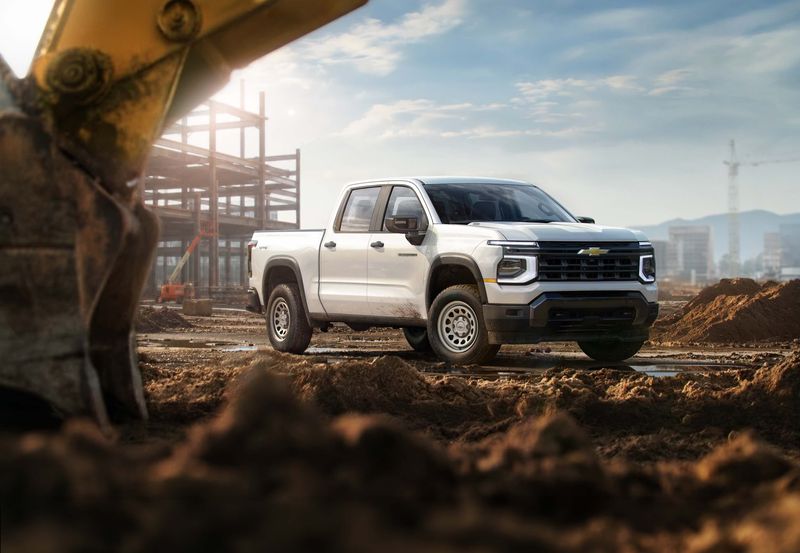
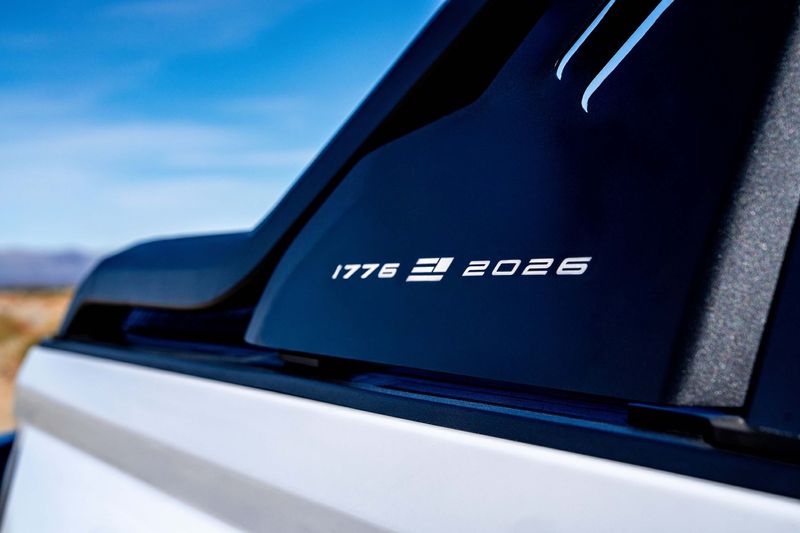
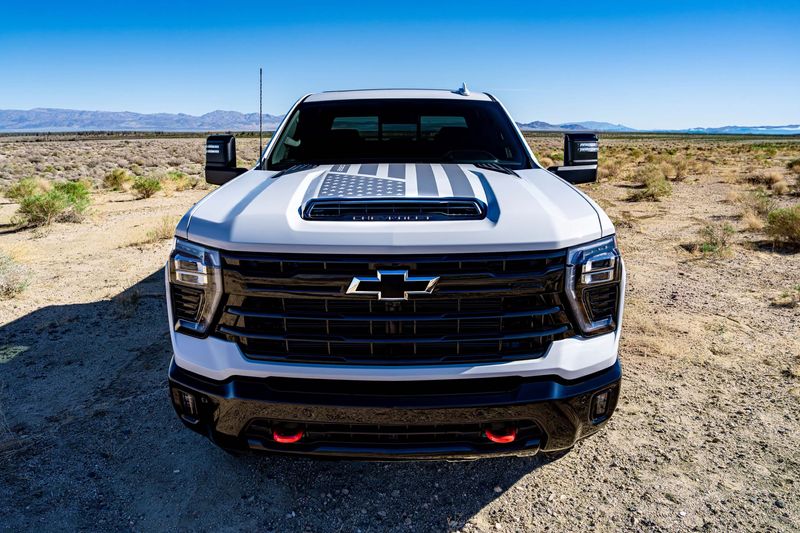
GM has released broad marketing projects to celebrate America’s 250th birthday, including special editions and appearance packages for Chevrolet’s 2026 Corvette, Silverado EV, Silverado LD, Silverado HD and Colorado. The collection, dubbed “Stars and Steel,” takes its inspiration from the American flag and is available on five models assembled in the United States.
Chevrolet has also run several updated versions of iconic ads such as “See the U.S.A. in Your Chevrolet,” which aired during the Opening Ceremony for the 2026 Winter Olympics in Italy and during the pregame show at the Super Bowl.
Its most recent advertisement as part of the ongoing campaign was an updated version of its “Heartbeat of America” TV spots that notably aired during the 1980s, when the Detroit Three first began to face strong competition from foreign automakers.
Stellantis, meanwhile, has emphasized patriotism during America’s 250th through more whimsical promotions. The company launched its “America Made Us” campaign last year for its Chrysler, Dodge, Jeep and Ram brands. In its latest campaign, the automaker is offering a free 2026 two-door Jeep Wrangler Sport if Team USA wins the 2026 FIFA World Cup to any customer legally named George Washington.
As for how it impacts auto sales, it’s hard to say, almost as hard it is to measure how American a company is at the end of the day, Hearsch said.
“We get this question just about every year. How far back do you want to take it? Do you count an aluminum cast part that was cast in Canada but imported to the United States and then machined here? How American is that, right?” Hearsch said. “There are rules in the tax scheme that tells you … but the reality is 90% of the aluminum we use does not come from the United States but the highest value of making that part is the machining and finishing. Is that math consumers are worried about?”
As for the battle of definitions, the idea of who gets credit for the most American isn’t the most important thing for U.S. automakers ― it’s remaining competitive on the global stage.
“The reality is that neither company is purely American in the way many people imagine,” Waatti said. “And neither could compete globally if it were.”
Free Press staff writer Liam Rappleye contributed to this report.
Jackie Charniga covers General Motors for the Free Press. Reach her at jcharniga@freepress.com.
This article originally appeared on Detroit Free Press: GM doubles down on American-made messaging targeted at its peers
Reporting by Jackie Charniga and Jamie L. LaReau, Detroit Free Press / Detroit Free Press
USA TODAY Network via Reuters Connect
By Jackie Charniga and Jamie L. LaReau, Detroit Free Press | USA TODAY Network