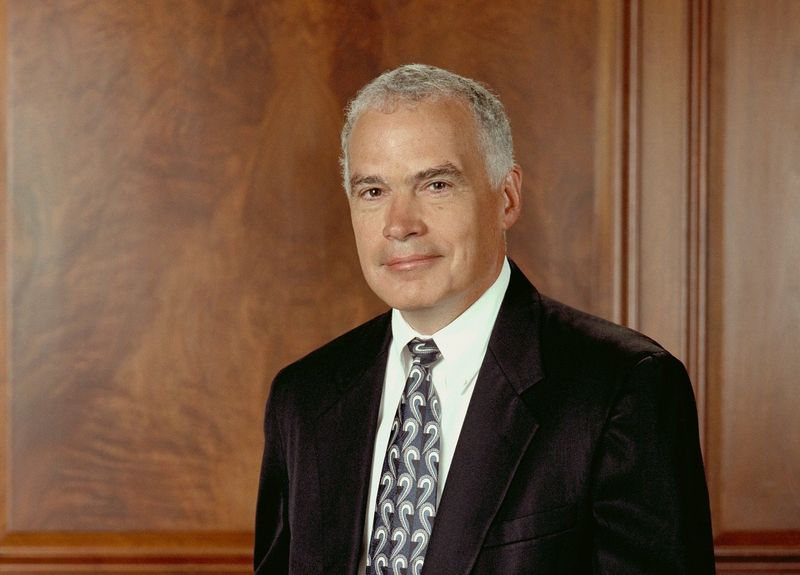
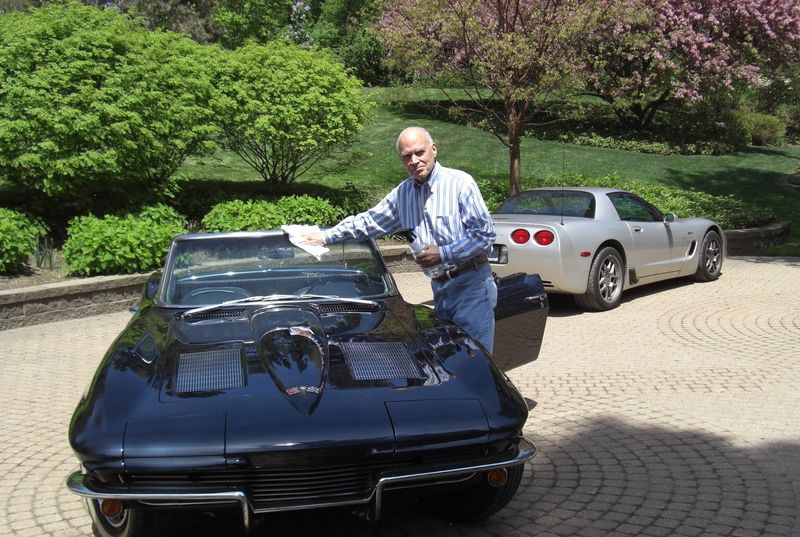
Former General Motors Vice Chairman Harry J. Pearce, best known for successfully proving in 1993 that “Dateline NBC” falsified a crash test to ignite a massive fuel-tank fire in a GM pickup truck, died on Oct. 14. He was 83.
GM CEO Mary Barra, who briefly served as Pearce’s executive assistant, told the Detroit Free Press in an emailed statement that she was saddened by his passing.

“Serving as Harry’s executive assistant in the 1990s helped shape my approach to leadership — he brought integrity, intellect, and a deep commitment to his role while at the company,” she said. “On behalf of the GM family, I extend heartfelt condolences to Harry’s loved ones.”
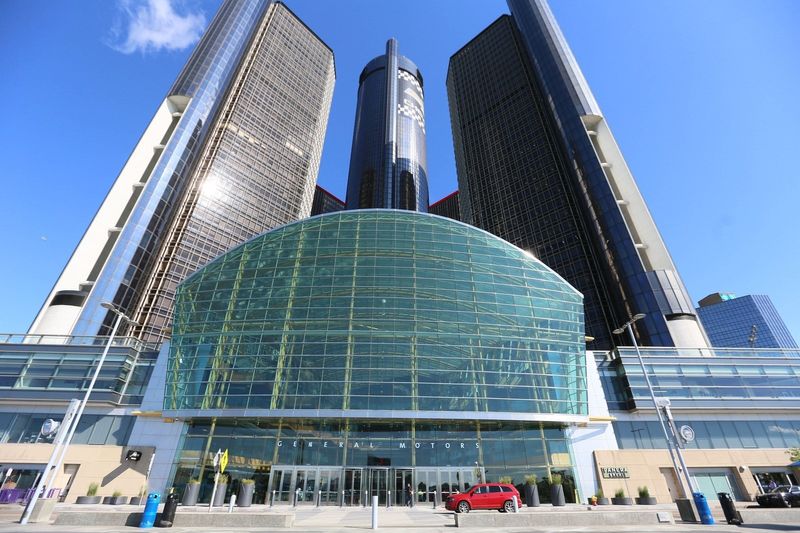
Among the hallmarks of his career, Pearce led GM’s decision to purchase the Renaissance Center and was instrumental in the launches of the EV1, the industry’s first modern electric vehicle, and a hydrogen fuel cell concept car.
NBC defamation case
At a historic 1993 news conference at GM’s old headquarters on West Grand Boulevard, Pearce outlined in meticulous detail why the Detroit automaker filed a defamation case in Marion County, Indiana, against NBC and the Institute for Safety Analysis. As general counsel, Pearce was seeking compensatory and punitive damages for what he called an “outrageous misrepresentation and conscious deception” in its Nov. 17, 1992, report titled “Waiting to explode?”
The episode aired “two unscientific crash demonstrations” intended to test a safety defect that would purportedly allow the vehicle to burst into flames when impacted from the side at a speed of 30 mph.
The safety defect in question was the decision to place the fuel tank outside the vehicle frame rail on the Chevrolet C/K pickup trucks. The sidesaddle design of the fuel tank ― installed in over 10 million square body trucks from 1973 to 1987 ― was deemed many times more dangerous than those of GM’s truck-building competitors by the U.S. Department of Transportation.
Still, the footage “Dateline” aired revealed a far more dramatic explosion than reasonable ― as the show’s producers allowed incendiary devices to be strapped to the vehicle and overfilled the gas tank prior to the staged crash to produce a larger post-collision fire.
Pearce sent GM employees to inspect junkyards in the vicinity of the crash and brought the exact vehicles Dateline strapped rockets to ― the same vehicles the network said were unavailable for analysis ― back to Michigan to reveal onstage during the two-hour news conference. He also tracked down footage of the crash recorded by onlookers in which smoke is seen pluming from beneath the pickup before it was hit.
Free Press auto critic Mark Phelan attended the news conference tribunal where Pearce debunked the network’s scheme.
“It was the kind of courtroom moment you think only happens in movies. Our jaws were hanging open,” Phelan said. “You could have heard a pin drop when Harry Pearce showed ‘Dateline’ had faked the footage.”
Following Pearce’s landmark conference, NBC admitted to rigging the test and settled its lawsuit with GM. The president of NBC was fired, and “Dateline” anchors Jane Pauley and Stone Phillips were ordered to read a 3½-minute on-air apology to viewers and GM.
Family, company man
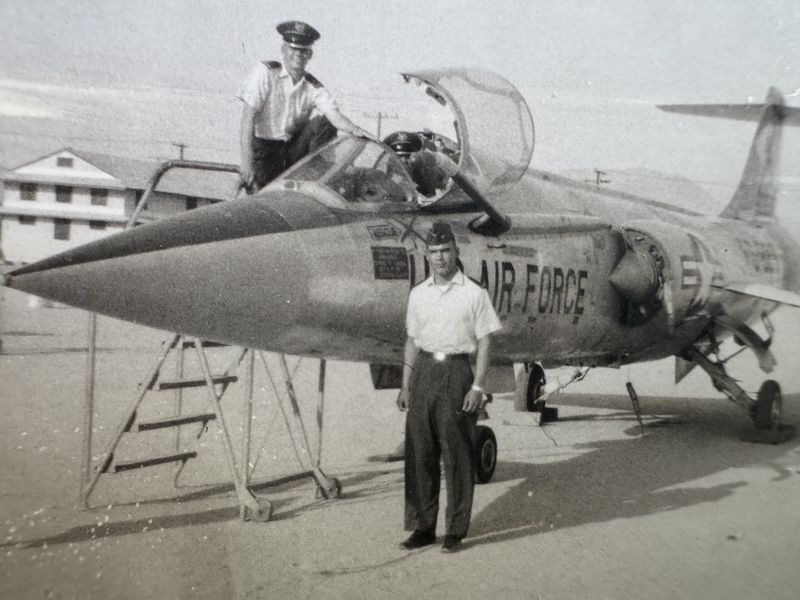
Pearce was born on Aug. 20, 1942, in Bismarck, North Dakota, to William Ridgely and Jean Murray Pearce. His early love of rocket science drew him to the U.S. Air Force Academy, where he earned a B.S. in engineering in 1964.
After military stints in Illinois, England, and the Netherlands, he moved back to Bismarck with his wife, Kathy, to raise their three children, Shannon, Susan and Harry Mark.
In his GM application submitted on May 1, 1985, Pearce outlined his credentials that included 15 years as a trial attorney, chairman of the traffic safety committee of the state bar of North Dakota, a municipal judge and single term as police commissioner of Bismarck. Of his many job offers at the time, working at GM would be the lowest paying, his family said ― but it would allow him to stay put long enough to spend time with family.
On the final page, he wrote: “What remains of my time is spent in airplanes and at home reassuring my family that they have a resident husband and father.”
By 1994, Pearce was responsible for Electronic Data Systems, then owned by GM, while it experimented with microwaves in telecommunications. Pearce saw a unique opportunity to incorporate telecom into transportation and recruited engineers for an initiative code-named Project Beacon who suggested using the existing U.S. cell phone network.
Pearce then pulled in train salesman Chet Huber from the company’s Electro-Motive Division in LaGrange, Illinois, to bring the technology to market. That project became OnStar, which grew into a multibillion enterprise with over 6 million subscribers.
“Harry was an amazing leader, visionary and a true example of integrity and resolve,” Huber said in an emailed statement to the Detroit Free Press. “He was the driving force behind the creation of OnStar, and along with Rick Wagoner the only reason something so disruptive survived GM’s natural instincts to shut it down on multiple occasions when the challenges got tough.”
Career at GM
A safety advocate, Pearce also helped standardize the Event Data Recorder across GM’s vehicles, functionally a “black box” that used the vehicle’s existing technology that, in the event of a collision, registered the speed the vehicle was at and the change of velocity during the crash, his son Harry Mark told the Free Press. GM was the first to standardize EDR tech across production vehicles in 1994.
He also worked to standardize glow-in-the-dark safety escape latches in the trunks of GM vehicles.
In addition to vehicle safety, Pearce was an advocate of racial and gender diversity. Through his position as GM’s general counsel, he sent a letter in 1989 to every law firm that he expected more diversity among those working on GM cases. It came to be known as The Pearce Letter and had a “butterfly effect” across the legal field.
A major change in his career path came from a leukemia diagnosis in 1998 that drew national headlines. At the time, Pearce was widely speculated to be in line to be chairman. Though he recovered, he retired from GM in 2001 and went on to serve as chairman of Hughes Electronics, Chairman of Nortel Networks, and Chairman of Montana Dakota Utilities as well as sit on the boards of six blood cancer foundations.
The visitation is on Oct. 24 at Lynch & Sons Funeral Home in Clawson, according to funeral director Pat Lynch.
Senior autos reporter Jamie L. LaReau contributed to this report.
Jackie Charniga covers General Motors for the Detroit Free Press. Reach her at jcharniga@freepress.com.
This article originally appeared on Detroit Free Press: Former GM vice chair Harry J. Pearce, known for proving NBC rigged a crash test, dies at 83
Reporting by Jackie Charniga, Detroit Free Press / Detroit Free Press
USA TODAY Network via Reuters Connect