Jessica Caldwell talks to lots of journalists.
It’s part of her role as head of insights at car-shopping research site Edmunds.com, answering questions about a range of automotive topics.

But if there’s one issue that comes up more than others, Caldwell told me, it’s affordability.
”It feels like affordability is the backbone to every question essentially,” she said recently.
Even when a question doesn’t involve the term directly, “it feels like it’s a part of every answer.”
That wasn’t always the case, at least as she recalls it, not that concerns about cost and value weren’t topics to be addressed. It was a change, however, that Caldwell ties back to the years around the COVID-19 pandemic, when a microchip shortage led to automotive price spikes. That, paired with rising interest rates, created a “double whammy” for consumers.
Affordability, of course, isn’t just an issue tied to car buyers. The nonprofit Urban Institute reports that “nearly half of people in American families cannot afford the true cost of living.” It offers an affordability tracker on its website with data points looking at, among other things, home prices, health insurance and grocery prices. Not surprisingly, all three have gone up.
Estimated monthly grocery prices in the United States were $750 in January 2017; This January, that number hit $1,050, according to the Urban Institute’s tracker. That’s $300 more to the supermarket.
The inflation-adjusted price, however, doesn’t offer as stark a difference during that period, putting the increase at $50.
New car prices have gone up, too, in a fairly steady march for years. The average transaction price on new vehicles for the year to date through June stood at $48,852. In 2019, before COVID-19 upended just about everything, that figure was $37,310. In 2002, it was $25,715, according to data supplied by Edmunds. Other than a couple of yearly declines during that period, the numbers have gone in only one direction.
Average transaction prices hitting close to $50,000 generates lots of attention and reaction from consumers. In fact, a survey of 20,000 mobility users from the United States, China, Germany, Japan and the United Kingdom released in July by the McKinsey Center for Future Mobility found that “affordability is affecting demand.”
The survey found that 32% of respondents plan to postpone their next vehicle purchase because of financial constraints and 45% will consider smaller vehicle categories than they’d originally planned.
Wages, in general, have gone up, too, even though it’s not an equitable increase. Some folks have seen their wages barely budge over the years or fall behind rising costs altogether. And the stress many of us still feel from the run-up in inflation in recent years might cancel out any sense that the numbers have improved. That, of course, might be because although inflation has eased considerably since 2022, it ticked up again this year, standing at 3.5% in June. The war with Iran and higher gas prices also add uncertainty.
But the federal Consumer Price Index might lead one to believe vehicle affordability isn’t such an issue these days. The index for used car prices, for instance, spiked dramatically from 2020 to 2022 but the index generally declined after that. A recent report by Edmunds noted, however, that prices for used vehicles “haven’t fully come back to earth, and used loan rates typically run higher than what’s available for a new vehicle.”
Ari Shwayder, a lecturer in the business, economics and public policy group at the University of Michigan’s Ross School of Business, said affordability doesn’t necessarily mean the same thing in every case.
”When I hear people talk about or write about affordability, I get a little uncomfortable, not because there’s anything wrong with that idea − like I think it’s an important idea to think about − but it can mean so many different things that often it’s sort of ill-defined,” he said.
So what do people mean when they’re talking about affordability?
“It’s not a single number. It’s sort of a relationship between prices, income, financing conditions, a bunch of things related to that,” Shwayder said.
As an economist, Shwayder said he tends to look at prices over a longer period of time, and car prices and wages over the last 10 to 30 years haven’t shown huge differences during that entire span of time.
Averages, however, mask a lot of variability and can be a bit misleading, he said.
Lower- and middle-income consumers get squeezed by not just higher prices, but also factors such as higher interest rates. Those rates might even have been higher in the past, but because rates dropped so low a few years ago, the recent rise has hit hard.
Because lower- and middle-income consumers finance more of their purchases, they get hit not just by higher prices, but also by those higher rates. That’s led to things like longer loan terms and higher monthly payments. According to Edmunds, in the second quarter of this year, 23.9% of financers took out loans of 84 months or longer and average monthly new-vehicle payments hit $777, which are both records.
The Consumer Price Index also does something else that can skew the picture. It adjusts for quality in some cases. The idea is that a vehicle in 2026 has more technology in it than one sold 30 years ago so the index tries to account for that change.
One issue, according to Shwayder, is that if you’re a lower-income buyer who needs a basic car for work and any other essential activities, especially in a state like Michigan with limited public transportation, then you might face a more challenging environment than in the past.
You can’t buy a 1996-equivalent vehicle in 2026, you buy the car that’s available, Shwayder said. Even though you’re getting more technology in that new car, you can’t buy the kind of basic transportation vehicle that you might have 30 years ago.
“That quality-adjusted price index can be a little bit misleading,” Shwayder said.
Auto companies, particularly domestic automakers, famously shifted away from smaller vehicles, shuttering whole vehicle lines years ago. That has meant a much smaller pool of vehicles in the lower price ranges. Those that are available, noted Caldwell, tend to come from Asian brands.
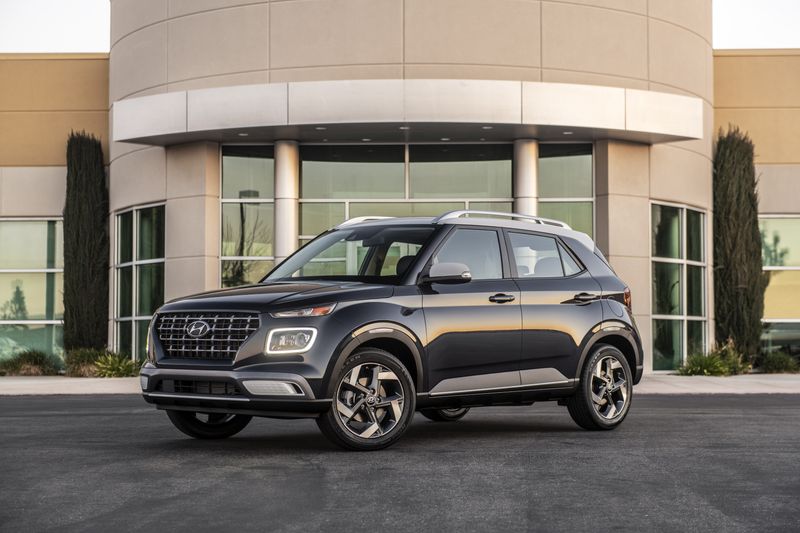
Much has been made about the challenge of finding an affordable car (the Hyundai Venue small SUV, for example, advertises a starting price of $20,550). The coming Slate electric pickup, priced at less than $25,000, has been touted as a potential game changer.
Higher-income consumers continue to buy vehicles on the more expensive end, leaving a big impact on the market. Automakers, who make more money from sales of more expensive vehicles, aren’t really incentivized to offer the kinds of less-expensive vehicles that once served people trying to buy a first car or replace their econobox.
Caldwell said she can’t recall a time like now when the new car market didn’t really have much to offer mid- to lower-income buyers. That’s despite examples automakers might highlight. Honda, for example, continues to offer a Civic with a price under $25,000, but that’s the starting price, and other versions of the Civic start higher.
SUVs and trucks are even more out of reach for some. Edmunds, in its recent report, noted that “the affordable large SUV no longer exists” and “the pickup truck that once fit a working family’s budget has quietly become a luxury purchase.”
But there’s also a point to be made about what consumers want and what they’re willing to buy.
“American consumers, they like all the features and the technology now, which adds to the price tag,” Caldwell said, noting that a buyer might even pick something cheaper and smaller but that price might be a lot higher once all the options get added. “You can want something that’s smaller, but It doesn’t mean you don’t want the creature comforts as well.”
Cox Automotive Executive Analyst Erin Keating, in a midyear review presentation in June, noted that the vehicle base price and what people drive home are almost never the same.
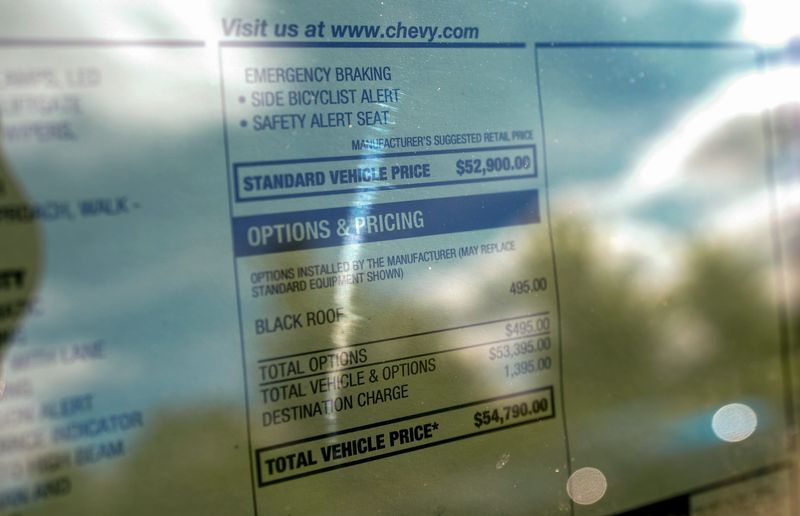
“Across the 10 best-selling non-truck nameplates, the average transaction runs about $7,200 above the published base. And I want to be clear about why, this isn’t a trick. The base models exist. Manufacturers build them and put them on the lot. Consumers just don’t choose them,” she said, according to a transcript.
But the current environment is adding some additional strains. Both Caldwell and Shwayder described the market distorting the impact of tariffs, which got a renewed focus on July 24 when the Trump administration imposed a new round of tariffs targeting countries around the globe.
And in that Cox Automotive midyear review presentation, Chief Economist Jeremy Robb pointed to other strains this year.
“As we’ve moved through the second quarter and high gas prices have seeped into many parts of the economy, we see that consumer expenditure growth is outpacing income growth by almost 4 percentage points. This illustrates exactly why consumers are feeling poorly, or what some refer to as the ‘vibe recession.’ ”
He noted that “over the long run even − including the period of the pandemic − personal income typically outpaces personal expense by 0.1%. But we are clearly in a time of expense outpacing income, with the average variance of -0.4% since early 2023.”
Eric D. Lawrence is the senior car culture reporter at the Detroit Free Press, and he also writes about recreational vehicles, boats and bikes. Send your tips and suggestions to elawrence@freepress.com. Become a subscriber. Submit a letter to the editor at freep.com/letters.
This article originally appeared on Detroit Free Press: For many car buyers, ‘affordable’ price is still out of reach
Reporting by Eric D. Lawrence, Detroit Free Press / Detroit Free Press
USA TODAY Network via Reuters Connect
By Eric D. Lawrence, Detroit Free Press | USA TODAY Network