

A nine-month, $2 million contract extension for Detroit’s ShotSpotter gunshot detection system is in jeopardy over City Council concerns that the Detroit Police Department has not justified the continued cost of the program.
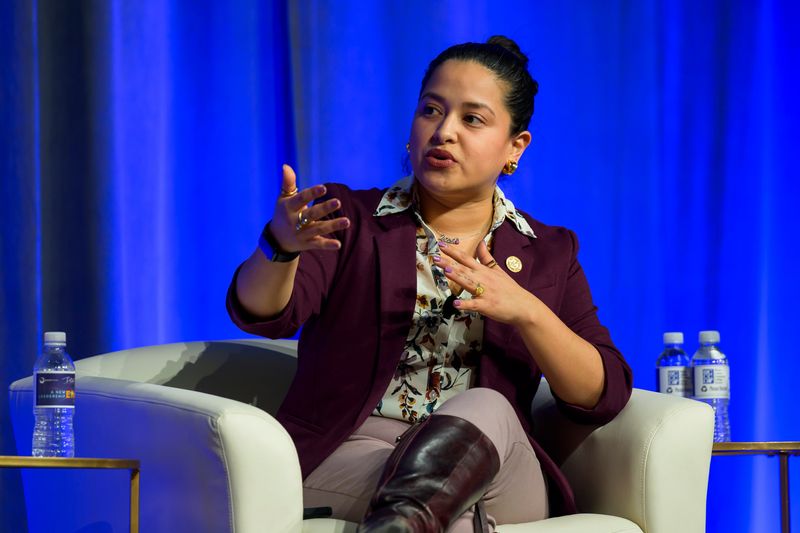
The council’s Public Health and Safety Committee formally recommended Monday that the extension be rejected when it comes up for a vote by the full City Council on June 30, the day the current ShotSpotter contract expires. Committee Chair Gabriela Santiago-Romero and Vice Chair Denzel McCampbell, the council’s two democratic socialists, questioned police leadership over privacy concerns and cost during three sessions this month.

Deputy Chief Mark Bliss said police have answered every question the council members have asked and provided sufficient data on the ShotSpotter program.
“We’ve given them a lot of information, a lot of numbers, a lot of explanations to a lot of their questions,” Bliss said. “I know they’re going through that and looking through those answers.”
The department has requested a nine-month extension to allow it time to evaluate proposals from multiple vendors for a gunshot detection technology. SoundThinking, which makes ShotSpotter, and New Mexico-based firm EAGL Technology told The Detroit News they had submitted bids.
“DPD will say that it’s worth saving a life or solving a case, but while I agree that’s valuable and important…, I’m more interested in putting that money into something that’s preventative,” Santiago-Romero told The News in an interview last month.
During Monday’s committee meeting, Santiago-Romero told Bliss, “I still have not heard enough support from the public. I have not seen enough data that this is working with the cost.”
When asked what would happen if the contract extension was not approved by June 30, Bliss told The News that “we will assess what’s going on with the contract, and we’ll have discussions. I am very positive that we will move this forward and go from there.”
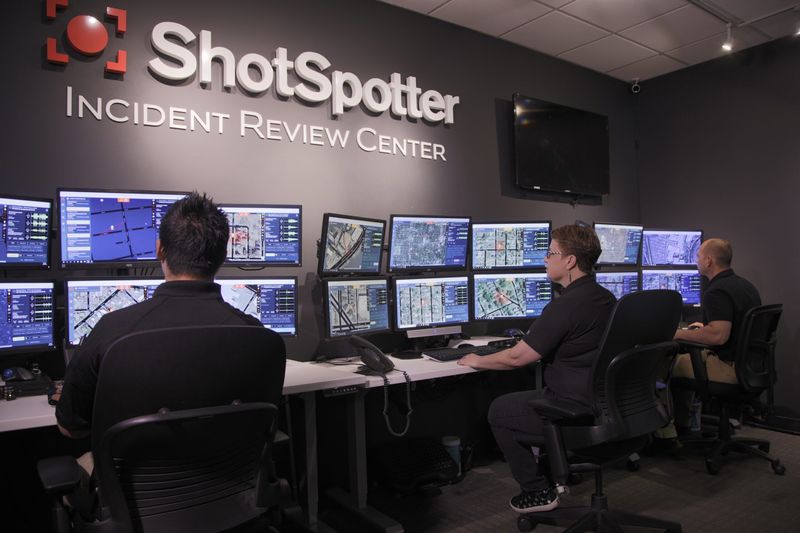
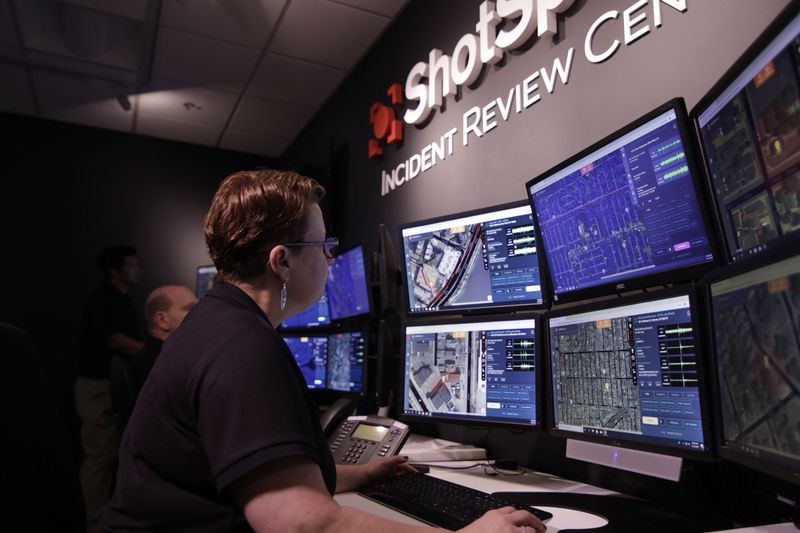
The ShotSpotter system is made up of microphones that detect the audio signals of potential gunshots by filtering out sounds like traffic and wind. If three or more sensors detect a possible gunshot, the software identifies the location of the shot using the time and angle of the arriving sound waves.
Then, an algorithm trained on confirmed gunfire filters out sounds that are unlikely to be gunshots. The incidents that aren’t filtered out by that point go to a human analyst, who is the final check before an alert goes out to police.
ShotSpotter has been active in Detroit since 2021 and expanded to its current scope of 39 square miles across nine of the city’s 11 police precincts in 2023. The city’s current contract costs $7 million over four years.
Council members question police definitions of success
Police leaders have said the goals of the ShotSpotter program are to reach the scene of shootings faster, investigate shootings more effectively and create a change in behavior that leads to fewer shootings.
By their account, those goals have been accomplished in the five years since the first gunshot detection sensors in Detroit came online in 2021.
An internal assessment carried out by the police department’s Crime Intelligence and Data Analytics teams found a 20% greater reduction in shootings and 911 calls reporting shots fired across ShotSpotter coverage areas between 2022 and 2025, according to an email from a police spokesperson.
Matthew Pensyl, a Detroit police officer, interacted with ShotSpotter every day while working in the city’s 9th precinct, he told The News.
“There’s just so much it brings to the table from an officer safety and a societal safety perspective. You couldn’t dissuade me from using this technology,” Pensyl said.
During a meeting of the City Council’s Public Health and Safety Committee last month, Bliss shared a barrage of statistics to underscore what the police department argued shows the system’s effectiveness. He said 911 calls in all gunshot detection coverage areas declined from 2022 to 2025; police obtained 250 search warrants and 78 arrests linked to alerts last year; and they collected almost 12,000 bullet casings when responding to alerts.
On Monday, Bliss told the committee that the police department had a preliminary meeting with researchers at the University of Michigan about setting up an “academic review” of the program. The most recent independent study on ShotSpotter in Detroit, released last month, found that it had no effect on the arrest rate or number of violent crimes in coverage areas through 2022.
Throughout the police presentation, council members Santiago-Romero and McCampbell grilled Bliss and Police Chief Todd Bettison over privacy protections and whether the system was worth the price tag.
“I’m still trying to figure out whether or not this is worth the money,” Santiago-Romero told the police leaders at the time.
The program has also come under fire from some residents who said the communities where ShotSpotter has been implemented — selected for high rates of gun violence — are already over-policed. At a public meeting in May, 15 of the residents who rose for public comment opposed the use of the technology, compared with one who supported it.
Gabrielle Dressner, a policy analyst with the Michigan branch of the American Civil Liberties Union, told The News the technology can lead to dangerous situations.
“If you’re going to a situation thinking that there is gunfire or the potential for gunfire, that creates a very tense situation,” Dressner said.
“And where this technology is not accurate, it’s making the situations that are dangerous where residents risk being stopped, detained and interrogated based on incorrect data.”
Police missed a year of reporting to the civilian oversight board
Santiago-Romero also expressed concern about what she perceived as a lack of transparency by DPD around the ShotSpotter program.
“One thing that council was supposed to get by approving ShotSpotter is quarterly updates in (the Public Health and Safety) committee … with how it’s working, with how it’s solving cases,” Santiago-Romero told The News last month.
“I’m pretty sure we received that information once, maybe twice,” she said.
Detroit police also failed to report program metrics to the city’s Board of Police Commissioners during a period spanning August 2023 to February 2025, public records show.
A 2022 policy directive on surveillance technology mandated that the department provide quarterly reports on ShotSpotter alerts, gunshots detected and firearms seized to the civilian oversight board.
“Due to a data overload, the system broke down and we had to suspend sending reports to the BOPC while we fixed the data source,” the Detroit Police Department told The News in an email.
Future of ShotSpotter uncertain in Detroit
Despite taking bids from multiple competitors, the Detroit Police are not necessarily moving on from ShotSpotter.
“We consistently assess and evaluate not just the technology, but how the technology fits in with our crime strategy,” said Bliss, the deputy chief.
The procurement process began in mid-February, and bids were closed at the end of March, according to a listing on the City of Detroit’s procurement website.
The goal of the nine-month ShotSpotter extension, Bliss said, is “to make sure we still have coverage during this process.”
“Our procurement process is somewhat elongated, and sometimes there’s bumps in the road, and it takes a little longer than we perceive it to be,” he said.
“We want to make sure we give enough time for the RFP process and also the evaluation.”
Multiple cities, most notably Chicago, have declined to renew ShotSpotter contracts in recent years. According to 2025 Securities and Exchange Commission filings from parent company SoundThinking, ShotSpotter added only five additional square miles of coverage last year.
In the filing, the company noted that one risk to its investors was “the fact that negative publicity about our company can and has caused current and potential future customers to evaluate the sales of our solutions more than in the past.”
John Fisher, a spokesperson for SoundThinking, the ShotSpotter vendor, told The News: “Since 2021, SoundThinking has been a committed partner to the Detroit Police Department and the Detroit community, providing life-saving gunshot detection service and contributing to the City’s public safety efforts.”
Fisher did not comment directly on the company’s new contract bid.
bwarren@detroitnews.com
This article originally appeared on The Detroit News: Detroit ShotSpotter contract in jeopardy over cost, transparency concerns
Reporting by Ben Warren, The Detroit News / The Detroit News
USA TODAY Network via Reuters Connect
By Ben Warren, The Detroit News | USA TODAY Network
